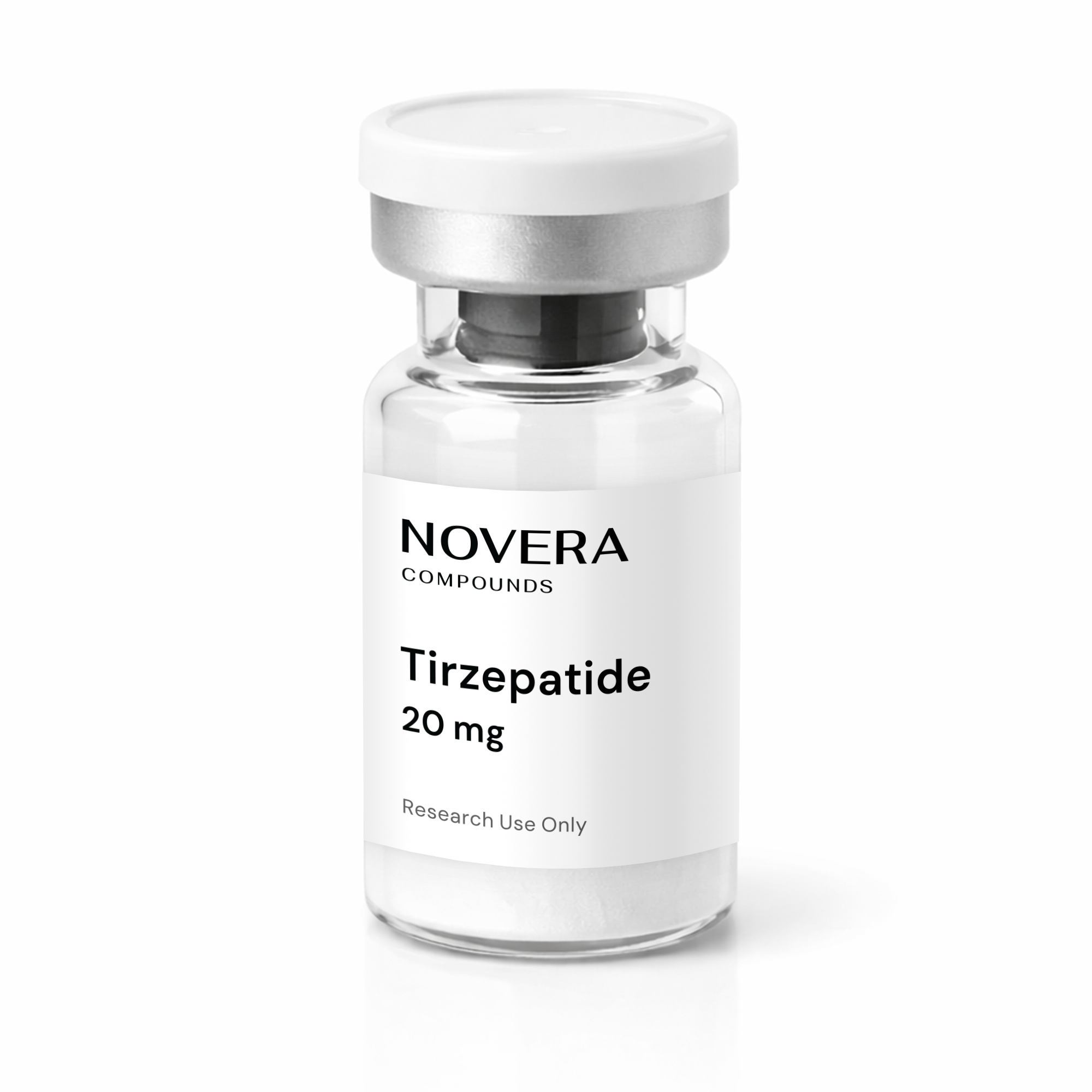
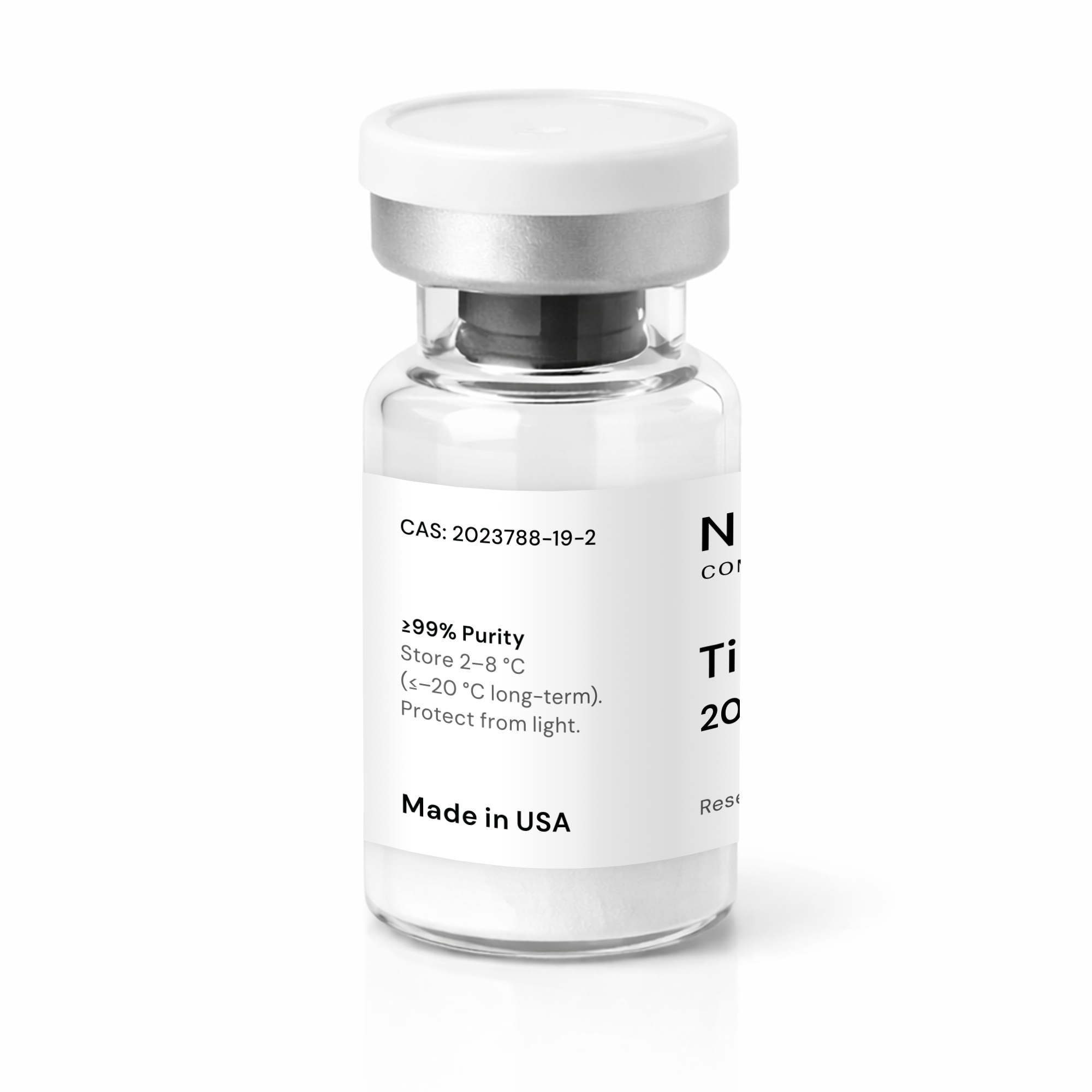
Tirzepatide (20 mg)
All products are 100% genuine and sourced from trusted manufacturers, with authenticity that can be verified for complete peace of mind.
Order exactly what you need with no minimum quantity required, whether it’s a single unit or a larger order.
Your order is guaranteed to arrive safely, with full shipment tracking and dedicated support to ensure a smooth delivery experience.
Your payments are protected with industry-standard encryption and trusted payment providers, ensuring every transaction is safe, private, and secure.
 99% PURITY GUARANTEE
 99% PURITY GUARANTEE
Each peptide batch is tested and verified to meet or exceed 98–99% purity (HPLC). Full analytical reports are available in the Certificate of Analysis section.
 Preparation & Handling Notice
The product is delivered in powdered (lyophilized) form and must be properly reconstituted prior to research use.
 RESEARCH USE ONLY
This product is intended for research use only. It is not for human or veterinary use, not for diagnostic or therapeutic purposes, and should only be handled by qualified professionals.
Strength: 20 mg
CAS: 2023788-19-2
Chemical Formula: C₂₂₅H₃₄₈N₄₈O₆₈
Molecular weight: 4813.48 g/mol
Peptide Sequence: Tyr-Aib-Glu-Gly-Thr-Phe-Thr-Ser-Asp-Tyr-Ser-Ile-Aib-Leu-Asp-Lys(C20-linker)-Ile-Ala-Gln-Lys-Ala-Phe-Val-Gln-Trp-Leu-Ile-Ala-Gly-Gly-Pro-Ser-Ser-Gly-Ala-Pro-Pro-Pro-Ser-NH₂
Synonyms: P1206, LY3298176, tirzepatida, tirzepatidum, OYN3CCI6QE
Storage: Store 2–8 °C (≤–20 °C long-term). RT exposure during transport acceptable. Protect from light.
Shelf life: 24 months from the manufacturing date.
-
Cold chain shipping available for temperature-sensitive products.
-
Orders are processed within 1–2 business days.
-
Delivery timelines vary by destination and shipping method — view our Shipping Policy for region-specific estimates.
-
Tracking information will be provided once shipped.
-
No order minimum applies.
-
If your shipment is delayed, lost, or arrives damaged, you're covered under our Refund & Replacement Policy.
We accept Visa, Mastercard, and American Express. Apple Pay and Google Pay are available upon request via your account manager.
All transactions are processed through a secure, PCI DSS–compliant system to ensure your data is fully protected.
Why Choose NOVERA COMPOUNDS Peptides?
Novera Research delivers high-quality research peptides developed under strict manufacturing and quality-control standards. Each product is carefully synthesized, tested, and handled to ensure consistency, reliability, and transparency for advanced research applications.
- High-purity, research-grade peptide synthesis
- Analytical testing to verify quality and composition
- Consistent batch-to-batch performance
- Batch identification on every vial for traceability
- Stored and shipped under controlled conditions
 High-purity, research-grade peptide synthesis

Why Choose Medica Depot
Shop hundreds of medical products with no minimums and free shipping on large orders.
 400+ products
 No order minimums
 Free shipping
 Loyalty rewards
 Trusted since 2007
 Account manager
 Verified LOT numbers
INFORMATION
What is Tirzepatide (20 mg)?
Tirzepatide is a 39-amino-acid peptide with lipid conjugation, widely used in laboratory research to investigate the activation of both GIP and GLP-1 receptors. It is particularly useful in experimental setups focused on receptor engagement, downstream signaling, and broader metabolic pathways in biological systems.
The addition of the C20 fatty diacid conjugation plays a key role in studies exploring the effects of peptide modifications on performance and stability within biological matrices and model systems.
Product Specifications
- Synonyms: LY3298176, P1206, tirzepatida, tirzepatidum
- CAS Number: 2023788-19-2
- Molecular Formula: C₂₂₅H₃₄₈N₄₈O₆₈
- Molecular Weight: 4813.48 g/mol
- Peptide Sequence: Tyr-Aib-Glu-Gly-Thr-Phe-Thr-Ser-Asp-Tyr-Ser-Ile-Aib-Leu-Asp-Lys-Ile-Ala-Gln-Lys(C20)-Ala-Phe-Val-Gln-Trp-Leu-Ile-Ala-Gly-Gly-Pro-Ser-Ser-Gly-Ala-Pro-Pro-Pro-Ser-NH₂
- Purity: ≥95% (verified by HPLC and mass spectrometry)
- Packaging Format: 20 mg lyophilized powder in a sealed research-grade vial
- Storage Conditions: Store 2–8 °C (≤–20 °C long term). Protect from light.
- Intended Use: For Laboratory Research Use Only
Key Characteristics of Tirzepatide (20 mg)
- Dual-target receptor activity: Employed to investigate the combined effects of activating both GIP and GLP-1 receptors within the same experimental framework.
- Notable structural design: The lipid moiety conjugation is central to research exploring peptide stability and the potential for extended exposure in biological environments.
- Supports consistent experimental documentation: Defined molecular identity aids in the creation of accurate, reproducible experimental records.
- Routine handling recommendations: Light protection during handling.
How Tirzepatide (20 mg) Supports Research
Tirzepatide is utilized in research focusing on incretin receptor pharmacology and metabolic signaling, particularly in studies assessing receptor activation profiles, downstream effects, and comparisons between dual-agonist and single-agonist molecules. Additionally, its lipid conjugation is of particular interest in studies exploring how modifications to the peptide’s molecular structure impact its behavior in experimental settings.
Research Applications & Usage Information
- Mechanistic receptor studies: Investigating the activation and signaling pathways associated with GIP and GLP-1 receptors.
- In vitro functional assays: Examining metabolic signaling pathways and biomarkers, depending on the model used.
- Comparative incretin literature workflows: Aligning experimental outcomes with published studies on receptor mechanisms and characterization.
- Peptide modification research: Analyzing the impact of modifications, such as fatty diacid conjugation, on peptide performance and stability in research contexts.
Handling and Storage Recommendations
- Minimize light exposure; follow good laboratory practices.
- Follow good laboratory practices for handling to reduce contamination risk.
Research Use Only Notice
This product is intended for laboratory research use only and is not approved for human or veterinary use. It is not intended for diagnostic, therapeutic, or clinical applications. Any reference to biological activity or potential effects is based solely on preclinical or in-vitro findings and should not be interpreted as validated clinical outcomes. Researchers are responsible for ensuring proper handling, storage, and disposal in accordance with institutional, federal, and international guidelines.
References
- Willard FS, Douros JD, Gabe MB, et al. Tirzepatide is an imbalanced and biased dual GIP and GLP-1 receptor agonist. JCI Insight. 2020;5(17):e140532. Published 2020 Sep 3. doi:10.1172/jci.insight.140532
- Fisman EZ, Tenenbaum A. The dual glucose-dependent insulinotropic polypeptide (GIP) and glucagon-like peptide-1 (GLP-1) receptor agonist tirzepatide: a novel cardiometabolic therapeutic prospect. Cardiovasc Diabetol. 2021;20(1):225. Published 2021 Nov 24. doi:10.1186/s12933-021-01412-5
- Coskun T, Sloop KW, Loghin C, et al. LY3298176, a novel dual GIP and GLP-1 receptor agonist for the treatment of type 2 diabetes mellitus: From discovery to clinical proof of concept. Mol Metab. 2018;18:3-14. doi:10.1016/j.molmet.2018.09.009
What is Tirzepatide (20 mg)?
Tirzepatide is a 39-amino-acid peptide with lipid conjugation, widely used in laboratory research to investigate the activation of both GIP and GLP-1 receptors. It is particularly useful in experimental setups focused on receptor engagement, downstream signaling, and broader metabolic pathways in biological systems.
The addition of the C20 fatty diacid conjugation plays a key role in studies exploring the effects of peptide modifications on performance and stability within biological matrices and model systems.
Product Specifications
- Synonyms: LY3298176, P1206, tirzepatida, tirzepatidum
- CAS Number: 2023788-19-2
- Molecular Formula: C₂₂₅H₃₄₈N₄₈O₆₈
- Molecular Weight: 4813.48 g/mol
- Peptide Sequence: Tyr-Aib-Glu-Gly-Thr-Phe-Thr-Ser-Asp-Tyr-Ser-Ile-Aib-Leu-Asp-Lys-Ile-Ala-Gln-Lys(C20)-Ala-Phe-Val-Gln-Trp-Leu-Ile-Ala-Gly-Gly-Pro-Ser-Ser-Gly-Ala-Pro-Pro-Pro-Ser-NH₂
- Purity: ≥95% (verified by HPLC and mass spectrometry)
- Packaging Format: 20 mg lyophilized powder in a sealed research-grade vial
- Storage Conditions: Store 2–8 °C (≤–20 °C long term). Protect from light.
- Intended Use: For Laboratory Research Use Only
Key Characteristics of Tirzepatide (20 mg)
- Dual-target receptor activity: Employed to investigate the combined effects of activating both GIP and GLP-1 receptors within the same experimental framework.
- Notable structural design: The lipid moiety conjugation is central to research exploring peptide stability and the potential for extended exposure in biological environments.
- Supports consistent experimental documentation: Defined molecular identity aids in the creation of accurate, reproducible experimental records.
- Routine handling recommendations: Light protection during handling.
How Tirzepatide (20 mg) Supports Research
Tirzepatide is utilized in research focusing on incretin receptor pharmacology and metabolic signaling, particularly in studies assessing receptor activation profiles, downstream effects, and comparisons between dual-agonist and single-agonist molecules. Additionally, its lipid conjugation is of particular interest in studies exploring how modifications to the peptide’s molecular structure impact its behavior in experimental settings.
Research Applications & Usage Information
- Mechanistic receptor studies: Investigating the activation and signaling pathways associated with GIP and GLP-1 receptors.
- In vitro functional assays: Examining metabolic signaling pathways and biomarkers, depending on the model used.
- Comparative incretin literature workflows: Aligning experimental outcomes with published studies on receptor mechanisms and characterization.
- Peptide modification research: Analyzing the impact of modifications, such as fatty diacid conjugation, on peptide performance and stability in research contexts.
Handling and Storage Recommendations
- Minimize light exposure; follow good laboratory practices.
- Follow good laboratory practices for handling to reduce contamination risk.
Research Use Only Notice
This product is intended for laboratory research use only and is not approved for human or veterinary use. It is not intended for diagnostic, therapeutic, or clinical applications. Any reference to biological activity or potential effects is based solely on preclinical or in-vitro findings and should not be interpreted as validated clinical outcomes. Researchers are responsible for ensuring proper handling, storage, and disposal in accordance with institutional, federal, and international guidelines.
References
- Willard FS, Douros JD, Gabe MB, et al. Tirzepatide is an imbalanced and biased dual GIP and GLP-1 receptor agonist. JCI Insight. 2020;5(17):e140532. Published 2020 Sep 3. doi:10.1172/jci.insight.140532
- Fisman EZ, Tenenbaum A. The dual glucose-dependent insulinotropic polypeptide (GIP) and glucagon-like peptide-1 (GLP-1) receptor agonist tirzepatide: a novel cardiometabolic therapeutic prospect. Cardiovasc Diabetol. 2021;20(1):225. Published 2021 Nov 24. doi:10.1186/s12933-021-01412-5
- Coskun T, Sloop KW, Loghin C, et al. LY3298176, a novel dual GIP and GLP-1 receptor agonist for the treatment of type 2 diabetes mellitus: From discovery to clinical proof of concept. Mol Metab. 2018;18:3-14. doi:10.1016/j.molmet.2018.09.009
Related products