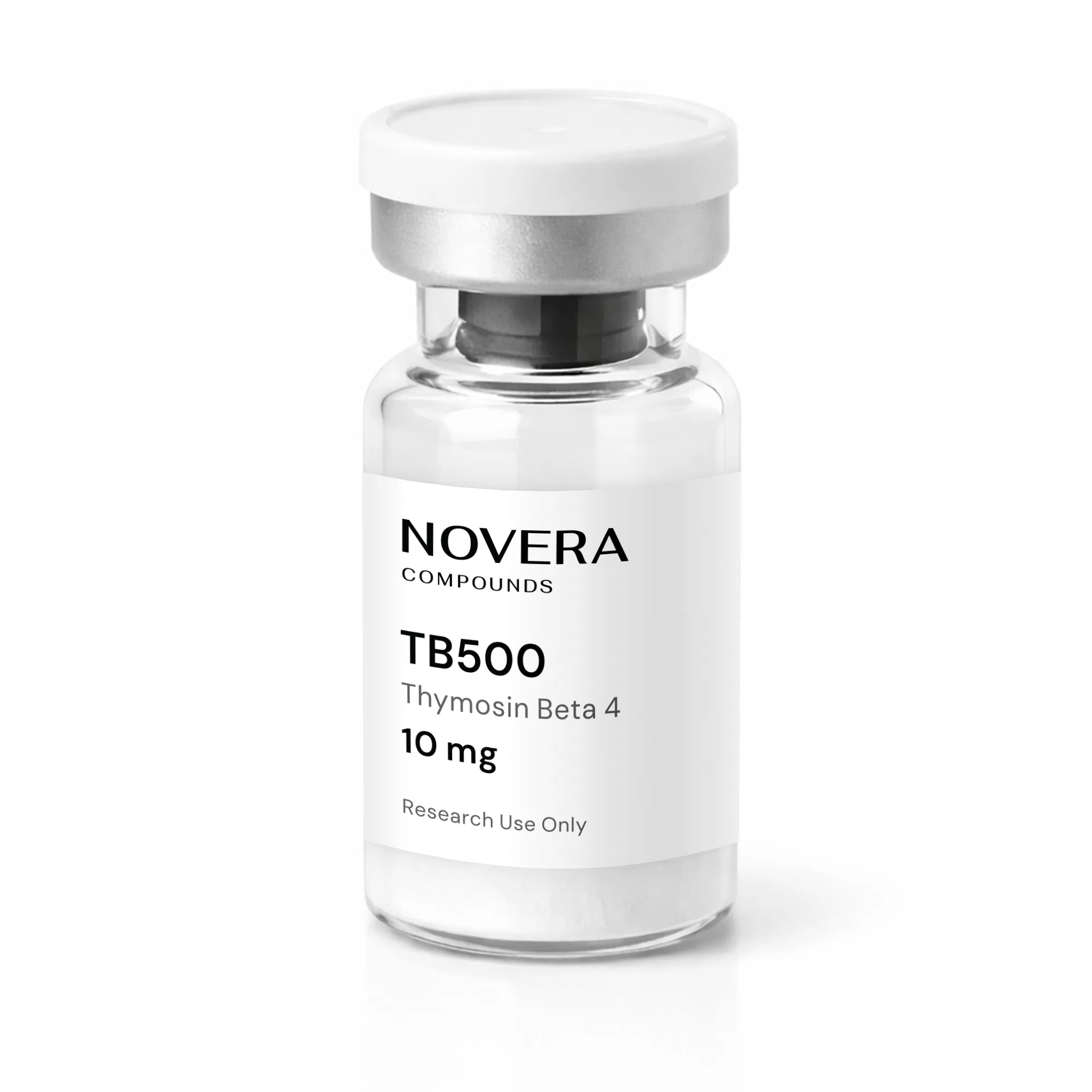
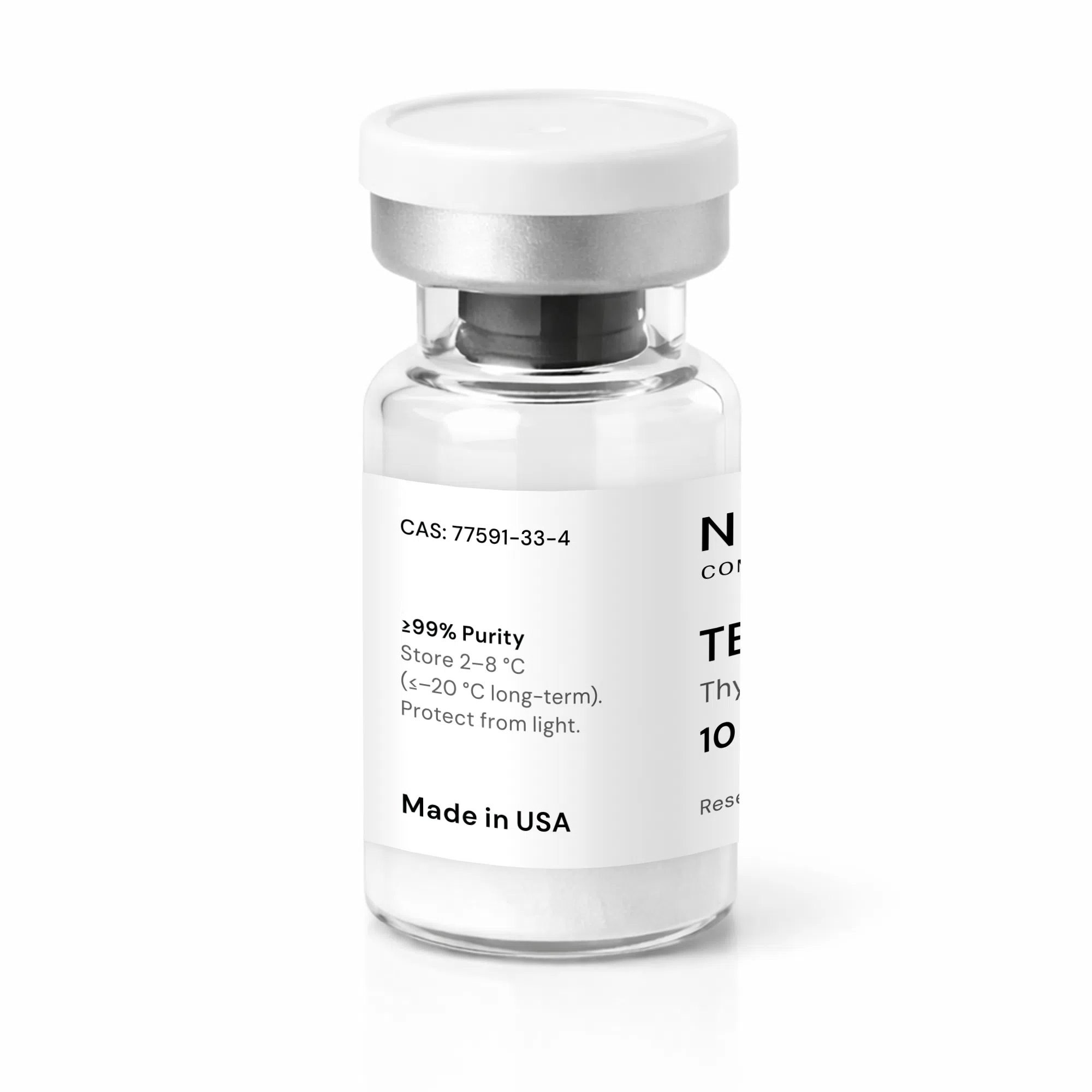
TB500 (Thymosin B4 Acetate) 10mg
Strength: 10mg
CAS: 77591-33-4
Chemical Formula: C₂₁₂H₃₅₀N₅₆O₇₈S
Molecular weight: 4963 g/mol
Peptide Sequence: Ac-Ser-Asp-Lys-Pro-Asp-Met-Ala-Glu-Ile-Glu-Lys-Phe-Asp-Lys-Ser-Lys-Leu-Lys-Lys-Thr-Glu-Thr-Gln-Glu-Lys-Asn-Pro-Leu-Pro-Ser-Lys-Glu-Thr-Ile-Glu-Gln-Glu-Lys-Gln-Ala-Gly-Glu-Ser-OH
Synonyms: Timbetasin
Storage: Store 2–8 °C (≤–20 °C long-term). RT exposure during transport acceptable. Protect from light.
Shelf life: 24 months from the manufacturing date.
Thymosin Beta 4 (TB500) is a 43-amino-acid peptide known for binding actin to regulate cell structure and movement. Research examines its role in preclinical models of wound healing, angiogenesis, tissue remodeling, and repair processes in skin, cardiac, corneal, and neural injury contexts.


Why Choose Medica Depot
Shop hundreds of medical products with no minimums and free shipping on large orders.
 400+ products
 No order minimums
 Free shipping
 Loyalty rewards
 Trusted since 2007
 Account manager
 Verified LOT numbers
INFORMATION
What is Thymosin Beta 4 (TB500) (10 mg)?
Thymosin Beta 4 (TB500), also known as timbetasin, is a naturally occurring peptide made up of 43 amino acids. It is primarily studied in research related to tissue repair and regeneration. TB500 is known for its ability to bind actin, a protein that helps maintain cell structure, making it useful for studying how cells move, change shape, and repair tissues.
In laboratory studies, TB500 (or Thymosin Beta 4) is used to investigate processes involved in tissue repair, such as wound healing, new blood vessel formation (angiogenesis), and tissue remodeling across various preclinical models, including skin, heart, eye, and nervous system models.
Product Specifications
- CAS Number: 77591-33-4
- Peptide Sequence: Ac-Ser-Asp-Lys-Pro-Asp-Met-Ala-Glu-Ile-Glu-Lys-Phe-Asp-Lys-Ser-Lys-Leu-Lys-Lys-Thr-Glu-Thr-Gln-Glu-Lys-Asn-Pro-Leu-Pro-Ser-Lys-Glu-Thr-Ile-Glu-Gln-Glu-Lys-Gln-Ala-Gly-Glu-Ser-OH
- Chemical Formula: C₂₁₂H₃₅₀N₅₆O₇₈S
- Molecular Weight: 4963 g/mol
- Purity: ≥99% (HPLC)
- Packaging Format: 10 mg lyophilized (freeze-dried) powder in a sealed glass vial
- Storage Conditions: Store at −20 °C and protect from light
- Intended Use: For laboratory research use only
Key Characteristics of Thymosin Beta 4 (TB500) (10 mg)
- Actin-Binding Function: Thymosin Beta 4 helps regulate actin dynamics within cells, which directly affects cell movement, shape, and tissue organization. This makes it valuable in studying cell structure and migration during healing.
- Linked to Injury Response: TB500 is present at high levels in tissues involved in repair. It is studied for its role in cell migration, tissue remodeling, and the body’s response to injury and stress.
- Preclinical Wound Healing Studies: In rat models, TB500 has been shown to improve wound healing by accelerating skin regeneration (re-epithelialization) and supporting angiogenesis (the formation of new blood vessels).
- Preclinical Tissue Models: Studied in skin wound, corneal injury, myocardial infarction, and neural damage models to examine re-epithelialization, angiogenesis, and tissue remodeling processes.
- Cardiac and Neural Research: TB500 has been evaluated in models of heart injury (myocardial infarction) and nervous system injury, where it has been used to explore tissue regeneration and repair after injury.
How Thymosin Beta 4 (TB500) (10 mg) Supports Research
TB500 (10 mg) is used in research to explore how cytoskeletal regulation connects to tissue repair. Because actin dynamics help determine how cells migrate and organize, TB500 can support experiments that track:
- Cell movement and wound healing: Understanding how cells migrate to the site of injury and promote tissue repair.
- Vessel formation (angiogenesis): Studying how new blood vessels form and contribute to tissue healing.
- Inflammation and tissue organization: Tracking how inflammation and other factors affect tissue repair during healing.
Preclinical models examine TB500’s effects on wound closure rates, angiogenesis markers, and tissue remodeling in skin, corneal, and cardiac injury models. While the peptide has shown promising effects in preclinical studies, further research is needed to better understand its full potential.
Research Applications & Usage Information
Thymosin Beta 4 (TB500) is commonly used in research involving cell motility, vascular biology, and regenerative pathways, including:
- Wound Healing and Skin Repair: Studying re-epithelialization, collagen production, and angiogenesis in excisional wound models and models related to epidermolysis bullosa (EB).
- Corneal and Ocular Surface Research: Exploring epithelial migration, tear-film stability, corneal staining, and models of alkali burn or dry-eye conditions.
- Cardiac Remodeling After Injury: Researching vascular regrowth, progenitor signaling, and functional recovery in models of myocardial infarction or ischemia.
- Neural Injury and Regeneration: Studying axonal growth, glial response, and functional outcomes in models of spinal cord injury or neurodegeneration.
- Cytoskeletal and Migration Assays: Investigating actin polymerization, cell migration assays, and stress-fiber organization in fibroblasts and endothelial cells.
- Inflammation and Infection Studies: Used in select keratitis models to explore interactions with antibiotics and inflammation-related markers.
Note: Experimental parameters (such as concentrations, timing, and model selection) must be defined by qualified researchers in accordance with institutional and regulatory guidelines. No dosing or clinical advice is provided.
Handling and Storage Recommendations
- Store sealed at −20 °C, protected from light and moisture.
- Allow the vial to reach room temperature before opening to reduce condensation.
- Use standard lab PPE and follow institutional SOPs for solution preparation, aliquoting, stability controls, and disposal.
Research Use Only Notice
This product is intended for laboratory research use only and is not approved for human or veterinary use. It is not intended for diagnostic, therapeutic, or clinical applications. Any reference to biological activity or potential effects is based solely on preclinical or in‑vitro findings and should not be interpreted as validated clinical outcomes. Researchers are responsible for ensuring proper handling, storage, and disposal in accordance with institutional, federal, and international guidelines.
References
- Malinda KM, Kleinman HK, Sidhu GS, et al. Thymosin β4 Accelerates Wound Healing. Journal of Investigative Dermatology. 1999;113(3):364-368. doi:10.1046/j.1523-1747.1999.00708.x
- Shrivastava S, Srivastava D, Olson EN, DiMaio JM, Bock‐Marquette I. Thymosin β4 and cardiac repair. Annals of the New York Academy of Sciences. 2010;1194(1):87-96. doi:10.1111/j.1749-6632.2010.05468.x
- Smart N, Risebro CA, Melville AA, et al. Thymosin beta4 induces adult epicardial progenitor mobilization and neovascularization. Nature. 2007;445(7124):177-182. doi:10.1038/nature05383
- Kleinman HK, Sosne G. Thymosin β4 Promotes Dermal Healing. Vitam Horm. 2016;102:251-275. doi:10.1016/bs.vh.2016.04.005
What is Thymosin Beta 4 (TB500) (10 mg)?
Thymosin Beta 4 (TB500), also known as timbetasin, is a naturally occurring peptide made up of 43 amino acids. It is primarily studied in research related to tissue repair and regeneration. TB500 is known for its ability to bind actin, a protein that helps maintain cell structure, making it useful for studying how cells move, change shape, and repair tissues.
In laboratory studies, TB500 (or Thymosin Beta 4) is used to investigate processes involved in tissue repair, such as wound healing, new blood vessel formation (angiogenesis), and tissue remodeling across various preclinical models, including skin, heart, eye, and nervous system models.
Product Specifications
- CAS Number: 77591-33-4
- Peptide Sequence: Ac-Ser-Asp-Lys-Pro-Asp-Met-Ala-Glu-Ile-Glu-Lys-Phe-Asp-Lys-Ser-Lys-Leu-Lys-Lys-Thr-Glu-Thr-Gln-Glu-Lys-Asn-Pro-Leu-Pro-Ser-Lys-Glu-Thr-Ile-Glu-Gln-Glu-Lys-Gln-Ala-Gly-Glu-Ser-OH
- Chemical Formula: C₂₁₂H₃₅₀N₅₆O₇₈S
- Molecular Weight: 4963 g/mol
- Purity: ≥99% (HPLC)
- Packaging Format: 10 mg lyophilized (freeze-dried) powder in a sealed glass vial
- Storage Conditions: Store at −20 °C and protect from light
- Intended Use: For laboratory research use only
Key Characteristics of Thymosin Beta 4 (TB500) (10 mg)
- Actin-Binding Function: Thymosin Beta 4 helps regulate actin dynamics within cells, which directly affects cell movement, shape, and tissue organization. This makes it valuable in studying cell structure and migration during healing.
- Linked to Injury Response: TB500 is present at high levels in tissues involved in repair. It is studied for its role in cell migration, tissue remodeling, and the body’s response to injury and stress.
- Preclinical Wound Healing Studies: In rat models, TB500 has been shown to improve wound healing by accelerating skin regeneration (re-epithelialization) and supporting angiogenesis (the formation of new blood vessels).
- Preclinical Tissue Models: Studied in skin wound, corneal injury, myocardial infarction, and neural damage models to examine re-epithelialization, angiogenesis, and tissue remodeling processes.
- Cardiac and Neural Research: TB500 has been evaluated in models of heart injury (myocardial infarction) and nervous system injury, where it has been used to explore tissue regeneration and repair after injury.
How Thymosin Beta 4 (TB500) (10 mg) Supports Research
TB500 (10 mg) is used in research to explore how cytoskeletal regulation connects to tissue repair. Because actin dynamics help determine how cells migrate and organize, TB500 can support experiments that track:
- Cell movement and wound healing: Understanding how cells migrate to the site of injury and promote tissue repair.
- Vessel formation (angiogenesis): Studying how new blood vessels form and contribute to tissue healing.
- Inflammation and tissue organization: Tracking how inflammation and other factors affect tissue repair during healing.
Preclinical models examine TB500’s effects on wound closure rates, angiogenesis markers, and tissue remodeling in skin, corneal, and cardiac injury models. While the peptide has shown promising effects in preclinical studies, further research is needed to better understand its full potential.
Research Applications & Usage Information
Thymosin Beta 4 (TB500) is commonly used in research involving cell motility, vascular biology, and regenerative pathways, including:
- Wound Healing and Skin Repair: Studying re-epithelialization, collagen production, and angiogenesis in excisional wound models and models related to epidermolysis bullosa (EB).
- Corneal and Ocular Surface Research: Exploring epithelial migration, tear-film stability, corneal staining, and models of alkali burn or dry-eye conditions.
- Cardiac Remodeling After Injury: Researching vascular regrowth, progenitor signaling, and functional recovery in models of myocardial infarction or ischemia.
- Neural Injury and Regeneration: Studying axonal growth, glial response, and functional outcomes in models of spinal cord injury or neurodegeneration.
- Cytoskeletal and Migration Assays: Investigating actin polymerization, cell migration assays, and stress-fiber organization in fibroblasts and endothelial cells.
- Inflammation and Infection Studies: Used in select keratitis models to explore interactions with antibiotics and inflammation-related markers.
Note: Experimental parameters (such as concentrations, timing, and model selection) must be defined by qualified researchers in accordance with institutional and regulatory guidelines. No dosing or clinical advice is provided.
Handling and Storage Recommendations
- Store sealed at −20 °C, protected from light and moisture.
- Allow the vial to reach room temperature before opening to reduce condensation.
- Use standard lab PPE and follow institutional SOPs for solution preparation, aliquoting, stability controls, and disposal.
Research Use Only Notice
This product is intended for laboratory research use only and is not approved for human or veterinary use. It is not intended for diagnostic, therapeutic, or clinical applications. Any reference to biological activity or potential effects is based solely on preclinical or in‑vitro findings and should not be interpreted as validated clinical outcomes. Researchers are responsible for ensuring proper handling, storage, and disposal in accordance with institutional, federal, and international guidelines.
References
- Malinda KM, Kleinman HK, Sidhu GS, et al. Thymosin β4 Accelerates Wound Healing. Journal of Investigative Dermatology. 1999;113(3):364-368. doi:10.1046/j.1523-1747.1999.00708.x
- Shrivastava S, Srivastava D, Olson EN, DiMaio JM, Bock‐Marquette I. Thymosin β4 and cardiac repair. Annals of the New York Academy of Sciences. 2010;1194(1):87-96. doi:10.1111/j.1749-6632.2010.05468.x
- Smart N, Risebro CA, Melville AA, et al. Thymosin beta4 induces adult epicardial progenitor mobilization and neovascularization. Nature. 2007;445(7124):177-182. doi:10.1038/nature05383
- Kleinman HK, Sosne G. Thymosin β4 Promotes Dermal Healing. Vitam Horm. 2016;102:251-275. doi:10.1016/bs.vh.2016.04.005
Related products