All products are 100% genuine and sourced from trusted manufacturers, with authenticity that can be verified for complete peace of mind.
Order exactly what you need with no minimum quantity required, whether it’s a single unit or a larger order.
Your order is guaranteed to arrive safely, with full shipment tracking and dedicated support to ensure a smooth delivery experience.
Your payments are protected with industry-standard encryption and trusted payment providers, ensuring every transaction is safe, private, and secure.
 99% PURITY GUARANTEE
 99% PURITY GUARANTEE
Each peptide batch is tested and verified to meet or exceed 98–99% purity (HPLC). Full analytical reports are available in the Certificate of Analysis section.
 Preparation & Handling Notice
The product is delivered in powdered (lyophilized) form and must be properly reconstituted prior to research use.
 RESEARCH USE ONLY
This product is intended for research use only. It is not for human or veterinary use, not for diagnostic or therapeutic purposes, and should only be handled by qualified professionals.
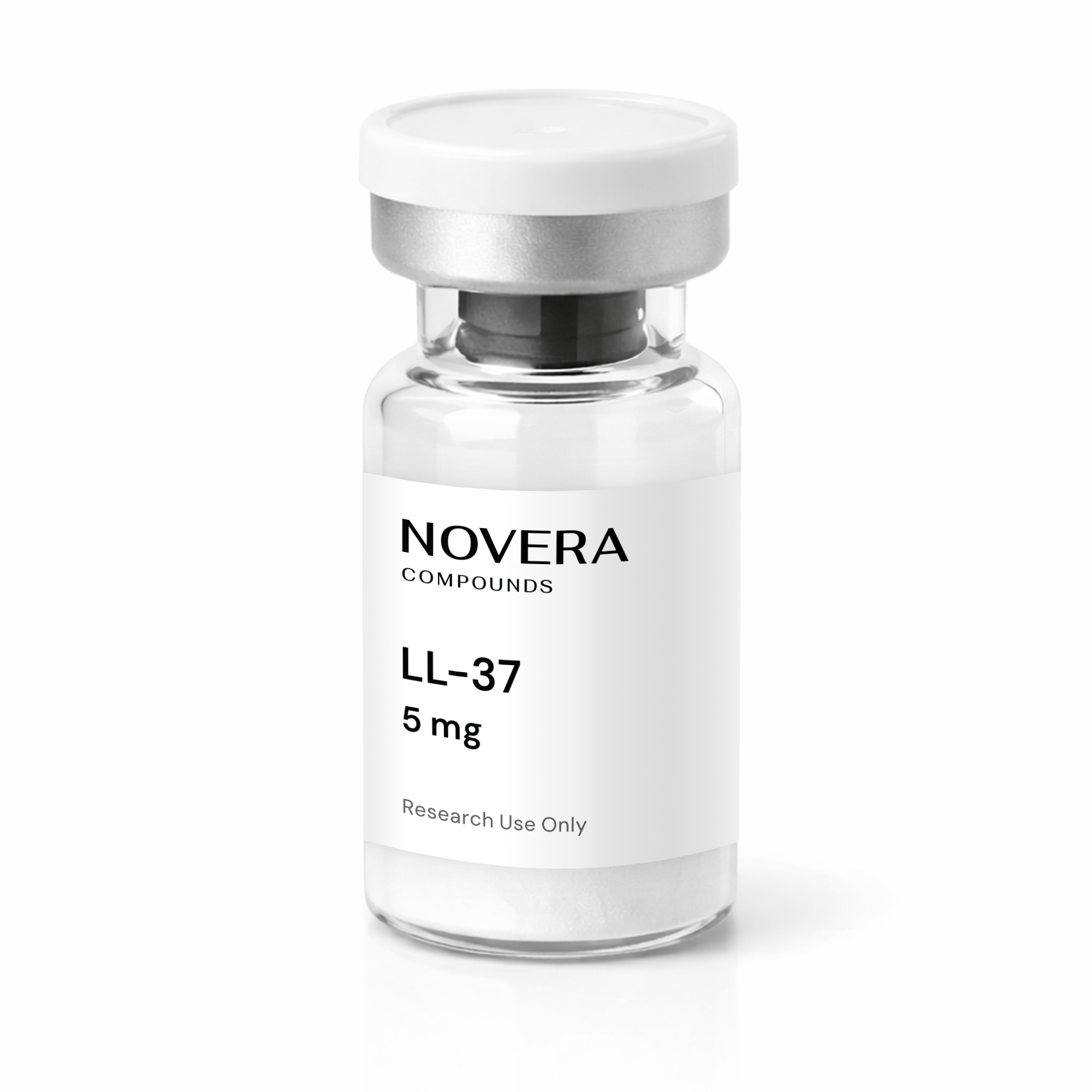
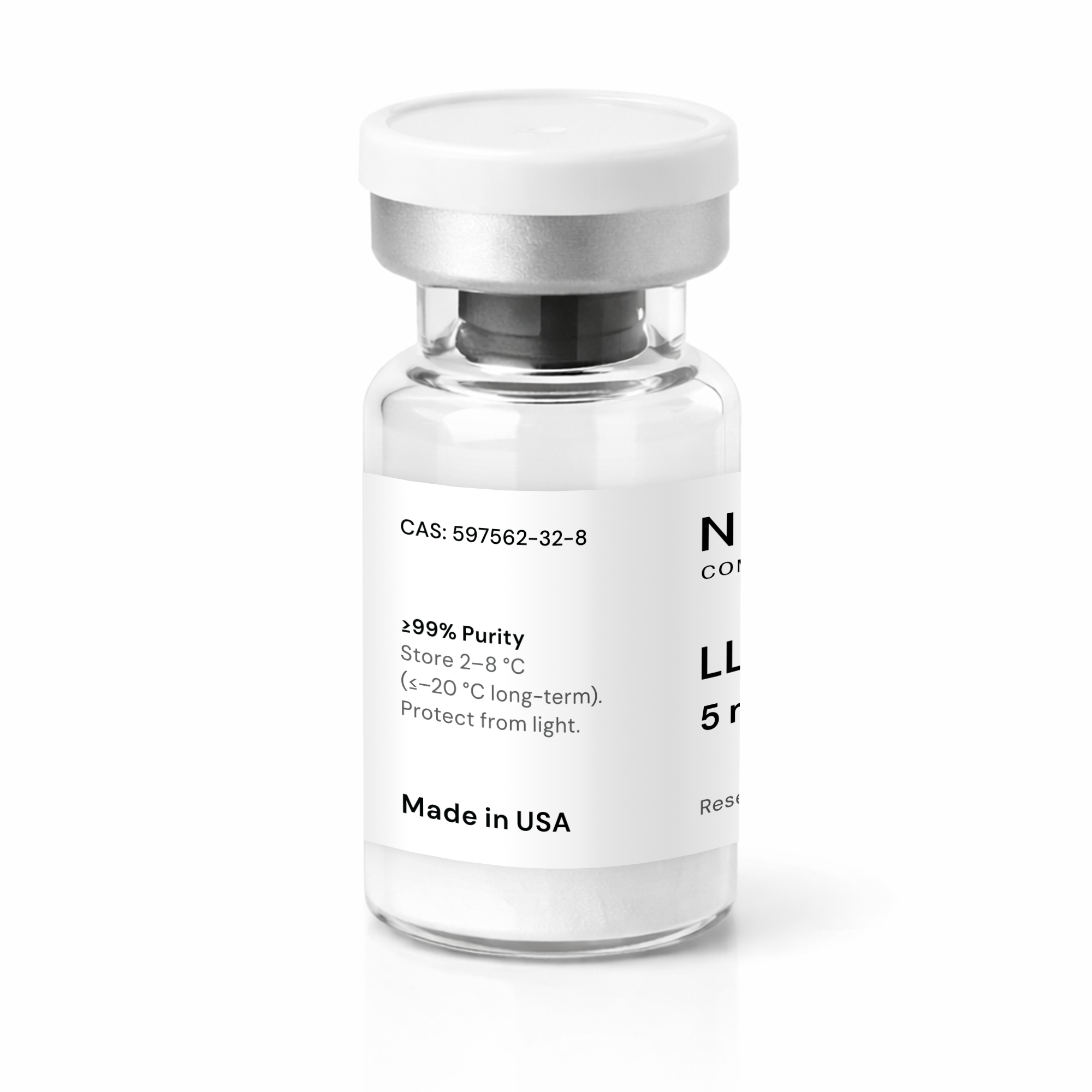
Strength: 5 mg
CAS: 597562-32-8
Chemical Formula: C₂₀₅H₃₄₀N₆₀O₅₃
Molecular weight: 4493.3 g/mol
Peptide Sequence: Leu-Leu-Gln-Asp-Phe-Phe-Arg-Asn-Lys-Ser-Lys-Lys-Ile-Gln-Gly-Glu-Lys-Leu-Lys-Lys-Asp-Arg-Ile-Arg-Asn-Thr-Ala-Ile-Arg-Asn-Leu-Ile-Gly-Arg-Ile-Ala-Leu
Synonyms: Cathelicidin, ropocamptide, Bac4, Cathelicidin antimicrobial peptide 18
Storage: Store 2–8 °C (≤–20 °C long-term). RT exposure during transport acceptable. Protect from light.
Shelf life: 24 months from the manufacturing date.
LL-37 (5 mg) is a synthetic peptide made up of 37 amino acids, modeled after a human host-defense peptide. It is commonly used in laboratory research to study immune function and the interactions between cells and their environment. Research suggests that LL-37 can interact with cell membranes and affect immune responses, such as the release of signaling molecules and the behavior of cell barriers. It is often used to explore how the immune system works, particularly in relation to microbes and cell communication.
-
Cold chain shipping available for temperature-sensitive products.
-
Orders are processed within 1–2 business days.
-
Delivery timelines vary by destination and shipping method — view our Shipping Policy for region-specific estimates.
-
Tracking information will be provided once shipped.
-
No order minimum applies.
-
If your shipment is delayed, lost, or arrives damaged, you're covered under our Refund & Replacement Policy.
We accept Visa, Mastercard, and American Express. Apple Pay and Google Pay are available upon request via your account manager.
All transactions are processed through a secure, PCI DSS–compliant system to ensure your data is fully protected.
Why Choose NOVERA COMPOUNDS Peptides?
Novera Research delivers high-quality research peptides developed under strict manufacturing and quality-control standards. Each product is carefully synthesized, tested, and handled to ensure consistency, reliability, and transparency for advanced research applications.
- High-purity, research-grade peptide synthesis
- Analytical testing to verify quality and composition
- Consistent batch-to-batch performance
- Batch identification on every vial for traceability
- Stored and shipped under controlled conditions
 High-purity, research-grade peptide synthesis

Why Choose Medica Depot
Shop hundreds of medical products with no minimums and free shipping on large orders.
 400+ products
 No order minimums
 Free shipping
 Loyalty rewards
 Trusted since 2007
 Account manager
 Verified LOT numbers
INFORMATION
What is LL-37 (5 mg)?
LL-37 (5 mg) is a synthetic peptide that mimics a naturally occurring human peptide involved in immune defense. It consists of 37 amino acids and is used in laboratory research to study immune function, cell signaling, and its interaction with cell membranes. LL-37 is a valuable tool for research on how immune cells communicate and how peptides affect biological membranes.
Researchers commonly use LL-37 to explore its involvement in immune responses, the release of signaling molecules, and its effects on cell barrier structure. This product is supplied strictly for research purposes and is not intended for medical or diagnostic use.
Product Specifications
- CAS Number: 597562-32-8
- Peptide Sequence:
Leu-Leu-Gln-Asp-Phe-Phe-Arg-Asn-Lys-Ser-Lys-Lys-Ile-Gln-Gly-Glu-Lys-Leu-Lys-Lys-Asp-Arg-Ile-Arg-Asn-Thr-Ala-Ile-Arg-Asn-Leu-Ile-Gly-Arg-Ile-Ala-Leu - Molecular Formula: C₂₀₅H₃₄₀N₆₀O₅₃
- Molecular weight: 4493.3 g/mol
- Purity: ≥ 95% (typically verified by HPLC and mass spectrometry)
- Packaging Format: 5 mg lyophilized powder in a sealed research vial
- Storage Conditions: Store 2–8 °C (≤ –20 °C long term). Protect from light.
- Intended Use: For Laboratory Research Use Only
Key Characteristics of LL-37 (5 mg)
- Synthetic peptide modeled after human cathelicidin
- Interacts with lipid membranes to help study immune responses
- Cationic under physiological conditions, which allows it to bind to negatively charged microbial and cell membranes
- Commonly used in research on immune signaling and inflammation
- Supplied in a lyophilized form to maintain stability and ensure consistent quality
- Typically tested for purity and identity using standard laboratory methods like HPLC and mass spectrometry
- Suitable for use in standard laboratory handling and research procedures
How LL-37 (5 mg) Supports Research
LL-37 (5 mg) is primarily used in research to study how the immune system works and how peptides interact with cell membranes. It helps researchers explore how antimicrobial peptides influence cell permeability, immune cell activity, and the release of immune signaling molecules under controlled conditions.
LL-37 is also studied for its role in immune regulation, particularly its interactions with cell receptors and its effects on inflammation. It is used in in vitro research on cell barrier integrity and immune cell communication. These studies are conducted in laboratory settings and focus on gaining a better understanding of immune responses.
Research Applications & Usage Information
LL-37 (5 mg) is commonly used in research for:
- Used to study host-defense peptide mechanisms in vitro/in model systems
- Analyzing immune signaling and inflammation pathways
- Research on Toll-like receptor (TLR) and innate immune system function
- Investigating the integrity of cell barriers and mucosal defense
- Exploring interactions between peptides and cell membranes
- Research on tissue responses in controlled lab models
These applications are for investigational purposes only and are conducted in laboratory settings.
Handling and Storage Recommendations
- Store at 2–8 °C (≤ –20 °C long-term)
- Protect from light, heat, and moisture
- Let the vial adjust to room temperature before opening to prevent condensation
- Reconstitute with sterile, research-grade solvents suitable for peptide use
- After reconstitution, store at 2–8 °C and use within the specified timeframes
- Avoid repeated freeze-thaw cycles to preserve peptide stability
Research Use Only Notice
This product is intended for laboratory research use only and is not approved for human or veterinary use. It is not intended for diagnostic, therapeutic, or clinical applications. Any reference to biological activity or potential effects is based solely on preclinical or in vitro findings and should not be interpreted as validated clinical outcomes. Researchers are responsible for ensuring proper handling, storage, and disposal in accordance with institutional, federal, and international guidelines.
References
- Dürr UH, Sudheendra US, Ramamoorthy A. LL-37, the only human member of the cathelicidin family of antimicrobial peptides. Biochim Biophys Acta. 2006;1758(9):1408-1425. doi:10.1016/j.bbamem.2006.03.030
- Zanetti M. Cathelicidins, multifunctional peptides of the innate immunity. J Leukoc Biol. 2004;75(1):39-48. doi:10.1189/jlb.0403147
- Vandamme D, Landuyt B, Luyten W, Schoofs L. A comprehensive summary of LL-37, the factotum human cathelicidin peptide. Cell Immunol. 2012;280(1):22-35. doi:10.1016/j.cellimm.2012.11.009
- Voronko OE, Khotina VA, Kashirskikh DA, Lee AA, Gasanov VAO. Antimicrobial Peptides of the Cathelicidin Family: Focus on LL-37 and Its Modifications. Int J Mol Sci. 2025;26(16):8103. Published 2025 Aug 21. doi:10.3390/ijms26168103
- Barlow PG, Beaumont PE, Cosseau C, et al. The human cathelicidin LL-37 preferentially promotes apoptosis of infected airway epithelium. Am J Respir Cell Mol Biol. 2010;43(6):692-702. doi:10.1165/rcmb.2009-0250OC
What is LL-37 (5 mg)?
LL-37 (5 mg) is a synthetic peptide that mimics a naturally occurring human peptide involved in immune defense. It consists of 37 amino acids and is used in laboratory research to study immune function, cell signaling, and its interaction with cell membranes. LL-37 is a valuable tool for research on how immune cells communicate and how peptides affect biological membranes.
Researchers commonly use LL-37 to explore its involvement in immune responses, the release of signaling molecules, and its effects on cell barrier structure. This product is supplied strictly for research purposes and is not intended for medical or diagnostic use.
Product Specifications
- CAS Number: 597562-32-8
- Peptide Sequence:
Leu-Leu-Gln-Asp-Phe-Phe-Arg-Asn-Lys-Ser-Lys-Lys-Ile-Gln-Gly-Glu-Lys-Leu-Lys-Lys-Asp-Arg-Ile-Arg-Asn-Thr-Ala-Ile-Arg-Asn-Leu-Ile-Gly-Arg-Ile-Ala-Leu - Molecular Formula: C₂₀₅H₃₄₀N₆₀O₅₃
- Molecular weight: 4493.3 g/mol
- Purity: ≥ 95% (typically verified by HPLC and mass spectrometry)
- Packaging Format: 5 mg lyophilized powder in a sealed research vial
- Storage Conditions: Store 2–8 °C (≤ –20 °C long term). Protect from light.
- Intended Use: For Laboratory Research Use Only
Key Characteristics of LL-37 (5 mg)
- Synthetic peptide modeled after human cathelicidin
- Interacts with lipid membranes to help study immune responses
- Cationic under physiological conditions, which allows it to bind to negatively charged microbial and cell membranes
- Commonly used in research on immune signaling and inflammation
- Supplied in a lyophilized form to maintain stability and ensure consistent quality
- Typically tested for purity and identity using standard laboratory methods like HPLC and mass spectrometry
- Suitable for use in standard laboratory handling and research procedures
How LL-37 (5 mg) Supports Research
LL-37 (5 mg) is primarily used in research to study how the immune system works and how peptides interact with cell membranes. It helps researchers explore how antimicrobial peptides influence cell permeability, immune cell activity, and the release of immune signaling molecules under controlled conditions.
LL-37 is also studied for its role in immune regulation, particularly its interactions with cell receptors and its effects on inflammation. It is used in in vitro research on cell barrier integrity and immune cell communication. These studies are conducted in laboratory settings and focus on gaining a better understanding of immune responses.
Research Applications & Usage Information
LL-37 (5 mg) is commonly used in research for:
- Used to study host-defense peptide mechanisms in vitro/in model systems
- Analyzing immune signaling and inflammation pathways
- Research on Toll-like receptor (TLR) and innate immune system function
- Investigating the integrity of cell barriers and mucosal defense
- Exploring interactions between peptides and cell membranes
- Research on tissue responses in controlled lab models
These applications are for investigational purposes only and are conducted in laboratory settings.
Handling and Storage Recommendations
- Store at 2–8 °C (≤ –20 °C long-term)
- Protect from light, heat, and moisture
- Let the vial adjust to room temperature before opening to prevent condensation
- Reconstitute with sterile, research-grade solvents suitable for peptide use
- After reconstitution, store at 2–8 °C and use within the specified timeframes
- Avoid repeated freeze-thaw cycles to preserve peptide stability
Research Use Only Notice
This product is intended for laboratory research use only and is not approved for human or veterinary use. It is not intended for diagnostic, therapeutic, or clinical applications. Any reference to biological activity or potential effects is based solely on preclinical or in vitro findings and should not be interpreted as validated clinical outcomes. Researchers are responsible for ensuring proper handling, storage, and disposal in accordance with institutional, federal, and international guidelines.
References
- Dürr UH, Sudheendra US, Ramamoorthy A. LL-37, the only human member of the cathelicidin family of antimicrobial peptides. Biochim Biophys Acta. 2006;1758(9):1408-1425. doi:10.1016/j.bbamem.2006.03.030
- Zanetti M. Cathelicidins, multifunctional peptides of the innate immunity. J Leukoc Biol. 2004;75(1):39-48. doi:10.1189/jlb.0403147
- Vandamme D, Landuyt B, Luyten W, Schoofs L. A comprehensive summary of LL-37, the factotum human cathelicidin peptide. Cell Immunol. 2012;280(1):22-35. doi:10.1016/j.cellimm.2012.11.009
- Voronko OE, Khotina VA, Kashirskikh DA, Lee AA, Gasanov VAO. Antimicrobial Peptides of the Cathelicidin Family: Focus on LL-37 and Its Modifications. Int J Mol Sci. 2025;26(16):8103. Published 2025 Aug 21. doi:10.3390/ijms26168103
- Barlow PG, Beaumont PE, Cosseau C, et al. The human cathelicidin LL-37 preferentially promotes apoptosis of infected airway epithelium. Am J Respir Cell Mol Biol. 2010;43(6):692-702. doi:10.1165/rcmb.2009-0250OC
Related products