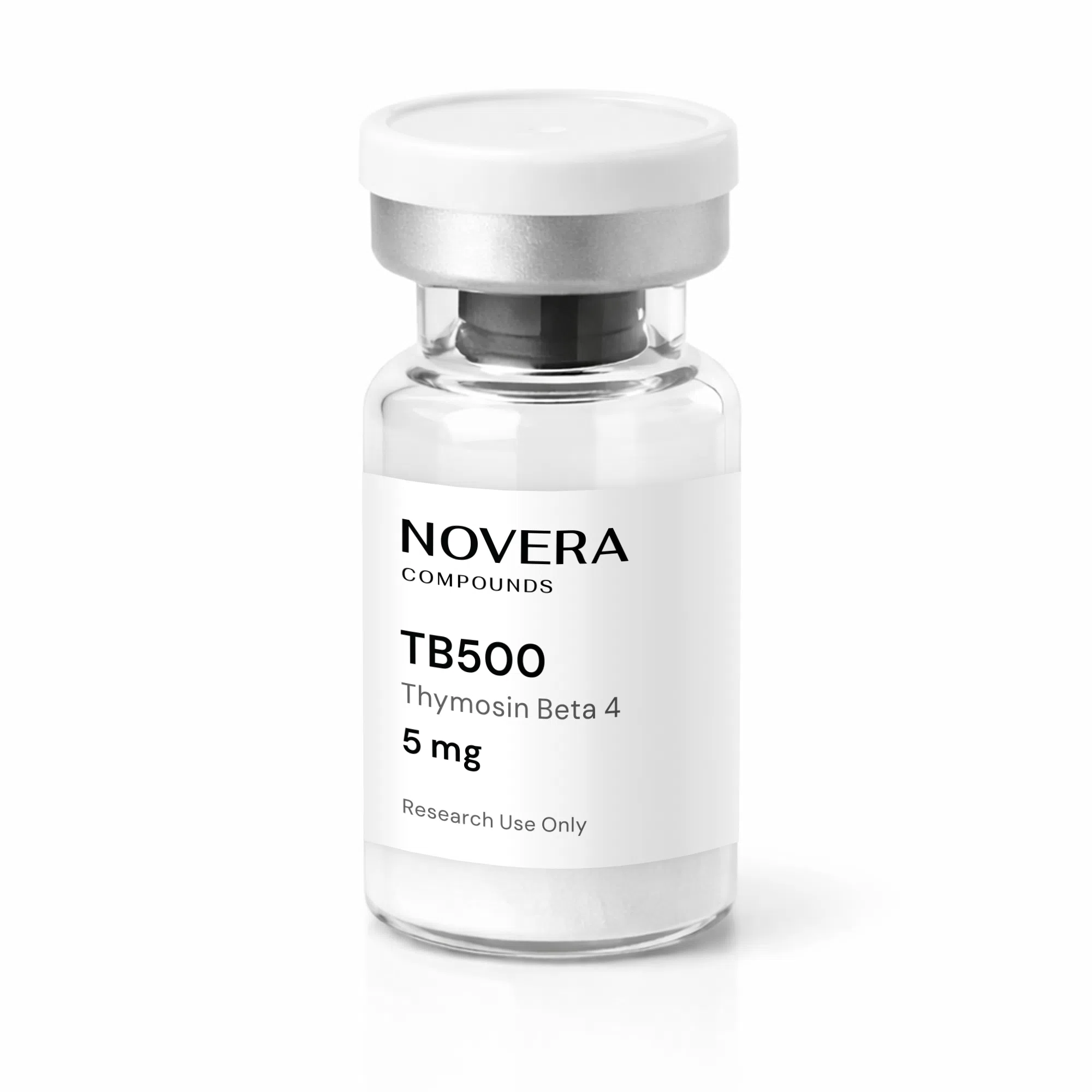
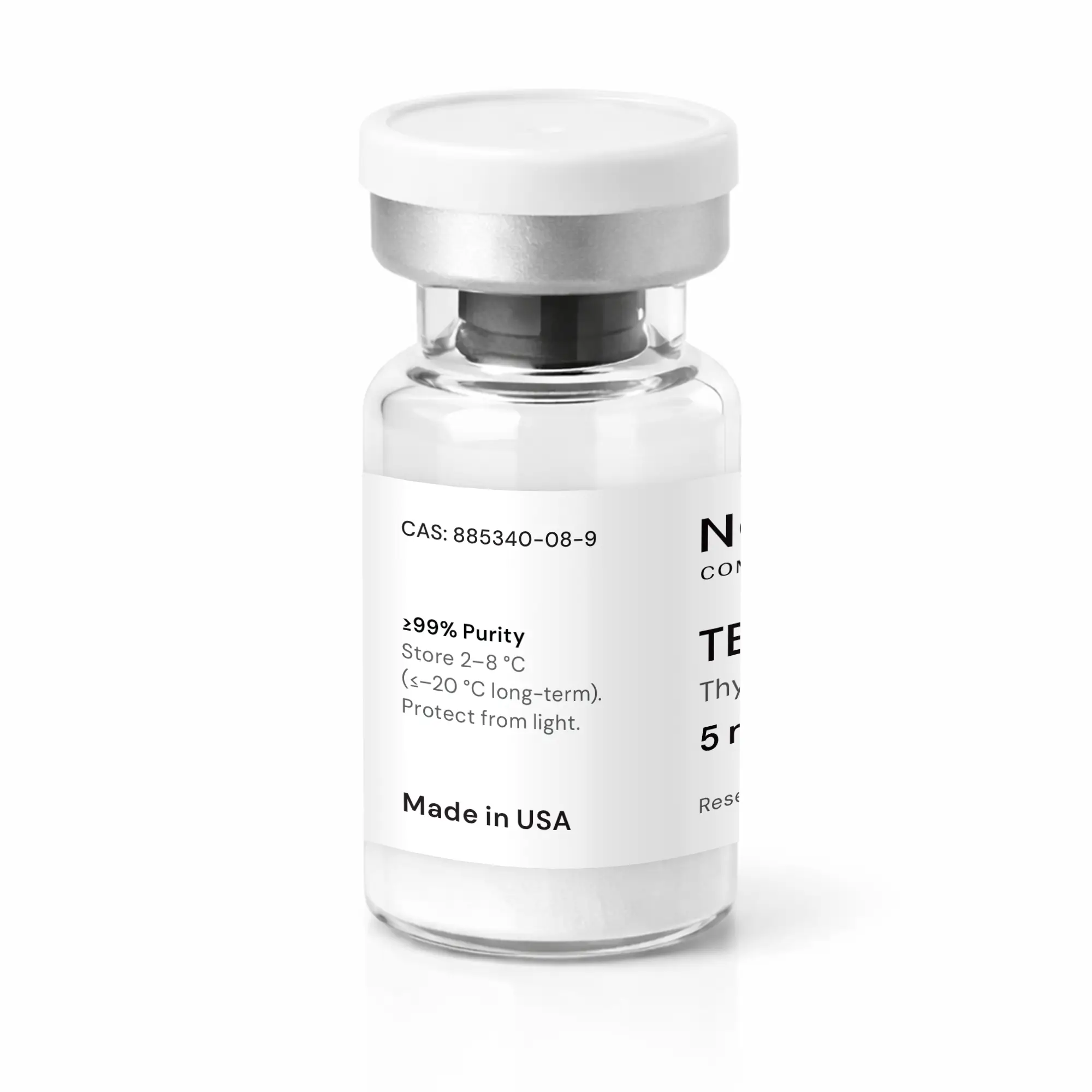
Thymosin Beta 4 (TB500) 5mg
Strength: 5 mg
CAS: 885340-08-9
Chemical Formula: C₃₈H₆₈N₁₀O₁₄
Molecular weight: 889.0 g/mol
Peptide Sequence: Ac-Ser-Asp-Lys-Pro-Asp-Met-Ala-Glu-Ile-Glu-Lys-Phe-Asp-Lys-Ser-Lys-Leu-Lys-Lys-Thr-Glu-Thr-Gln-Glu-Lys-Asn-Pro-Leu-Pro-Ser-Lys-Glu-Thr-Ile-Glu-Gln-Glu-Lys-Gln-Ala-Gly-Glu-Ser-OH
Synonyms: Timbetasin
Storage: Store 2–8 °C (≤–20 °C long-term). RT exposure during transport acceptable. Protect from light.
Shelf life: 24 months from the manufacturing date.
Thymosin Beta 4 (TB500) is a 43-amino-acid peptide known for binding actin to regulate cell structure and movement. Research examines its role in preclinical models of wound healing, angiogenesis, tissue remodeling, and repair processes across skin, cardiac, corneal, and neural injury.


Why Choose Medica Depot
Shop hundreds of medical products with no minimums and free shipping on large orders.
 400+ products
 No order minimums
 Free shipping
 Loyalty rewards
 Trusted since 2007
 Account manager
 Verified LOT numbers
INFORMATION
What is Thymosin Beta 4 (TB500) (5 mg)?
Thymosin Beta 4 (commonly referred to as TB500) is a synthetic version of thymosin β4, a small, well-characterized peptide studied for its actin-binding (actin-sequestering) properties in cell biology. In laboratory research, it is frequently used to explore cytoskeleton dynamics, cell movement, and related signaling behavior in experimental systems, where researchers track changes in cellular organization and downstream biomarkers.
Product Specifications
- CAS Number: 885340-08-9
- Peptide Sequence: Ac-Ser-Asp-Lys-Pro-Asp-Met-Ala-Glu-Ile-Glu-Lys-Phe-Asp-Lys-Ser-Lys-Leu-Lys-Lys-Thr-Glu-Thr-Gln-Glu-Lys-Asn-Pro-Leu-Pro-Ser-Lys-Glu-Thr-Ile-Glu-Gln-Glu-Lys-Gln-Ala-Gly-Glu-Ser-OH
- Category: Peptides
- Subcategory: Healing & Regenerative Peptides
- Chemical Weight (Molecular Weight): 889.0 g/mol
- Molecular Formula: C₃₈H₆₈N₁₀O₁₄
- Synonyms: Timbetasin
- Purity: ≥99%
- Packaging Format: 5 mg vial
- Storage Conditions: Store at -20°C, avoid light exposure
- Designation: For Laboratory Research Use Only
Key Characteristics of Thymosin Beta 4 (TB500) (5 mg)
- Sequence-Defined Peptide: Supports consistent experimental documentation and reproducibility.
- Actin/Cytoskeleton Relevance: Studied for its role in binding G-actin and influencing actin polymerization balance in cells.
- Cell-Behavior Models: Commonly used to observe cell migration, cytoskeletal organization, and related readouts (model-dependent).
- Tissue-Repair Biology Research: Used in preclinical/in vitro research exploring tissue-response biology, depending on the model design and endpoints.
- Storage: Store at -20°C, avoid light exposure.
How Thymosin Beta 4 (TB500) (5 mg) Supports Research
In laboratory settings, Thymosin β4 is used as a tool to investigate cytoskeleton-linked signaling and cellular behaviors that depend on actin dynamics. It is included in experimental designs measuring cell movement, structural organization, and changes in biomarkers associated with cytoskeletal regulation and tissue-response pathways.
Research Applications & Usage Information
Thymosin Beta 4 (TB500) (5 mg) is commonly used in laboratory research for:
- Actin Dynamics and Cytoskeleton Studies: Investigating G-actin binding/sequestration and actin-polymerization balance.
- Cell Migration and Motility Models: Quantifying movement and morphology in assays (model-dependent).
- Tissue-Response Research: Exploring repair-associated biology in preclinical/in vitro systems; outcomes depend on model endpoints and controls.
- Mechanistic Studies: Mapping pathway interactions between cytoskeletal regulation and broader cell signaling and gene-expression readouts.
- Assay Development/Method Validation: Using a well-characterized peptide to support repeatability and benchmarking.
Note: No dosing, administration, or clinical-use guidance is provided. This material is intended for laboratory research only.
Handling and Storage Recommendations
- Store at -20°C, avoid light exposure (keep in original packaging or a light-limiting container).
- Minimize freeze–thaw cycles.
- Keep the vial tightly closed and use clean laboratory techniques to minimize contamination.
- Follow your facility’s PPE, labeling, and disposal procedures.
Research Use Only Notice
This product is intended for laboratory research use only and is not approved for human or veterinary use. It is not intended for diagnostic, therapeutic, or clinical applications. Any reference to biological activity or potential effects is based solely on preclinical or in-vitro findings and should not be interpreted as validated clinical outcomes. Researchers are responsible for ensuring proper handling, storage, and disposal in accordance with institutional, federal, and international guidelines.
References
- Malinda KM, Kleinman HK, Sidhu GS, et al. Thymosin β4 Accelerates Wound Healing. Journal of Investigative Dermatology. 1999;113(3):364-368. doi:10.1046/j.1523-1747.1999.00708.x
- Shrivastava S, Srivastava D, Olson EN, DiMaio JM, Bock‐Marquette I. Thymosin β4 and cardiac repair. Annals of the New York Academy of Sciences. 2010;1194(1):87-96. doi:10.1111/j.1749-6632.2010.05468.x
- Smart N, Risebro CA, Melville AA, et al. Thymosin beta4 induces adult epicardial progenitor mobilization and neovascularization. Nature. 2007;445(7124):177-182. doi:10.1038/nature05383
- Kleinman HK, Sosne G. Thymosin β4 Promotes Dermal Healing. Vitam Horm. 2016;102:251-275. doi:10.1016/bs.vh.2016.04.005
What is Thymosin Beta 4 (TB500) (5 mg)?
Thymosin Beta 4 (commonly referred to as TB500) is a synthetic version of thymosin β4, a small, well-characterized peptide studied for its actin-binding (actin-sequestering) properties in cell biology. In laboratory research, it is frequently used to explore cytoskeleton dynamics, cell movement, and related signaling behavior in experimental systems, where researchers track changes in cellular organization and downstream biomarkers.
Product Specifications
- CAS Number: 885340-08-9
- Peptide Sequence: Ac-Ser-Asp-Lys-Pro-Asp-Met-Ala-Glu-Ile-Glu-Lys-Phe-Asp-Lys-Ser-Lys-Leu-Lys-Lys-Thr-Glu-Thr-Gln-Glu-Lys-Asn-Pro-Leu-Pro-Ser-Lys-Glu-Thr-Ile-Glu-Gln-Glu-Lys-Gln-Ala-Gly-Glu-Ser-OH
- Category: Peptides
- Subcategory: Healing & Regenerative Peptides
- Chemical Weight (Molecular Weight): 889.0 g/mol
- Molecular Formula: C₃₈H₆₈N₁₀O₁₄
- Synonyms: Timbetasin
- Purity: ≥99%
- Packaging Format: 5 mg vial
- Storage Conditions: Store at -20°C, avoid light exposure
- Designation: For Laboratory Research Use Only
Key Characteristics of Thymosin Beta 4 (TB500) (5 mg)
- Sequence-Defined Peptide: Supports consistent experimental documentation and reproducibility.
- Actin/Cytoskeleton Relevance: Studied for its role in binding G-actin and influencing actin polymerization balance in cells.
- Cell-Behavior Models: Commonly used to observe cell migration, cytoskeletal organization, and related readouts (model-dependent).
- Tissue-Repair Biology Research: Used in preclinical/in vitro research exploring tissue-response biology, depending on the model design and endpoints.
- Storage: Store at -20°C, avoid light exposure.
How Thymosin Beta 4 (TB500) (5 mg) Supports Research
In laboratory settings, Thymosin β4 is used as a tool to investigate cytoskeleton-linked signaling and cellular behaviors that depend on actin dynamics. It is included in experimental designs measuring cell movement, structural organization, and changes in biomarkers associated with cytoskeletal regulation and tissue-response pathways.
Research Applications & Usage Information
Thymosin Beta 4 (TB500) (5 mg) is commonly used in laboratory research for:
- Actin Dynamics and Cytoskeleton Studies: Investigating G-actin binding/sequestration and actin-polymerization balance.
- Cell Migration and Motility Models: Quantifying movement and morphology in assays (model-dependent).
- Tissue-Response Research: Exploring repair-associated biology in preclinical/in vitro systems; outcomes depend on model endpoints and controls.
- Mechanistic Studies: Mapping pathway interactions between cytoskeletal regulation and broader cell signaling and gene-expression readouts.
- Assay Development/Method Validation: Using a well-characterized peptide to support repeatability and benchmarking.
Note: No dosing, administration, or clinical-use guidance is provided. This material is intended for laboratory research only.
Handling and Storage Recommendations
- Store at -20°C, avoid light exposure (keep in original packaging or a light-limiting container).
- Minimize freeze–thaw cycles.
- Keep the vial tightly closed and use clean laboratory techniques to minimize contamination.
- Follow your facility’s PPE, labeling, and disposal procedures.
Research Use Only Notice
This product is intended for laboratory research use only and is not approved for human or veterinary use. It is not intended for diagnostic, therapeutic, or clinical applications. Any reference to biological activity or potential effects is based solely on preclinical or in-vitro findings and should not be interpreted as validated clinical outcomes. Researchers are responsible for ensuring proper handling, storage, and disposal in accordance with institutional, federal, and international guidelines.
References
- Malinda KM, Kleinman HK, Sidhu GS, et al. Thymosin β4 Accelerates Wound Healing. Journal of Investigative Dermatology. 1999;113(3):364-368. doi:10.1046/j.1523-1747.1999.00708.x
- Shrivastava S, Srivastava D, Olson EN, DiMaio JM, Bock‐Marquette I. Thymosin β4 and cardiac repair. Annals of the New York Academy of Sciences. 2010;1194(1):87-96. doi:10.1111/j.1749-6632.2010.05468.x
- Smart N, Risebro CA, Melville AA, et al. Thymosin beta4 induces adult epicardial progenitor mobilization and neovascularization. Nature. 2007;445(7124):177-182. doi:10.1038/nature05383
- Kleinman HK, Sosne G. Thymosin β4 Promotes Dermal Healing. Vitam Horm. 2016;102:251-275. doi:10.1016/bs.vh.2016.04.005
Related products