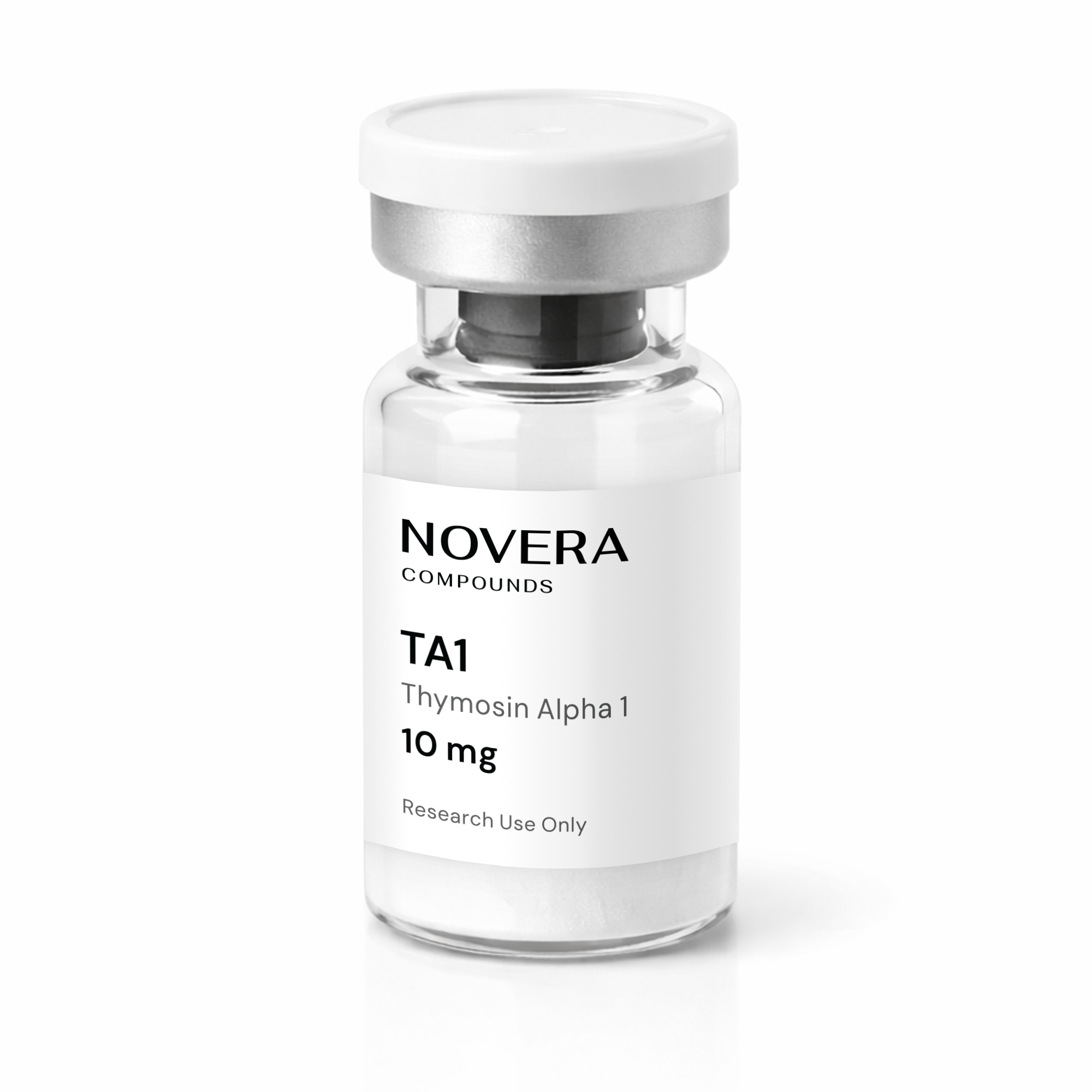
Thymosin Alpha-1
All products are 100% genuine and sourced from trusted manufacturers, with authenticity that can be verified for complete peace of mind.
Order exactly what you need with no minimum quantity required, whether it’s a single unit or a larger order.
Your order is guaranteed to arrive safely, with full shipment tracking and dedicated support to ensure a smooth delivery experience.
Your payments are protected with industry-standard encryption and trusted payment providers, ensuring every transaction is safe, private, and secure.
 99% PURITY GUARANTEE
 99% PURITY GUARANTEE
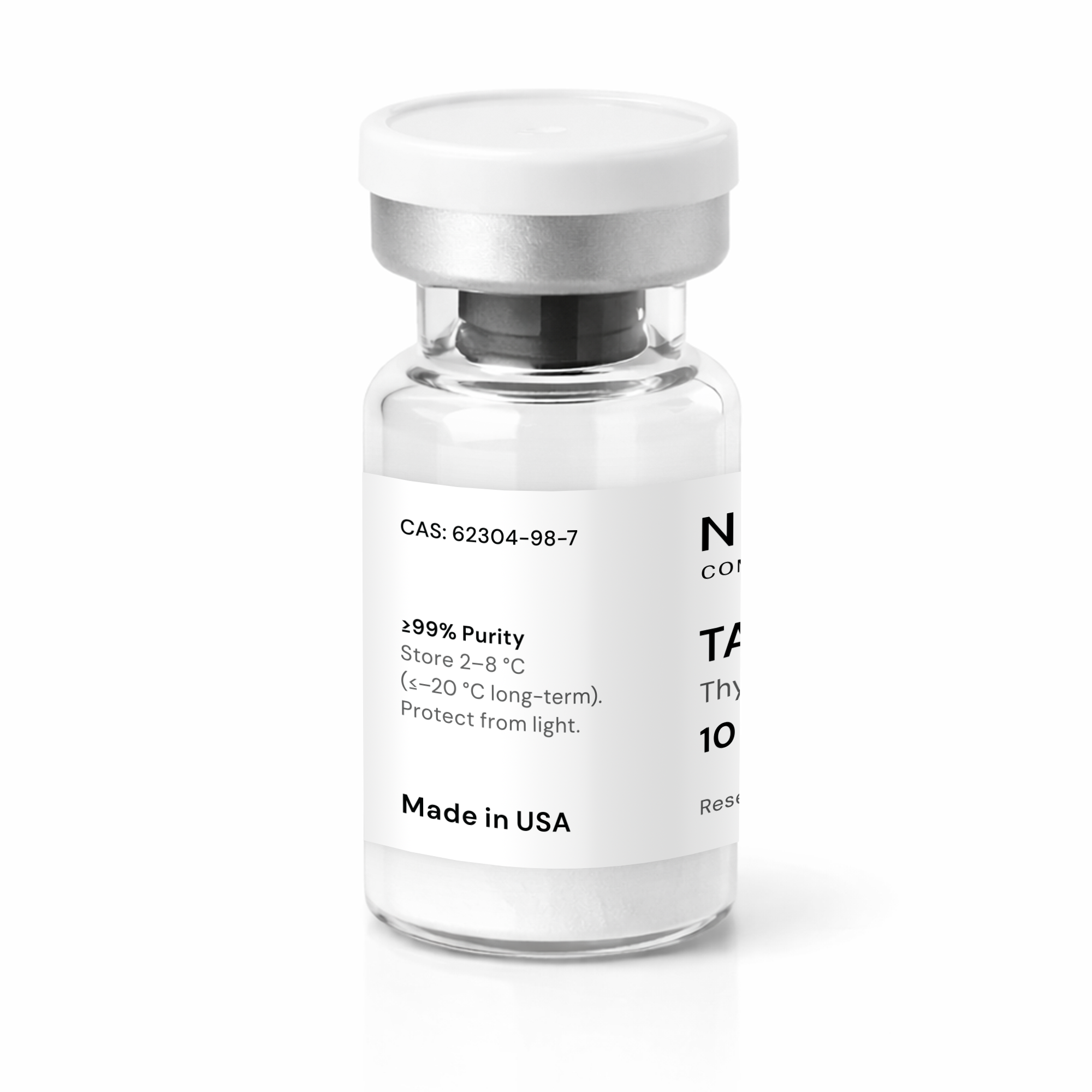
Each peptide batch is tested and verified to meet or exceed 98–99% purity (HPLC). Full analytical reports are available in the Certificate of Analysis section.
 Preparation & Handling Notice
The product is delivered in powdered (lyophilized) form and must be properly reconstituted prior to research use.
 RESEARCH USE ONLY
This product is intended for research use only. It is not for human or veterinary use, not for diagnostic or therapeutic purposes, and should only be handled by qualified professionals.
Strength: 10 mg
CAS: 62304-98-7
Chemical Formula: C₁₂₉H₂₁₅N₃₃O₅₅
Molecular weight: 3108.3 g/mol
Peptide Sequence: Ac-Ser-Asp-Ala-Ala-Val-Asp-Thr-Ser-Ser-Glu-Ile-Thr-Thr-Lys-Asp-Leu-Lys-Glu-Lys-Lys-Glu-Val-Val-Glu-Glu-Ala-Glu-Asn-OH
Synonyms: Thymalfasin
Storage: Store 2–8 °C (≤–20 °C long-term). RT exposure during transport acceptable. Protect from light.
Shelf life: 24 months from the manufacturing date.
Thymosin Alpha 1 (TA1) is a synthetic 28 amino acid thymic peptide categorized among immune and thymic research peptides. Research suggests that it enhances T cell maturation, dendritic cell function, NK cytotoxicity, and cytokine balance (e.g., IFN γ↑, TNF α↓), while modulating MHC expression and viral replication in preclinical models and clinical trials for hepatitis, melanoma, and sepsis.
-
Cold chain shipping available for temperature-sensitive products.
-
Orders are processed within 1–2 business days.
-
Delivery timelines vary by destination and shipping method — view our Shipping Policy for region-specific estimates.
-
Tracking information will be provided once shipped.
-
No order minimum applies.
-
If your shipment is delayed, lost, or arrives damaged, you're covered under our Refund & Replacement Policy.
We accept Visa, Mastercard, and American Express. Apple Pay and Google Pay are available upon request via your account manager.
All transactions are processed through a secure, PCI DSS–compliant system to ensure your data is fully protected.
Why Choose NOVERA COMPOUNDS Peptides?
Novera Research delivers high-quality research peptides developed under strict manufacturing and quality-control standards. Each product is carefully synthesized, tested, and handled to ensure consistency, reliability, and transparency for advanced research applications.
- High-purity, research-grade peptide synthesis
- Analytical testing to verify quality and composition
- Consistent batch-to-batch performance
- Batch identification on every vial for traceability
- Stored and shipped under controlled conditions
 High-purity, research-grade peptide synthesis

Why Choose Medica Depot
Shop hundreds of medical products with no minimums and free shipping on large orders.
 400+ products
 No order minimums
 Free shipping
 Loyalty rewards
 Trusted since 2007
 Account manager
 Verified LOT numbers
INFORMATION
What is Thymosin Alpha 1 (TA1) (10 mg)?
Thymosin Alpha 1 (TA1), also known as thymalfasin, is a naturally occurring peptide made up of 28 amino acids. It is commonly used in research focused on immune system functions, particularly T-cell development, dendritic cell activity, and cytokine signaling in models of viral infections, cancer, and immune dysregulation.
In laboratory studies, TA1 (or Thymalfasin) is used to explore its effects on immune responses, such as T-cell activation, natural killer (NK) cell activity, and the immune system’s response to infections or vaccines.
Product Specifications
- CAS Number: 62304-98-7
- Peptide Sequence:
Ac-Ser-Asp-Ala-Ala-Val-Asp-Thr-Ser-Ser-Glu-Ile-Thr-Thr-Lys-Asp-Leu-Lys-Glu-Lys-Lys-Glu-Val-Val-Glu-Glu-Ala-Glu-Asn-OH - Chemical Formula: C₁₂₉H₂₁₅N₃₃O₅₅
- Molecular Weight: 3108.3 g/mol
- Purity: Research-grade peptide, typically ≥98% pure, confirmed by HPLC and mass spectrometry. Detailed lot-specific results are provided in the certificate of analysis (COA).
- Packaging Format: 10 mg lyophilized (freeze-dried) TA1 in a sealed vial, suitable for use in immune assays and preclinical research.
- Storage Conditions: Store at −20 °C, protected from light and moisture. Limit temperature cycling to help maintain stability.
- Intended Use: For laboratory research use only; not for human or veterinary use.
Key Characteristics of Thymosin Alpha 1 (TA1) (10 mg)
- Thymus-Derived Peptide: TA1 is a thymus-derived peptide known for its ability to influence immune functions, including T-cell activity, dendritic cell maturation, and NK cell responses. It is commonly studied in relation to immune signaling pathways, such as those linked to innate immunity.
- Viral Infection Research: In viral infection models, TA1 has been studied for its effects on MHC class I expression (important for immune cell recognition) and antigen presentation. It is also used to track viral replication and immune system recognition in controlled experiments.
- Cytokine Balance and Immune Health: TA1 is often examined for its effects on cytokine profiles, including pro-inflammatory markers (e.g., IL-1β, TNF-α) and immune-supporting cytokines (e.g., IFN-γ). This makes it valuable in research on immune health and balance.
- Preclinical Research Context: TA1 has been used in preclinical models of viral hepatitis, melanoma, and liver cancer to study immune responses, including T-cell and NK cell activation. These studies help inform future research hypotheses, though outcomes vary depending on the research design and model used.
- Research-Ready Analytical Verification: Each batch of TA1 comes with detailed supporting documentation (COA, HPLC/MS confirmation), ensuring reliable results across cell-based assays, animal studies, and biomarker-focused research.
How Thymosin Alpha 1 (TA1) (10 mg) Supports Research
TA1 (10 mg) is used in research to investigate how this thymus peptide affects immune cell coordination and function. It is particularly useful in studies investigating:
- T-cell recovery after immune challenges
- Dendritic cell activity and antigen processing
- NK cell activation
- Shifts in cytokine networks during infections, inflammation, or cancer
Because TA1 is studied in both preclinical and clinical research, it is often included in experiments on immune priming, vaccine development, immune dysregulation, and immunotherapy. However, it is important to note that TA1 does not imply any established therapeutic benefits.
Research Applications & Usage Information
- Viral Infection Models (e.g., hepatitis B/C, HIV, COVID-19): Used to measure immune recovery, cytokine levels, and virus-related markers in chronic or acute infections, often in comparison with antiviral treatments.
- Cancer Immunology (e.g., melanoma, lung cancer, liver cancer): Used in studies of NK cell and dendritic cell activation, antigen presentation, immune-cell infiltration, and tumor-immune interactions.
- Dendritic Cell and Macrophage Maturation: Applied in immune-cell cultures to measure the activation of immune pathways (e.g., MAPK/JAK/NF-κB) and cytokine production, such as IL-12 and IFN-γ.
- Sepsis and Immune Dysregulation: Tested in models of sepsis to study immune recovery, cytokine balance, and survival rates under controlled conditions.
- Vaccine Enhancement: Evaluated as a potential tool to boost vaccine responses by enhancing antibody levels and T-cell activity.
Note: All experimental parameters (such as concentration, exposure time, and model selection) must be defined by qualified researchers in accordance with ethical and regulatory guidelines. No dosing or clinical advice is provided.
Handling and Storage Recommendations
- Store the sealed vial at −20 °C, protected from light and moisture.
- Allow the vial to reach room temperature before opening to prevent condensation.
- Handle using standard lab safety protocols (PPE) and follow good laboratory practices for handling bioactive peptides.
- When preparing solutions, follow your institution’s established procedures for solvent selection, labeling, storage, and disposal.
- Discard any prepared material that shows visible changes (e.g., cloudiness) or exceeds validated research stability protocols.
Research Use Only Notice
This product is intended for laboratory research use only and is not approved for human or veterinary use. It is not intended for diagnostic, therapeutic, or clinical applications. Any reference to biological activity or potential effects is based solely on preclinical or in‑vitro findings and should not be interpreted as validated clinical outcomes. Researchers are responsible for ensuring proper handling, storage, and disposal in accordance with institutional, federal, and international guidelines.
References
- Romani L, Bistoni F, Gaziano R, et al. Thymosin alpha 1 activates dendritic cells for antifungal Th1 resistance through toll-like receptor signaling. Blood. 2004;103(11):4232-4239. doi:10.1182/blood-2003-11-4036
- Peng R, Xu C, Zheng H, Lao X. Modified Thymosin Alpha 1 Distributes and Inhibits the Growth of Lung Cancer in Vivo. ACS Omega. 2020;5(18):10374-10381. Published 2020 Apr 27. doi:10.1021/acsomega.0c00220
- Matteucci C, Minutolo A, Balestrieri E, et al. Thymosin Alpha 1 Mitigates Cytokine Storm in Blood Cells From Coronavirus Disease 2019 Patients. Open Forum Infect Dis. 2020;8(1):ofaa588. Published 2020 Dec 5. doi:10.1093/ofid/ofaa588
- Solmonese L, Lofiego MF, Fazio C, et al. The Immunomodulatory Activity of Thymosin Alpha 1 on Tumor Cell Lines and Distinct Immune Cell Subsets. Onco Targets Ther. 2025;18:995-1012. Published 2025 Sep 10. doi:10.2147/OTT.S527785
- Li J, Liu CH, Wang FS. Thymosin alpha 1: biological activities, applications and genetic engineering production. Peptides. 2010;31(11):2151-2158. doi:10.1016/j.peptides.2010.07.026
What is Thymosin Alpha 1 (TA1) (10 mg)?
Thymosin Alpha 1 (TA1), also known as thymalfasin, is a naturally occurring peptide made up of 28 amino acids. It is commonly used in research focused on immune system functions, particularly T-cell development, dendritic cell activity, and cytokine signaling in models of viral infections, cancer, and immune dysregulation.
In laboratory studies, TA1 (or Thymalfasin) is used to explore its effects on immune responses, such as T-cell activation, natural killer (NK) cell activity, and the immune system’s response to infections or vaccines.
Product Specifications
- CAS Number: 62304-98-7
- Peptide Sequence:
Ac-Ser-Asp-Ala-Ala-Val-Asp-Thr-Ser-Ser-Glu-Ile-Thr-Thr-Lys-Asp-Leu-Lys-Glu-Lys-Lys-Glu-Val-Val-Glu-Glu-Ala-Glu-Asn-OH - Chemical Formula: C₁₂₉H₂₁₅N₃₃O₅₅
- Molecular Weight: 3108.3 g/mol
- Purity: Research-grade peptide, typically ≥98% pure, confirmed by HPLC and mass spectrometry. Detailed lot-specific results are provided in the certificate of analysis (COA).
- Packaging Format: 10 mg lyophilized (freeze-dried) TA1 in a sealed vial, suitable for use in immune assays and preclinical research.
- Storage Conditions: Store at −20 °C, protected from light and moisture. Limit temperature cycling to help maintain stability.
- Intended Use: For laboratory research use only; not for human or veterinary use.
Key Characteristics of Thymosin Alpha 1 (TA1) (10 mg)
- Thymus-Derived Peptide: TA1 is a thymus-derived peptide known for its ability to influence immune functions, including T-cell activity, dendritic cell maturation, and NK cell responses. It is commonly studied in relation to immune signaling pathways, such as those linked to innate immunity.
- Viral Infection Research: In viral infection models, TA1 has been studied for its effects on MHC class I expression (important for immune cell recognition) and antigen presentation. It is also used to track viral replication and immune system recognition in controlled experiments.
- Cytokine Balance and Immune Health: TA1 is often examined for its effects on cytokine profiles, including pro-inflammatory markers (e.g., IL-1β, TNF-α) and immune-supporting cytokines (e.g., IFN-γ). This makes it valuable in research on immune health and balance.
- Preclinical Research Context: TA1 has been used in preclinical models of viral hepatitis, melanoma, and liver cancer to study immune responses, including T-cell and NK cell activation. These studies help inform future research hypotheses, though outcomes vary depending on the research design and model used.
- Research-Ready Analytical Verification: Each batch of TA1 comes with detailed supporting documentation (COA, HPLC/MS confirmation), ensuring reliable results across cell-based assays, animal studies, and biomarker-focused research.
How Thymosin Alpha 1 (TA1) (10 mg) Supports Research
TA1 (10 mg) is used in research to investigate how this thymus peptide affects immune cell coordination and function. It is particularly useful in studies investigating:
- T-cell recovery after immune challenges
- Dendritic cell activity and antigen processing
- NK cell activation
- Shifts in cytokine networks during infections, inflammation, or cancer
Because TA1 is studied in both preclinical and clinical research, it is often included in experiments on immune priming, vaccine development, immune dysregulation, and immunotherapy. However, it is important to note that TA1 does not imply any established therapeutic benefits.
Research Applications & Usage Information
- Viral Infection Models (e.g., hepatitis B/C, HIV, COVID-19): Used to measure immune recovery, cytokine levels, and virus-related markers in chronic or acute infections, often in comparison with antiviral treatments.
- Cancer Immunology (e.g., melanoma, lung cancer, liver cancer): Used in studies of NK cell and dendritic cell activation, antigen presentation, immune-cell infiltration, and tumor-immune interactions.
- Dendritic Cell and Macrophage Maturation: Applied in immune-cell cultures to measure the activation of immune pathways (e.g., MAPK/JAK/NF-κB) and cytokine production, such as IL-12 and IFN-γ.
- Sepsis and Immune Dysregulation: Tested in models of sepsis to study immune recovery, cytokine balance, and survival rates under controlled conditions.
- Vaccine Enhancement: Evaluated as a potential tool to boost vaccine responses by enhancing antibody levels and T-cell activity.
Note: All experimental parameters (such as concentration, exposure time, and model selection) must be defined by qualified researchers in accordance with ethical and regulatory guidelines. No dosing or clinical advice is provided.
Handling and Storage Recommendations
- Store the sealed vial at −20 °C, protected from light and moisture.
- Allow the vial to reach room temperature before opening to prevent condensation.
- Handle using standard lab safety protocols (PPE) and follow good laboratory practices for handling bioactive peptides.
- When preparing solutions, follow your institution’s established procedures for solvent selection, labeling, storage, and disposal.
- Discard any prepared material that shows visible changes (e.g., cloudiness) or exceeds validated research stability protocols.
Research Use Only Notice
This product is intended for laboratory research use only and is not approved for human or veterinary use. It is not intended for diagnostic, therapeutic, or clinical applications. Any reference to biological activity or potential effects is based solely on preclinical or in‑vitro findings and should not be interpreted as validated clinical outcomes. Researchers are responsible for ensuring proper handling, storage, and disposal in accordance with institutional, federal, and international guidelines.
References
- Romani L, Bistoni F, Gaziano R, et al. Thymosin alpha 1 activates dendritic cells for antifungal Th1 resistance through toll-like receptor signaling. Blood. 2004;103(11):4232-4239. doi:10.1182/blood-2003-11-4036
- Peng R, Xu C, Zheng H, Lao X. Modified Thymosin Alpha 1 Distributes and Inhibits the Growth of Lung Cancer in Vivo. ACS Omega. 2020;5(18):10374-10381. Published 2020 Apr 27. doi:10.1021/acsomega.0c00220
- Matteucci C, Minutolo A, Balestrieri E, et al. Thymosin Alpha 1 Mitigates Cytokine Storm in Blood Cells From Coronavirus Disease 2019 Patients. Open Forum Infect Dis. 2020;8(1):ofaa588. Published 2020 Dec 5. doi:10.1093/ofid/ofaa588
- Solmonese L, Lofiego MF, Fazio C, et al. The Immunomodulatory Activity of Thymosin Alpha 1 on Tumor Cell Lines and Distinct Immune Cell Subsets. Onco Targets Ther. 2025;18:995-1012. Published 2025 Sep 10. doi:10.2147/OTT.S527785
- Li J, Liu CH, Wang FS. Thymosin alpha 1: biological activities, applications and genetic engineering production. Peptides. 2010;31(11):2151-2158. doi:10.1016/j.peptides.2010.07.026
Related products