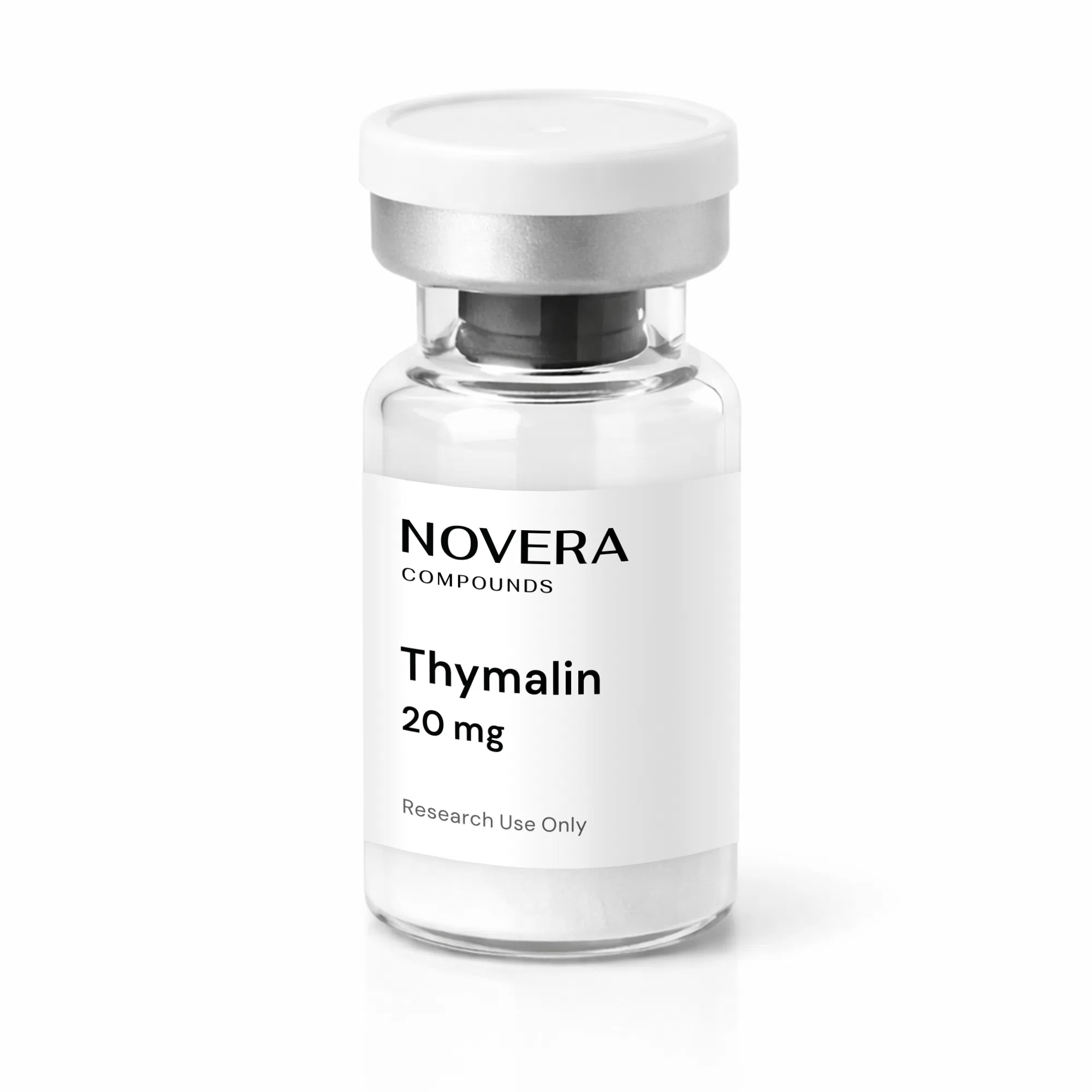
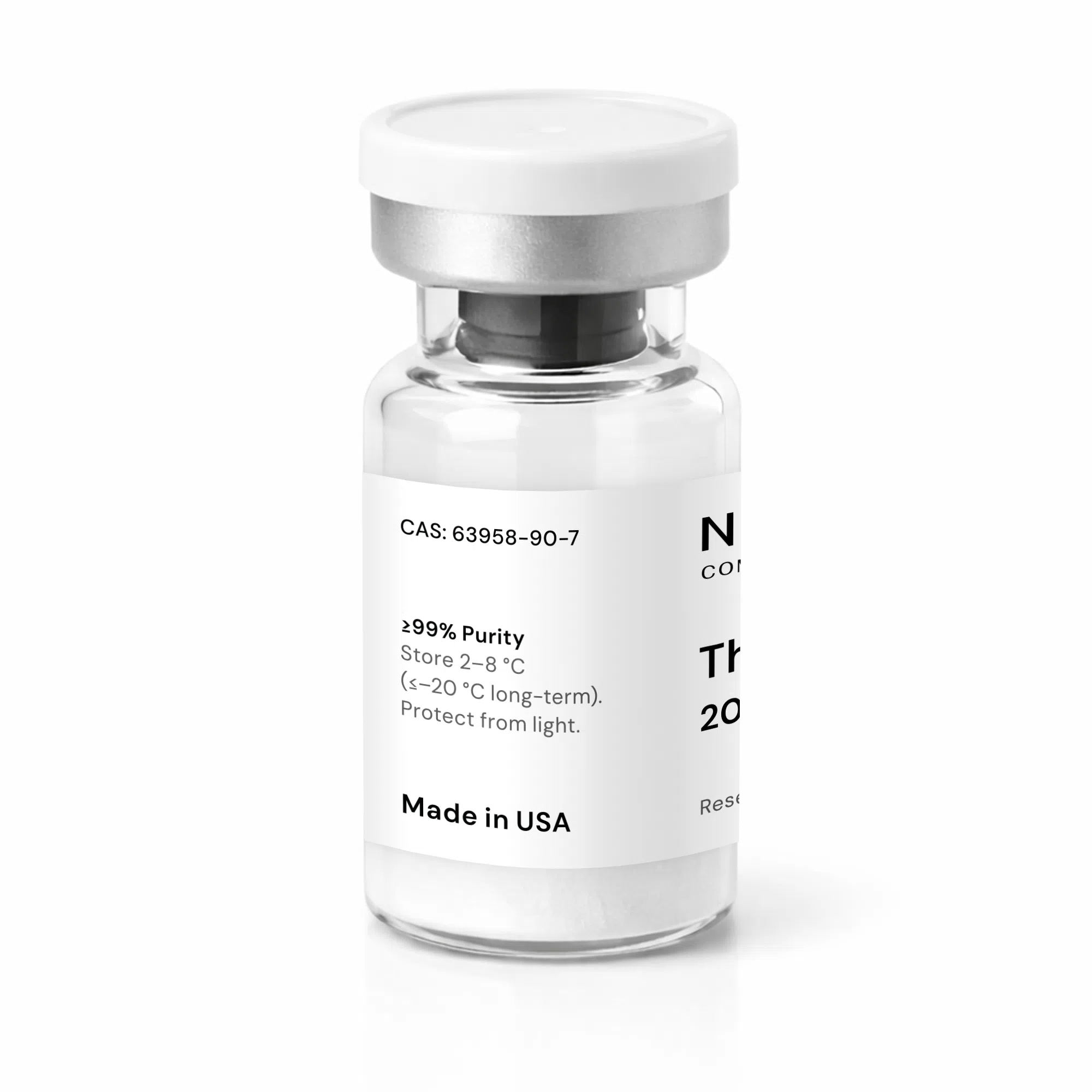
Thymalin 20mg
Strength: 20 mg
CAS: 63958-90-7
Chemical Formula: C₃₃H₅₄N₁₂O₁₅
Molecular weight: 858.864 g/mol
Peptide Sequence: Pyr-Ala-Lys-Ser-Gln-Gly-Gly-Ser-Asn
Synonyms: Thymulin
Storage: Store 2–8 °C (≤–20 °C long-term). RT exposure during transport acceptable. Protect from light.
Shelf life: 24 months from the manufacturing date.
Thymalin is a synthetic nonapeptide related to thymulin and is classified among immune and thymic research peptides. Research explores its effects on T-cell differentiation, NK cell activity, cytokine signaling, and neuroimmune interactions in preclinical models, with zinc influencing its structure and thymocyte maturation.


Why Choose Medica Depot
Shop hundreds of medical products with no minimums and free shipping on large orders.
 400+ products
 No order minimums
 Free shipping
 Loyalty rewards
 Trusted since 2007
 Account manager
 Verified LOT numbers
INFORMATION
What is Thymalin (20 mg)?
Thymalin (20 mg) is a synthetic peptide made up of 9 amino acids (the building blocks of proteins). Its structure is similar to that of a natural hormone called thymulin, produced by the thymus gland and helping regulate the immune system.
Thymalin is often used in research to study how the thymus supports immune function, helps T-cells (a type of white blood cell) develop, and influences immune cell signaling.
In laboratory studies, Thymalin is used to understand how thymus-related factors, including zinc, affect immune cells and their functions.
Product Specifications
- CAS Number: 63958-90-7
- Peptide Sequence: Pyr-Ala-Lys-Ser-Gln-Gly-Gly-Ser-Asn
- Chemical Formula: C₃₃H₅₄N₁₂O₁₅
- Molecular Weight: 858.864 g/mol
- Purity: High purity (≥98–99%) confirmed by laboratory testing, including HPLC and mass spectrometry.
- Packaging Format: 20 mg lyophilized (freeze-dried) Thymalin in a sealed vial. This format is suitable for research studies, including immune-cell testing and preclinical models.
- Storage Conditions: Store at −20 °C, protected from light and moisture. Minimize temperature cycling to help maintain stability.
- Intended Use: For laboratory research use only; not for human or veterinary use.
Key Characteristics of Thymalin (20 mg)
- Thymulin-Related Peptide: Thymalin is modeled after the natural thymulin hormone. Thymulin helps support the immune system by depending on zinc, an essential nutrient for its function.
- Zinc-Dependent Research: Many studies have shown that Thymalin activity is linked to zinc levels. Zinc plays a crucial role in how Thymalin affects T-cell development, immune responses, and cytokine levels in the body.
- Focus on Immune-Cell Development: Thymalin is used to study how T-cells mature and how other immune cells are affected by thymus function. It’s also used to study natural killer (NK) cells, which help fight infections.
- Neuroimmune and Circadian Research: Thymalin is also used in studies examining how the immune system interacts with other systems, such as the nervous system, and how these interactions may change with circadian rhythms (the body’s natural cycles), stress, or aging.
How Thymalin (20 mg) Supports Research
Thymalin helps researchers study how the thymus (the organ that produces T-cells) regulates the immune system. Because Thymalin is zinc-dependent, it allows scientists to see how different zinc levels influence immune cell functions, such as T-cell development and cytokine signaling.
It is frequently used in research related to immune system aging, immune responses to stress, and the body’s response to tumors and infections. Researchers use Thymalin to explore how the thymus might affect immune changes during these processes.
Research Applications & Usage Information
- T-cell and Thymocyte Development: Thymalin is used in cell cultures to track T-cell development and study how they mature, grow, and die.
- Lymphocyte Profiling: It is used in flow cytometry studies to measure different types of immune cells (such as T cells and NK cells) and how they respond to cytokines (proteins that regulate immune responses).
- Zinc-Dependent Immunomodulation: Researchers use Thymalin to study how changes in zinc levels affect the function of thymic peptides and immune cell activity.
- Neuroimmune and Circadian Studies: Thymalin is used in research examining how the immune system interacts with the nervous system and how immune cell behavior may change with the time of day or under stress.
- Tumor-Immune and Stress Models: It’s also used in animal models to study the body’s immune response to stress, radiation, or tumors, and how the thymus contributes to immune surveillance during these conditions.
Note: All experimental parameters (e.g., concentrations, timing, and models) should be defined by qualified researchers in accordance with ethical and regulatory guidelines. No clinical advice or dosing recommendations are provided.
Handling and Storage Recommendations
- Store the sealed vial at −20 °C, protected from light and moisture.
- Allow the vial to reach room temperature before opening to reduce condensation.
- Use standard laboratory safety equipment (PPE) and follow good laboratory practices when handling bioactive peptides.
- When preparing research solutions, follow your institution’s procedures for solvent selection, labeling, storage, and disposal.
- Discard any prepared material that shows visible changes, such as cloudiness, or that exceeds the recommended stability period.
Research Use Only Notice
This product is intended for laboratory research use only and is not approved for human or veterinary use. It is not intended for diagnostic, therapeutic, or clinical applications. Any reference to biological activity or potential effects is based solely on preclinical or in‑vitro findings and should not be interpreted as validated clinical outcomes. Researchers are responsible for ensuring proper handling, storage, and disposal in accordance with institutional, federal, and international guidelines.
References
- Dardenne M, Pleau JM. Interactions between zinc and thymulin. Met Based Drugs. 1994;1(2-3):233-239. doi:10.1155/MBD.1994.233
- Bach JF, Dardenne M, Pleau JM, Rosa J. Biochemical characterisation of a serum thymic factor. Nature. 1977;266(5597):55-57. doi:10.1038/266055a0
- Hrinevych IuIa, Bendiuh HD, Khranovs’ka NM, Bilokin’ IuM, Ostapenko OM. Vplyv tyroksynu i tymalinu na proliferatsiiu ta apoptoz tymotsytiv u shchuriv pislia tyreoïdektomiï [Effect of thyroxin and thymalin on proliferation and apoptosis of thymocytes in rats after thyroidectomy]. Fiziol Zh (1994). 2004;50(3):39-43.
- Zhukova GV, Schikhlyarova AI, Barteneva TA, Shevchenko AN, Zakharyuta FM. Effect of Thymalin on the Tumor and Thymus under Conditions of Activation Therapy In Vivo. Bull Exp Biol Med. 2018;165(1):80-83. doi:10.1007/s10517-018-4104-z
- Labunets’ IF. Vikovi zminy tsyrkadnykh i tsyrkanual’nykh kolyvan’ velychyny imunnoï vidpovidi ta chysla klityn u limfoïdnykh orhanakh tvaryn: mozhlyvyĭ zv’iazok z faktoramy tymusa [Age-related changes in circadian and circannual fluctuations of the immune response and the number of cells in lymphoid organs of animals: a possible connection to thymic factors]. Fiziol Zh (1994). 2001;47(5):54-62.
What is Thymalin (20 mg)?
Thymalin (20 mg) is a synthetic peptide made up of 9 amino acids (the building blocks of proteins). Its structure is similar to that of a natural hormone called thymulin, produced by the thymus gland and helping regulate the immune system.
Thymalin is often used in research to study how the thymus supports immune function, helps T-cells (a type of white blood cell) develop, and influences immune cell signaling.
In laboratory studies, Thymalin is used to understand how thymus-related factors, including zinc, affect immune cells and their functions.
Product Specifications
- CAS Number: 63958-90-7
- Peptide Sequence: Pyr-Ala-Lys-Ser-Gln-Gly-Gly-Ser-Asn
- Chemical Formula: C₃₃H₅₄N₁₂O₁₅
- Molecular Weight: 858.864 g/mol
- Purity: High purity (≥98–99%) confirmed by laboratory testing, including HPLC and mass spectrometry.
- Packaging Format: 20 mg lyophilized (freeze-dried) Thymalin in a sealed vial. This format is suitable for research studies, including immune-cell testing and preclinical models.
- Storage Conditions: Store at −20 °C, protected from light and moisture. Minimize temperature cycling to help maintain stability.
- Intended Use: For laboratory research use only; not for human or veterinary use.
Key Characteristics of Thymalin (20 mg)
- Thymulin-Related Peptide: Thymalin is modeled after the natural thymulin hormone. Thymulin helps support the immune system by depending on zinc, an essential nutrient for its function.
- Zinc-Dependent Research: Many studies have shown that Thymalin activity is linked to zinc levels. Zinc plays a crucial role in how Thymalin affects T-cell development, immune responses, and cytokine levels in the body.
- Focus on Immune-Cell Development: Thymalin is used to study how T-cells mature and how other immune cells are affected by thymus function. It’s also used to study natural killer (NK) cells, which help fight infections.
- Neuroimmune and Circadian Research: Thymalin is also used in studies examining how the immune system interacts with other systems, such as the nervous system, and how these interactions may change with circadian rhythms (the body’s natural cycles), stress, or aging.
How Thymalin (20 mg) Supports Research
Thymalin helps researchers study how the thymus (the organ that produces T-cells) regulates the immune system. Because Thymalin is zinc-dependent, it allows scientists to see how different zinc levels influence immune cell functions, such as T-cell development and cytokine signaling.
It is frequently used in research related to immune system aging, immune responses to stress, and the body’s response to tumors and infections. Researchers use Thymalin to explore how the thymus might affect immune changes during these processes.
Research Applications & Usage Information
- T-cell and Thymocyte Development: Thymalin is used in cell cultures to track T-cell development and study how they mature, grow, and die.
- Lymphocyte Profiling: It is used in flow cytometry studies to measure different types of immune cells (such as T cells and NK cells) and how they respond to cytokines (proteins that regulate immune responses).
- Zinc-Dependent Immunomodulation: Researchers use Thymalin to study how changes in zinc levels affect the function of thymic peptides and immune cell activity.
- Neuroimmune and Circadian Studies: Thymalin is used in research examining how the immune system interacts with the nervous system and how immune cell behavior may change with the time of day or under stress.
- Tumor-Immune and Stress Models: It’s also used in animal models to study the body’s immune response to stress, radiation, or tumors, and how the thymus contributes to immune surveillance during these conditions.
Note: All experimental parameters (e.g., concentrations, timing, and models) should be defined by qualified researchers in accordance with ethical and regulatory guidelines. No clinical advice or dosing recommendations are provided.
Handling and Storage Recommendations
- Store the sealed vial at −20 °C, protected from light and moisture.
- Allow the vial to reach room temperature before opening to reduce condensation.
- Use standard laboratory safety equipment (PPE) and follow good laboratory practices when handling bioactive peptides.
- When preparing research solutions, follow your institution’s procedures for solvent selection, labeling, storage, and disposal.
- Discard any prepared material that shows visible changes, such as cloudiness, or that exceeds the recommended stability period.
Research Use Only Notice
This product is intended for laboratory research use only and is not approved for human or veterinary use. It is not intended for diagnostic, therapeutic, or clinical applications. Any reference to biological activity or potential effects is based solely on preclinical or in‑vitro findings and should not be interpreted as validated clinical outcomes. Researchers are responsible for ensuring proper handling, storage, and disposal in accordance with institutional, federal, and international guidelines.
References
- Dardenne M, Pleau JM. Interactions between zinc and thymulin. Met Based Drugs. 1994;1(2-3):233-239. doi:10.1155/MBD.1994.233
- Bach JF, Dardenne M, Pleau JM, Rosa J. Biochemical characterisation of a serum thymic factor. Nature. 1977;266(5597):55-57. doi:10.1038/266055a0
- Hrinevych IuIa, Bendiuh HD, Khranovs’ka NM, Bilokin’ IuM, Ostapenko OM. Vplyv tyroksynu i tymalinu na proliferatsiiu ta apoptoz tymotsytiv u shchuriv pislia tyreoïdektomiï [Effect of thyroxin and thymalin on proliferation and apoptosis of thymocytes in rats after thyroidectomy]. Fiziol Zh (1994). 2004;50(3):39-43.
- Zhukova GV, Schikhlyarova AI, Barteneva TA, Shevchenko AN, Zakharyuta FM. Effect of Thymalin on the Tumor and Thymus under Conditions of Activation Therapy In Vivo. Bull Exp Biol Med. 2018;165(1):80-83. doi:10.1007/s10517-018-4104-z
- Labunets’ IF. Vikovi zminy tsyrkadnykh i tsyrkanual’nykh kolyvan’ velychyny imunnoï vidpovidi ta chysla klityn u limfoïdnykh orhanakh tvaryn: mozhlyvyĭ zv’iazok z faktoramy tymusa [Age-related changes in circadian and circannual fluctuations of the immune response and the number of cells in lymphoid organs of animals: a possible connection to thymic factors]. Fiziol Zh (1994). 2001;47(5):54-62.
Related products