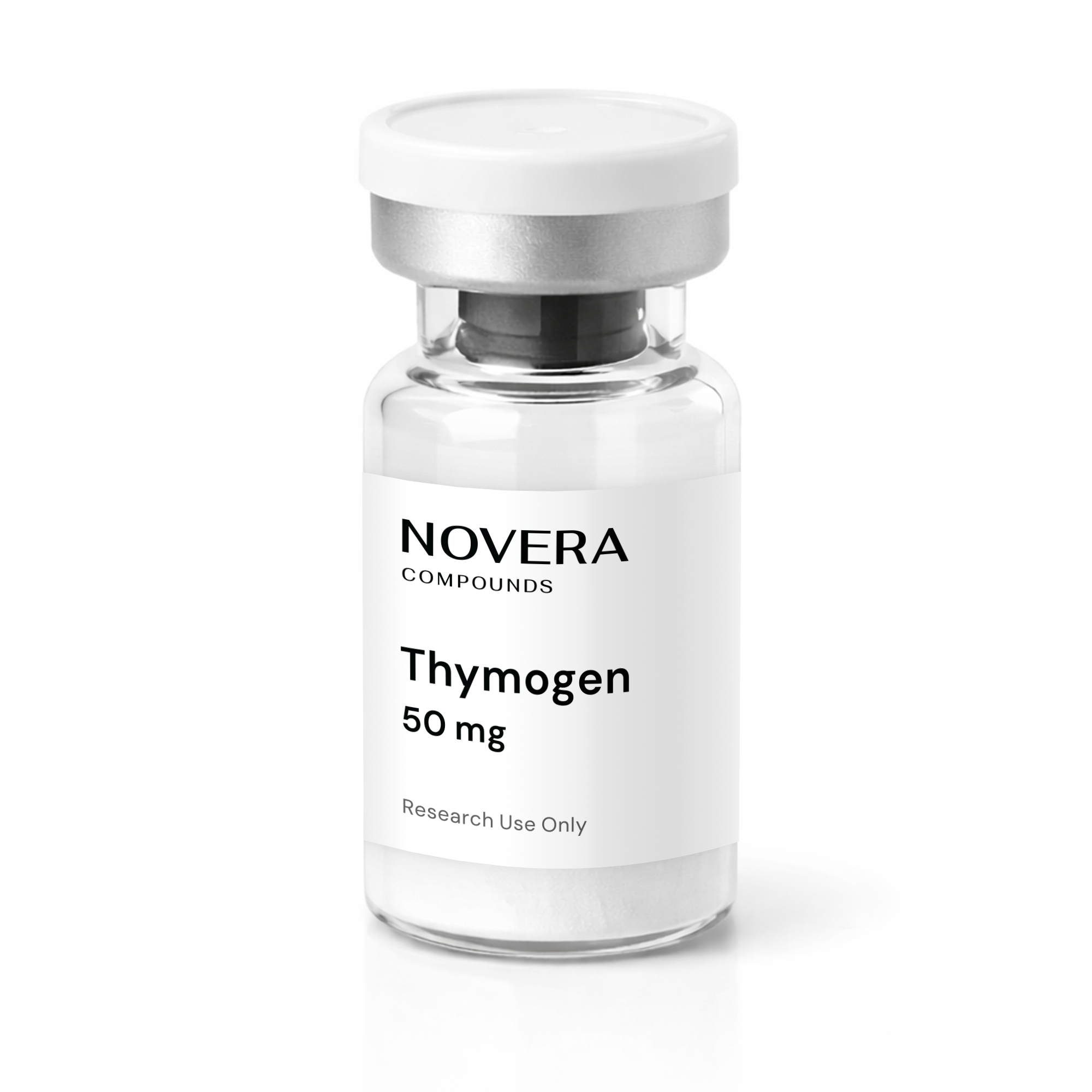
Thymagen(Thymogen) (50mg)
All products are 100% genuine and sourced from trusted manufacturers, with authenticity that can be verified for complete peace of mind.
Order exactly what you need with no minimum quantity required, whether it’s a single unit or a larger order.
Your order is guaranteed to arrive safely, with full shipment tracking and dedicated support to ensure a smooth delivery experience.
Your payments are protected with industry-standard encryption and trusted payment providers, ensuring every transaction is safe, private, and secure.
 99% PURITY GUARANTEE
 99% PURITY GUARANTEE
Each peptide batch is tested and verified to meet or exceed 98–99% purity (HPLC). Full analytical reports are available in the Certificate of Analysis section.
 Preparation & Handling Notice
The product is delivered in powdered (lyophilized) form and must be properly reconstituted prior to research use.
 RESEARCH USE ONLY
This product is intended for research use only. It is not for human or veterinary use, not for diagnostic or therapeutic purposes, and should only be handled by qualified professionals.
Strength: 50 mg
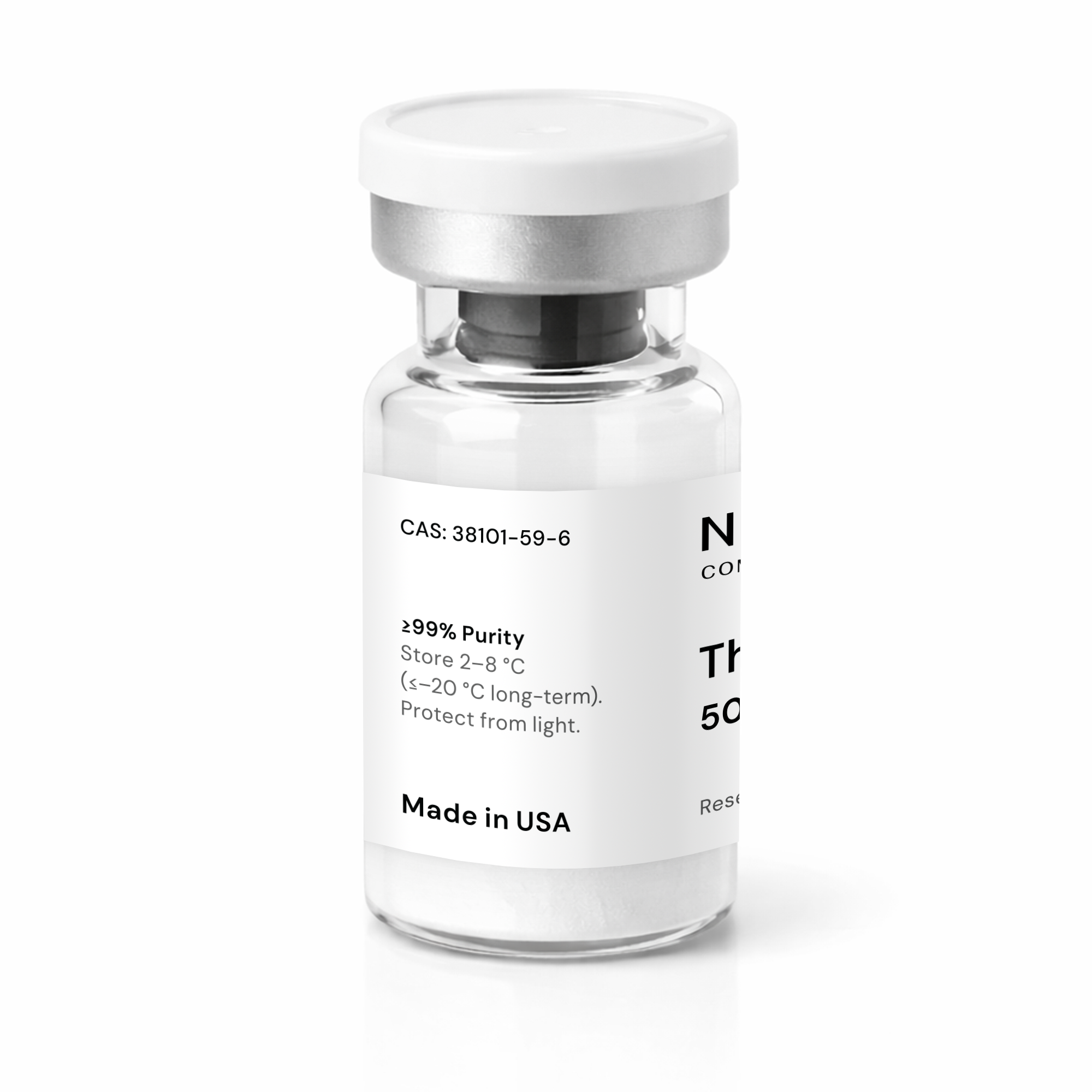
CAS: 38101-59-6
Chemical Formula: C₁₆H₁₉N₃O₅
Molecular weight: 333.34 g/mol
Peptide Sequence: H-Glu-Trp-OH
Synonyms: Thymagen
Storage: Store 2–8 °C (≤–20 °C long-term). RT exposure during transport acceptable. Protect from light.
Shelf life: 24 months from the manufacturing date.
Thymagen (Thymogen) is a synthetic dipeptide bioregulator made from glutamic acid and tryptophan, modeled after natural thymus peptides. Research explores how it affects cell signaling, T-cell development, interferon pathways, and immune responses in lab models of infection, radiation, and tumors.
-
Cold chain shipping available for temperature-sensitive products.
-
Orders are processed within 1–2 business days.
-
Delivery timelines vary by destination and shipping method — view our Shipping Policy for region-specific estimates.
-
Tracking information will be provided once shipped.
-
No order minimum applies.
-
If your shipment is delayed, lost, or arrives damaged, you're covered under our Refund & Replacement Policy.
We accept Visa, Mastercard, and American Express. Apple Pay and Google Pay are available upon request via your account manager.
All transactions are processed through a secure, PCI DSS–compliant system to ensure your data is fully protected.
Why Choose NOVERA COMPOUNDS Peptides?
Novera Research delivers high-quality research peptides developed under strict manufacturing and quality-control standards. Each product is carefully synthesized, tested, and handled to ensure consistency, reliability, and transparency for advanced research applications.
- High-purity, research-grade peptide synthesis
- Analytical testing to verify quality and composition
- Consistent batch-to-batch performance
- Batch identification on every vial for traceability
- Stored and shipped under controlled conditions
 High-purity, research-grade peptide synthesis

Why Choose Medica Depot
Shop hundreds of medical products with no minimums and free shipping on large orders.
 400+ products
 No order minimums
 Free shipping
 Loyalty rewards
 Trusted since 2007
 Account manager
 Verified LOT numbers
INFORMATION
What is Thymagen (Thymogen) (50 mg)?
Thymagen (also known as Thymogen) (50 mg) is a synthetic dipeptide bioregulator composed of two amino acids: glutamic acid and tryptophan (Glu–Trp; H-Glu-Trp-OH). It is commonly categorized as an immune and thymic peptide because it is frequently used in research focused on thymus-related immune development, lymphocyte signaling, and immune-cell maturation in experimental models.
In laboratory settings, Thymagen serves as a simplified model of thymic regulatory peptides. Its short, well-defined structure allows researchers to study how small peptide signals influence immune signaling networks and gene-expression patterns, without the complexity of larger thymic proteins.
Product Specifications
- CAS Number: 38101-59-6
- Peptide Sequence: H-Glu-Trp-OH (Glu-Trp; EW)
- Chemical Formula: C₁₆H₁₉N₃O₅
- Molecular Weight: 333.34 g/mol
- Purity: Research-grade synthetic dipeptide, typically ≥98–99% by HPLC. Identity and molecular mass are confirmed by chromatographic methods and mass spectrometry, with lot-specific details provided in the certificate of analysis (COA).
- Packaging Format: 50 mg lyophilized (freeze-dried) Thymagen in a sealed vial, suitable for extended cell-based work, animal studies, or multi-condition in vitro assays.
- Storage Conditions: Store at −20 °C, protected from light and moisture. Reduce temperature cycling to help maintain integrity and consistent assay performance.
- Intended Use: For laboratory research use only; not for human or veterinary use.
Key Characteristics of Thymagen (Thymogen) (50 mg)
- Minimal, Low-Molecular-Weight Dipeptide: Derived from thymic peptide fraction research and used as a small, defined scaffold for studying thymus-related regulatory signaling and peptide–receptor/peptidase interactions.
- Second-Messenger Research Relevance: Investigated for effects on intracellular cAMP/cGMP balance and phosphodiesterase activity in lymphoid cells, supporting studies of second-messenger regulation.
- T-cell Maturation and Differentiation Models: Used in the thymus and spleen systems to explore T-lymphocyte precursor development, differentiation markers, and shifts toward immunocompetent phenotypes.
- Cytokine and Interferon-Linked Signaling: Associated in preclinical literature with interferon-related pathways and broader cytokine responses, making it useful for studying coordination between innate and adaptive immune signaling.
- Research-Ready Characterization: Supplied as lyophilized material with standard analytical verification (e.g., HPLC/MS data and COA), supporting reproducible use in immune biochemistry and systems immunology workflows.
How Thymagen (Thymogen) (50 mg) Supports Research
Thymagen is a practical model compound for studying thymic regulatory peptides in a controlled way. As a short, well-defined dipeptide, it allows researchers to test how thymus-linked peptide signals may influence cyclic nucleotide pathways, downstream kinase activity, and related gene-expression programs involved in immune maturation.
As an immune and thymic peptide, it is often included in studies examining how small peptides may affect T-cell development, interferon signaling, and immune surveillance in research models of aging, infection, and physiological stress—without implying clinical benefit.
Research Applications & Usage Information
- Second-Messenger and Kinase Signaling Studies: Used to measure changes in cAMP/cGMP levels, phosphodiesterase activity, and downstream signaling readouts (often linked to pathways such as PKA/PKG) in thymus or spleen lymphocyte systems.
- T-lymphocyte Differentiation Models: Applied in thymus and spleen preparations to track T-cell precursor transitions, differentiation markers, and functional traits of emerging lymphocyte subsets.
- Cytokine and Interferon Pathway Assays: Included in in vitro and in vivo experiments that evaluate interferon-associated signaling, cytokine transcription patterns, and broader immune response coordination.
- Host-Response and Infection Models: Used in controlled challenge paradigms to study how thymic dipeptide signaling may influence immune allocation, surveillance, and recovery-related readouts during infection or immunodepression models.
- Radiation, Tumor, and Stress-Response Research: Used in rodent models involving radiation exposure, chemically induced tumorigenesis, and tissue injury to examine links between thymic peptide signaling, immune surveillance markers, and stress-related biochemical endpoints.
Important note: Experimental parameters (e.g., concentrations, exposure times, model selection, and endpoints) are determined by qualified investigators under appropriate ethical and regulatory oversight. No dosing or clinical recommendations are provided or implied.
Handling and Storage Recommendations
- Store the sealed vial at −20 °C, protected from light and moisture.
- Allow the vial to reach room temperature before opening to reduce condensation.
- Handle using standard lab PPE and follow good laboratory practices for bioactive peptides.
- When preparing solutions, follow your institution’s validated SOPs for solvent choice, labeling, aliquoting, stability controls, and disposal.
- Discard any prepared material that shows visible changes or exceeds validated stability windows.
Research Use Only Notice
This product is intended for laboratory research use only and is not approved for human or veterinary use. It is not intended for diagnostic, therapeutic, or clinical applications. Any reference to biological activity or potential effects is based solely on preclinical or in‑vitro findings and should not be interpreted as validated clinical outcomes. Researchers are responsible for ensuring proper handling, storage, and disposal in accordance with institutional, federal, and international guidelines.
References
- Khavinson V Kh, Morozov V. Peptides of Pineal Gland and Thymus Prolong Human Life. Vol 24. Neuroendocrinology Letters; 2003. https://khavinson.info/assets/files/skan/2003-khavinson_morozov1.pdf
- Demidov SV, Kostromin AN, Kuĭbeda VV, Chernaia IV, Borovok MI. [Effect of thymagen, thymalin and vilosen on the cAMP and cGMP levels and phosphodiesterase activity in spleen lymphocytes during sensitization and anaphylactic shock]. PubMed. Published August 1, 1991. https://pubmed.ncbi.nlm.nih.gov/1659006/
- Kozhemiakin AL, Morozov VG, Khavinson VK. [Participation of the cyclase system in the molecular mechanisms of differentiation control of immunocompetent cells]. PubMed. Published April 1, 1984. https://pubmed.ncbi.nlm.nih.gov/6329326/
- Silin D, Lyubomska O, Ershov F, Frolov V, Kutsyna G. Synthetic and natural immunomodulators acting as interferon inducers. Current Pharmaceutical Design. 2009;15(11):1238-1247. doi:10.2174/138161209787846847
- Anisimov VN, Miretskiĭ GI, Morozov VG, Pavel’eva IA, Khavinson VK. [The effect of the synthetic immunomodulator thymogen on radiation-induced carcinogenesis in rats]. PubMed. Published 1992. https://pubmed.ncbi.nlm.nih.gov/1300740/
- Bespalov VG, Troian DN, Petrov AS, Morozov VG, Khavinson VK. [Inhibiting effect of thymogen on the development of tumors of the esophagus and forestomach induced by N-nitrososarcosine ethyl ester in rats]. PubMed. Published 1989. https://pubmed.ncbi.nlm.nih.gov/2759010/
What is Thymagen (Thymogen) (50 mg)?
Thymagen (also known as Thymogen) (50 mg) is a synthetic dipeptide bioregulator composed of two amino acids: glutamic acid and tryptophan (Glu–Trp; H-Glu-Trp-OH). It is commonly categorized as an immune and thymic peptide because it is frequently used in research focused on thymus-related immune development, lymphocyte signaling, and immune-cell maturation in experimental models.
In laboratory settings, Thymagen serves as a simplified model of thymic regulatory peptides. Its short, well-defined structure allows researchers to study how small peptide signals influence immune signaling networks and gene-expression patterns, without the complexity of larger thymic proteins.
Product Specifications
- CAS Number: 38101-59-6
- Peptide Sequence: H-Glu-Trp-OH (Glu-Trp; EW)
- Chemical Formula: C₁₆H₁₉N₃O₅
- Molecular Weight: 333.34 g/mol
- Purity: Research-grade synthetic dipeptide, typically ≥98–99% by HPLC. Identity and molecular mass are confirmed by chromatographic methods and mass spectrometry, with lot-specific details provided in the certificate of analysis (COA).
- Packaging Format: 50 mg lyophilized (freeze-dried) Thymagen in a sealed vial, suitable for extended cell-based work, animal studies, or multi-condition in vitro assays.
- Storage Conditions: Store at −20 °C, protected from light and moisture. Reduce temperature cycling to help maintain integrity and consistent assay performance.
- Intended Use: For laboratory research use only; not for human or veterinary use.
Key Characteristics of Thymagen (Thymogen) (50 mg)
- Minimal, Low-Molecular-Weight Dipeptide: Derived from thymic peptide fraction research and used as a small, defined scaffold for studying thymus-related regulatory signaling and peptide–receptor/peptidase interactions.
- Second-Messenger Research Relevance: Investigated for effects on intracellular cAMP/cGMP balance and phosphodiesterase activity in lymphoid cells, supporting studies of second-messenger regulation.
- T-cell Maturation and Differentiation Models: Used in the thymus and spleen systems to explore T-lymphocyte precursor development, differentiation markers, and shifts toward immunocompetent phenotypes.
- Cytokine and Interferon-Linked Signaling: Associated in preclinical literature with interferon-related pathways and broader cytokine responses, making it useful for studying coordination between innate and adaptive immune signaling.
- Research-Ready Characterization: Supplied as lyophilized material with standard analytical verification (e.g., HPLC/MS data and COA), supporting reproducible use in immune biochemistry and systems immunology workflows.
How Thymagen (Thymogen) (50 mg) Supports Research
Thymagen is a practical model compound for studying thymic regulatory peptides in a controlled way. As a short, well-defined dipeptide, it allows researchers to test how thymus-linked peptide signals may influence cyclic nucleotide pathways, downstream kinase activity, and related gene-expression programs involved in immune maturation.
As an immune and thymic peptide, it is often included in studies examining how small peptides may affect T-cell development, interferon signaling, and immune surveillance in research models of aging, infection, and physiological stress—without implying clinical benefit.
Research Applications & Usage Information
- Second-Messenger and Kinase Signaling Studies: Used to measure changes in cAMP/cGMP levels, phosphodiesterase activity, and downstream signaling readouts (often linked to pathways such as PKA/PKG) in thymus or spleen lymphocyte systems.
- T-lymphocyte Differentiation Models: Applied in thymus and spleen preparations to track T-cell precursor transitions, differentiation markers, and functional traits of emerging lymphocyte subsets.
- Cytokine and Interferon Pathway Assays: Included in in vitro and in vivo experiments that evaluate interferon-associated signaling, cytokine transcription patterns, and broader immune response coordination.
- Host-Response and Infection Models: Used in controlled challenge paradigms to study how thymic dipeptide signaling may influence immune allocation, surveillance, and recovery-related readouts during infection or immunodepression models.
- Radiation, Tumor, and Stress-Response Research: Used in rodent models involving radiation exposure, chemically induced tumorigenesis, and tissue injury to examine links between thymic peptide signaling, immune surveillance markers, and stress-related biochemical endpoints.
Important note: Experimental parameters (e.g., concentrations, exposure times, model selection, and endpoints) are determined by qualified investigators under appropriate ethical and regulatory oversight. No dosing or clinical recommendations are provided or implied.
Handling and Storage Recommendations
- Store the sealed vial at −20 °C, protected from light and moisture.
- Allow the vial to reach room temperature before opening to reduce condensation.
- Handle using standard lab PPE and follow good laboratory practices for bioactive peptides.
- When preparing solutions, follow your institution’s validated SOPs for solvent choice, labeling, aliquoting, stability controls, and disposal.
- Discard any prepared material that shows visible changes or exceeds validated stability windows.
Research Use Only Notice
This product is intended for laboratory research use only and is not approved for human or veterinary use. It is not intended for diagnostic, therapeutic, or clinical applications. Any reference to biological activity or potential effects is based solely on preclinical or in‑vitro findings and should not be interpreted as validated clinical outcomes. Researchers are responsible for ensuring proper handling, storage, and disposal in accordance with institutional, federal, and international guidelines.
References
- Khavinson V Kh, Morozov V. Peptides of Pineal Gland and Thymus Prolong Human Life. Vol 24. Neuroendocrinology Letters; 2003. https://khavinson.info/assets/files/skan/2003-khavinson_morozov1.pdf
- Demidov SV, Kostromin AN, Kuĭbeda VV, Chernaia IV, Borovok MI. [Effect of thymagen, thymalin and vilosen on the cAMP and cGMP levels and phosphodiesterase activity in spleen lymphocytes during sensitization and anaphylactic shock]. PubMed. Published August 1, 1991. https://pubmed.ncbi.nlm.nih.gov/1659006/
- Kozhemiakin AL, Morozov VG, Khavinson VK. [Participation of the cyclase system in the molecular mechanisms of differentiation control of immunocompetent cells]. PubMed. Published April 1, 1984. https://pubmed.ncbi.nlm.nih.gov/6329326/
- Silin D, Lyubomska O, Ershov F, Frolov V, Kutsyna G. Synthetic and natural immunomodulators acting as interferon inducers. Current Pharmaceutical Design. 2009;15(11):1238-1247. doi:10.2174/138161209787846847
- Anisimov VN, Miretskiĭ GI, Morozov VG, Pavel’eva IA, Khavinson VK. [The effect of the synthetic immunomodulator thymogen on radiation-induced carcinogenesis in rats]. PubMed. Published 1992. https://pubmed.ncbi.nlm.nih.gov/1300740/
- Bespalov VG, Troian DN, Petrov AS, Morozov VG, Khavinson VK. [Inhibiting effect of thymogen on the development of tumors of the esophagus and forestomach induced by N-nitrososarcosine ethyl ester in rats]. PubMed. Published 1989. https://pubmed.ncbi.nlm.nih.gov/2759010/
Related products