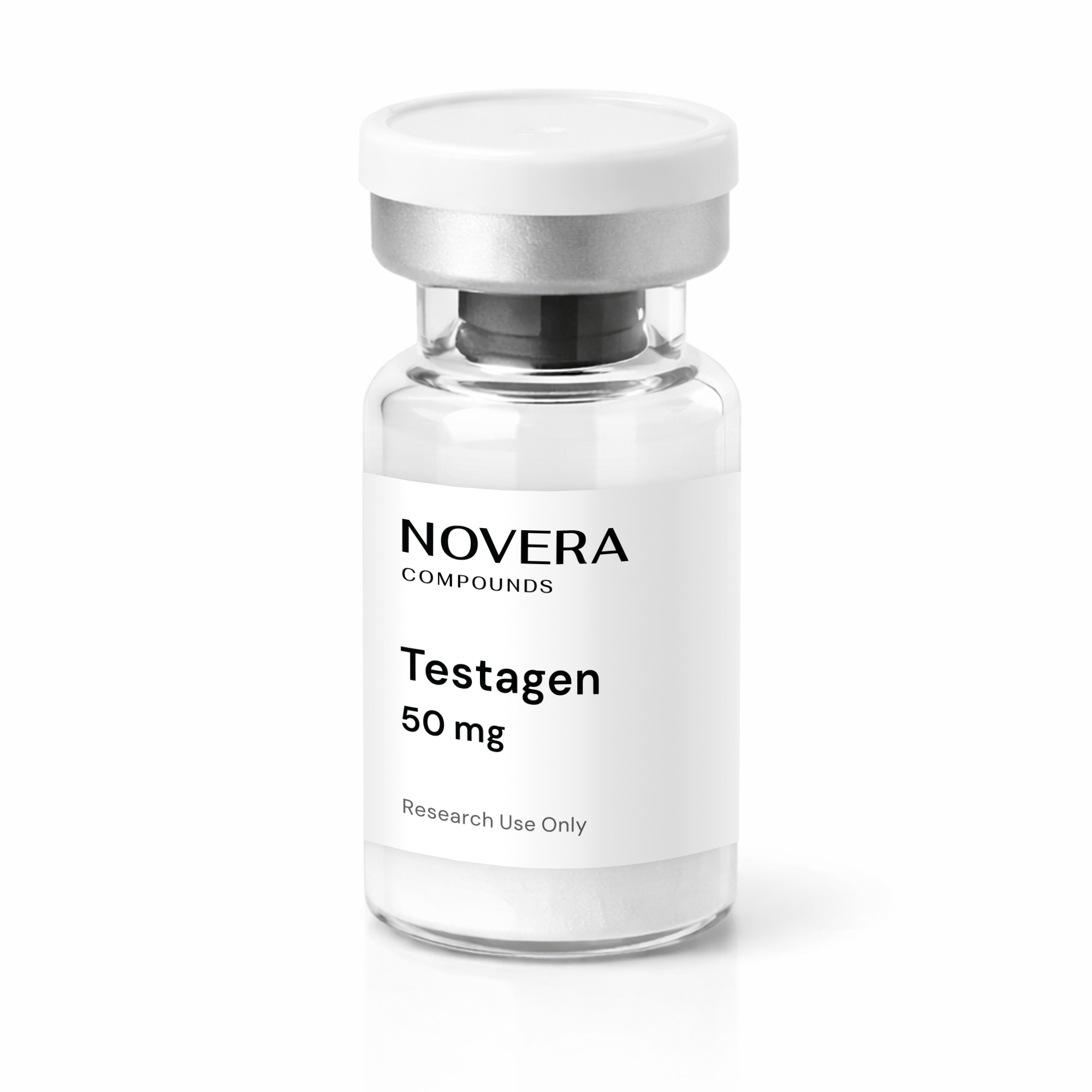
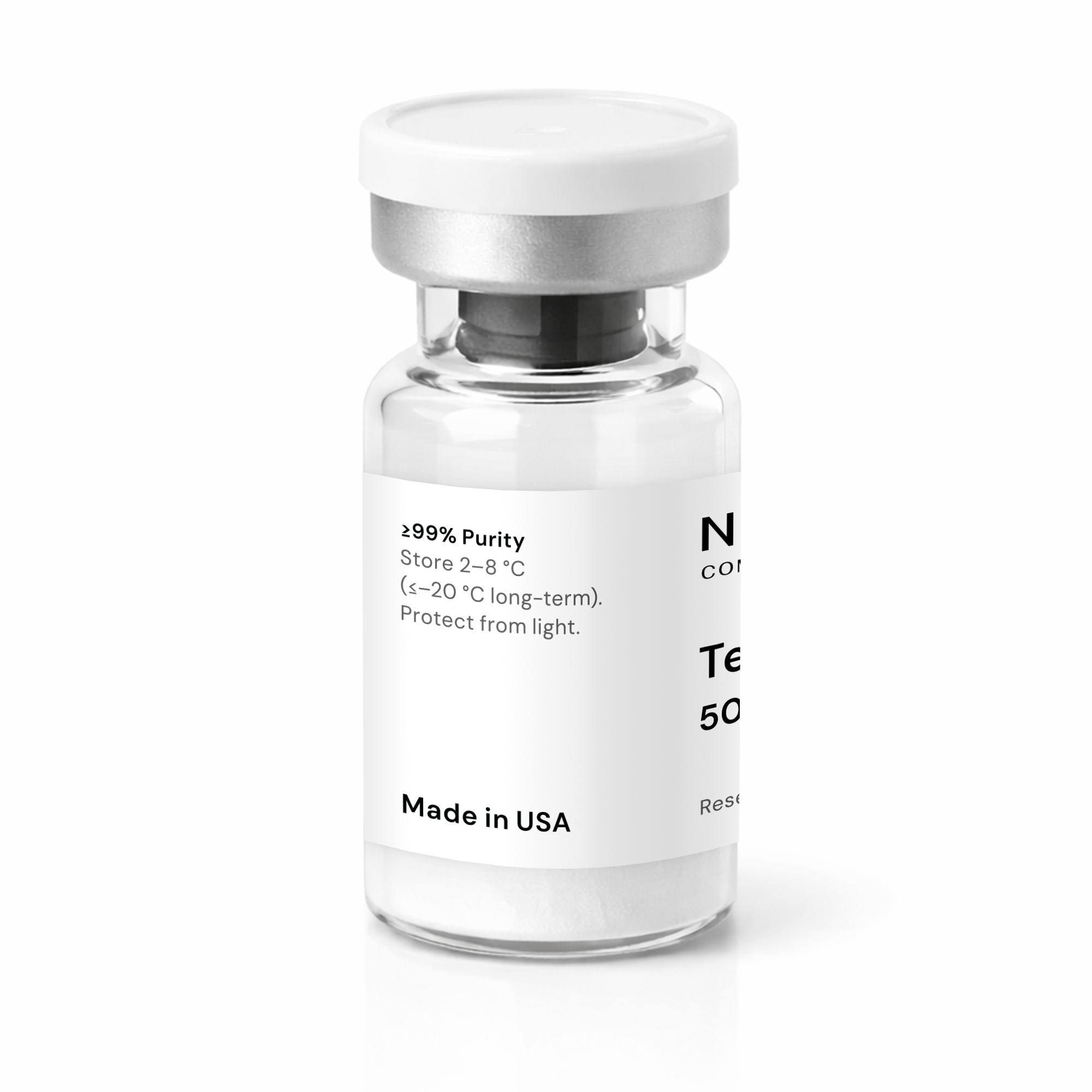
Testagen (50mg)
All products are 100% genuine and sourced from trusted manufacturers, with authenticity that can be verified for complete peace of mind.
Order exactly what you need with no minimum quantity required, whether it’s a single unit or a larger order.
Your order is guaranteed to arrive safely, with full shipment tracking and dedicated support to ensure a smooth delivery experience.
Your payments are protected with industry-standard encryption and trusted payment providers, ensuring every transaction is safe, private, and secure.
 99% PURITY GUARANTEE
 99% PURITY GUARANTEE
Each peptide batch is tested and verified to meet or exceed 98–99% purity (HPLC). Full analytical reports are available in the Certificate of Analysis section.
 Preparation & Handling Notice
The product is delivered in powdered (lyophilized) form and must be properly reconstituted prior to research use.
 RESEARCH USE ONLY
This product is intended for research use only. It is not for human or veterinary use, not for diagnostic or therapeutic purposes, and should only be handled by qualified professionals.
Strength: 50 mg
CAS: N/A
Chemical Formula: C₁₇H₂₉N₅O₉
Molecular weight: 447.44 g/mol
Peptide Sequence: H-Lys-Glu-Asp-Gly-OH
Synonyms: Anterior pituitary peptide, KEDG
Storage: Store 2–8 °C (≤–20 °C long-term). RT exposure during transport acceptable. Protect from light.
Shelf life: 24 months from the manufacturing date.
Testagen, a tetrapeptide bioregulator (KEDG), is used in laboratory research to study gene expression, cellular signaling, and peptide-mediated endocrine regulation. Applications include protein synthesis pathways, cell function marker analysis, and comparative bioregulator studies in controlled experimental models. For laboratory research use only
-
Cold chain shipping available for temperature-sensitive products.
-
Orders are processed within 1–2 business days.
-
Delivery timelines vary by destination and shipping method — view our Shipping Policy for region-specific estimates.
-
Tracking information will be provided once shipped.
-
No order minimum applies.
-
If your shipment is delayed, lost, or arrives damaged, you're covered under our Refund & Replacement Policy.
We accept Visa, Mastercard, and American Express. Apple Pay and Google Pay are available upon request via your account manager.
All transactions are processed through a secure, PCI DSS–compliant system to ensure your data is fully protected.
Why Choose NOVERA COMPOUNDS Peptides?
Novera Research delivers high-quality research peptides developed under strict manufacturing and quality-control standards. Each product is carefully synthesized, tested, and handled to ensure consistency, reliability, and transparency for advanced research applications.
- High-purity, research-grade peptide synthesis
- Analytical testing to verify quality and composition
- Consistent batch-to-batch performance
- Batch identification on every vial for traceability
- Stored and shipped under controlled conditions
 High-purity, research-grade peptide synthesis

Why Choose Medica Depot
Shop hundreds of medical products with no minimums and free shipping on large orders.
 400+ products
 No order minimums
 Free shipping
 Loyalty rewards
 Trusted since 2007
 Account manager
 Verified LOT numbers
INFORMATION
What is Testagen (50 mg)?
Testagen (50 mg) is an ultrashort synthetic tetrapeptide (KEDG) used in laboratory research to study organ-targeted bioregulator peptides and their relationship to endocrine and neuroimmunoendocrine signaling in experimental models. It is commonly discussed in anterior pituitary–associated peptide research, where investigators evaluate how small, sequence-defined peptides influence cellular signaling and gene-expression–related readouts in controlled systems.
Product Specifications
- Peptide Sequence: H-Lys-Glu-Asp-Gly-OH
- Category: Peptides
- Subcategory: Organ-Specific & Bioregulator Peptides
- Molecular Weight: 447.44 g/mol
- Molecular Formula: C₁₇H₂₉N₅O₉
- Synonyms: Anterior pituitary peptide; KEDG
- Purity: ≥99%
- Packaging Format: 50 mg
- Storage Conditions: Store at -20°C, avoid light exposure
- Designation: For Laboratory Research Use Only
Key Characteristics of Testagen (50 mg)
- Ultrashort, Defined Sequence: A tetrapeptide (KEDG) that supports reproducible documentation in research workflows.
- Endocrine Research Tool: Used in pituitary-related peptide biology studies, including signaling readouts and downstream effects.
- Thyroid and Physiological Research: Studied in systems involving thyroid structure/function and related physiological markers (model-dependent).
- Peptide-DNA/Hypothesis Framework: Included in research discussing peptide interactions with DNA/histone-associated regulation as a potential mechanism for short bioregulator peptides (conceptual framework).
- Storage: Store at -20°C and protect from light.
How Testagen (50 mg) Supports Research
In laboratory settings, Testagen is used to investigate how short regulatory peptides influence cell signaling and gene-expression biomarkers in organ- and endocrine-oriented experimental models. Research involving Lys-Glu-Asp-Gly (KEDG) has been conducted in animal models assessing pituitary physiology, including immune-organ morphology and thyroid-related endpoints.
Research Applications & Usage Information
Testagen (50 mg) is commonly used in laboratory research for:
- Pituitary-Related Peptide Research: Studying anterior pituitary peptide model systems and signaling readouts.
- Thyroid-Focused Experimental Models: Exploring thyroid morphology and hormonal activity in animal studies.
- Neuroimmunoendocrine Research: Evaluating immune and tissue morphology changes in hypophysectomized models.
- Gene-Expression Regulation Frameworks: Investigating short peptide–DNA/histone interactions in conceptual research.
- Analytical/Physicochemical Research: Using the defined tetrapeptide as a characterized small-molecule/peptide material (depending on lab objectives).
Note: No dosing or administration guidance is provided. For laboratory research use only.
Handling and Storage Recommendations
- Store at -20°C and protect from light (keep the vial in its original packaging or in a light-limiting container).
- Avoid repeated freeze–thaw cycles.
- Keep the vial tightly closed and use clean laboratory techniques to minimize contamination.
- Follow your facility’s PPE, labeling, and disposal procedures.
Research Use Only Notice
This product is intended for laboratory research use only and is not approved for human or veterinary use. It is not intended for diagnostic, therapeutic, or clinical applications. Any reference to biological activity or potential effects is based solely on preclinical or in-vitro findings and should not be interpreted as validated clinical outcomes. Researchers are responsible for ensuring proper handling, storage, and disposal in accordance with institutional, federal, and international guidelines.
References
- Dobriţescu A, Samide A, Cioateră N, et al. The Inhibitory Effect and Adsorption Properties of Testagen Peptide on Copper Surfaces in Saline Environments: An Experimental and Computational Study. Molecules. 2025;30(15):3141. Published 2025 Jul 26. doi:10.3390/molecules30153141
- Khavinson VK, Popovich IG, Linkova NS, Mironova ES, Ilina AR. Peptide Regulation of Gene Expression: A Systematic Review. Molecules. 2021;26(22):7053. Published 2021 Nov 22. doi:10.3390/molecules26227053
- Khavinson V, Linkova N, Diatlova A, Trofimova S. Peptide Regulation of Cell Differentiation. Stem Cell Rev Rep. 2020;16(1):118-125. doi:10.1007/s12015-019-09938-8
- Khavinson V, Linkova N, Kozhevnikova E, Dyatlova A, Petukhov M. Transport of Biologically Active Ultrashort Peptides Using POT and LAT Carriers. Int J Mol Sci. 2022;23(14):7733. Published 2022 Jul 13. doi:10.3390/ijms23147733
What is Testagen (50 mg)?
Testagen (50 mg) is an ultrashort synthetic tetrapeptide (KEDG) used in laboratory research to study organ-targeted bioregulator peptides and their relationship to endocrine and neuroimmunoendocrine signaling in experimental models. It is commonly discussed in anterior pituitary–associated peptide research, where investigators evaluate how small, sequence-defined peptides influence cellular signaling and gene-expression–related readouts in controlled systems.
Product Specifications
- Peptide Sequence: H-Lys-Glu-Asp-Gly-OH
- Category: Peptides
- Subcategory: Organ-Specific & Bioregulator Peptides
- Molecular Weight: 447.44 g/mol
- Molecular Formula: C₁₇H₂₉N₅O₉
- Synonyms: Anterior pituitary peptide; KEDG
- Purity: ≥99%
- Packaging Format: 50 mg
- Storage Conditions: Store at -20°C, avoid light exposure
- Designation: For Laboratory Research Use Only
Key Characteristics of Testagen (50 mg)
- Ultrashort, Defined Sequence: A tetrapeptide (KEDG) that supports reproducible documentation in research workflows.
- Endocrine Research Tool: Used in pituitary-related peptide biology studies, including signaling readouts and downstream effects.
- Thyroid and Physiological Research: Studied in systems involving thyroid structure/function and related physiological markers (model-dependent).
- Peptide-DNA/Hypothesis Framework: Included in research discussing peptide interactions with DNA/histone-associated regulation as a potential mechanism for short bioregulator peptides (conceptual framework).
- Storage: Store at -20°C and protect from light.
How Testagen (50 mg) Supports Research
In laboratory settings, Testagen is used to investigate how short regulatory peptides influence cell signaling and gene-expression biomarkers in organ- and endocrine-oriented experimental models. Research involving Lys-Glu-Asp-Gly (KEDG) has been conducted in animal models assessing pituitary physiology, including immune-organ morphology and thyroid-related endpoints.
Research Applications & Usage Information
Testagen (50 mg) is commonly used in laboratory research for:
- Pituitary-Related Peptide Research: Studying anterior pituitary peptide model systems and signaling readouts.
- Thyroid-Focused Experimental Models: Exploring thyroid morphology and hormonal activity in animal studies.
- Neuroimmunoendocrine Research: Evaluating immune and tissue morphology changes in hypophysectomized models.
- Gene-Expression Regulation Frameworks: Investigating short peptide–DNA/histone interactions in conceptual research.
- Analytical/Physicochemical Research: Using the defined tetrapeptide as a characterized small-molecule/peptide material (depending on lab objectives).
Note: No dosing or administration guidance is provided. For laboratory research use only.
Handling and Storage Recommendations
- Store at -20°C and protect from light (keep the vial in its original packaging or in a light-limiting container).
- Avoid repeated freeze–thaw cycles.
- Keep the vial tightly closed and use clean laboratory techniques to minimize contamination.
- Follow your facility’s PPE, labeling, and disposal procedures.
Research Use Only Notice
This product is intended for laboratory research use only and is not approved for human or veterinary use. It is not intended for diagnostic, therapeutic, or clinical applications. Any reference to biological activity or potential effects is based solely on preclinical or in-vitro findings and should not be interpreted as validated clinical outcomes. Researchers are responsible for ensuring proper handling, storage, and disposal in accordance with institutional, federal, and international guidelines.
References
- Dobriţescu A, Samide A, Cioateră N, et al. The Inhibitory Effect and Adsorption Properties of Testagen Peptide on Copper Surfaces in Saline Environments: An Experimental and Computational Study. Molecules. 2025;30(15):3141. Published 2025 Jul 26. doi:10.3390/molecules30153141
- Khavinson VK, Popovich IG, Linkova NS, Mironova ES, Ilina AR. Peptide Regulation of Gene Expression: A Systematic Review. Molecules. 2021;26(22):7053. Published 2021 Nov 22. doi:10.3390/molecules26227053
- Khavinson V, Linkova N, Diatlova A, Trofimova S. Peptide Regulation of Cell Differentiation. Stem Cell Rev Rep. 2020;16(1):118-125. doi:10.1007/s12015-019-09938-8
- Khavinson V, Linkova N, Kozhevnikova E, Dyatlova A, Petukhov M. Transport of Biologically Active Ultrashort Peptides Using POT and LAT Carriers. Int J Mol Sci. 2022;23(14):7733. Published 2022 Jul 13. doi:10.3390/ijms23147733
Related products