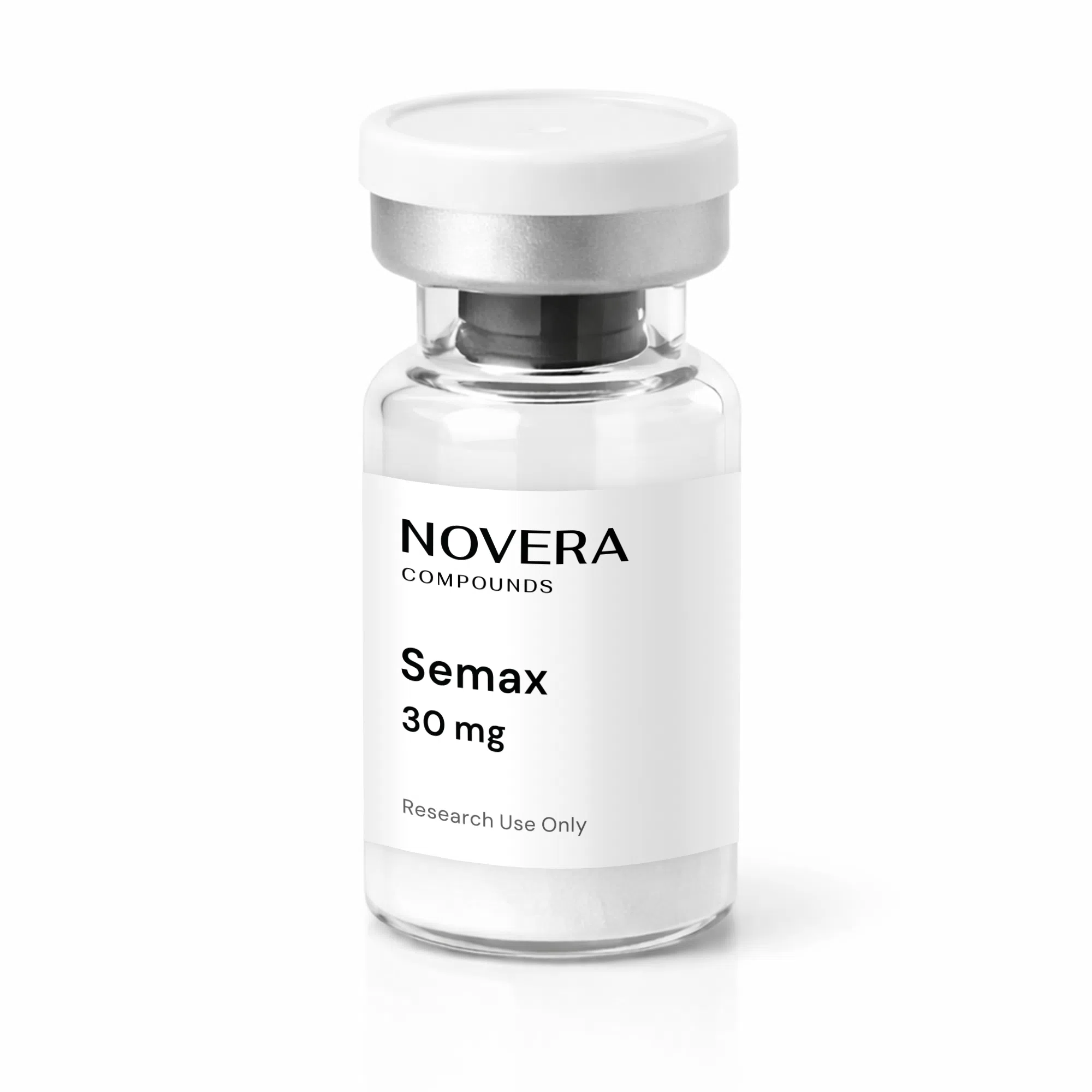
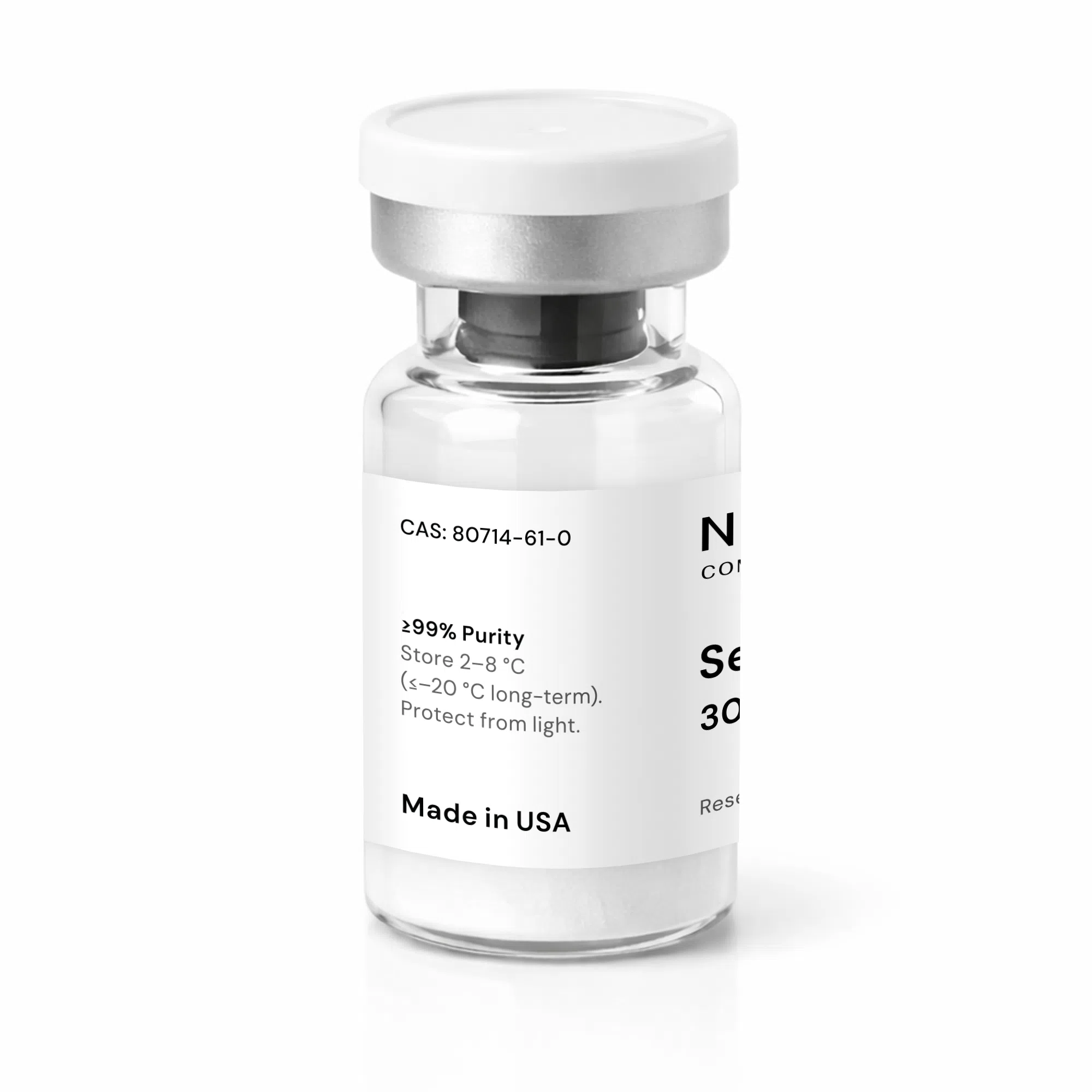
Semax 30mg
Strength: 30 mg
CAS: 80714-61-0
Chemical Formula: C₃₇H₅₁N₉O₁₀S
Molecular weight: 813.9 g/mol
Peptide Sequence: Met-Glu-His-Phe-Pro-Gly-Pro
Storage: Store 2–8 °C (≤–20 °C long-term). RT exposure during transport acceptable. Protect from light.
Shelf life: 24 months from the manufacturing date.
Semax is a synthetic heptapeptide used as a research tool in neurobiology studies. It is applied to investigate signaling pathways, stress responses, neurotrophin expression, and neuroimmune interactions in controlled in vitro and ex vivo models. Typical applications include gene expression profiling, cellular biomarker analysis, and comparative peptide testing. For laboratory research use only; not for diagnostic, therapeutic, or human use.


Why Choose Medica Depot
Shop hundreds of medical products with no minimums and free shipping on large orders.
 400+ products
 No order minimums
 Free shipping
 Loyalty rewards
 Trusted since 2007
 Account manager
 Verified LOT numbers
INFORMATION
What is Semax (30 mg)?
Semax (30 mg) is a synthetic peptide commonly used as a research tool in brain and neurobiology-focused studies. It is typically used to investigate signaling pathways, stress response pathways, and neuroimmune interactions in experimental models.
In laboratory settings, Semax helps explore how short peptides influence cellular communication and gene-expression–related readouts in controlled systems. Its defined sequence and high purity ensure consistent handling and reproducible study designs across research workflows.
Product Specifications
- CAS Number: 80714-61-0
- Peptide Sequence: Met-Glu-DL-His-Phe-Pro-Gly-Pro
- Category: Peptides
- Subcategory: Brain, Cognitive & Nootropic Peptides
- Molecular Formula: C₃₇H₅₁N₉O₁₀S
- Molecular Weight:9 g/mol
- Purity: ≥99%
- Packaging Format: 30 mg
- Storage Conditions: Store at -20°C, avoid light exposure
- Designation: For Laboratory Research Use Only
Key Characteristics of Semax (30 mg)
- High Purity: ≥99% purity to support controlled experiments and reduce variability.
- Short, Defined Sequence: Suitable for research requiring consistent material.
- Neurobiology Research: Commonly studied in contexts involving peptide-related signaling.
- Pathway-Focused Research: Ideal for tracking changes in molecular markers and signaling readouts.
- Convenient Packaging: The 30 mg format supports method development, repeat experiments, and extended research workflows.
How Semax (30 mg) Supports Research
Semax is used in laboratory research to support studies examining brain-related signaling and cellular response patterns. It may be included in experiments focusing on stress-response biology, neuroimmune communication, and regulatory signaling pathways, depending on the model and research design. Researchers commonly use it as a standardized peptide reagent to investigate how peptide analogs affect measurable biomarkers in experimental systems.
Research Applications & Usage Information
Semax (30 mg) is commonly used in research workflows such as:
- Neurobiology Signaling Studies: Cellular and molecular pathway mapping in experimental models.
- Neuroimmune Interaction Research: Tracking immune-related markers in neurological contexts.
- Stress-Response Pathway Investigations: Evaluating changes in biomarkers after experimental exposure.
- Gene Expression and Protein Marker Profiling: Supporting exploratory work on peptide-associated response patterns.
- Method Development and Assay Validation: Requiring consistent peptide material for benchmarking or repeat testing.
- Comparative Research: Evaluating peptide analogs side by side under the same experimental conditions.
Note: This material is intended for laboratory research use only. Research protocols and models vary by institution.
Handling and Storage Recommendations
- Store at -20°C.
- Protect from light by keeping the vial in its original packaging or a light-limiting container.
- Avoid repeated freeze–thaw cycles.
- Keep the container tightly closed and handle it using standard lab practices to minimize contamination.
- Use appropriate PPE and follow your facility’s chemical hygiene and waste-disposal procedures.
Research Use Only Notice
This product is intended for laboratory research use only and is not approved for human or veterinary use. It is not intended for diagnostic, therapeutic, or clinical applications. Any reference to biological activity or potential effects is based solely on preclinical or in-vitro findings and should not be interpreted as validated clinical outcomes. Researchers are responsible for ensuring proper handling, storage, and disposal in accordance with institutional, federal, and international guidelines.
References
- Shadrina MI, Dolotov OV, Grivennikov IA, et al. Rapid induction of neurotrophin mRNAs in rat glial cell cultures by Semax, an adrenocorticotropic hormone analog. Neurosci Lett. 2001;308(2):115-118. doi:10.1016/s0304-3940(01)01994-2
- Dmitrieva VG, Povarova OV, Skvortsova VI, Limborska SA, Myasoedov NF, Dergunova LV. Semax and Pro-Gly-Pro activate the transcription of neurotrophins and their receptor genes after cerebral ischemia. Cell Mol Neurobiol. 2010;30(1):71-79. doi:10.1007/s10571-009-9432-0
- Medvedeva EV, Dmitrieva VG, Povarova OV, et al. The peptide semax affects the expression of genes related to the immune and vascular systems in rat brain focal ischemia: genome-wide transcriptional analysis. BMC Genomics. 2014;15:228. Published 2014 Mar 24. doi:10.1186/1471-2164-15-228
- Safarova ER, Shram SI, Zolotarev YuA, Myasoedov NF. Effect of Semax Peptide on Survival of Cultured Rat Pheochromocytoma Cells during Oxidative Stress. Bulletin of Experimental Biology and Medicine. 2003;135(3):268-271. doi:10.1023/a:1024141232307
What is Semax (30 mg)?
Semax (30 mg) is a synthetic peptide commonly used as a research tool in brain and neurobiology-focused studies. It is typically used to investigate signaling pathways, stress response pathways, and neuroimmune interactions in experimental models.
In laboratory settings, Semax helps explore how short peptides influence cellular communication and gene-expression–related readouts in controlled systems. Its defined sequence and high purity ensure consistent handling and reproducible study designs across research workflows.
Product Specifications
- CAS Number: 80714-61-0
- Peptide Sequence: Met-Glu-DL-His-Phe-Pro-Gly-Pro
- Category: Peptides
- Subcategory: Brain, Cognitive & Nootropic Peptides
- Molecular Formula: C₃₇H₅₁N₉O₁₀S
- Molecular Weight:9 g/mol
- Purity: ≥99%
- Packaging Format: 30 mg
- Storage Conditions: Store at -20°C, avoid light exposure
- Designation: For Laboratory Research Use Only
Key Characteristics of Semax (30 mg)
- High Purity: ≥99% purity to support controlled experiments and reduce variability.
- Short, Defined Sequence: Suitable for research requiring consistent material.
- Neurobiology Research: Commonly studied in contexts involving peptide-related signaling.
- Pathway-Focused Research: Ideal for tracking changes in molecular markers and signaling readouts.
- Convenient Packaging: The 30 mg format supports method development, repeat experiments, and extended research workflows.
How Semax (30 mg) Supports Research
Semax is used in laboratory research to support studies examining brain-related signaling and cellular response patterns. It may be included in experiments focusing on stress-response biology, neuroimmune communication, and regulatory signaling pathways, depending on the model and research design. Researchers commonly use it as a standardized peptide reagent to investigate how peptide analogs affect measurable biomarkers in experimental systems.
Research Applications & Usage Information
Semax (30 mg) is commonly used in research workflows such as:
- Neurobiology Signaling Studies: Cellular and molecular pathway mapping in experimental models.
- Neuroimmune Interaction Research: Tracking immune-related markers in neurological contexts.
- Stress-Response Pathway Investigations: Evaluating changes in biomarkers after experimental exposure.
- Gene Expression and Protein Marker Profiling: Supporting exploratory work on peptide-associated response patterns.
- Method Development and Assay Validation: Requiring consistent peptide material for benchmarking or repeat testing.
- Comparative Research: Evaluating peptide analogs side by side under the same experimental conditions.
Note: This material is intended for laboratory research use only. Research protocols and models vary by institution.
Handling and Storage Recommendations
- Store at -20°C.
- Protect from light by keeping the vial in its original packaging or a light-limiting container.
- Avoid repeated freeze–thaw cycles.
- Keep the container tightly closed and handle it using standard lab practices to minimize contamination.
- Use appropriate PPE and follow your facility’s chemical hygiene and waste-disposal procedures.
Research Use Only Notice
This product is intended for laboratory research use only and is not approved for human or veterinary use. It is not intended for diagnostic, therapeutic, or clinical applications. Any reference to biological activity or potential effects is based solely on preclinical or in-vitro findings and should not be interpreted as validated clinical outcomes. Researchers are responsible for ensuring proper handling, storage, and disposal in accordance with institutional, federal, and international guidelines.
References
- Shadrina MI, Dolotov OV, Grivennikov IA, et al. Rapid induction of neurotrophin mRNAs in rat glial cell cultures by Semax, an adrenocorticotropic hormone analog. Neurosci Lett. 2001;308(2):115-118. doi:10.1016/s0304-3940(01)01994-2
- Dmitrieva VG, Povarova OV, Skvortsova VI, Limborska SA, Myasoedov NF, Dergunova LV. Semax and Pro-Gly-Pro activate the transcription of neurotrophins and their receptor genes after cerebral ischemia. Cell Mol Neurobiol. 2010;30(1):71-79. doi:10.1007/s10571-009-9432-0
- Medvedeva EV, Dmitrieva VG, Povarova OV, et al. The peptide semax affects the expression of genes related to the immune and vascular systems in rat brain focal ischemia: genome-wide transcriptional analysis. BMC Genomics. 2014;15:228. Published 2014 Mar 24. doi:10.1186/1471-2164-15-228
- Safarova ER, Shram SI, Zolotarev YuA, Myasoedov NF. Effect of Semax Peptide on Survival of Cultured Rat Pheochromocytoma Cells during Oxidative Stress. Bulletin of Experimental Biology and Medicine. 2003;135(3):268-271. doi:10.1023/a:1024141232307
Related products