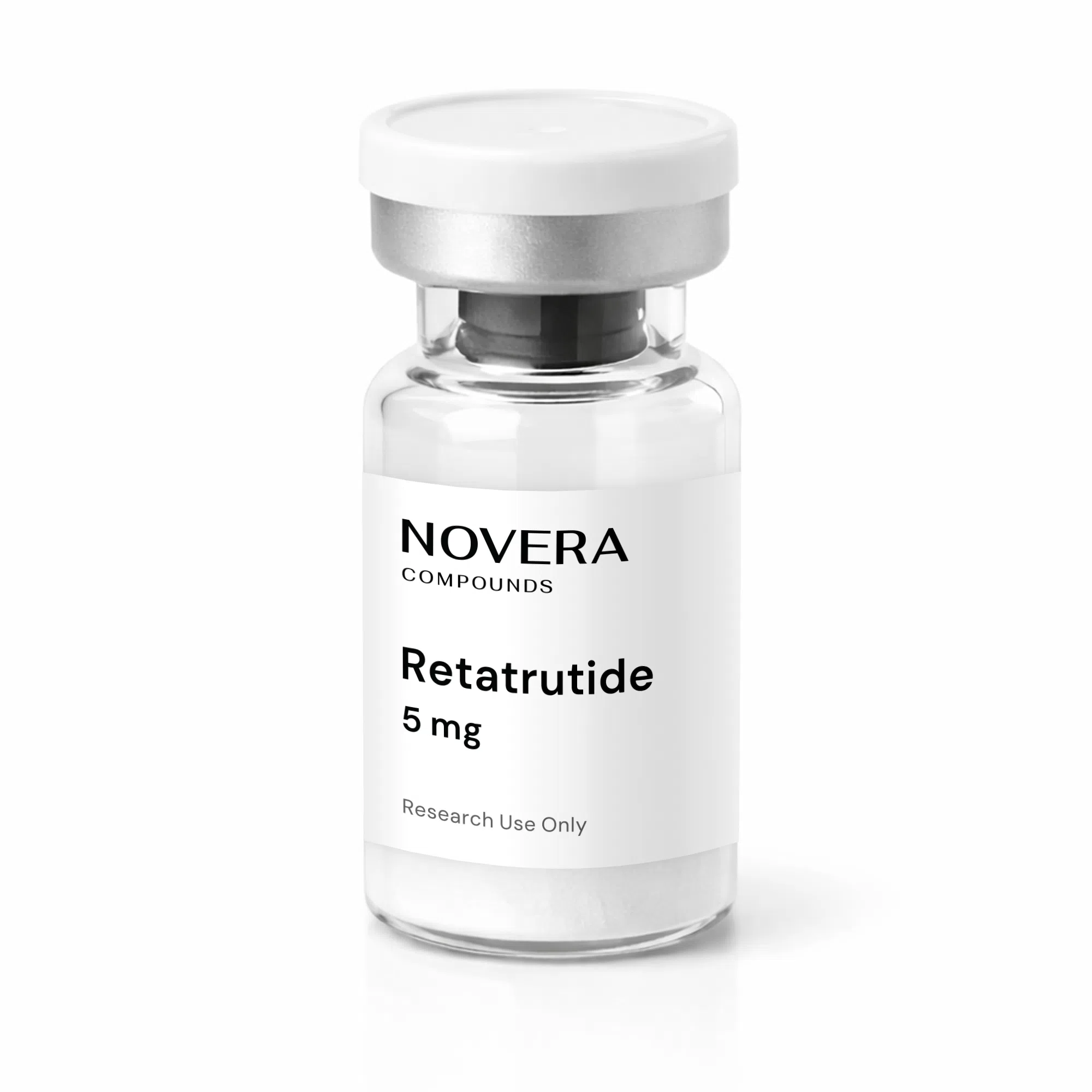
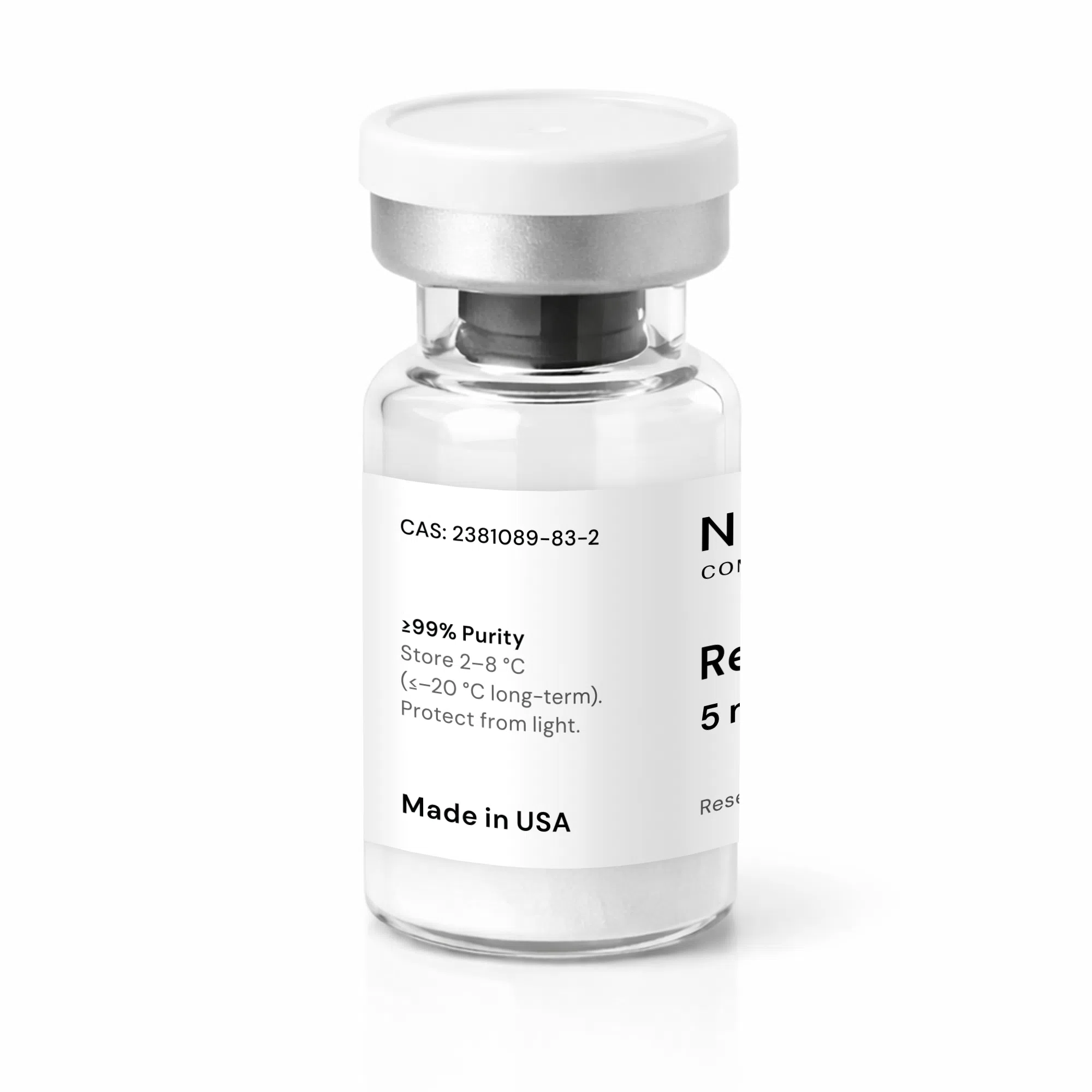
Retatrutide 5mg
Strength: 5mg
CAS: 2381089-83-2
Chemical Formula: C₂₂₁H₃₄₂N₄₆O₆₈
Molecular weight: 4845.444 g/mol
Peptide Sequence: Tyr-{Aib}-Gln-Gly-Thr-Phe-Thr-Ser-Asp-Tyr-Ser-Ile-{α-Me-Leu}-Leu-Asp-Lys-{diacid-C20-gamma-Glu-(AEEA)-Lys}-Ala-Gln-{Aib}-Ala-Phe-Ile-Glu-Tyr-Leu-Leu-Glu-Gly-Gly-Pro-Ser-Ser-Gly-Ala-Pro-Pro-Pro-Ser-NH2 (Sodium salt)
Synonyms: Retatrutide acetate, LY3437943
Storage: Store 2–8 °C (≤–20 °C long-term). RT exposure during transport acceptable. Protect from light.
Shelf life: 24 months from the manufacturing date.
Retatrutide is a synthetic triple-receptor agonist peptide designed to engage GLP-1, GIP, and glucagon receptors in experimental systems. Supplied as high-purity lyophilized powder, it is used in laboratory and preclinical research models to investigate multi-pathway metabolic signaling, energy homeostasis, and coordinated endocrine receptor activation. Intended strictly for controlled in vitro and in vivo research applications.


Why Choose Medica Depot
Shop hundreds of medical products with no minimums and free shipping on large orders.
 400+ products
 No order minimums
 Free shipping
 Loyalty rewards
 Trusted since 2007
 Account manager
 Verified LOT numbers
INFORMATION
What is Retatrutide (5 mg)?
Retatrutide (5 mg) is a synthetic peptide designed for laboratory research on metabolic regulation and hormone receptor signaling. This investigational peptide interacts with multiple receptor systems involved in energy balance and glucose metabolism, making it a valuable tool for studying complex endocrine pathways.
In controlled experimental environments, Retatrutide acts as a multi-receptor agonist, engaging the glucagon-like peptide-1 (GLP-1), glucose-dependent insulinotropic polypeptide (GIP), and glucagon receptors. By stimulating these pathways simultaneously, researchers can explore the effects of coordinated hormonal responses and receptor cross-talk on cellular metabolism.
The 5 mg version is ideal for small-scale assays, pilot experiments, and preclinical research that requires precise peptide quantities. This product is strictly for laboratory use only.
Product Specifications
- CAS Number: 2381089-83-2
- Synonyms: Retatrutide acetate, LY3437943
- Peptide Sequence:
Tyr-{Aib}-Gln-Gly-Thr-Phe-Thr-Ser-Asp-Tyr-Ser-Ile-{α-Me-Leu}-Leu-Asp-Lys-{diacid-C20-gamma-Glu-(AEEA)-Lys}-Ala-Gln-{Aib}-Ala-Phe-Ile-Glu-Tyr-Leu-Leu-Glu-Gly-Gly-Pro-Ser-Ser-Gly-Ala-Pro-Pro-Pro-Ser-NH2 (Sodium salt) - Molecular Formula: C₂₂₁H₃₄₂N₄₆O₆₈
- Molecular Weight: 4845.444 g/mol
- Subcategory: Weight Loss & Metabolic Peptides
- Purity: ≥95% (verified by HPLC and mass spectrometry)
- Packaging Format: 5 mg lyophilized powder in sealed research-grade vial
- Storage Conditions: Store at 2–8 °C (≤–20 °C for periods of non-use). Protect from light.
- Intended Use: For Laboratory Research Use Only
Key Characteristics of Retatrutide (5 mg)
- Multi-Receptor Research Peptide: Investigated for its interactions with GLP-1, GIP, and glucagon receptors.
- Metabolic Research Focus: Commonly used in laboratory studies on glucose regulation, energy balance, and hormone signaling.
- Stability-Enhanced Design: Includes amino acid modifications to improve stability in experimental settings.
- High Purity: Typically ≥95%, confirmed through chromatographic and spectrometric methods.
- Lyophilized Format: Freeze-dried presentation preserves structural integrity before reconstitution.
- Reproducible Manufacturing: Produced to meet consistent research standards for reliable results.
How Retatrutide (5 mg) Supports Research
Retatrutide (5 mg) aids in understanding how coordinated receptor activation affects metabolic pathways. Researchers use this peptide in in vitro and preclinical studies to explore:
- Receptor binding and interactions
- Activation of intracellular signaling cascades
- Modulation of hormone-driven metabolic pathways
- Cross-talk between incretin and glucagon signaling
- Cellular responses to multi-receptor stimulation
By engaging multiple receptors simultaneously, Retatrutide allows scientists to investigate complex metabolic communications rather than focusing on isolated receptor activities.
Research Applications & Usage Information
Retatrutide (5 mg) is commonly used in research involving:
- GLP-1 receptor signaling investigations
- GIP receptor pathway studies
- Glucagon receptor activation research
- Multi-receptor agonist comparative models
- Energy homeostasis and metabolic regulation research
- Endocrine system modeling in vitro and in preclinical settings
- Cellular signaling and second-messenger pathway analyses
All applications are investigational and limited to controlled laboratory environments.
Handling and Storage Recommendations
- Store unopened vials at 2–8 °C. For extended preservation, maintain at ≤–20 °C.
- Keep the vial sealed until ready to use.
- Minimize exposure to moisture and direct light.
- Allow the vial to equilibrate before opening to avoid moisture condensation.
- After reconstitution, store at 2–8 °C following laboratory protocol.
- Avoid repeated freeze-thaw cycles to preserve peptide integrity.
Research Use Only Notice
This product is intended for laboratory research use only and is not approved for human or veterinary use. It is not intended for diagnostic, therapeutic, or clinical applications. Any reference to biological activity or potential effects is based solely on preclinical or in-vitro findings and should not be interpreted as validated clinical outcomes. Researchers are responsible for ensuring proper handling, storage, and disposal in accordance with institutional, federal, and international guidelines.
References
- Coskun T, Urva S, Roell WC, et al. LY3437943, a novel triple glucagon, GIP, and GLP-1 receptor agonist for glycemic control and weight loss: From discovery to clinical proof of concept. Cell Metab. 2022;34(9):1234-1247.e9. doi:10.1016/j.cmet.2022.07.013
- Jastreboff AM, Kaplan LM, Frías JP, et al. Triple-Hormone-Receptor Agonist Retatrutide for Obesity – A Phase 2 Trial. N Engl J Med. 2023;389(6):514-526. doi:10.1056/NEJMoa2301972
- Sanyal AJ, Kaplan LM, Frias JP, et al. Triple hormone receptor agonist retatrutide for metabolic dysfunction-associated steatotic liver disease: a randomized phase 2a trial. Nat Med. 2024;30(7):2037-2048. doi:10.1038/s41591-024-03018-2
- Ma J, Hu X, Zhang W, Tao M, Wang M, Lu W. Comparison of the effects of Liraglutide, Tirzepatide, and Retatrutide on diabetic kidney disease in db/db mice. Endocrine. 2025;87(1):159-169. doi:10.1007/s12020-024-03998-8
What is Retatrutide (5 mg)?
Retatrutide (5 mg) is a synthetic peptide designed for laboratory research on metabolic regulation and hormone receptor signaling. This investigational peptide interacts with multiple receptor systems involved in energy balance and glucose metabolism, making it a valuable tool for studying complex endocrine pathways.
In controlled experimental environments, Retatrutide acts as a multi-receptor agonist, engaging the glucagon-like peptide-1 (GLP-1), glucose-dependent insulinotropic polypeptide (GIP), and glucagon receptors. By stimulating these pathways simultaneously, researchers can explore the effects of coordinated hormonal responses and receptor cross-talk on cellular metabolism.
The 5 mg version is ideal for small-scale assays, pilot experiments, and preclinical research that requires precise peptide quantities. This product is strictly for laboratory use only.
Product Specifications
- CAS Number: 2381089-83-2
- Synonyms: Retatrutide acetate, LY3437943
- Peptide Sequence:
Tyr-{Aib}-Gln-Gly-Thr-Phe-Thr-Ser-Asp-Tyr-Ser-Ile-{α-Me-Leu}-Leu-Asp-Lys-{diacid-C20-gamma-Glu-(AEEA)-Lys}-Ala-Gln-{Aib}-Ala-Phe-Ile-Glu-Tyr-Leu-Leu-Glu-Gly-Gly-Pro-Ser-Ser-Gly-Ala-Pro-Pro-Pro-Ser-NH2 (Sodium salt) - Molecular Formula: C₂₂₁H₃₄₂N₄₆O₆₈
- Molecular Weight: 4845.444 g/mol
- Subcategory: Weight Loss & Metabolic Peptides
- Purity: ≥95% (verified by HPLC and mass spectrometry)
- Packaging Format: 5 mg lyophilized powder in sealed research-grade vial
- Storage Conditions: Store at 2–8 °C (≤–20 °C for periods of non-use). Protect from light.
- Intended Use: For Laboratory Research Use Only
Key Characteristics of Retatrutide (5 mg)
- Multi-Receptor Research Peptide: Investigated for its interactions with GLP-1, GIP, and glucagon receptors.
- Metabolic Research Focus: Commonly used in laboratory studies on glucose regulation, energy balance, and hormone signaling.
- Stability-Enhanced Design: Includes amino acid modifications to improve stability in experimental settings.
- High Purity: Typically ≥95%, confirmed through chromatographic and spectrometric methods.
- Lyophilized Format: Freeze-dried presentation preserves structural integrity before reconstitution.
- Reproducible Manufacturing: Produced to meet consistent research standards for reliable results.
How Retatrutide (5 mg) Supports Research
Retatrutide (5 mg) aids in understanding how coordinated receptor activation affects metabolic pathways. Researchers use this peptide in in vitro and preclinical studies to explore:
- Receptor binding and interactions
- Activation of intracellular signaling cascades
- Modulation of hormone-driven metabolic pathways
- Cross-talk between incretin and glucagon signaling
- Cellular responses to multi-receptor stimulation
By engaging multiple receptors simultaneously, Retatrutide allows scientists to investigate complex metabolic communications rather than focusing on isolated receptor activities.
Research Applications & Usage Information
Retatrutide (5 mg) is commonly used in research involving:
- GLP-1 receptor signaling investigations
- GIP receptor pathway studies
- Glucagon receptor activation research
- Multi-receptor agonist comparative models
- Energy homeostasis and metabolic regulation research
- Endocrine system modeling in vitro and in preclinical settings
- Cellular signaling and second-messenger pathway analyses
All applications are investigational and limited to controlled laboratory environments.
Handling and Storage Recommendations
- Store unopened vials at 2–8 °C. For extended preservation, maintain at ≤–20 °C.
- Keep the vial sealed until ready to use.
- Minimize exposure to moisture and direct light.
- Allow the vial to equilibrate before opening to avoid moisture condensation.
- After reconstitution, store at 2–8 °C following laboratory protocol.
- Avoid repeated freeze-thaw cycles to preserve peptide integrity.
Research Use Only Notice
This product is intended for laboratory research use only and is not approved for human or veterinary use. It is not intended for diagnostic, therapeutic, or clinical applications. Any reference to biological activity or potential effects is based solely on preclinical or in-vitro findings and should not be interpreted as validated clinical outcomes. Researchers are responsible for ensuring proper handling, storage, and disposal in accordance with institutional, federal, and international guidelines.
References
- Coskun T, Urva S, Roell WC, et al. LY3437943, a novel triple glucagon, GIP, and GLP-1 receptor agonist for glycemic control and weight loss: From discovery to clinical proof of concept. Cell Metab. 2022;34(9):1234-1247.e9. doi:10.1016/j.cmet.2022.07.013
- Jastreboff AM, Kaplan LM, Frías JP, et al. Triple-Hormone-Receptor Agonist Retatrutide for Obesity – A Phase 2 Trial. N Engl J Med. 2023;389(6):514-526. doi:10.1056/NEJMoa2301972
- Sanyal AJ, Kaplan LM, Frias JP, et al. Triple hormone receptor agonist retatrutide for metabolic dysfunction-associated steatotic liver disease: a randomized phase 2a trial. Nat Med. 2024;30(7):2037-2048. doi:10.1038/s41591-024-03018-2
- Ma J, Hu X, Zhang W, Tao M, Wang M, Lu W. Comparison of the effects of Liraglutide, Tirzepatide, and Retatrutide on diabetic kidney disease in db/db mice. Endocrine. 2025;87(1):159-169. doi:10.1007/s12020-024-03998-8
Related products