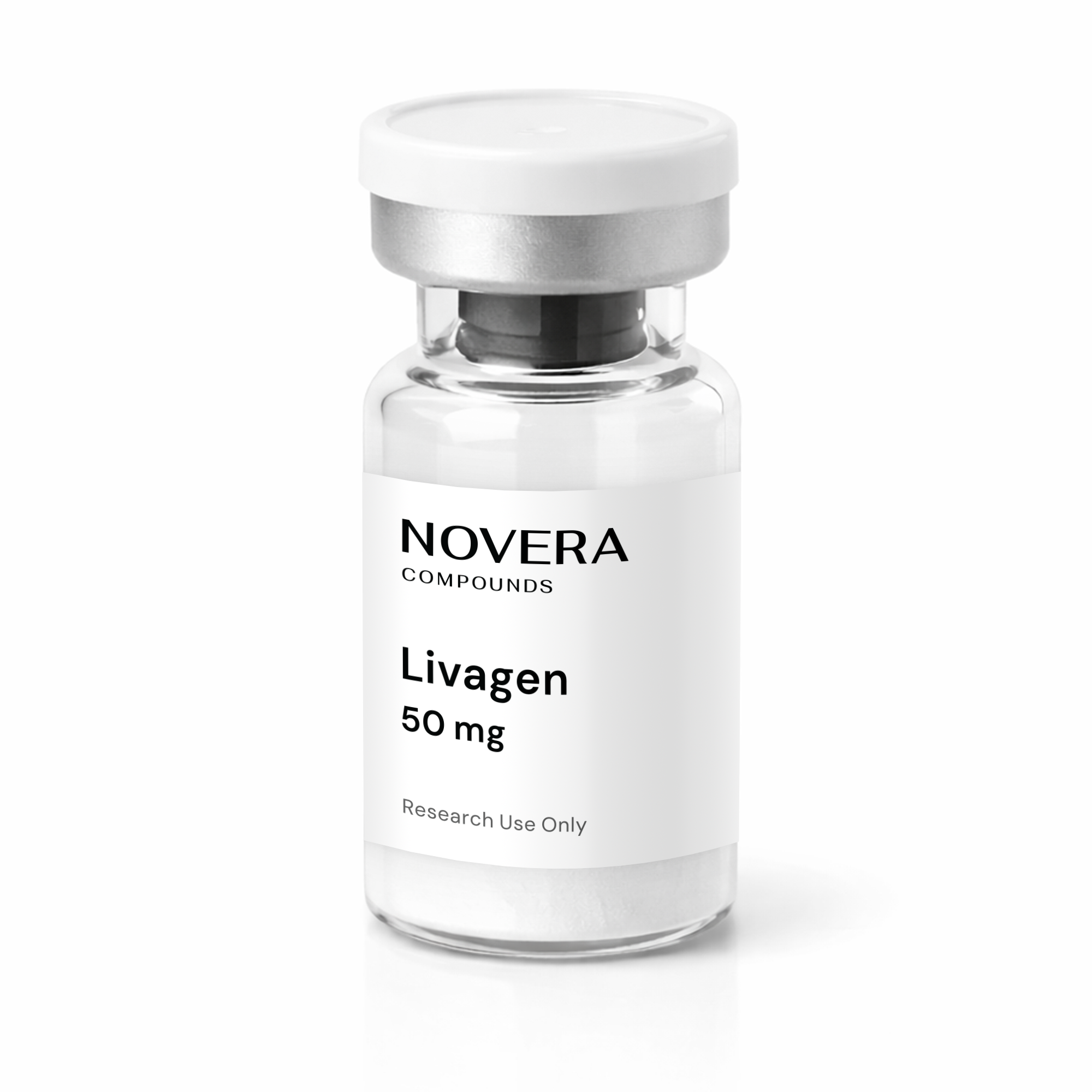
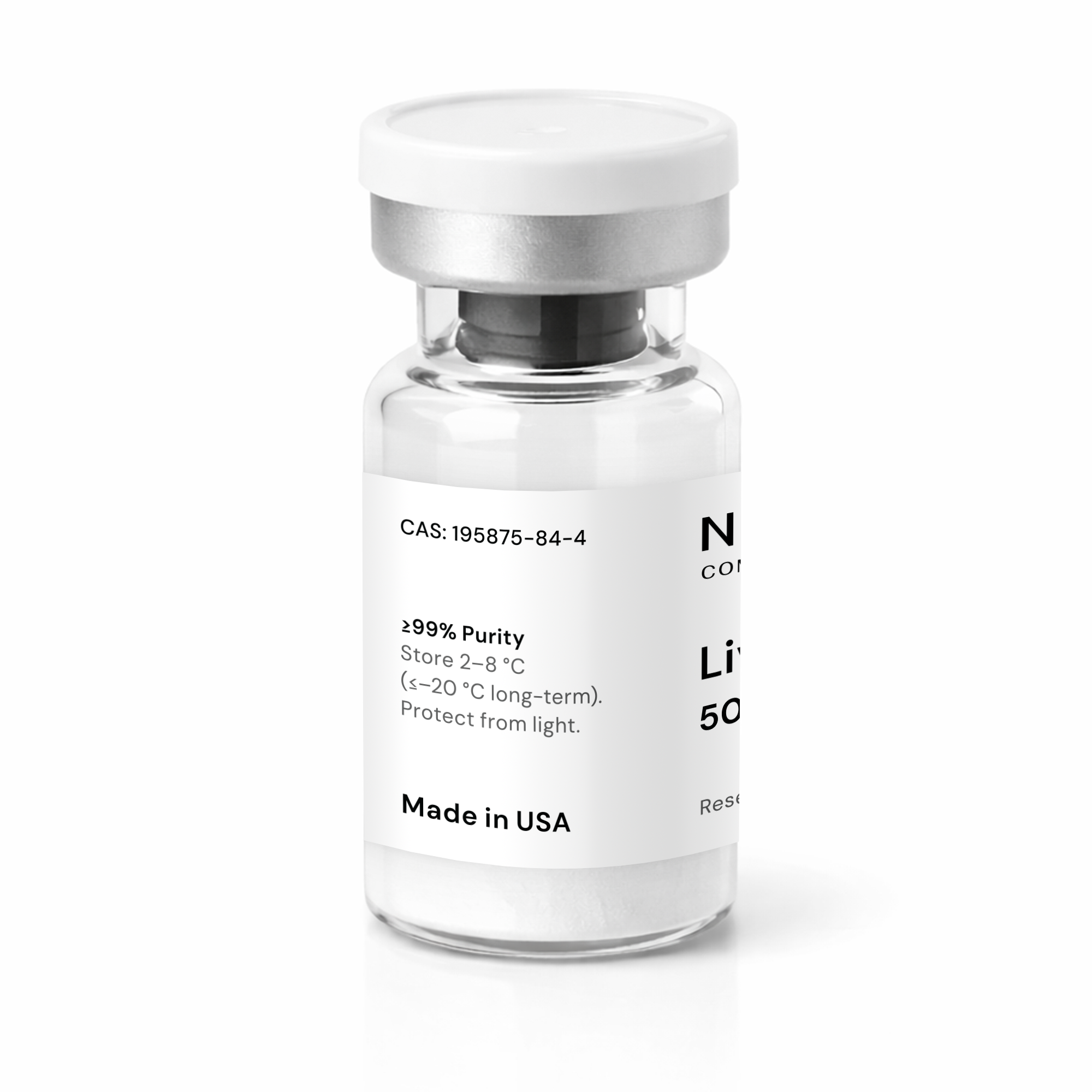
Livagen (50mg)
All products are 100% genuine and sourced from trusted manufacturers, with authenticity that can be verified for complete peace of mind.
Order exactly what you need with no minimum quantity required, whether it’s a single unit or a larger order.
Your order is guaranteed to arrive safely, with full shipment tracking and dedicated support to ensure a smooth delivery experience.
Your payments are protected with industry-standard encryption and trusted payment providers, ensuring every transaction is safe, private, and secure.
 99% PURITY GUARANTEE
 99% PURITY GUARANTEE
Each peptide batch is tested and verified to meet or exceed 98–99% purity (HPLC). Full analytical reports are available in the Certificate of Analysis section.
 Preparation & Handling Notice
The product is delivered in powdered (lyophilized) form and must be properly reconstituted prior to research use.
 RESEARCH USE ONLY
This product is intended for research use only. It is not for human or veterinary use, not for diagnostic or therapeutic purposes, and should only be handled by qualified professionals.
Strength: 50mg
CAS: 195875-84-4
Chemical Formula: C₁₈H₃₁N₅O₉
Molecular weight: 461.46 g/mol
Peptide Sequence: H-Lys-Glu-Asp-Ala-OH
Synonyms: KEDA tetrapeptide; liver peptide bioregulator
Storage: Store 2–8 °C (≤–20 °C long-term). RT exposure during transport acceptable. Protect from light.
Shelf life: 24 months from the manufacturing date.
Livagen is a synthetic tetrapeptide (Lys Glu Asp Ala), categorized as a liver associated bioregulator peptide. It is commonly studied for its effects on chromatin structure, gene accessibility, and ribosomal gene transcription in liver-associated and lymphocyte models. Research suggests that Livagen influences chromatin decondensation, heterochromatin–euchromatin transitions, and nucleolar activity, providing insight into transcriptional regulation in differentiated cells, but does not establish therapeutic efficacy or clinical indications.
-
Cold chain shipping available for temperature-sensitive products.
-
Orders are processed within 1–2 business days.
-
Delivery timelines vary by destination and shipping method — view our Shipping Policy for region-specific estimates.
-
Tracking information will be provided once shipped.
-
No order minimum applies.
-
If your shipment is delayed, lost, or arrives damaged, you're covered under our Refund & Replacement Policy.
We accept Visa, Mastercard, and American Express. Apple Pay and Google Pay are available upon request via your account manager.
All transactions are processed through a secure, PCI DSS–compliant system to ensure your data is fully protected.
Why Choose NOVERA COMPOUNDS Peptides?
Novera Research delivers high-quality research peptides developed under strict manufacturing and quality-control standards. Each product is carefully synthesized, tested, and handled to ensure consistency, reliability, and transparency for advanced research applications.
- High-purity, research-grade peptide synthesis
- Analytical testing to verify quality and composition
- Consistent batch-to-batch performance
- Batch identification on every vial for traceability
- Stored and shipped under controlled conditions
 High-purity, research-grade peptide synthesis

Why Choose Medica Depot
Shop hundreds of medical products with no minimums and free shipping on large orders.
 400+ products
 No order minimums
 Free shipping
 Loyalty rewards
 Trusted since 2007
 Account manager
 Verified LOT numbers
INFORMATION
What is Livagen (50mg)?
Livagen (50mg) is a synthetic tetrapeptide (Lys‑Glu‑Asp‑Ala), classified as an organ‑specific peptide bioregulator. It is primarily studied for its impact on chromatin organization and gene accessibility in differentiated cells.
In laboratory research, Livagen serves as a defined tool to investigate how short peptides influence chromatin structure, transcriptional accessibility, and ribosomal gene activity. It is commonly used in lymphocyte-based models and liver-associated systems to study gene expression and nucleolar function, strictly within preclinical contexts.
Product Specifications
- Synonyms: Livagen; KEDA tetrapeptide; liver peptide bioregulator; Lys‑Glu‑Asp‑Ala peptide
- Peptide Sequence: H‑Lys‑Glu‑Asp‑Ala‑OH (Lys‑Glu‑Asp‑Ala)
- Chemical Formula: C₁₈H₃₁N₅O₉
- Molecular Weight: 461.46 g/mol
- CAS Number: 195875‑84‑4
- Purity: Supplied as a high‑purity, research‑grade peptide; identity and purity are typically confirmed by HPLC and mass spectrometry, with lot‑specific values documented in the accompanying certificate of analysis (COA).
- Packaging Format: 50 mg lyophilized (freeze‑dried) peptide in a sealed laboratory vial, intended for reconstitution with an appropriate solvent or buffer before use.
- Storage Conditions: Store at −20°C, protected from light and moisture; avoid repeated freeze–thaw cycles to help maintain peptide integrity.
- Intended Use: For laboratory research use only; not for human or veterinary use.
Key Characteristics of Livagen (50mg)
- Chromatin-focused bioregulator: Researchers study KEDA for its potential to affect chromatin packing and gene accessibility in differentiated cells.
- Lymphocyte model use: Commonly used in lymphocyte systems to track chromatin decondensation and shifts between heterochromatin and euchromatin
- Nucleolar and ribosomal readouts: Studies often monitor nucleolar activity and ribosomal gene transcription as indicators of transcriptional activation.
- Gene-expression profiling: Research frequently evaluates changes in mRNA patterns linked to immune-related and metabolic pathways.
How Livagen (50mg) Supports Research
Livagen (50mg) supports research by providing a well-defined tetrapeptide for studying how chromatin organization influences transcriptional regulation and ribosomal gene activation.
In lymphocyte-based models and liver-associated systems, Livagen allows researchers to explore how short peptides modulate gene accessibility and nucleolar function. Its ability to influence chromatin decondensation and transcriptional output makes it a practical tool for investigating epigenetic mechanisms and gene expression regulation in differentiated cells.
Research Applications & Usage Information
- Chromatin State and Nuclear Organization: Used in lymphocyte models to evaluate heterochromatin/euchromatin balance, decondensation markers, and NOR-related activity as indicators of chromatin activation.
- Ribosomal Gene Activity and Protein Synthesis: Applied in studies that track ribosomal transcription and nucleolar readouts (including Ag-NOR–based assays) as proxies for cellular transcriptional activity.
- Peptide Regulation of Gene Expression: Included in broader programs examining how short peptides relate to gene-expression patterns, including immune and metabolic signaling networks.
- Enzyme Activity and Peptide Turnover Studies: Used in assays that look at peptide stability, turnover, and peptidase-related activity under defined conditions.
- Neuroimmune and Gastrointestinal Model Systems: Applied in select immune-tissue and GI-related systems to explore chromatin remodeling and gene-regulation endpoints in preclinical research.
Handling and Storage Recommendations
- Keep lyophilized vials at −20°C or colder, dry, and protected from light.
- Let the sealed vial reach room temperature to reduce condensation.
- Use a sterile solvent or buffer suited to your assay. Split into small, labeled portions to limit freeze–thaw cycles.
- Refrigerate or freeze based on your lab’s stability guidance; discard if appearance changes or beyond validated timelines.
- Use standard PPE and dispose of materials in accordance with institutional waste procedures.
Research Use Only Notice
This product is intended for laboratory research use only and is not approved for human or veterinary use. It is not intended for diagnostic, therapeutic, or clinical applications. Any reference to biological activity or potential effects is based solely on preclinical or in‑vitro findings and should not be interpreted as validated clinical outcomes. Researchers are responsible for ensuring proper handling, storage, and disposal in accordance with institutional, federal, and international guidelines.
References
- Khavinson VKh, Lezhava TA, Monaselidze JG, et al. Effects of Livagen Peptide on Chromatin Activation in Lymphocytes from Old People. Bulletin of Experimental Biology and Medicine. 2002;134(4):389-392. doi:10.1023/a:1021924702103
- Khavinson VK, Popovich IG, Linkova NS, Mironova ES, Ilina AR. Peptide Regulation of Gene Expression: A Systematic review. Molecules. 2021;26(22):7053. doi:10.3390/molecules26227053
- Lezhava T, Jokhadze T, Monaselidze J, et al. EPIGENETIC MODIFICATION UNDER THE INFLUENCE OF PEPTIDE BIOREGULATORS ON THE “OLD” CHROMATIN. PubMed. Published February 1, 2023. https://pubmed.ncbi.nlm.nih.gov/37042594/
- Janssens Y, Wynendaele E, Vanden Berghe W, De Spiegeleer B. Peptides as epigenetic modulators: therapeutic implications. Clinical Epigenetics. 2019;11(1):101. doi:10.1186/s13148-019-0700-7
- Khavinson VKh, Lin’kova NS, Tarnovskaya SI. Short peptides regulate gene expression. Bulletin of Experimental Biology and Medicine. 2016;162(2):288-292. doi:10.1007/s10517-016-3596-7
What is Livagen (50mg)?
Livagen (50mg) is a synthetic tetrapeptide (Lys‑Glu‑Asp‑Ala), classified as an organ‑specific peptide bioregulator. It is primarily studied for its impact on chromatin organization and gene accessibility in differentiated cells.
In laboratory research, Livagen serves as a defined tool to investigate how short peptides influence chromatin structure, transcriptional accessibility, and ribosomal gene activity. It is commonly used in lymphocyte-based models and liver-associated systems to study gene expression and nucleolar function, strictly within preclinical contexts.
Product Specifications
- Synonyms: Livagen; KEDA tetrapeptide; liver peptide bioregulator; Lys‑Glu‑Asp‑Ala peptide
- Peptide Sequence: H‑Lys‑Glu‑Asp‑Ala‑OH (Lys‑Glu‑Asp‑Ala)
- Chemical Formula: C₁₈H₃₁N₅O₉
- Molecular Weight: 461.46 g/mol
- CAS Number: 195875‑84‑4
- Purity: Supplied as a high‑purity, research‑grade peptide; identity and purity are typically confirmed by HPLC and mass spectrometry, with lot‑specific values documented in the accompanying certificate of analysis (COA).
- Packaging Format: 50 mg lyophilized (freeze‑dried) peptide in a sealed laboratory vial, intended for reconstitution with an appropriate solvent or buffer before use.
- Storage Conditions: Store at −20°C, protected from light and moisture; avoid repeated freeze–thaw cycles to help maintain peptide integrity.
- Intended Use: For laboratory research use only; not for human or veterinary use.
Key Characteristics of Livagen (50mg)
- Chromatin-focused bioregulator: Researchers study KEDA for its potential to affect chromatin packing and gene accessibility in differentiated cells.
- Lymphocyte model use: Commonly used in lymphocyte systems to track chromatin decondensation and shifts between heterochromatin and euchromatin
- Nucleolar and ribosomal readouts: Studies often monitor nucleolar activity and ribosomal gene transcription as indicators of transcriptional activation.
- Gene-expression profiling: Research frequently evaluates changes in mRNA patterns linked to immune-related and metabolic pathways.
How Livagen (50mg) Supports Research
Livagen (50mg) supports research by providing a well-defined tetrapeptide for studying how chromatin organization influences transcriptional regulation and ribosomal gene activation.
In lymphocyte-based models and liver-associated systems, Livagen allows researchers to explore how short peptides modulate gene accessibility and nucleolar function. Its ability to influence chromatin decondensation and transcriptional output makes it a practical tool for investigating epigenetic mechanisms and gene expression regulation in differentiated cells.
Research Applications & Usage Information
- Chromatin State and Nuclear Organization: Used in lymphocyte models to evaluate heterochromatin/euchromatin balance, decondensation markers, and NOR-related activity as indicators of chromatin activation.
- Ribosomal Gene Activity and Protein Synthesis: Applied in studies that track ribosomal transcription and nucleolar readouts (including Ag-NOR–based assays) as proxies for cellular transcriptional activity.
- Peptide Regulation of Gene Expression: Included in broader programs examining how short peptides relate to gene-expression patterns, including immune and metabolic signaling networks.
- Enzyme Activity and Peptide Turnover Studies: Used in assays that look at peptide stability, turnover, and peptidase-related activity under defined conditions.
- Neuroimmune and Gastrointestinal Model Systems: Applied in select immune-tissue and GI-related systems to explore chromatin remodeling and gene-regulation endpoints in preclinical research.
Handling and Storage Recommendations
- Keep lyophilized vials at −20°C or colder, dry, and protected from light.
- Let the sealed vial reach room temperature to reduce condensation.
- Use a sterile solvent or buffer suited to your assay. Split into small, labeled portions to limit freeze–thaw cycles.
- Refrigerate or freeze based on your lab’s stability guidance; discard if appearance changes or beyond validated timelines.
- Use standard PPE and dispose of materials in accordance with institutional waste procedures.
Research Use Only Notice
This product is intended for laboratory research use only and is not approved for human or veterinary use. It is not intended for diagnostic, therapeutic, or clinical applications. Any reference to biological activity or potential effects is based solely on preclinical or in‑vitro findings and should not be interpreted as validated clinical outcomes. Researchers are responsible for ensuring proper handling, storage, and disposal in accordance with institutional, federal, and international guidelines.
References
- Khavinson VKh, Lezhava TA, Monaselidze JG, et al. Effects of Livagen Peptide on Chromatin Activation in Lymphocytes from Old People. Bulletin of Experimental Biology and Medicine. 2002;134(4):389-392. doi:10.1023/a:1021924702103
- Khavinson VK, Popovich IG, Linkova NS, Mironova ES, Ilina AR. Peptide Regulation of Gene Expression: A Systematic review. Molecules. 2021;26(22):7053. doi:10.3390/molecules26227053
- Lezhava T, Jokhadze T, Monaselidze J, et al. EPIGENETIC MODIFICATION UNDER THE INFLUENCE OF PEPTIDE BIOREGULATORS ON THE “OLD” CHROMATIN. PubMed. Published February 1, 2023. https://pubmed.ncbi.nlm.nih.gov/37042594/
- Janssens Y, Wynendaele E, Vanden Berghe W, De Spiegeleer B. Peptides as epigenetic modulators: therapeutic implications. Clinical Epigenetics. 2019;11(1):101. doi:10.1186/s13148-019-0700-7
- Khavinson VKh, Lin’kova NS, Tarnovskaya SI. Short peptides regulate gene expression. Bulletin of Experimental Biology and Medicine. 2016;162(2):288-292. doi:10.1007/s10517-016-3596-7
Related products