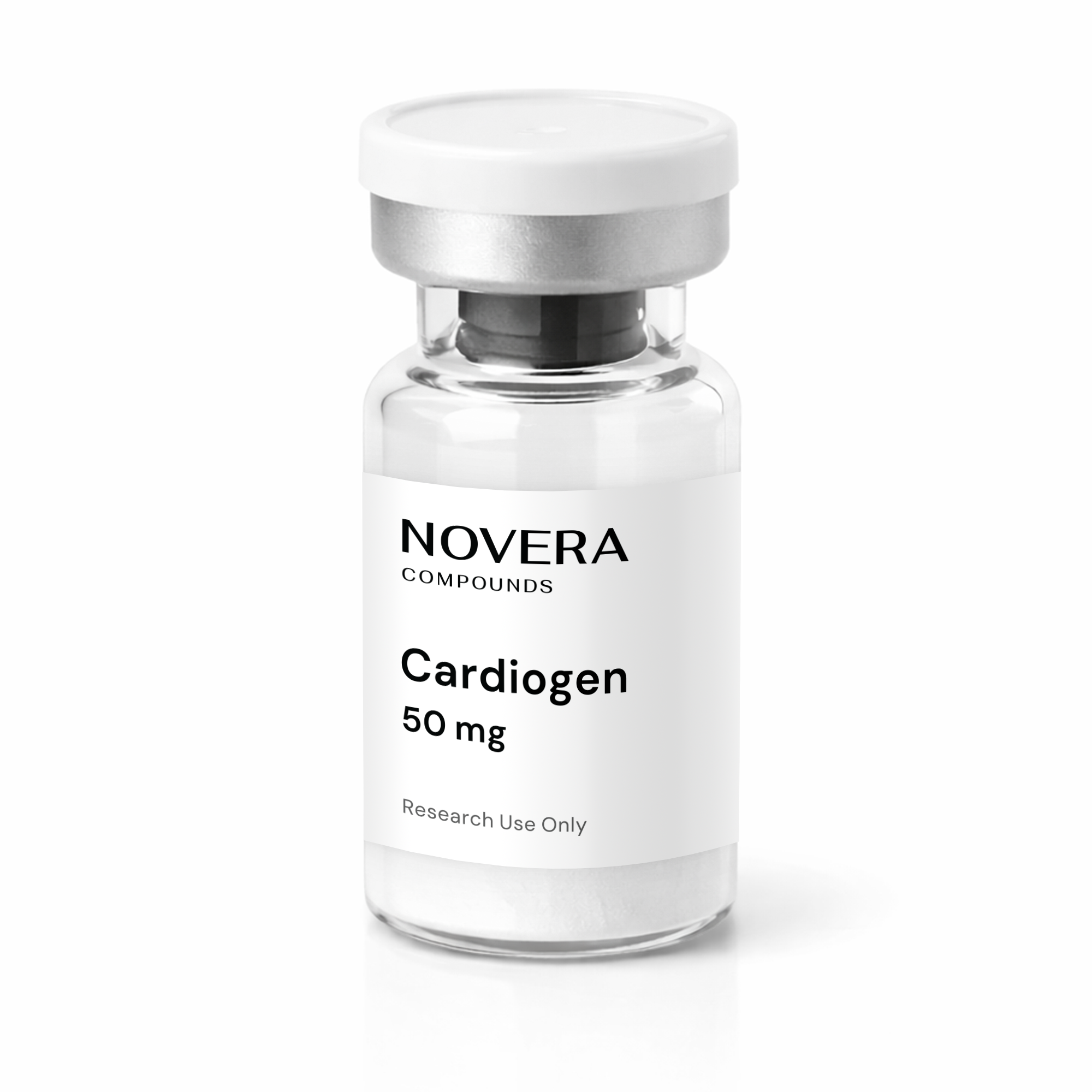
Cardiogen (50mg)
All products are 100% genuine and sourced from trusted manufacturers, with authenticity that can be verified for complete peace of mind.
Order exactly what you need with no minimum quantity required, whether it’s a single unit or a larger order.
Your order is guaranteed to arrive safely, with full shipment tracking and dedicated support to ensure a smooth delivery experience.
Your payments are protected with industry-standard encryption and trusted payment providers, ensuring every transaction is safe, private, and secure.
 99% PURITY GUARANTEE
 99% PURITY GUARANTEE
Each peptide batch is tested and verified to meet or exceed 98–99% purity (HPLC). Full analytical reports are available in the Certificate of Analysis section.
 Preparation & Handling Notice
The product is delivered in powdered (lyophilized) form and must be properly reconstituted prior to research use.
 RESEARCH USE ONLY
This product is intended for research use only. It is not for human or veterinary use, not for diagnostic or therapeutic purposes, and should only be handled by qualified professionals.
Strength: 50 mg
CAS: N/A
Chemical Formula: C₁₈H₃₁N₇O₉
Molecular weight: 489.48 g/mol
Peptide Sequence: Ala-Glu-Asp-Arg
Synonyms: Cardiac peptide bioregulator
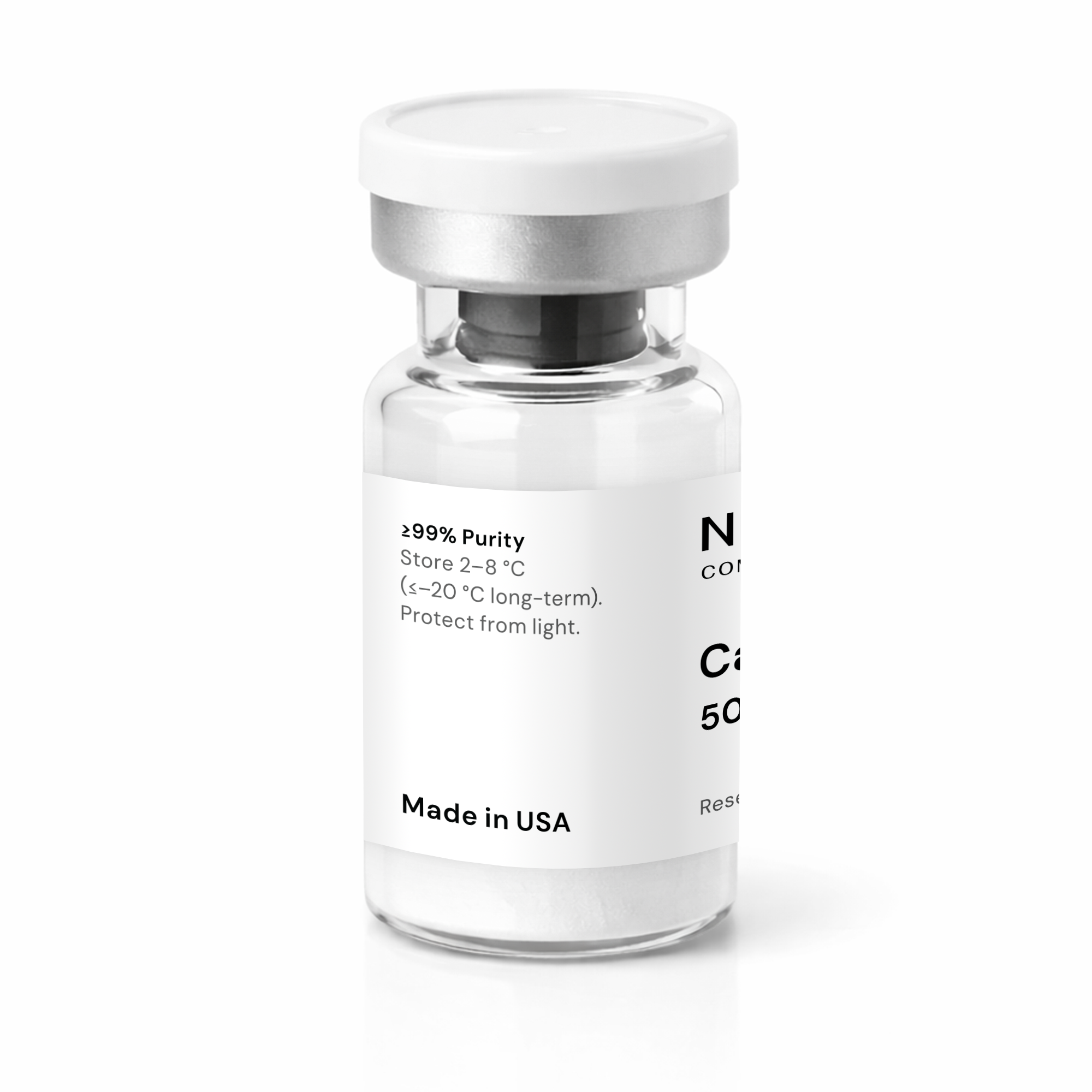
Storage: Store 2–8 °C (≤–20 °C long-term). RT exposure during transport acceptable. Protect from light.
Shelf life: 24 months from the manufacturing date.
Cardiogen is a short synthetic tetrapeptide (Ala–Glu–Asp–Arg) described as a cardiac peptide bioregulator and studied in preclinical tissue and animal models. Research reports that it alters cell proliferation and p53 associated apoptosis markers in rat myocard tissue cultures and that it is associated with increased tumor cell apoptosis and dose dependent inhibition of M 1 sarcoma growth in senescent rat models. These findings are specific to those experimental systems and do not represent validated clinical outcomes.
-
Cold chain shipping available for temperature-sensitive products.
-
Orders are processed within 1–2 business days.
-
Delivery timelines vary by destination and shipping method — view our Shipping Policy for region-specific estimates.
-
Tracking information will be provided once shipped.
-
No order minimum applies.
-
If your shipment is delayed, lost, or arrives damaged, you're covered under our Refund & Replacement Policy.
We accept Visa, Mastercard, and American Express. Apple Pay and Google Pay are available upon request via your account manager.
All transactions are processed through a secure, PCI DSS–compliant system to ensure your data is fully protected.
Why Choose NOVERA COMPOUNDS Peptides?
Novera Research delivers high-quality research peptides developed under strict manufacturing and quality-control standards. Each product is carefully synthesized, tested, and handled to ensure consistency, reliability, and transparency for advanced research applications.
- High-purity, research-grade peptide synthesis
- Analytical testing to verify quality and composition
- Consistent batch-to-batch performance
- Batch identification on every vial for traceability
- Stored and shipped under controlled conditions
 High-purity, research-grade peptide synthesis

Why Choose Medica Depot
Shop hundreds of medical products with no minimums and free shipping on large orders.
 400+ products
 No order minimums
 Free shipping
 Loyalty rewards
 Trusted since 2007
 Account manager
 Verified LOT numbers
INFORMATION
What is Cardiogen (50mg)?
Cardiogen (50 mg) is a synthetic research peptide in the organ-specific and bioregulator category. Literature describes it as a cardiac bioregulator peptide, originally linked to low–molecular-weight compounds identified in heart tissue and later synthesized for controlled experimental use.
Researchers use Cardiogen as a probe in models that examine gene expression, cell growth, and programmed cell death (apoptosis) in cardiac and stromal (supporting) tissues. Studies using myocardial tissue cultures and fibroblast-based systems have explored how this peptide may influence cell proliferation, tissue remodeling pathways, and signaling networks related to stress responses and aging.
Cardiogen is not a drug or dietary supplement. Researchers use it only in preclinical in-vitro and in-vivo experiments.
- Also known as: Cardiogen; cardiac peptide bioregulator; tetrapeptide AEDR (Ala–Glu–Asp–Arg)
Product Specifications
- Peptide Sequence: Ala–Glu–Asp–Arg
- Molecular Weight: 489.48 g/mol
- Chemical Formula: C₁₈H₃₁N₇O₉
- Purity: Typically supplied as ≥99% purity, with peptide identity and purity characterized by HPLC and mass spectrometry as documented in the Certificate of Analysis (CoA).
- Packaging Format: 50 mg Cardiogen per vial, provided as a lyophilized (freeze‑dried) powder in a sealed research‑grade container.
- Storage Conditions: Store at −20°C or below, protected from light and moisture; avoid repeated freeze–thaw cycles.
- Intended Use: For Laboratory Research Use Only (not for human or veterinary use).
Key Characteristics of Cardiogen (50mg)
- Short, Organ-Targeted Peptide: Cardiogen is a four-amino acid peptide (Ala–Glu–Asp–Arg) developed for its organ-specific gene-expression effects, with a focus on cardiac and stromal tissues.
- Cardiac Bioregulator Concept: Cardiogen is being studied for its ability to modulate gene expression, contractile protein synthesis, and cell behavior in myocardial tissue cultures under controlled conditions.
- Fibroblast and Tissue-Remodeling Focus: Cardiogen influences fibroblast gene-expression programs, extracellular-matrix signaling, and tissue-remodeling pathways, particularly in aging and stress models.
- Apoptosis and p53-Related Endpoints: In rat myocardial tissue cultures, reports describe increased cell proliferation and reduced p53 expression (a protein involved in apoptosis), suggesting potential effects on cell survival pathways in those preclinical settings.
- Tumor-Model Investigations: In senescent rats with transplanted M-1 sarcoma, injections were associated with increased tumor-cell apoptosis and dose-dependent inhibition of tumor growth, interpreted within that specific experimental model and conditions.
- Research-Grade Quality: Cardiogen is supplied as a synthetic peptide at high purity (typically ≥99%), and its identity is confirmed and impurities assessed by chromatographic and mass spectrometric methods.
- Lyophilized for Stability: Cardiogen is freeze-dried to maintain its stability during storage and shipping. It is intended to be reconstituted with appropriate laboratory solvents before use.
- Exclusive Research Use: Cardiogen is used solely to explore mechanistic questions in in vitro experiments and animal models, not for clinical, diagnostic, or therapeutic purposes.
How Cardiogen (50mg) Supports Research
Cardiogen (50 mg) supports research by helping investigators study how ultrashort peptides may influence gene expression and cell behavior in cardiac and stromal systems. In organotypic myocardial tissue cultures from young and older rats, researchers have used Cardiogen to examine cell proliferation, apoptosis-related markers, and protein expression (including p53) to understand age-related differences in tissue response under controlled conditions.
Researchers also use Cardiogen in fibroblast and stromal cell cultures to study gene-expression programs linked to extracellular-matrix turnover and tissue remodeling. In certain rodent tumor models, investigators have used it to explore relationships between peptide exposure, apoptosis frequency, and tumor-growth patterns within that experimental context.
Across these models, Cardiogen functions as a tool for mapping pathways—not as a clinical intervention.
Research Applications & Usage Information
Cardiogen (50mg) is used in various research studies focused on gene expression, cell behavior, and tissue remodeling. Typical applications include:
- Myocardial Tissue Culture and Cardiac Cell Development: Studying cardiomyocyte proliferation, support-cell dynamics, and apoptosis in rat myocardial explant cultures, including age-comparison designs.
- Fibroblast Biology and Extracellular-Matrix Signaling: Examining gene-expression networks tied to fibroblast differentiation, matrix regulation, and stromal–parenchymal interactions in vitro.
- Tumor-Cell Apoptosis and Tumor Microenvironment Models: Used in rodent M-1 sarcoma models to evaluate apoptosis markers and tumor-growth dynamics under defined protocols.
- Age-Associated Stromal and Prostate Tissue Studies: Referenced in gerontology research exploring fibroblast-derived signaling and stromal gene expression in prostate tissue culture models.
- Ultrashort Peptide Transport and Bioregulation Research: Support studies of how peptides such as AEDR may enter cells and interact with intracellular targets via peptide transport mechanisms.
Cardiogen is used as a mechanistic and exploratory reagent, not for therapeutic purposes. Outcomes observed in research are specific to controlled experimental conditions and should not be generalized beyond those settings.
Handling and Storage Recommendations
To maintain peptide integrity and ensure consistent experimental results, follow these guidelines:
- Keep sealed vials at −20 °C or colder, dry, and protected from light.
- Let the sealed vial reach room temperature to reduce condensation.
- Store 2-8 °C (short-term) or −20 °C (long-term) per validated stability/institutional practice.
- Use appropriate PPE and standard laboratory biosafety practices.
- Dispose of unused material, solutions, and contaminated supplies according to institutional and local chemical/biohazard waste requirements.
Research Use Only Notice
This product is intended for laboratory research use only and is not approved for human or veterinary use. It is not intended for diagnostic, therapeutic, or clinical applications. Any reference to biological activity or potential effects is based solely on preclinical or in-vitro findings and should not be interpreted as validated clinical outcomes. Researchers are responsible for ensuring proper handling, storage, and disposal in accordance with institutional, federal, and international guidelines.
References
- Levdik NV, Knyazkin IV. Tumor-modifying effect of cardiogen peptide on M-1 sarcoma in senescent rats. Bull Exp Biol Med. 2009;148(3):433-436. doi:10.1007/s10517-010-0730-9
- Khavinson V, Linkova N, Kozhevnikova E, Dyatlova A, Petukhov M. Transport of Biologically Active Ultrashort Peptides Using POT and LAT Carriers. Int J Mol Sci. 2022;23(14):7733. Published 2022 Jul 13. doi:10.3390/ijms23147733
- Chalisova NI, Lesniak VV, Balykina NA, et al. The effect of the amino acids and cardiogen on the development of myocard tissue culture from young and old rats. Adv Gerontol. 2009;22(3):409-413.
- Anisimov VN, Khavinson VKh. Peptide bioregulation of aging: results and prospects. Biogerontology. 2010;11(2):139-149. doi:10.1007/s10522-009-9249-8
- National Center for Biotechnology Information. PubChem Patent Summary for US-7662789-B2, Peptide substance restoring myocardium function. https://pubchem.ncbi.nlm.nih.gov/patent/US-7662789-B2.
What is Cardiogen (50mg)?
Cardiogen (50 mg) is a synthetic research peptide in the organ-specific and bioregulator category. Literature describes it as a cardiac bioregulator peptide, originally linked to low–molecular-weight compounds identified in heart tissue and later synthesized for controlled experimental use.
Researchers use Cardiogen as a probe in models that examine gene expression, cell growth, and programmed cell death (apoptosis) in cardiac and stromal (supporting) tissues. Studies using myocardial tissue cultures and fibroblast-based systems have explored how this peptide may influence cell proliferation, tissue remodeling pathways, and signaling networks related to stress responses and aging.
Cardiogen is not a drug or dietary supplement. Researchers use it only in preclinical in-vitro and in-vivo experiments.
- Also known as: Cardiogen; cardiac peptide bioregulator; tetrapeptide AEDR (Ala–Glu–Asp–Arg)
Product Specifications
- Peptide Sequence: Ala–Glu–Asp–Arg
- Molecular Weight: 489.48 g/mol
- Chemical Formula: C₁₈H₃₁N₇O₉
- Purity: Typically supplied as ≥99% purity, with peptide identity and purity characterized by HPLC and mass spectrometry as documented in the Certificate of Analysis (CoA).
- Packaging Format: 50 mg Cardiogen per vial, provided as a lyophilized (freeze‑dried) powder in a sealed research‑grade container.
- Storage Conditions: Store at −20°C or below, protected from light and moisture; avoid repeated freeze–thaw cycles.
- Intended Use: For Laboratory Research Use Only (not for human or veterinary use).
Key Characteristics of Cardiogen (50mg)
- Short, Organ-Targeted Peptide: Cardiogen is a four-amino acid peptide (Ala–Glu–Asp–Arg) developed for its organ-specific gene-expression effects, with a focus on cardiac and stromal tissues.
- Cardiac Bioregulator Concept: Cardiogen is being studied for its ability to modulate gene expression, contractile protein synthesis, and cell behavior in myocardial tissue cultures under controlled conditions.
- Fibroblast and Tissue-Remodeling Focus: Cardiogen influences fibroblast gene-expression programs, extracellular-matrix signaling, and tissue-remodeling pathways, particularly in aging and stress models.
- Apoptosis and p53-Related Endpoints: In rat myocardial tissue cultures, reports describe increased cell proliferation and reduced p53 expression (a protein involved in apoptosis), suggesting potential effects on cell survival pathways in those preclinical settings.
- Tumor-Model Investigations: In senescent rats with transplanted M-1 sarcoma, injections were associated with increased tumor-cell apoptosis and dose-dependent inhibition of tumor growth, interpreted within that specific experimental model and conditions.
- Research-Grade Quality: Cardiogen is supplied as a synthetic peptide at high purity (typically ≥99%), and its identity is confirmed and impurities assessed by chromatographic and mass spectrometric methods.
- Lyophilized for Stability: Cardiogen is freeze-dried to maintain its stability during storage and shipping. It is intended to be reconstituted with appropriate laboratory solvents before use.
- Exclusive Research Use: Cardiogen is used solely to explore mechanistic questions in in vitro experiments and animal models, not for clinical, diagnostic, or therapeutic purposes.
How Cardiogen (50mg) Supports Research
Cardiogen (50 mg) supports research by helping investigators study how ultrashort peptides may influence gene expression and cell behavior in cardiac and stromal systems. In organotypic myocardial tissue cultures from young and older rats, researchers have used Cardiogen to examine cell proliferation, apoptosis-related markers, and protein expression (including p53) to understand age-related differences in tissue response under controlled conditions.
Researchers also use Cardiogen in fibroblast and stromal cell cultures to study gene-expression programs linked to extracellular-matrix turnover and tissue remodeling. In certain rodent tumor models, investigators have used it to explore relationships between peptide exposure, apoptosis frequency, and tumor-growth patterns within that experimental context.
Across these models, Cardiogen functions as a tool for mapping pathways—not as a clinical intervention.
Research Applications & Usage Information
Cardiogen (50mg) is used in various research studies focused on gene expression, cell behavior, and tissue remodeling. Typical applications include:
- Myocardial Tissue Culture and Cardiac Cell Development: Studying cardiomyocyte proliferation, support-cell dynamics, and apoptosis in rat myocardial explant cultures, including age-comparison designs.
- Fibroblast Biology and Extracellular-Matrix Signaling: Examining gene-expression networks tied to fibroblast differentiation, matrix regulation, and stromal–parenchymal interactions in vitro.
- Tumor-Cell Apoptosis and Tumor Microenvironment Models: Used in rodent M-1 sarcoma models to evaluate apoptosis markers and tumor-growth dynamics under defined protocols.
- Age-Associated Stromal and Prostate Tissue Studies: Referenced in gerontology research exploring fibroblast-derived signaling and stromal gene expression in prostate tissue culture models.
- Ultrashort Peptide Transport and Bioregulation Research: Support studies of how peptides such as AEDR may enter cells and interact with intracellular targets via peptide transport mechanisms.
Cardiogen is used as a mechanistic and exploratory reagent, not for therapeutic purposes. Outcomes observed in research are specific to controlled experimental conditions and should not be generalized beyond those settings.
Handling and Storage Recommendations
To maintain peptide integrity and ensure consistent experimental results, follow these guidelines:
- Keep sealed vials at −20 °C or colder, dry, and protected from light.
- Let the sealed vial reach room temperature to reduce condensation.
- Store 2-8 °C (short-term) or −20 °C (long-term) per validated stability/institutional practice.
- Use appropriate PPE and standard laboratory biosafety practices.
- Dispose of unused material, solutions, and contaminated supplies according to institutional and local chemical/biohazard waste requirements.
Research Use Only Notice
This product is intended for laboratory research use only and is not approved for human or veterinary use. It is not intended for diagnostic, therapeutic, or clinical applications. Any reference to biological activity or potential effects is based solely on preclinical or in-vitro findings and should not be interpreted as validated clinical outcomes. Researchers are responsible for ensuring proper handling, storage, and disposal in accordance with institutional, federal, and international guidelines.
References
- Levdik NV, Knyazkin IV. Tumor-modifying effect of cardiogen peptide on M-1 sarcoma in senescent rats. Bull Exp Biol Med. 2009;148(3):433-436. doi:10.1007/s10517-010-0730-9
- Khavinson V, Linkova N, Kozhevnikova E, Dyatlova A, Petukhov M. Transport of Biologically Active Ultrashort Peptides Using POT and LAT Carriers. Int J Mol Sci. 2022;23(14):7733. Published 2022 Jul 13. doi:10.3390/ijms23147733
- Chalisova NI, Lesniak VV, Balykina NA, et al. The effect of the amino acids and cardiogen on the development of myocard tissue culture from young and old rats. Adv Gerontol. 2009;22(3):409-413.
- Anisimov VN, Khavinson VKh. Peptide bioregulation of aging: results and prospects. Biogerontology. 2010;11(2):139-149. doi:10.1007/s10522-009-9249-8
- National Center for Biotechnology Information. PubChem Patent Summary for US-7662789-B2, Peptide substance restoring myocardium function. https://pubchem.ncbi.nlm.nih.gov/patent/US-7662789-B2.
Related products