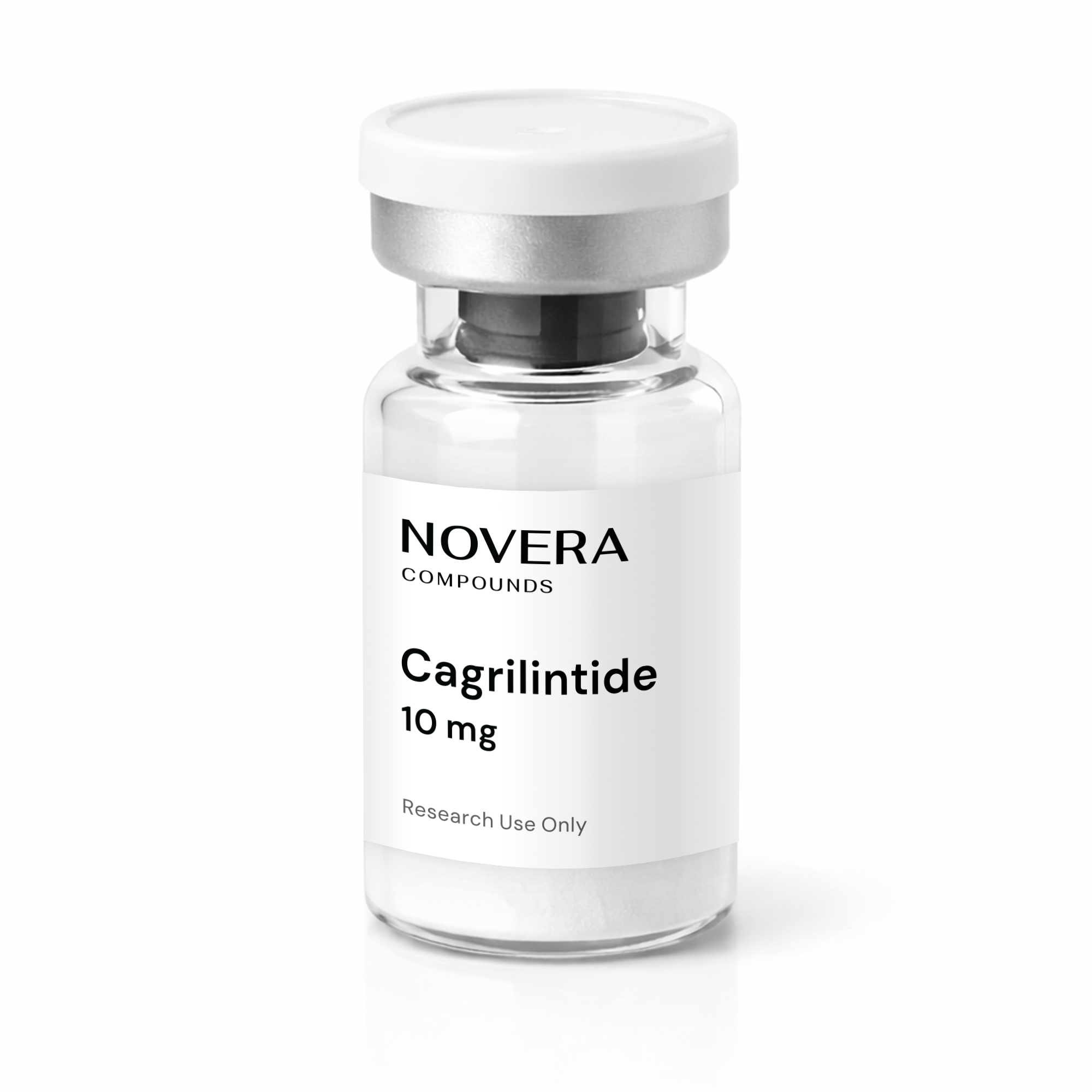
Cagrilintide (10mg)
All products are 100% genuine and sourced from trusted manufacturers, with authenticity that can be verified for complete peace of mind.
Order exactly what you need with no minimum quantity required, whether it’s a single unit or a larger order.
Your order is guaranteed to arrive safely, with full shipment tracking and dedicated support to ensure a smooth delivery experience.
Your payments are protected with industry-standard encryption and trusted payment providers, ensuring every transaction is safe, private, and secure.
 99% PURITY GUARANTEE
 99% PURITY GUARANTEE
Each peptide batch is tested and verified to meet or exceed 98–99% purity (HPLC). Full analytical reports are available in the Certificate of Analysis section.


 Preparation & Handling Notice
The product is delivered in powdered (lyophilized) form and must be properly reconstituted prior to research use.
 RESEARCH USE ONLY
This product is intended for research use only. It is not for human or veterinary use, not for diagnostic or therapeutic purposes, and should only be handled by qualified professionals.
Strength: 10 mg
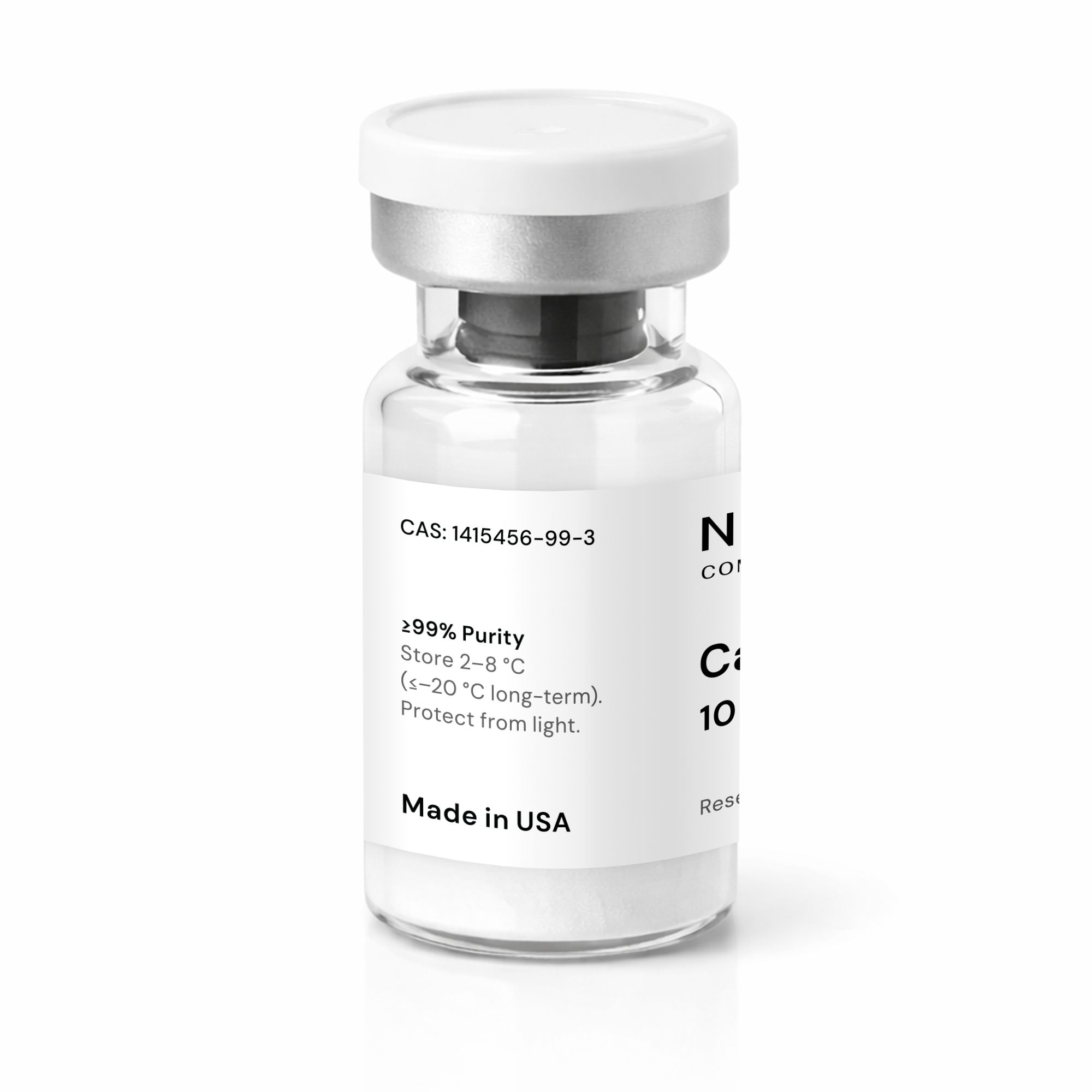
CAS: 1415456-99-3
Chemical Formula: C₁₉₄H₃₁₂N₅₄O₅₉S₂
Molecular weight: 4408.258 g/mol
Peptide Sequence: XKCNTATCATQRLAEFLRHSSNNFGPILPPTNVGSNTP
Synonyms: NN0174-0833, AM833, EX-A10092
Storage: Store 2–8 °C (≤–20 °C long-term). RT exposure during transport acceptable. Protect from light.
Shelf life: 24 months from the manufacturing date.
Cagrilintide is a long acting synthetic amylin analogue that activates amylin and calcitonin receptors involved in appetite and energy balance. It is under investigation in preclinical and clinical studies on overweight, obesity, and metabolic disorders, where researchers have examined its effects on body weight and energy intake, including when combined with GLP 1 receptor agonists such as semaglutide, but it is not an approved therapy.
-
Cold chain shipping available for temperature-sensitive products.
-
Orders are processed within 1–2 business days.
-
Delivery timelines vary by destination and shipping method — view our Shipping Policy for region-specific estimates.
-
Tracking information will be provided once shipped.
-
No order minimum applies.
-
If your shipment is delayed, lost, or arrives damaged, you're covered under our Refund & Replacement Policy.
We accept Visa, Mastercard, and American Express. Apple Pay and Google Pay are available upon request via your account manager.
All transactions are processed through a secure, PCI DSS–compliant system to ensure your data is fully protected.
Why Choose NOVERA COMPOUNDS Peptides?
Novera Research delivers high-quality research peptides developed under strict manufacturing and quality-control standards. Each product is carefully synthesized, tested, and handled to ensure consistency, reliability, and transparency for advanced research applications.
- High-purity, research-grade peptide synthesis
- Analytical testing to verify quality and composition
- Consistent batch-to-batch performance
- Batch identification on every vial for traceability
- Stored and shipped under controlled conditions
 High-purity, research-grade peptide synthesis

Why Choose Medica Depot
Shop hundreds of medical products with no minimums and free shipping on large orders.
 400+ products
 No order minimums
 Free shipping
 Loyalty rewards
 Trusted since 2007
 Account manager
 Verified LOT numbers
INFORMATION
What is Cagrilintide (10mg)?
Cagrilintide is a synthetic research peptide classified in weight-loss and metabolic peptide research. It is a long-acting analogue of amylin, a natural hormone involved in appetite and energy regulation. In research models, cagrilintide is designed to activate receptors linked to satiety, food intake, gastric emptying, and metabolic control.
Compared with native amylin, cagrilintide includes modifications that improve stability, extend activity over time, and reduce the tendency to form fibrils. It interacts with amylin receptors and calcitonin receptors, which are widely studied for their roles in appetite and energy balance.
Cagrilintide is used to investigate receptor signaling and metabolic pathways in controlled laboratory settings. It is not approved for clinical use.
Product Specifications
- CAS Number: 1415456-99-3
- Peptide Sequence: XKCNTATCATQRLAEFLRHSSNNFGPILPPTNVGSNTP (disulfide bridge Cys3–Cys8; X denotes N‑terminal lipidated residue)
- Molecular Weight: 4408.258 g/mol
- Chemical Formula: C₁₉₄H₃₁₂N₅₄O₅₉S₂
- Packaging Format: 10 mg cagrilintide per vial, provided as a lyophilized (freeze‑dried) powder in a sealed research-use container.
- Storage Conditions: Store lyophilized peptide at −20°C, protected from light and moisture; avoid repeated freeze–thaw cycles.
- Intended Use: For Laboratory Research Use Only (not for human or veterinary use).
Key Characteristics of Cagrilintide (10mg)
- Long-acting amylin analogue: A modified form of amylin designed to remain active longer than the native hormone in research settings.
- Receptor activity profile: Acts as a nonselective agonist at amylin and calcitonin receptors involved in appetite regulation, gastric emptying, and metabolic control.
- Stability-focused design: Uses lipidation and sequence modifications to improve stability and reduce fibril formation compared with natural amylin.
- Investigational evidence base: Studied in clinical research for effects on body weight, energy intake, and metabolic markers in overweight/obesity populations.
- Combination-pathway research: Commonly studied with GLP-1 receptor agonists (e.g., semaglutide) to evaluate multi-hormone effects on appetite and metabolism.
- Lyophilized format: Supplied as a freeze-dried powder for reconstitution using lab-appropriate solvents based on study design.
- Long half-life (characterized in studies): Reported as long-acting in preclinical and clinical research, supporting extended-interval dosing within those study protocols.
- Storage considerations: Lyophilized storage at −20 °C supports stability; reconstituted solutions are commonly stored colder for longer-term integrity (per internal methods).
How Cagrilintide (10mg) Supports Research
Cagrilintide is used as a tool compound to study how amylin and calcitonin receptor signaling influences appetite, food intake, and energy balance. By activating these receptor systems, researchers can investigate mechanisms involved in satiety signaling and metabolic regulation.
Across preclinical research and clinical studies, cagrilintide has been evaluated for effects on body weight, energy intake, and metabolic parameters, including work that explores combination approaches (such as pairing with semaglutide). These findings help inform how targeting multiple hormone pathways may affect appetite regulation and metabolism in controlled study settings.
Research Applications & Usage Information
Cagrilintide (10 mg) is widely used in research studies on weight regulation, metabolism, and receptor signaling. Common applications include:
- Metabolic and obesity research: Studying how amylin receptor activation influences body weight, food intake, and metabolic control in preclinical and clinical research settings.
- Receptor pharmacology and signaling: Characterizing amylin and calcitonin receptor activation and downstream signaling in cell-based systems.
- Comparative hormone studies: Comparing cagrilintide with native amylin, pramlintide, and related peptides to assess potency, duration, and receptor-driven effects.
- Combination-therapy models: Evaluating interactions with GLP-1 receptor agonists (e.g., semaglutide) to study additive or complementary effects on appetite and metabolism.
- PK/PD profiling: Investigating absorption, distribution, half-life, and exposure–response relationships, including the impact of lipidation on duration of action.
- Gut–brain signaling research: Exploring how amylin-related signaling contributes to appetite and satiety pathways in brain regions involved in hunger regulation.
Cagrilintide is used to study biological mechanisms in controlled research environments. Observed effects in studies should not be interpreted as therapeutic outcomes outside those settings.
Handling and Storage Recommendations
To maintain peptide integrity and ensure reliable experimental results, the following handling and storage practices are recommended:
- Store unopened vials at −20 °C or below, sealed.
- Protect from light or moisture to maintain potency.
- Store reconstituted solutions at 2-8 °C (short-term) or −20 °C (long-term).
- Dispose of unused material and supplies according to institutional safety and waste procedures.
Research Use Only Notice
This product is intended for laboratory research use only and is not approved for human or veterinary use. It is not intended for diagnostic, therapeutic, or clinical applications. Any reference to biological activity or potential effects is based solely on preclinical or in-vitro findings and should not be interpreted as validated clinical outcomes. Researchers are responsible for ensuring proper handling, storage, and disposal in accordance with institutional, federal, and international guidelines.
References
- D’Ascanio AM, Mullally JA, Frishman WH. Cagrilintide: A Long-Acting Amylin Analog for the Treatment of Obesity. Cardiol Rev. 2024;32(1):83-90. doi:10.1097/CRD.0000000000000513
- Lau DCW, Erichsen L, Francisco AM, et al. Once-weekly cagrilintide for weight management in people with overweight and obesity: a multicentre, randomised, double-blind, placebo-controlled and active-controlled, dose-finding phase 2 trial. Lancet. 2021;398(10317):2160-2172. doi:10.1016/S0140-6736(21)01751-7
- Dutta D, Nagendra L, Harish BG, et al. Efficacy and Safety of Cagrilintide Alone and in Combination with Semaglutide (Cagrisema) as Anti-Obesity Medications: A Systematic Review and Meta-Analysis. Indian J Endocrinol Metab. 2024;28(5):436-444. doi:10.4103/ijem.ijem_45_24
- Kruse T, Hansen JL, Dahl K, et al. Development of Cagrilintide, a Long-Acting Amylin Analogue. J Med Chem. 2021;64(15):11183-11194. doi:10.1021/acs.jmedchem.1c00565
What is Cagrilintide (10mg)?
Cagrilintide is a synthetic research peptide classified in weight-loss and metabolic peptide research. It is a long-acting analogue of amylin, a natural hormone involved in appetite and energy regulation. In research models, cagrilintide is designed to activate receptors linked to satiety, food intake, gastric emptying, and metabolic control.
Compared with native amylin, cagrilintide includes modifications that improve stability, extend activity over time, and reduce the tendency to form fibrils. It interacts with amylin receptors and calcitonin receptors, which are widely studied for their roles in appetite and energy balance.
Cagrilintide is used to investigate receptor signaling and metabolic pathways in controlled laboratory settings. It is not approved for clinical use.
Product Specifications
- CAS Number: 1415456-99-3
- Peptide Sequence: XKCNTATCATQRLAEFLRHSSNNFGPILPPTNVGSNTP (disulfide bridge Cys3–Cys8; X denotes N‑terminal lipidated residue)
- Molecular Weight: 4408.258 g/mol
- Chemical Formula: C₁₉₄H₃₁₂N₅₄O₅₉S₂
- Packaging Format: 10 mg cagrilintide per vial, provided as a lyophilized (freeze‑dried) powder in a sealed research-use container.
- Storage Conditions: Store lyophilized peptide at −20°C, protected from light and moisture; avoid repeated freeze–thaw cycles.
- Intended Use: For Laboratory Research Use Only (not for human or veterinary use).
Key Characteristics of Cagrilintide (10mg)
- Long-acting amylin analogue: A modified form of amylin designed to remain active longer than the native hormone in research settings.
- Receptor activity profile: Acts as a nonselective agonist at amylin and calcitonin receptors involved in appetite regulation, gastric emptying, and metabolic control.
- Stability-focused design: Uses lipidation and sequence modifications to improve stability and reduce fibril formation compared with natural amylin.
- Investigational evidence base: Studied in clinical research for effects on body weight, energy intake, and metabolic markers in overweight/obesity populations.
- Combination-pathway research: Commonly studied with GLP-1 receptor agonists (e.g., semaglutide) to evaluate multi-hormone effects on appetite and metabolism.
- Lyophilized format: Supplied as a freeze-dried powder for reconstitution using lab-appropriate solvents based on study design.
- Long half-life (characterized in studies): Reported as long-acting in preclinical and clinical research, supporting extended-interval dosing within those study protocols.
- Storage considerations: Lyophilized storage at −20 °C supports stability; reconstituted solutions are commonly stored colder for longer-term integrity (per internal methods).
How Cagrilintide (10mg) Supports Research
Cagrilintide is used as a tool compound to study how amylin and calcitonin receptor signaling influences appetite, food intake, and energy balance. By activating these receptor systems, researchers can investigate mechanisms involved in satiety signaling and metabolic regulation.
Across preclinical research and clinical studies, cagrilintide has been evaluated for effects on body weight, energy intake, and metabolic parameters, including work that explores combination approaches (such as pairing with semaglutide). These findings help inform how targeting multiple hormone pathways may affect appetite regulation and metabolism in controlled study settings.
Research Applications & Usage Information
Cagrilintide (10 mg) is widely used in research studies on weight regulation, metabolism, and receptor signaling. Common applications include:
- Metabolic and obesity research: Studying how amylin receptor activation influences body weight, food intake, and metabolic control in preclinical and clinical research settings.
- Receptor pharmacology and signaling: Characterizing amylin and calcitonin receptor activation and downstream signaling in cell-based systems.
- Comparative hormone studies: Comparing cagrilintide with native amylin, pramlintide, and related peptides to assess potency, duration, and receptor-driven effects.
- Combination-therapy models: Evaluating interactions with GLP-1 receptor agonists (e.g., semaglutide) to study additive or complementary effects on appetite and metabolism.
- PK/PD profiling: Investigating absorption, distribution, half-life, and exposure–response relationships, including the impact of lipidation on duration of action.
- Gut–brain signaling research: Exploring how amylin-related signaling contributes to appetite and satiety pathways in brain regions involved in hunger regulation.
Cagrilintide is used to study biological mechanisms in controlled research environments. Observed effects in studies should not be interpreted as therapeutic outcomes outside those settings.
Handling and Storage Recommendations
To maintain peptide integrity and ensure reliable experimental results, the following handling and storage practices are recommended:
- Store unopened vials at −20 °C or below, sealed.
- Protect from light or moisture to maintain potency.
- Store reconstituted solutions at 2-8 °C (short-term) or −20 °C (long-term).
- Dispose of unused material and supplies according to institutional safety and waste procedures.
Research Use Only Notice
This product is intended for laboratory research use only and is not approved for human or veterinary use. It is not intended for diagnostic, therapeutic, or clinical applications. Any reference to biological activity or potential effects is based solely on preclinical or in-vitro findings and should not be interpreted as validated clinical outcomes. Researchers are responsible for ensuring proper handling, storage, and disposal in accordance with institutional, federal, and international guidelines.
References
- D’Ascanio AM, Mullally JA, Frishman WH. Cagrilintide: A Long-Acting Amylin Analog for the Treatment of Obesity. Cardiol Rev. 2024;32(1):83-90. doi:10.1097/CRD.0000000000000513
- Lau DCW, Erichsen L, Francisco AM, et al. Once-weekly cagrilintide for weight management in people with overweight and obesity: a multicentre, randomised, double-blind, placebo-controlled and active-controlled, dose-finding phase 2 trial. Lancet. 2021;398(10317):2160-2172. doi:10.1016/S0140-6736(21)01751-7
- Dutta D, Nagendra L, Harish BG, et al. Efficacy and Safety of Cagrilintide Alone and in Combination with Semaglutide (Cagrisema) as Anti-Obesity Medications: A Systematic Review and Meta-Analysis. Indian J Endocrinol Metab. 2024;28(5):436-444. doi:10.4103/ijem.ijem_45_24
- Kruse T, Hansen JL, Dahl K, et al. Development of Cagrilintide, a Long-Acting Amylin Analogue. J Med Chem. 2021;64(15):11183-11194. doi:10.1021/acs.jmedchem.1c00565
Related products