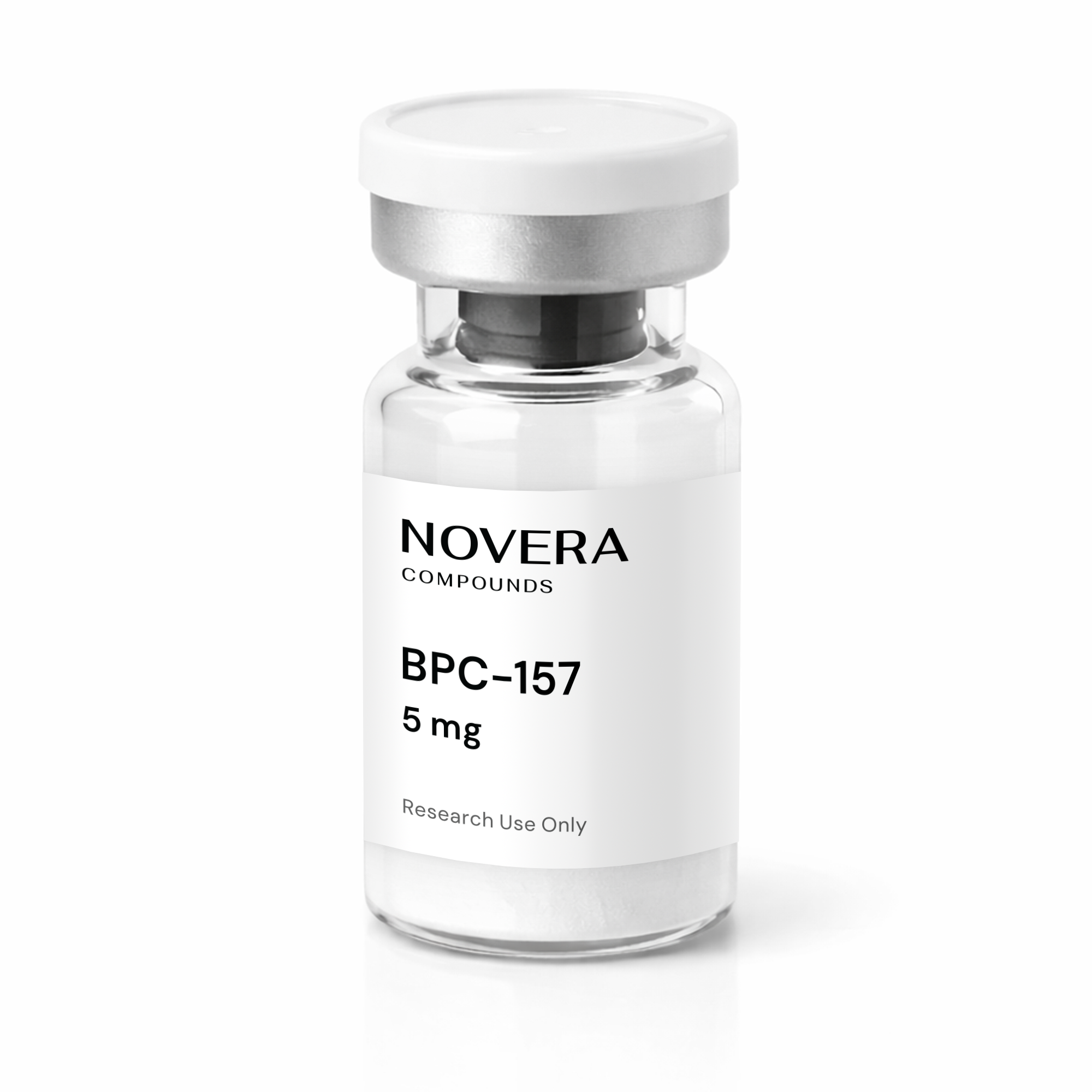
BPC-157 (5mg)
All products are 100% genuine and sourced from trusted manufacturers, with authenticity that can be verified for complete peace of mind.
Order exactly what you need with no minimum quantity required, whether it’s a single unit or a larger order.
Your order is guaranteed to arrive safely, with full shipment tracking and dedicated support to ensure a smooth delivery experience.
Your payments are protected with industry-standard encryption and trusted payment providers, ensuring every transaction is safe, private, and secure.
 99% PURITY GUARANTEE
 99% PURITY GUARANTEE
Each peptide batch is tested and verified to meet or exceed 98–99% purity (HPLC). Full analytical reports are available in the Certificate of Analysis section.
 Preparation & Handling Notice
The product is delivered in powdered (lyophilized) form and must be properly reconstituted prior to research use.
 RESEARCH USE ONLY
This product is intended for research use only. It is not for human or veterinary use, not for diagnostic or therapeutic purposes, and should only be handled by qualified professionals.
Strength: 5 mg
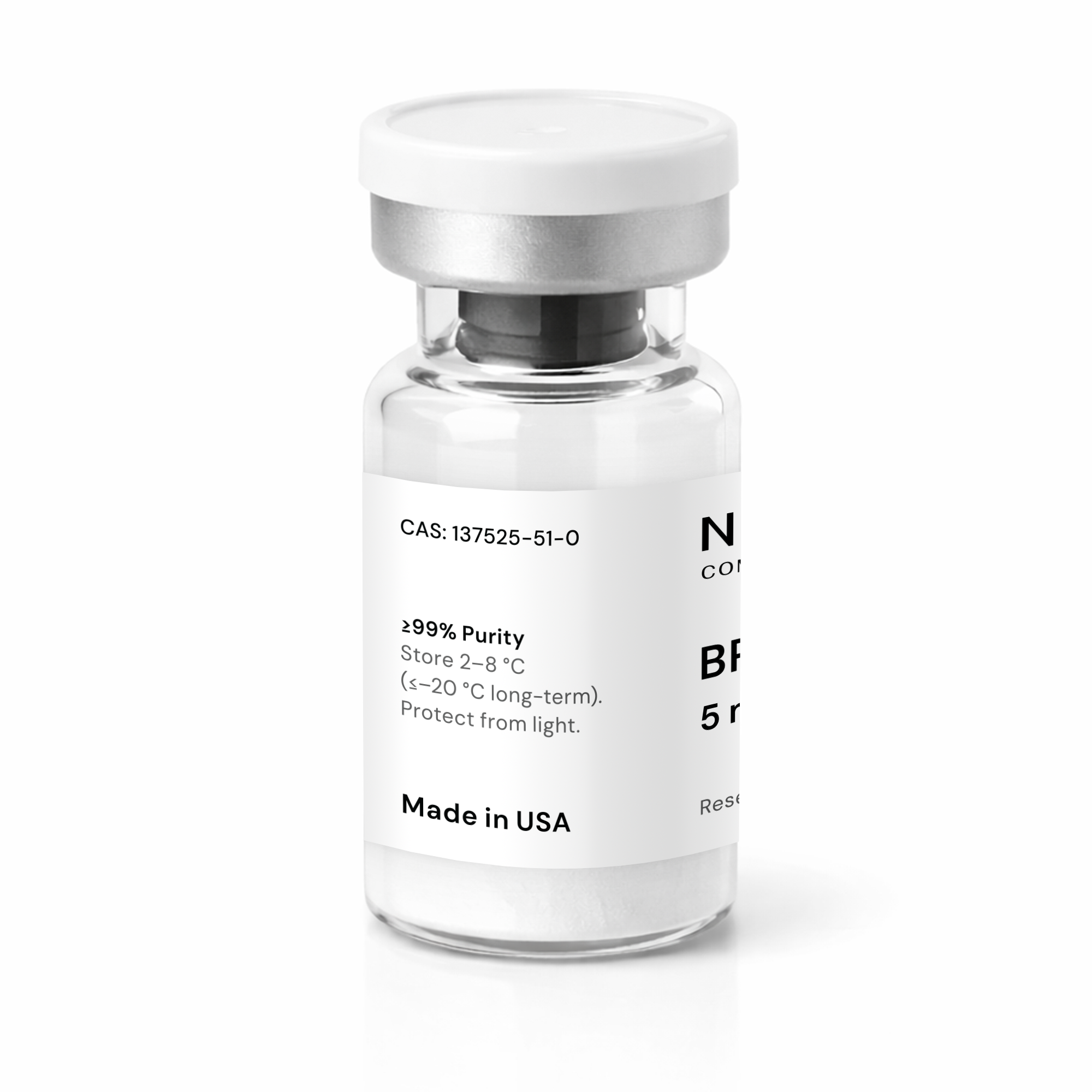
CAS: 137525-51-0
Chemical Formula: C₆₂H₉₈N₁₆O₂₂
Molecular weight: 1419.5 g/mol
Peptide Sequence: Gly-Glu-Pro-Pro-Pro-Gly-Lys-Pro-Ala-Asp-Asp-Ala-Gly-Leu-Val
Synonyms: BPC157, Bepecin
Storage: Store 2–8 °C (≤–20 °C long-term). RT exposure during transport acceptable. Protect from light.
Shelf life: 24 months from the manufacturing date.
BPC 157 is a synthetic research peptide used in laboratory and preclinical studies to explore peptide driven cellular signaling, tissue integrity, and adaptive biological responses. Supplied as a high purity lyophilized powder, it is intended solely for laboratory research use.
-
Cold chain shipping available for temperature-sensitive products.
-
Orders are processed within 1–2 business days.
-
Delivery timelines vary by destination and shipping method — view our Shipping Policy for region-specific estimates.
-
Tracking information will be provided once shipped.
-
No order minimum applies.
-
If your shipment is delayed, lost, or arrives damaged, you're covered under our Refund & Replacement Policy.
We accept Visa, Mastercard, and American Express. Apple Pay and Google Pay are available upon request via your account manager.
All transactions are processed through a secure, PCI DSS–compliant system to ensure your data is fully protected.
Why Choose NOVERA COMPOUNDS Peptides?
Novera Research delivers high-quality research peptides developed under strict manufacturing and quality-control standards. Each product is carefully synthesized, tested, and handled to ensure consistency, reliability, and transparency for advanced research applications.
- High-purity, research-grade peptide synthesis
- Analytical testing to verify quality and composition
- Consistent batch-to-batch performance
- Batch identification on every vial for traceability
- Stored and shipped under controlled conditions
 High-purity, research-grade peptide synthesis

Why Choose Medica Depot
Shop hundreds of medical products with no minimums and free shipping on large orders.
 400+ products
 No order minimums
 Free shipping
 Loyalty rewards
 Trusted since 2007
 Account manager
 Verified LOT numbers
INFORMATION
What is BPC-157 (5mg)?
BPC-157 (Body Protection Compound-157) is a short, 15-amino acid synthetic peptide widely used in preclinical research to examine tissue-response patterns to experimentally induced stress or injury in controlled laboratory conditions.
Derived from a fragment of a naturally occurring gastric protein, BPC-157 is used as a research tool to explore how peptides interact with cellular systems involved in maintenance and response processes. The 5 mg presentation is suitable for laboratories conducting pilot studies, method development, or multiple assay conditions, while maintaining consistency, stability, and reproducibility. All applications are strictly limited to laboratory research use only.
Product Specifications
- Category: Peptides
- Subcategory: Healing & Regenerative Peptides
- Peptide Name: BPC-157
- CAS Number: 137525-51-0
- Peptide Sequence: Gly–Glu–Pro–Pro–Pro–Gly–Lys–Pro–Ala–Asp–Asp–Ala–Gly–Leu–Val
- Molecular Formula: C₆₂H₉₈N₁₆O₂₂
- Molecular Weight: ~1419.5 g/mol
- Purity: ≥99% (HPLC‑verified; identity confirmed by standard analytical methods)
- Packaging Format: 5 mg lyophilized (freeze‑dried) powder in a sealed research‑use vial
- Storage Conditions: Store at 2–8 °C (≤ –20 °C for long-term storage). Protect from light.
- Intended Use: For laboratory research use only; not for human or veterinary use
Key Characteristics of BPC-157 (5mg)
- High purity (≥99%) to support consistent results in controlled lab workflows.
- Defined 15-amino acid peptide, commonly referenced in preclinical literature as a “stable gastric pentadecapeptide.”
- Small 5 mg format suitable for research teams running pilot studies, method development, or multiple assay conditions.
- Commonly used in non-clinical research to track changes in tissue-response markers, barrier integrity, and signaling readouts over time (in-vitro and animal models).
- Cold storage required (-20°C) and light protection recommended to maintain peptide integrity between uses.
- Research Use Only positioning (not for diagnostic, therapeutic, or clinical applications).
How BPC-157 (5mg) Supports Research
In laboratory and preclinical studies, BPC-157 is used to investigate peptide-driven cellular communication and signaling. Researchers utilize this peptide to observe how cells respond to signaling cues, structural stress, and environmental changes within controlled laboratory systems, particularly in models of tissue disruption or barrier compromise.
Its role in research is exploratory and focused on mechanistic understanding, rather than producing therapeutic outcomes. The 5 mg format allows researchers to maintain continuity across experiments that require repeated preparation or comparative analysis.
Research Applications & Usage Information
BPC-157 (5mg) is generally used in laboratory research for:
- Studies of cellular signaling and communication, focusing on peptide-mediated signaling changes.
- Tissue-related and regenerative research models, where structural integrity, matrix remodeling, or barrier function are endpoints.
- Exploratory investigations of peptide–protein interactions in cell and tissue systems.
- Comparative studies involving repair-associated peptides in preclinical models.
- Preclinical research examining cellular adaptation and response to experimentally induced stress or injury.
All use is restricted to in-vitro and preclinical research settings.
Handling and Storage Recommendations
- Store unopened vials at 2–8 °C, with ≤ –20 °C recommended for long-term storage
- Protect from light and moisture
- After reconstitution, store solutions at 2–8 °C and use within laboratory-defined timeframes
- Avoid repeated freeze-thaw cycles
- Follow standard laboratory safety, labeling, and handling procedures
All handling is performed within laboratory research environments; BPC-157 is not intended for human or veterinary administration.
Research Use Only Notice
This product is intended for laboratory research use only and is not approved for human or veterinary use. It is not intended for diagnostic, therapeutic, or clinical applications. Any reference to biological activity or potential effects is based solely on preclinical or in-vitro findings and should not be interpreted as validated clinical outcomes. Researchers are responsible for ensuring proper handling, storage, and disposal in accordance with institutional, federal, and international guidelines.
References
- Sikiric P, Seiwerth S, Brcic L, et al. Stable gastric pentadecapeptide BPC 157 in trials for inflammatory bowel disease (PL-10, PLD-116, PL 14736, Pliva, Croatia). Full and distended stomach, and vascular response. Inflammopharmacology. 2006;14(5-6):214-221. doi:10.1007/s10787-006-1531-7
- Sikiric P. The pharmacological properties of the novel peptide BPC 157 (PL-10). Inflammopharmacology. 1999;7(1):1-14. doi:10.1007/s10787-999-0022-z
- Xu C, Sun L, Ren F, et al. Preclinical safety evaluation of body protective compound-157, a potential drug for treating various wounds. Regul Toxicol Pharmacol. 2020;114:104665. doi:10.1016/j.yrtph.2020.104665
- Chang CH, Tsai WC, Lin MS, Hsu YH, Pang JHS. The promoting effect of pentadecapeptide BPC 157 on tendon healing involves tendon outgrowth, cell survival, and cell migration. Journal of Applied Physiology. 2010;110(3):774-780. doi:10.1152/japplphysiol.00945.2010
- Sikiric P, Blagaic AB, Strbe S, et al. The Stable Gastric Pentadecapeptide BPC 157 Pleiotropic Beneficial Activity and Its Possible Relations with Neurotransmitter Activity. Pharmaceuticals. 2024;17(4):461. doi:10.3390/ph17040461
- McGuire FP, Martinez R, Lenz A, Skinner L, Cushman DM. Regeneration or Risk? A Narrative Review of BPC-157 for Musculoskeletal Healing. Curr Rev Musculoskelet Med. 2025;18(12):611-619. doi:10.1007/s12178-025-09990-7
What is BPC-157 (5mg)?
BPC-157 (Body Protection Compound-157) is a short, 15-amino acid synthetic peptide widely used in preclinical research to examine tissue-response patterns to experimentally induced stress or injury in controlled laboratory conditions.
Derived from a fragment of a naturally occurring gastric protein, BPC-157 is used as a research tool to explore how peptides interact with cellular systems involved in maintenance and response processes. The 5 mg presentation is suitable for laboratories conducting pilot studies, method development, or multiple assay conditions, while maintaining consistency, stability, and reproducibility. All applications are strictly limited to laboratory research use only.
Product Specifications
- Category: Peptides
- Subcategory: Healing & Regenerative Peptides
- Peptide Name: BPC-157
- CAS Number: 137525-51-0
- Peptide Sequence: Gly–Glu–Pro–Pro–Pro–Gly–Lys–Pro–Ala–Asp–Asp–Ala–Gly–Leu–Val
- Molecular Formula: C₆₂H₉₈N₁₆O₂₂
- Molecular Weight: ~1419.5 g/mol
- Purity: ≥99% (HPLC‑verified; identity confirmed by standard analytical methods)
- Packaging Format: 5 mg lyophilized (freeze‑dried) powder in a sealed research‑use vial
- Storage Conditions: Store at 2–8 °C (≤ –20 °C for long-term storage). Protect from light.
- Intended Use: For laboratory research use only; not for human or veterinary use
Key Characteristics of BPC-157 (5mg)
- High purity (≥99%) to support consistent results in controlled lab workflows.
- Defined 15-amino acid peptide, commonly referenced in preclinical literature as a “stable gastric pentadecapeptide.”
- Small 5 mg format suitable for research teams running pilot studies, method development, or multiple assay conditions.
- Commonly used in non-clinical research to track changes in tissue-response markers, barrier integrity, and signaling readouts over time (in-vitro and animal models).
- Cold storage required (-20°C) and light protection recommended to maintain peptide integrity between uses.
- Research Use Only positioning (not for diagnostic, therapeutic, or clinical applications).
How BPC-157 (5mg) Supports Research
In laboratory and preclinical studies, BPC-157 is used to investigate peptide-driven cellular communication and signaling. Researchers utilize this peptide to observe how cells respond to signaling cues, structural stress, and environmental changes within controlled laboratory systems, particularly in models of tissue disruption or barrier compromise.
Its role in research is exploratory and focused on mechanistic understanding, rather than producing therapeutic outcomes. The 5 mg format allows researchers to maintain continuity across experiments that require repeated preparation or comparative analysis.
Research Applications & Usage Information
BPC-157 (5mg) is generally used in laboratory research for:
- Studies of cellular signaling and communication, focusing on peptide-mediated signaling changes.
- Tissue-related and regenerative research models, where structural integrity, matrix remodeling, or barrier function are endpoints.
- Exploratory investigations of peptide–protein interactions in cell and tissue systems.
- Comparative studies involving repair-associated peptides in preclinical models.
- Preclinical research examining cellular adaptation and response to experimentally induced stress or injury.
All use is restricted to in-vitro and preclinical research settings.
Handling and Storage Recommendations
- Store unopened vials at 2–8 °C, with ≤ –20 °C recommended for long-term storage
- Protect from light and moisture
- After reconstitution, store solutions at 2–8 °C and use within laboratory-defined timeframes
- Avoid repeated freeze-thaw cycles
- Follow standard laboratory safety, labeling, and handling procedures
All handling is performed within laboratory research environments; BPC-157 is not intended for human or veterinary administration.
Research Use Only Notice
This product is intended for laboratory research use only and is not approved for human or veterinary use. It is not intended for diagnostic, therapeutic, or clinical applications. Any reference to biological activity or potential effects is based solely on preclinical or in-vitro findings and should not be interpreted as validated clinical outcomes. Researchers are responsible for ensuring proper handling, storage, and disposal in accordance with institutional, federal, and international guidelines.
References
- Sikiric P, Seiwerth S, Brcic L, et al. Stable gastric pentadecapeptide BPC 157 in trials for inflammatory bowel disease (PL-10, PLD-116, PL 14736, Pliva, Croatia). Full and distended stomach, and vascular response. Inflammopharmacology. 2006;14(5-6):214-221. doi:10.1007/s10787-006-1531-7
- Sikiric P. The pharmacological properties of the novel peptide BPC 157 (PL-10). Inflammopharmacology. 1999;7(1):1-14. doi:10.1007/s10787-999-0022-z
- Xu C, Sun L, Ren F, et al. Preclinical safety evaluation of body protective compound-157, a potential drug for treating various wounds. Regul Toxicol Pharmacol. 2020;114:104665. doi:10.1016/j.yrtph.2020.104665
- Chang CH, Tsai WC, Lin MS, Hsu YH, Pang JHS. The promoting effect of pentadecapeptide BPC 157 on tendon healing involves tendon outgrowth, cell survival, and cell migration. Journal of Applied Physiology. 2010;110(3):774-780. doi:10.1152/japplphysiol.00945.2010
- Sikiric P, Blagaic AB, Strbe S, et al. The Stable Gastric Pentadecapeptide BPC 157 Pleiotropic Beneficial Activity and Its Possible Relations with Neurotransmitter Activity. Pharmaceuticals. 2024;17(4):461. doi:10.3390/ph17040461
- McGuire FP, Martinez R, Lenz A, Skinner L, Cushman DM. Regeneration or Risk? A Narrative Review of BPC-157 for Musculoskeletal Healing. Curr Rev Musculoskelet Med. 2025;18(12):611-619. doi:10.1007/s12178-025-09990-7
Related products