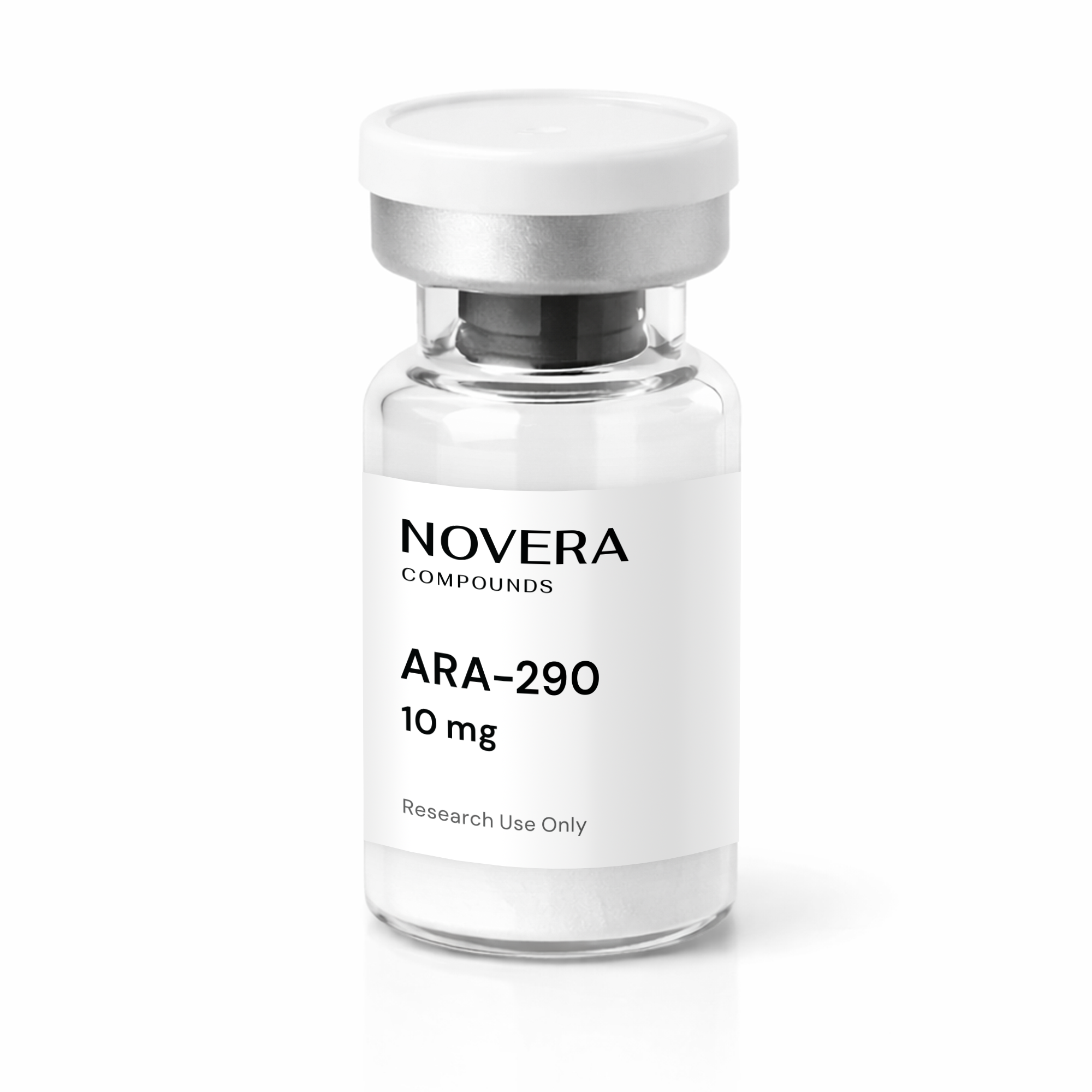
ARA-290 (10mg)
All products are 100% genuine and sourced from trusted manufacturers, with authenticity that can be verified for complete peace of mind.
Order exactly what you need with no minimum quantity required, whether it’s a single unit or a larger order.
Your order is guaranteed to arrive safely, with full shipment tracking and dedicated support to ensure a smooth delivery experience.
Your payments are protected with industry-standard encryption and trusted payment providers, ensuring every transaction is safe, private, and secure.
 99% PURITY GUARANTEE
 99% PURITY GUARANTEE
Each peptide batch is tested and verified to meet or exceed 98–99% purity (HPLC). Full analytical reports are available in the Certificate of Analysis section.
 Preparation & Handling Notice
The product is delivered in powdered (lyophilized) form and must be properly reconstituted prior to research use.
 RESEARCH USE ONLY
This product is intended for research use only. It is not for human or veterinary use, not for diagnostic or therapeutic purposes, and should only be handled by qualified professionals.
Strength: 10 mg
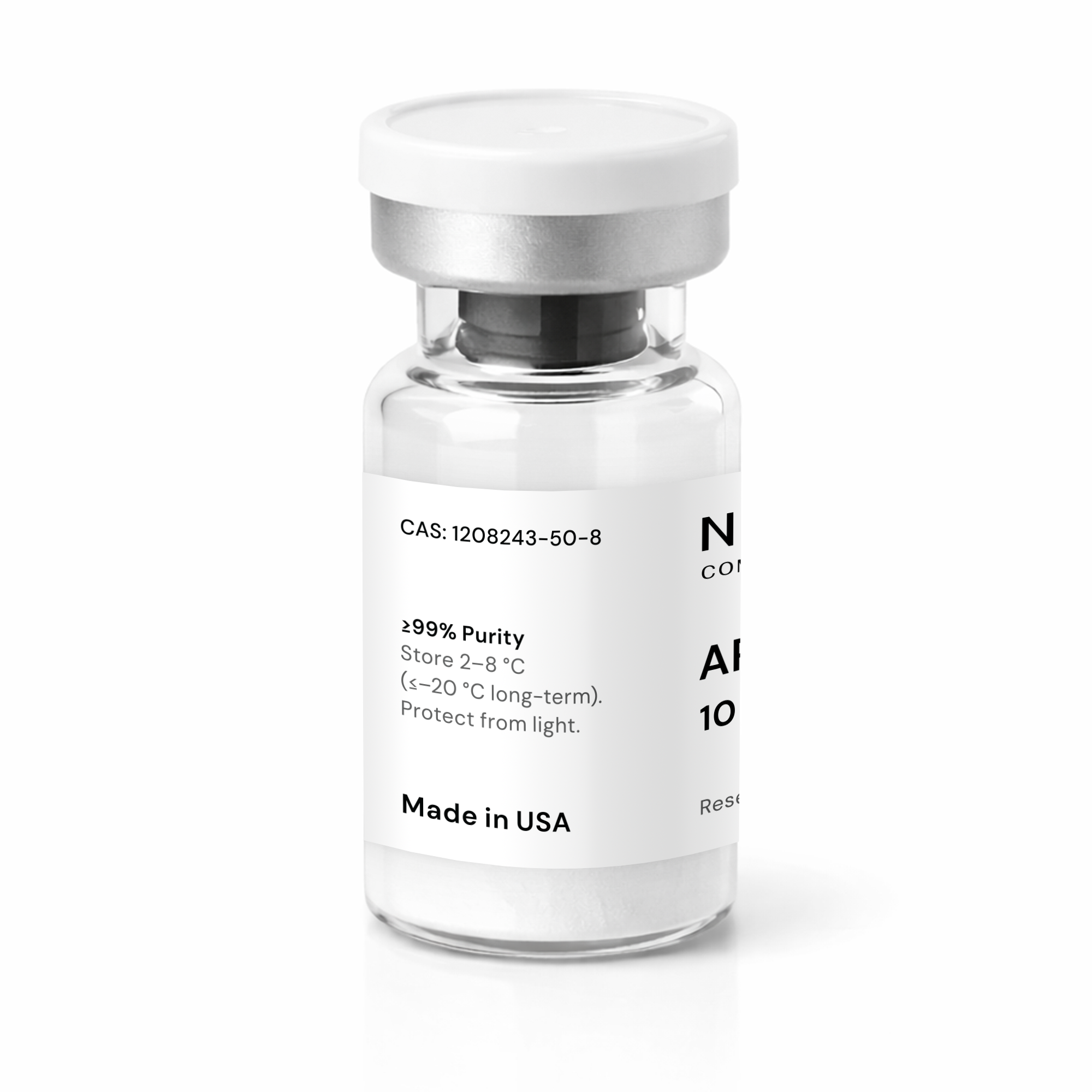
CAS: 1208243-50-8
Chemical Formula: C₅₁H₈₄N₁₆O₂₁
Molecular weight: 1257.3 g/mol
Peptide Sequence: XEQLERALNSS
Synonyms: Cibinetide, PHBSP
Storage: Store 2–8 °C (≤–20 °C long-term). RT exposure during transport acceptable. Protect from light.
Shelf life: 24 months from the manufacturing date.
What is ARA‑290 (10 mg)?
ARA-290 (10 mg) is a synthetic research peptide commonly grouped within healing and regenerative research. Also known as cibinetide or PHBSP, it is an 11–amino-acid fragment derived from the helix-B region of erythropoietin (EPO). It was developed to separate tissue-protective signaling from EPO’s primary hematopoietic effect (red blood cell production).
Unlike full-length EPO, ARA-290 is studied for its ability to engage the innate repair receptor (often described as an EPOR/β-common receptor complex). This receptor system has been investigated for its role in tissue protection and inflammation modulation, without triggering erythropoiesis.
ARA-290 is used in research settings to explore inflammation, cell stress responses, and neuroimmune signaling in cell and animal models, and it has also been examined in early-phase human studies. It is not approved for clinical use.
Product Specifications
- CAS Number: 1208243‑50‑8
- Peptide Sequence: XEQLERALNSS (11 amino acids)
- Molecular Weight: 1257.3 g/mol
- Chemical Formula: C₅₁H₈₄N₁₆O₂₁
- Purity: ≥99% (HPLC‑verified)
- Packaging Format: 10 mg lyophilized powder in a sealed research‑grade glass vial
- Storage Conditions (unreconstituted): Store at −20 °C; protect from light; keep container tightly closed
- Intended Use: For laboratory research use only; not for human or veterinary use
Key Characteristics of ARA‑290 (10 mg)
- Non‑erythropoietic EPO‑derived Peptide: ARA‑290 is derived from a specific portion of erythropoietin and is designed to activate the EPOR/β‑common receptor complex involved in tissue protection and inflammation regulation, without stimulating red blood cell production.
- Selective Receptor Engagement: ARA‑290 binds to the EPOR/CD131 receptor complex and activates downstream pathways (e.g., JAK2, PI3K/Akt, and NF‑κB) that are linked to tissue protection, cellular stress responses, and the regulation of inflammatory gene expression.
- Focus on Inflammation and Tissue Protection Research: ARA‑290 has been studied in preclinical models for its impact on inflammation, endothelial barrier integrity, and immune cell activation in conditions such as experimental colitis and tissue injury.
- Neuroimmune and Small‑fiber Nerve Studies: Early clinical research has explored ARA‑290’s potential impact on nerve structure and function in small‑fiber neuropathy, examining corneal nerve fiber density, intraepidermal nerve fiber markers, and neuropathic symptoms in conditions like diabetic neuropathy and sarcoidosis.
- High‑purity Analytical Profile: ARA‑290 is supplied with ≥99% purity (verified by HPLC and mass spectrometry) to support reproducible experiments in both in-vitro and in-vivo models.
- Standard Peptide Handling and Storage: Provided as a lyophilized powder, ARA‑290 (10 mg) is reconstituted under aseptic conditions and stored frozen at −20°C to maintain stability.
How ARA‑290 (10 mg) Supports Research
ARA-290 (10 mg) is used as a research tool to study how EPO-derived fragments may influence tissue protection, inflammation, and neuroimmune pathways. Because it is designed to engage the innate repair receptor, it allows researchers to examine these signaling effects separately from EPO’s red blood cell–related activity.
- In preclinical studies, ARA-290 has been used to examine outcomes related to immune-cell activity, cytokine release, endothelial responses, and cell survival under stress.
- In early clinical research, it has been explored for small-fiber nerve structure and neuropathy-related symptom measures, helping inform continued investigation in neuroimmune and inflammatory research—without establishing it as a therapeutic agent.
Research Applications & Usage Information
ARA‑290 (10 mg) is commonly used in laboratory and translational research to study the effects of this peptide on inflammation, tissue protection, and nerve health. Examples of its research applications include:
- Inflammation and Innate Immune Signaling: Investigating how ARA‑290 influences immune cell responses, such as cytokine production, NF‑κB activity, and gene expression in models of inflammatory diseases like experimental colitis.
- Endothelial and Tissue Protection Models: Studying how ARA‑290 impacts endothelial barrier integrity, microvascular function, and cell survival under stress conditions such as low oxygen or inflammation, to explore its tissue-protective mechanisms.
- Peripheral Nerve and Small‑fiber Neuropathy Research: Using ARA‑290 in animal models or human trials to assess small nerve fiber density, sensory function, and symptoms in neuropathic conditions like diabetic neuropathy and sarcoidosis.
- Metabolic and Microvascular Studies in Diabetes: Examining how ARA‑290 affects metabolic control and nerve health in diabetic models, including measures like corneal nerve fiber density and sensory testing.
- Bone and Osteoclast Biology: Studying how ARA‑290 influences bone remodeling and osteoclast activity in models of inflammatory arthritis, to better understand the role of the innate repair receptor in bone health.
- Receptor and Pathway Characterization: Investigating the receptor binding, signaling pathways, and cross-talk with other channels, using cell-based assays and biochemical analyses.
Research conditions such as peptide concentrations, exposure times, and model selection are determined by the investigator based on the study goals, prior literature, and institutional guidelines. No dosing or clinical regimen is recommended or implied.
Handling and Storage Recommendations
To maintain the quality and safety of the product, follow these guidelines:
- Store at −20 °C or below.
- Keep sealed and protected from light.
- Minimize room-temperature exposure (transport only).
- Store at 2–8 °C, based on study needs.
Research Use Only Notice
This product is intended for laboratory research use only and is not approved for human or veterinary use. It is not intended for diagnostic, therapeutic, or clinical applications. Any reference to biological activity or potential effects is based solely on preclinical or in-vitro findings and should not be interpreted as validated clinical outcomes. Researchers are responsible for ensuring proper handling, storage, and disposal in accordance with institutional, federal, and international guidelines.
References
- Brines M, Patel NS, Villa P, et al. Nonerythropoietic, tissue-protective peptides derived from the tertiary structure of erythropoietin. Proc Natl Acad Sci U S A. 2008;105(31):10925-10930. doi:10.1073/pnas.0805594105
- Zhu H, Li X, Yuan M, et al. Intramyocardial delivery of bFGF with a biodegradable and thermosensitive hydrogel improves angiogenesis and cardio-protection in infarcted myocardium. Exp Ther Med. 2017;14(4):3609-3615. doi:10.3892/etm.2017.5015
- Brines M, Dunne AN, van Velzen M, et al. ARA 290, a nonerythropoietic peptide engineered from erythropoietin, improves metabolic control and neuropathic symptoms in patients with type 2 diabetes. Mol Med. 2015;20(1):658-666. Published 2015 Mar 13. doi:10.2119/molmed.2014.00215
- Nairz M, Haschka D, Dichtl S, et al. Cibinetide dampens innate immune cell functions thus ameliorating the course of experimental colitis. Sci Rep. 2017;7(1):13012. Published 2017 Oct 12. doi:10.1038/s41598-017-13046-3
-
Cold chain shipping available for temperature-sensitive products.
-
Orders are processed within 1–2 business days.
-
Delivery timelines vary by destination and shipping method — view our Shipping Policy for region-specific estimates.
-
Tracking information will be provided once shipped.
-
No order minimum applies.
-
If your shipment is delayed, lost, or arrives damaged, you're covered under our Refund & Replacement Policy.
We accept Visa, Mastercard, and American Express. Apple Pay and Google Pay are available upon request via your account manager.
All transactions are processed through a secure, PCI DSS–compliant system to ensure your data is fully protected.
Why Choose NOVERA COMPOUNDS Peptides?
Novera Research delivers high-quality research peptides developed under strict manufacturing and quality-control standards. Each product is carefully synthesized, tested, and handled to ensure consistency, reliability, and transparency for advanced research applications.
- High-purity, research-grade peptide synthesis
- Analytical testing to verify quality and composition
- Consistent batch-to-batch performance
- Batch identification on every vial for traceability
- Stored and shipped under controlled conditions
 High-purity, research-grade peptide synthesis

Why Choose Medica Depot
Shop hundreds of medical products with no minimums and free shipping on large orders.
 400+ products
 No order minimums
 Free shipping
 Loyalty rewards
 Trusted since 2007
 Account manager
 Verified LOT numbers
INFORMATION
ARA 290 is a synthetic 11 amino acid peptide derived from the helix B region of erythropoietin (EPO), engineered to selectively engage the “innate repair receptor” without stimulating red blood cell production. Research in preclinical models and early phase clinical studies has examined its effects on inflammatory pathways and small fiber nerve structure and symptom measures in conditions such as sarcoidosis and diabetic neuropathy, but it is not an approved therapy for any indication.
ARA 290 is a synthetic 11 amino acid peptide derived from the helix B region of erythropoietin (EPO), engineered to selectively engage the “innate repair receptor” without stimulating red blood cell production. Research in preclinical models and early phase clinical studies has examined its effects on inflammatory pathways and small fiber nerve structure and symptom measures in conditions such as sarcoidosis and diabetic neuropathy, but it is not an approved therapy for any indication.
Related products