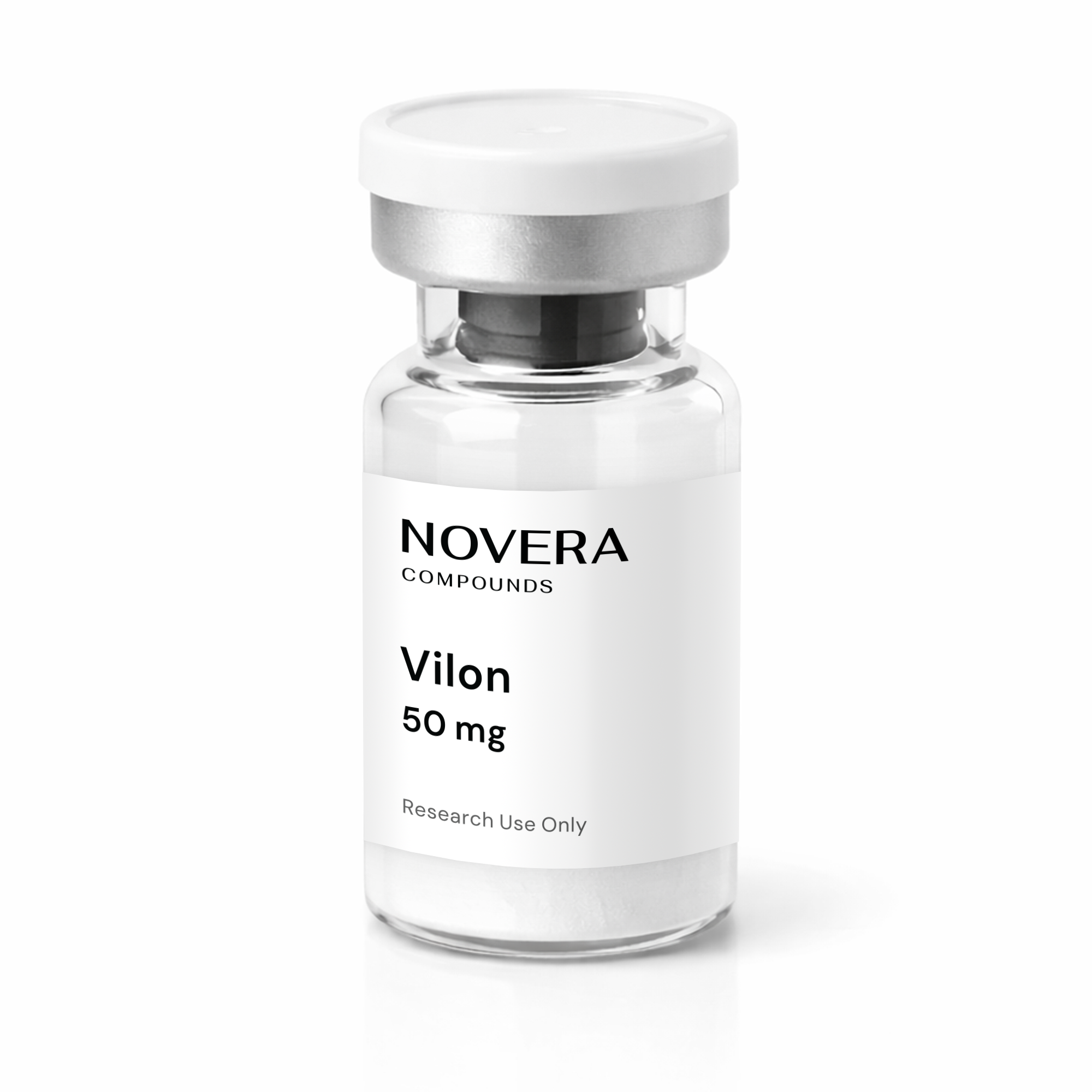
Vilon (50mg)
All products are 100% genuine and sourced from trusted manufacturers, with authenticity that can be verified for complete peace of mind.
Order exactly what you need with no minimum quantity required, whether it’s a single unit or a larger order.
Your order is guaranteed to arrive safely, with full shipment tracking and dedicated support to ensure a smooth delivery experience.
Your payments are protected with industry-standard encryption and trusted payment providers, ensuring every transaction is safe, private, and secure.
 99% PURITY GUARANTEE
 99% PURITY GUARANTEE
Each peptide batch is tested and verified to meet or exceed 98–99% purity (HPLC). Full analytical reports are available in the Certificate of Analysis section.
 Preparation & Handling Notice
The product is delivered in powdered (lyophilized) form and must be properly reconstituted prior to research use.
 RESEARCH USE ONLY
This product is intended for research use only. It is not for human or veterinary use, not for diagnostic or therapeutic purposes, and should only be handled by qualified professionals.
Strength: 50 mg
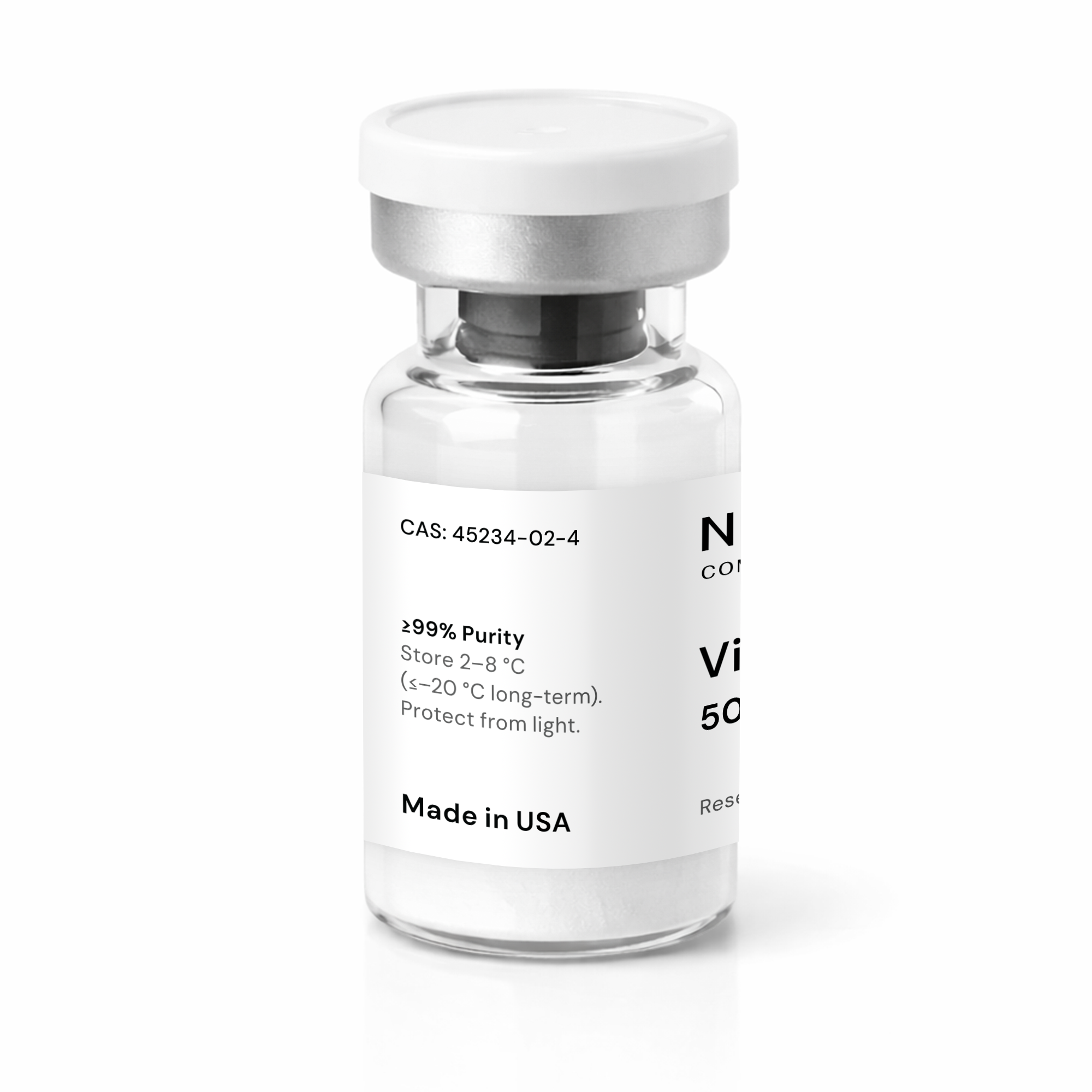
CAS: 45234-02-04
Chemical Formula: C₁₁H₂₁N₃O₅
Molecular weight: 275.30 g/mol
Peptide Sequence: Lys-Glu
Storage: Store 2–8 °C (≤–20 °C long-term). RT exposure during transport acceptable. Protect from light.
Shelf life: 24 months from the manufacturing date.
Vilon is a synthetic thymic bioregulator dipeptide (Lys-Glu) from thymic extract research. Studies explore its chromatin reactivation in elderly lymphocytes, IL-2 modulation in thymic cultures, and gene expression/tumor dynamics in rodent aging models.
-
Cold chain shipping available for temperature-sensitive products.
-
Orders are processed within 1–2 business days.
-
Delivery timelines vary by destination and shipping method — view our Shipping Policy for region-specific estimates.
-
Tracking information will be provided once shipped.
-
No order minimum applies.
-
If your shipment is delayed, lost, or arrives damaged, you're covered under our Refund & Replacement Policy.
We accept Visa, Mastercard, and American Express. Apple Pay and Google Pay are available upon request via your account manager.
All transactions are processed through a secure, PCI DSS–compliant system to ensure your data is fully protected.
Why Choose NOVERA COMPOUNDS Peptides?
Novera Research delivers high-quality research peptides developed under strict manufacturing and quality-control standards. Each product is carefully synthesized, tested, and handled to ensure consistency, reliability, and transparency for advanced research applications.
- High-purity, research-grade peptide synthesis
- Analytical testing to verify quality and composition
- Consistent batch-to-batch performance
- Batch identification on every vial for traceability
- Stored and shipped under controlled conditions
 High-purity, research-grade peptide synthesis

Why Choose Medica Depot
Shop hundreds of medical products with no minimums and free shipping on large orders.
 400+ products
 No order minimums
 Free shipping
 Loyalty rewards
 Trusted since 2007
 Account manager
 Verified LOT numbers
INFORMATION
What is Vilon (50 mg)?
Vilon (50 mg) is a synthetic dipeptide made from two amino acids: L-lysine and L-glutamic acid (Lys–Glu). It is commonly grouped with immune and thymic peptide research due to its association with thymic tissue extracts, which have been studied for its potential role in immune regulation.
In laboratory research, Vilon is used to study how very small peptides may influence chromatin structure, gene expression, and immune cell function—particularly in models related to aging, immune regulation, and thymus-dependent immune processes.
Product Specifications
- CAS Number: 45234-02-4
- Peptide Sequence: Lys-Glu (L-Lys-L-Glu)
- Chemical Formula: C₁₁H₂₁N₃O₅
- Molecular Weight: 275.30 g/mol
- Purity: ≥99% (research grade; HPLC/MS verified)
- Packaging Format: 50 mg lyophilized powder in a sealed research-grade vial
- Storage Conditions (unreconstituted): Store at −20 °C, protect from light, keep vial tightly closed
- Intended Use: For laboratory research use only; not for human or veterinary use
Key Characteristics of Vilon (50 mg)
- Thymus-Derived Bioregulator: Vilon is a synthetic analogue of a peptide associated with thymic tissue extracts and is often studied in relation to immune and thymic functions.
- Chromatin and Gene Expression: In cultured lymphocytes from older donors, Vilon has been reported to promote chromatin decondensation (the “reactivation” of DNA) and increase transcription in previously inactive regions, such as ribosomal DNA. This effect is often considered an epigenetic-like process in mechanistic studies.
- Immune Cell Function: In vitro and ex vivo studies have shown that Vilon can influence cytokine gene expression, including interleukin-2 (IL-2) in splenocytes, and can affect cell proliferation in thymus cell cultures.
- Aging and Preclinical Observations: In rodent studies, Vilon has been associated with changes in spontaneous tumor growth and lifespan, providing insights into aging biology and immune surveillance. These findings are preclinical and do not imply clinical outcomes.
- Transcriptomic and Tissue Profiling: Microarray-based studies in mouse heart and other tissues have shown that Vilon exposure can lead to broad transcriptional shifts, particularly in genes related to the extracellular matrix, microvasculature, and stress response pathways.
- High-Purity, Verified Material: Vilon is supplied as a ≥99% purity lyophilized peptide, verified by HPLC/MS, ensuring reliable use across biochemical, cellular, and animal research workflows.
How Vilon (50 mg) Supports Research
Vilon (50 mg) is used as a research tool to explore the intersection of epigenetic regulation and thymus-linked immune biology. In lymphocyte and thymus-cell systems, it is applied to investigate how short peptides may affect:
- Chromatin compaction and DNA accessibility
- Transcription patterns, including cytokine genes such as interleukin-2 (IL-2)
- Immune activation-related gene programs in controlled culture settings
In animal studies, Vilon has been used to investigate age-related gene expression drift, spontaneous tumor dynamics, gastrointestinal enzyme activity, and microvascular signaling. These findings help generate hypotheses in aging and immune regulation research, but do not imply therapeutic use.
Research Applications & Usage Information
Vilon (50 mg) is commonly used in a variety of mechanistic and preclinical research designs, including:
- Epigenetics and Chromatin Biology: Studying chromatin accessibility (euchromatin vs. heterochromatin), nucleolar activity, and transcriptional changes in lymphocytes from young vs. older donors.
- Immune-Cell and Cytokine Gene Regulation: Measuring IL-2 expression and related cytokine transcripts in splenocyte or thymus-derived cultures, along with cell activation and proliferation markers.
- Thymus and Lymphoid Tissue Models: Investigating thymus-cell culture responses, including shifts in cell populations and proliferation markers, to explore thymic signaling in vitro.
- Tumor Biology and Immune Surveillance (Preclinical): Studying associations with spontaneous tumor growth rates, survival metrics, and gene expression in rodent tumor models, particularly related to immune surveillance.
- Aging-Related Gastrointestinal and Cardiovascular Research: Exploring enzyme activity and transport in gastrointestinal tissues from aging animals, along with transcriptional changes in heart or renal stress models, including pathways linked to fibrosis and stress signaling.
- Systems-Level Transcriptomics: Using microarray or RNA-seq to analyze multi-organ gene-expression shifts following Vilon exposure, focusing on extracellular matrix, inflammation, and stress-response networks.
Note: Experimental parameters (such as concentration, exposure time, and model selection) must be determined by researchers based on study goals, prior research, and institutional oversight. No dosing or clinical guidance is provided or implied.
Handling and Storage Recommendations
- Store sealed at −20 °C, protected from light, tightly sealed.
- For short-term storage, keep at 2–8 °C.
- Allow the vial to reach room temperature before opening to reduce condensation.
- If preparing solutions, use aseptic technique and follow your lab’s SOPs for aliquoting, stability controls, and disposal.
Research Use Only Notice
This product is intended for laboratory research use only and is not approved for human or veterinary use. It is not intended for diagnostic, therapeutic, or clinical applications. Any reference to biological activity or potential effects is based solely on preclinical or in‑vitro findings and should not be interpreted as validated clinical outcomes. Researchers are responsible for ensuring proper handling, storage, and disposal in accordance with institutional, federal, and international guidelines.
References
- Lezhava T, Khavison V, Monaselidze J, et al. Bioregulator Vilon-Induced Reactivation of Chromatin in Cultured Lymphocytes from Old People. Biogerontology. 2004;5(2):73-79. doi:10.1023/b:bgen.0000025070.90330.7f
- Kazakova TB, Barabanova SV, Khavinson VKh, et al. In vitro effect of short peptides on expression of interleukin-2 gene in splenocytes. Bulletin of Experimental Biology and Medicine. 2002;133(6):614-616. doi:10.1023/a:1020210615148
- Sevostianova NN, Linkova NS, Polyakova VO, et al. Immunomodulating effects of vilon and its analogue in the culture of human and animal thymus cells. Bulletin of Experimental Biology and Medicine. 2013;154(4):562-565. doi:10.1007/s10517-013-2000-0
- Lezhava T, Monaselidze J, Kadotani T, Dvalishvili N, Buadze T. Anti-aging peptide bioregulators induce reactivation of chromatin. PubMed. Published April 1, 2006. https://pubmed.ncbi.nlm.nih.gov/16705247/
- Anisimov SV, Bokheler KR, Khavinson VKh, Anisimov VN. Studies of the Effects of Vilon and Epithalon on Gene Expression in Mouse Heart using DNA-Microarray Technology. Bulletin of Experimental Biology and Medicine. 2002;133(3):293-299. doi:10.1023/a:1015859322630
- Gavrisheva NA, Malinin VV, Ses TP, Kozlov KL, Panchenko AV, Titkov AYu. Effect of peptide Vilon on the content of transforming growth factor-β and permeability of microvessels during experimental chronic renal failure. Bulletin of Experimental Biology and Medicine. 2005;139(1):24-26. doi:10.1007/s10517-005-0202-9
What is Vilon (50 mg)?
Vilon (50 mg) is a synthetic dipeptide made from two amino acids: L-lysine and L-glutamic acid (Lys–Glu). It is commonly grouped with immune and thymic peptide research due to its association with thymic tissue extracts, which have been studied for its potential role in immune regulation.
In laboratory research, Vilon is used to study how very small peptides may influence chromatin structure, gene expression, and immune cell function—particularly in models related to aging, immune regulation, and thymus-dependent immune processes.
Product Specifications
- CAS Number: 45234-02-4
- Peptide Sequence: Lys-Glu (L-Lys-L-Glu)
- Chemical Formula: C₁₁H₂₁N₃O₅
- Molecular Weight: 275.30 g/mol
- Purity: ≥99% (research grade; HPLC/MS verified)
- Packaging Format: 50 mg lyophilized powder in a sealed research-grade vial
- Storage Conditions (unreconstituted): Store at −20 °C, protect from light, keep vial tightly closed
- Intended Use: For laboratory research use only; not for human or veterinary use
Key Characteristics of Vilon (50 mg)
- Thymus-Derived Bioregulator: Vilon is a synthetic analogue of a peptide associated with thymic tissue extracts and is often studied in relation to immune and thymic functions.
- Chromatin and Gene Expression: In cultured lymphocytes from older donors, Vilon has been reported to promote chromatin decondensation (the “reactivation” of DNA) and increase transcription in previously inactive regions, such as ribosomal DNA. This effect is often considered an epigenetic-like process in mechanistic studies.
- Immune Cell Function: In vitro and ex vivo studies have shown that Vilon can influence cytokine gene expression, including interleukin-2 (IL-2) in splenocytes, and can affect cell proliferation in thymus cell cultures.
- Aging and Preclinical Observations: In rodent studies, Vilon has been associated with changes in spontaneous tumor growth and lifespan, providing insights into aging biology and immune surveillance. These findings are preclinical and do not imply clinical outcomes.
- Transcriptomic and Tissue Profiling: Microarray-based studies in mouse heart and other tissues have shown that Vilon exposure can lead to broad transcriptional shifts, particularly in genes related to the extracellular matrix, microvasculature, and stress response pathways.
- High-Purity, Verified Material: Vilon is supplied as a ≥99% purity lyophilized peptide, verified by HPLC/MS, ensuring reliable use across biochemical, cellular, and animal research workflows.
How Vilon (50 mg) Supports Research
Vilon (50 mg) is used as a research tool to explore the intersection of epigenetic regulation and thymus-linked immune biology. In lymphocyte and thymus-cell systems, it is applied to investigate how short peptides may affect:
- Chromatin compaction and DNA accessibility
- Transcription patterns, including cytokine genes such as interleukin-2 (IL-2)
- Immune activation-related gene programs in controlled culture settings
In animal studies, Vilon has been used to investigate age-related gene expression drift, spontaneous tumor dynamics, gastrointestinal enzyme activity, and microvascular signaling. These findings help generate hypotheses in aging and immune regulation research, but do not imply therapeutic use.
Research Applications & Usage Information
Vilon (50 mg) is commonly used in a variety of mechanistic and preclinical research designs, including:
- Epigenetics and Chromatin Biology: Studying chromatin accessibility (euchromatin vs. heterochromatin), nucleolar activity, and transcriptional changes in lymphocytes from young vs. older donors.
- Immune-Cell and Cytokine Gene Regulation: Measuring IL-2 expression and related cytokine transcripts in splenocyte or thymus-derived cultures, along with cell activation and proliferation markers.
- Thymus and Lymphoid Tissue Models: Investigating thymus-cell culture responses, including shifts in cell populations and proliferation markers, to explore thymic signaling in vitro.
- Tumor Biology and Immune Surveillance (Preclinical): Studying associations with spontaneous tumor growth rates, survival metrics, and gene expression in rodent tumor models, particularly related to immune surveillance.
- Aging-Related Gastrointestinal and Cardiovascular Research: Exploring enzyme activity and transport in gastrointestinal tissues from aging animals, along with transcriptional changes in heart or renal stress models, including pathways linked to fibrosis and stress signaling.
- Systems-Level Transcriptomics: Using microarray or RNA-seq to analyze multi-organ gene-expression shifts following Vilon exposure, focusing on extracellular matrix, inflammation, and stress-response networks.
Note: Experimental parameters (such as concentration, exposure time, and model selection) must be determined by researchers based on study goals, prior research, and institutional oversight. No dosing or clinical guidance is provided or implied.
Handling and Storage Recommendations
- Store sealed at −20 °C, protected from light, tightly sealed.
- For short-term storage, keep at 2–8 °C.
- Allow the vial to reach room temperature before opening to reduce condensation.
- If preparing solutions, use aseptic technique and follow your lab’s SOPs for aliquoting, stability controls, and disposal.
Research Use Only Notice
This product is intended for laboratory research use only and is not approved for human or veterinary use. It is not intended for diagnostic, therapeutic, or clinical applications. Any reference to biological activity or potential effects is based solely on preclinical or in‑vitro findings and should not be interpreted as validated clinical outcomes. Researchers are responsible for ensuring proper handling, storage, and disposal in accordance with institutional, federal, and international guidelines.
References
- Lezhava T, Khavison V, Monaselidze J, et al. Bioregulator Vilon-Induced Reactivation of Chromatin in Cultured Lymphocytes from Old People. Biogerontology. 2004;5(2):73-79. doi:10.1023/b:bgen.0000025070.90330.7f
- Kazakova TB, Barabanova SV, Khavinson VKh, et al. In vitro effect of short peptides on expression of interleukin-2 gene in splenocytes. Bulletin of Experimental Biology and Medicine. 2002;133(6):614-616. doi:10.1023/a:1020210615148
- Sevostianova NN, Linkova NS, Polyakova VO, et al. Immunomodulating effects of vilon and its analogue in the culture of human and animal thymus cells. Bulletin of Experimental Biology and Medicine. 2013;154(4):562-565. doi:10.1007/s10517-013-2000-0
- Lezhava T, Monaselidze J, Kadotani T, Dvalishvili N, Buadze T. Anti-aging peptide bioregulators induce reactivation of chromatin. PubMed. Published April 1, 2006. https://pubmed.ncbi.nlm.nih.gov/16705247/
- Anisimov SV, Bokheler KR, Khavinson VKh, Anisimov VN. Studies of the Effects of Vilon and Epithalon on Gene Expression in Mouse Heart using DNA-Microarray Technology. Bulletin of Experimental Biology and Medicine. 2002;133(3):293-299. doi:10.1023/a:1015859322630
- Gavrisheva NA, Malinin VV, Ses TP, Kozlov KL, Panchenko AV, Titkov AYu. Effect of peptide Vilon on the content of transforming growth factor-β and permeability of microvessels during experimental chronic renal failure. Bulletin of Experimental Biology and Medicine. 2005;139(1):24-26. doi:10.1007/s10517-005-0202-9
Related products