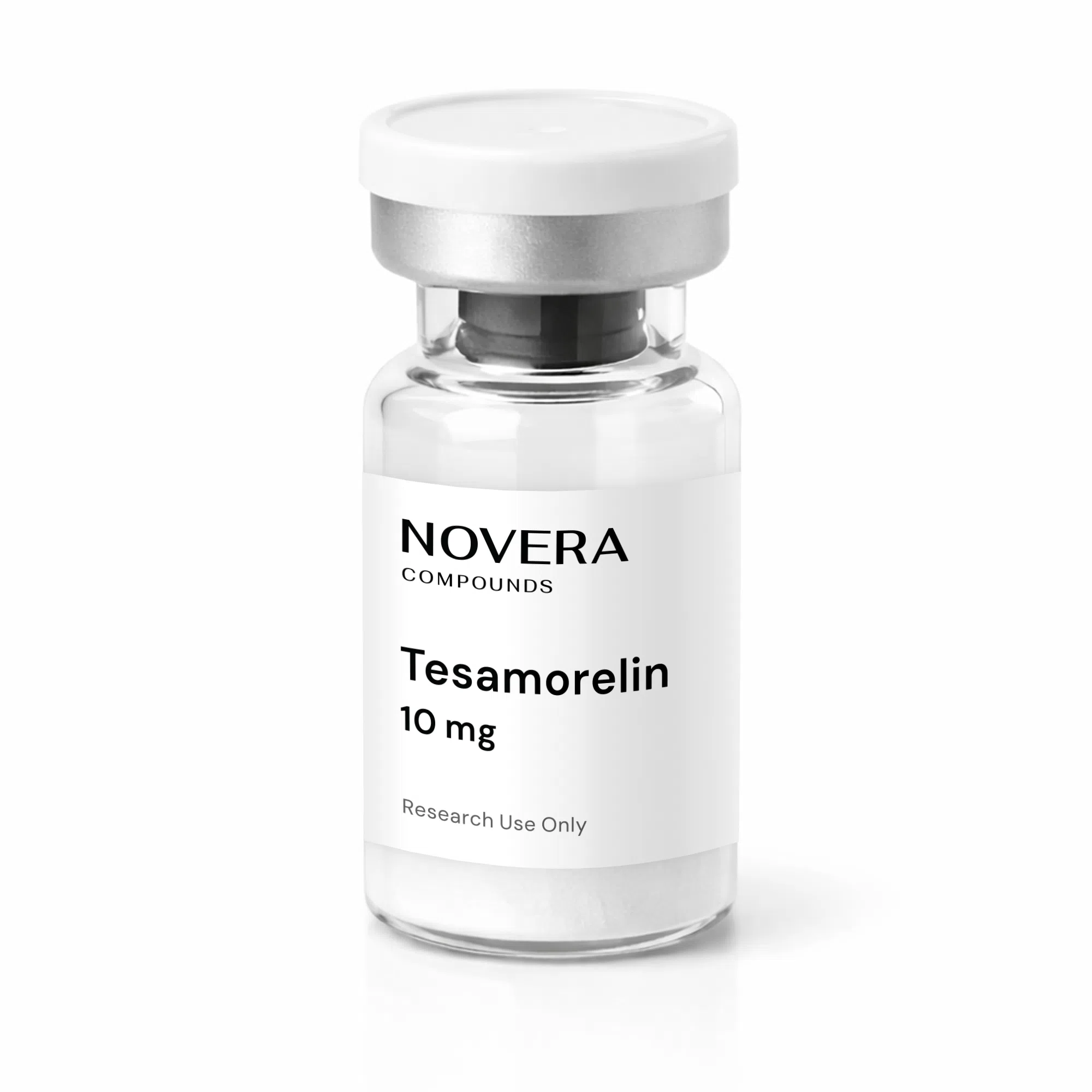
Tesamorelin 10mg
Strength: 10 mg
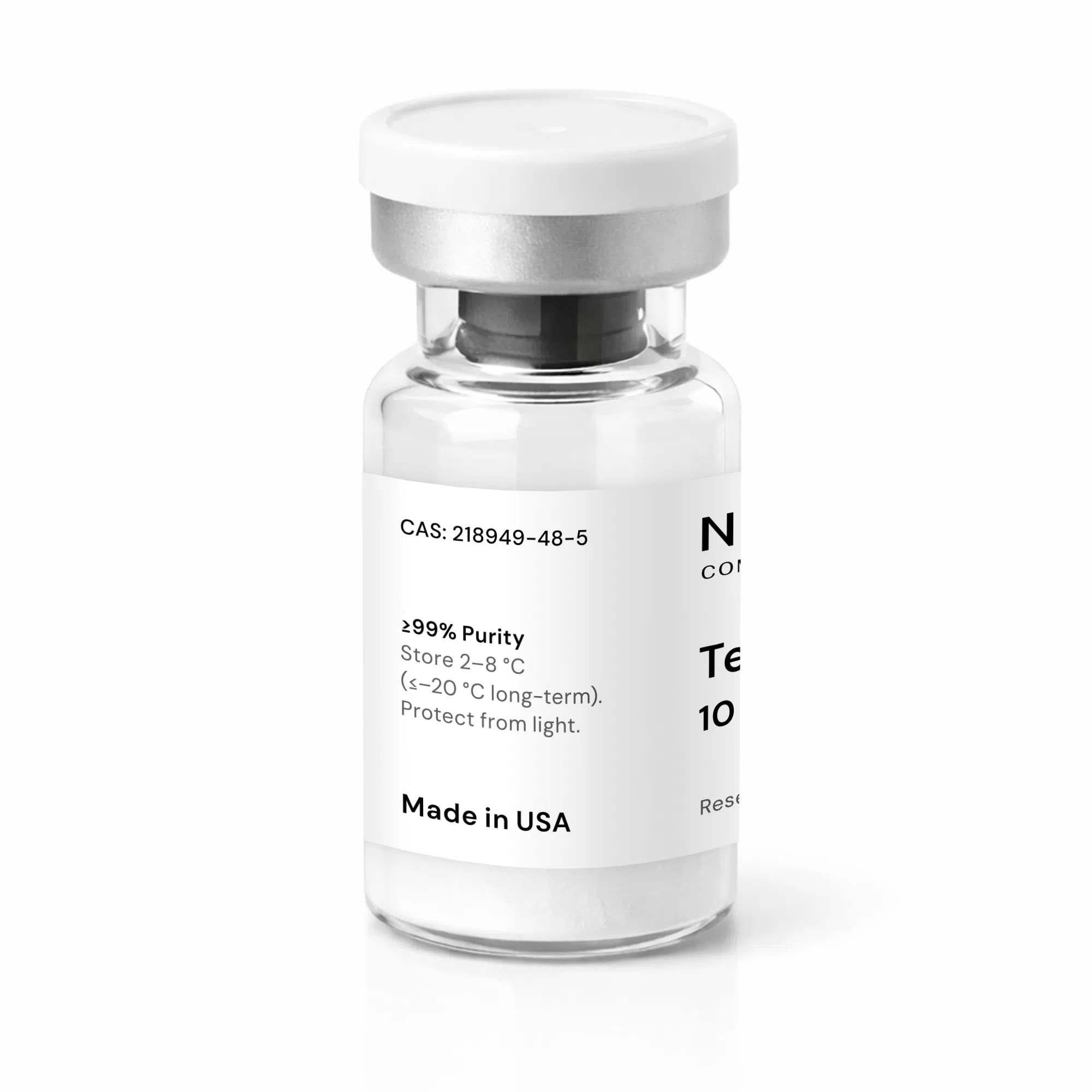
CAS: 218949-48-5
Chemical Formula: C₂₂₁H₃₆₆N₇₂O₆₇S
Molecular weight: 5136 g/mol
Peptide Sequence: Trans-3-hexenoyl-YADAIFTNSYRKVLGQLSARKLLQDIMSRQQGESNQERGARARL-NH2
Synonyms: TH9507
Storage: Store 2–8 °C (≤–20 °C long-term). RT exposure during transport acceptable. Protect from light.
Shelf life: 24 months from the manufacturing date.
Tesamorelin is a synthetic GHRH(1-44) receptor agonist analog for laboratory research investigating pituitary signaling pathways, hormone-receptor interactions, and endocrine communication models.


Why Choose Medica Depot
Shop hundreds of medical products with no minimums and free shipping on large orders.
 400+ products
 No order minimums
 Free shipping
 Loyalty rewards
 Trusted since 2007
 Account manager
 Verified LOT numbers
INFORMATION
What is Tesamorelin (10 mg)?
Tesamorelin (10 mg) is a synthetic peptide used in laboratory research to study endocrine signaling, particularly in pathways related to growth hormone–releasing hormone (GHRH(1-44)) analog research. It is typically categorized as growth hormone research peptides, in which researchers examine receptor-driven signaling and downstream biomarker changes in controlled experimental models.
Product Specifications
- CAS Number: 218949-48-5
- Peptide Sequence: Trans-3-hexenoyl-YADAIFTNSYRKVLGQLSARKLLQDIMSRQQGESNQERGARARL-NH2
- Category: Peptides
- Subcategory: Muscle Growth & Performance Peptides
- Molecular Weight: 5136 g/mol
- Molecular Formula: C₂₂₁H₃₆₆N₇₂O₆₇S
- Synonyms: TH9507
- Purity: ≥99%
- Packaging Format: 10 mg
- Storage Conditions: Store at -20°C, avoid light exposure
- Designation: For Laboratory Research Use Only
Key Characteristics of Tesamorelin (10 mg)
- Well-defined peptide identity with consistent composition and sequence, supporting repeatable experimental setups.
- It has a common research focus on GHRH receptor signaling, with pathway-linked biomarkers studied in laboratory models.
- High purity (≥99%) to reduce variability and improve reliability in controlled research workflows.
- Ideal for assay work (e.g., pathway readouts, comparative profiling, and method validation), where standardized peptide material is needed.
- This peptide has storage-sensitive material. It requires low-temperature, light-protected storage to support research applications.
How Tesamorelin (10 mg) Supports Research
Tesamorelin is used in laboratory studies to explore GHRH(1-44) receptor-mediated signaling and its downstream effects in experimental systems. It is often included in study designs that focus on receptor-mediated communication, time-course signaling patterns, and changes in molecular markers associated with endocrine pathway activity.
Research Applications & Usage Information
Tesamorelin (10 mg) is commonly used in laboratory research, such as:
- Endocrine signaling studies, evaluating pathway activation and downstream biomarker shifts in controlled models.
- Receptor interaction research, including comparative experiments to map signaling responses across different peptide tools.
- Protein signaling and gene-expression profiling, where researchers track changes in selected markers following experimental exposure.
- Method development and assay validation, where consistent peptide material supports repeat testing and benchmarking.
- Comparability studies, confirming analytical identity and consistency across batches or experimental conditions.
Handling and Storage Recommendations
- Store at -20°C, or 2–8°C for short-term storage. Protect from light (keep the vial in its original packaging or in a light-limiting container).
- Avoid repeated freeze-thaw cycles to support research applications.
- Keep the container tightly closed and use proper lab techniques to minimize contamination.
- Follow your facility’s chemical hygiene plan, labeling rules, and disposal procedures.
Research Use Only Notice
This product is intended for laboratory research use only and is not approved for human or veterinary use. It is not intended for diagnostic, therapeutic, or clinical applications. Any reference to biological activity or potential effects is based solely on preclinical or in-vitro findings and should not be interpreted as validated clinical outcomes. Researchers are responsible for ensuring proper handling, storage, and disposal in accordance with institutional, federal, and international guidelines.
References
- Tesamorelin. PubChem Compound Summary for CID 16137828. Bethesda, MD: National Center for Biotechnology Information; 2025. https://pubchem.ncbi.nlm.nih.gov/compound/Tesamorelin
- US Food and Drug Administration. Pharmacology Review(s). NDA/BLA 022505Orig1s000PharmR. Silver Spring, MD: US FDA; 2010. https://www.accessdata.fda.gov/drugsatfda_docs/nda/2010/022505Orig1s000PharmR.pdf
- US Food and Drug Administration. Tesamorelin acetate. GSRS/GINAS substance record; UNII LGW5H38VE3. Silver Spring, MD: US FDA. https://precision.fda.gov/ginas/app/ui/substances/0815de8e-8238-401d-a2f6-f88577ae1947
- Izdebski J, Pinski J, Horvath JE, Halmos G, Groot K, Schally AV. Synthesis and biological evaluation of superactive agonists of growth hormone-releasing hormone. Proc Natl Acad Sci U S A. 1995;92(11):4872-4876. doi:10.1073/pnas.92.11.4872
What is Tesamorelin (10 mg)?
Tesamorelin (10 mg) is a synthetic peptide used in laboratory research to study endocrine signaling, particularly in pathways related to growth hormone–releasing hormone (GHRH(1-44)) analog research. It is typically categorized as growth hormone research peptides, in which researchers examine receptor-driven signaling and downstream biomarker changes in controlled experimental models.
Product Specifications
- CAS Number: 218949-48-5
- Peptide Sequence: Trans-3-hexenoyl-YADAIFTNSYRKVLGQLSARKLLQDIMSRQQGESNQERGARARL-NH2
- Category: Peptides
- Subcategory: Muscle Growth & Performance Peptides
- Molecular Weight: 5136 g/mol
- Molecular Formula: C₂₂₁H₃₆₆N₇₂O₆₇S
- Synonyms: TH9507
- Purity: ≥99%
- Packaging Format: 10 mg
- Storage Conditions: Store at -20°C, avoid light exposure
- Designation: For Laboratory Research Use Only
Key Characteristics of Tesamorelin (10 mg)
- Well-defined peptide identity with consistent composition and sequence, supporting repeatable experimental setups.
- It has a common research focus on GHRH receptor signaling, with pathway-linked biomarkers studied in laboratory models.
- High purity (≥99%) to reduce variability and improve reliability in controlled research workflows.
- Ideal for assay work (e.g., pathway readouts, comparative profiling, and method validation), where standardized peptide material is needed.
- This peptide has storage-sensitive material. It requires low-temperature, light-protected storage to support research applications.
How Tesamorelin (10 mg) Supports Research
Tesamorelin is used in laboratory studies to explore GHRH(1-44) receptor-mediated signaling and its downstream effects in experimental systems. It is often included in study designs that focus on receptor-mediated communication, time-course signaling patterns, and changes in molecular markers associated with endocrine pathway activity.
Research Applications & Usage Information
Tesamorelin (10 mg) is commonly used in laboratory research, such as:
- Endocrine signaling studies, evaluating pathway activation and downstream biomarker shifts in controlled models.
- Receptor interaction research, including comparative experiments to map signaling responses across different peptide tools.
- Protein signaling and gene-expression profiling, where researchers track changes in selected markers following experimental exposure.
- Method development and assay validation, where consistent peptide material supports repeat testing and benchmarking.
- Comparability studies, confirming analytical identity and consistency across batches or experimental conditions.
Handling and Storage Recommendations
- Store at -20°C, or 2–8°C for short-term storage. Protect from light (keep the vial in its original packaging or in a light-limiting container).
- Avoid repeated freeze-thaw cycles to support research applications.
- Keep the container tightly closed and use proper lab techniques to minimize contamination.
- Follow your facility’s chemical hygiene plan, labeling rules, and disposal procedures.
Research Use Only Notice
This product is intended for laboratory research use only and is not approved for human or veterinary use. It is not intended for diagnostic, therapeutic, or clinical applications. Any reference to biological activity or potential effects is based solely on preclinical or in-vitro findings and should not be interpreted as validated clinical outcomes. Researchers are responsible for ensuring proper handling, storage, and disposal in accordance with institutional, federal, and international guidelines.
References
- Tesamorelin. PubChem Compound Summary for CID 16137828. Bethesda, MD: National Center for Biotechnology Information; 2025. https://pubchem.ncbi.nlm.nih.gov/compound/Tesamorelin
- US Food and Drug Administration. Pharmacology Review(s). NDA/BLA 022505Orig1s000PharmR. Silver Spring, MD: US FDA; 2010. https://www.accessdata.fda.gov/drugsatfda_docs/nda/2010/022505Orig1s000PharmR.pdf
- US Food and Drug Administration. Tesamorelin acetate. GSRS/GINAS substance record; UNII LGW5H38VE3. Silver Spring, MD: US FDA. https://precision.fda.gov/ginas/app/ui/substances/0815de8e-8238-401d-a2f6-f88577ae1947
- Izdebski J, Pinski J, Horvath JE, Halmos G, Groot K, Schally AV. Synthesis and biological evaluation of superactive agonists of growth hormone-releasing hormone. Proc Natl Acad Sci U S A. 1995;92(11):4872-4876. doi:10.1073/pnas.92.11.4872
Related products