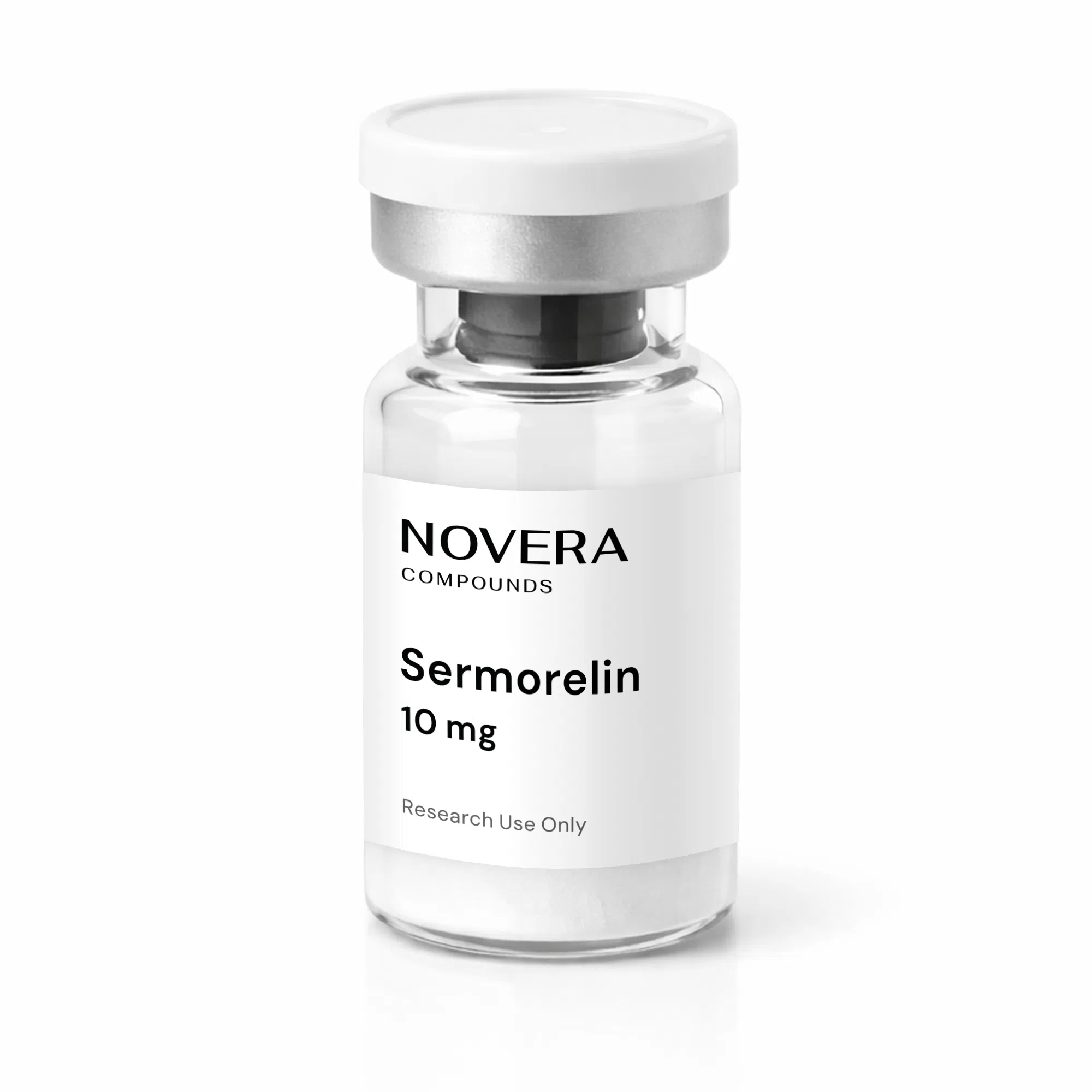
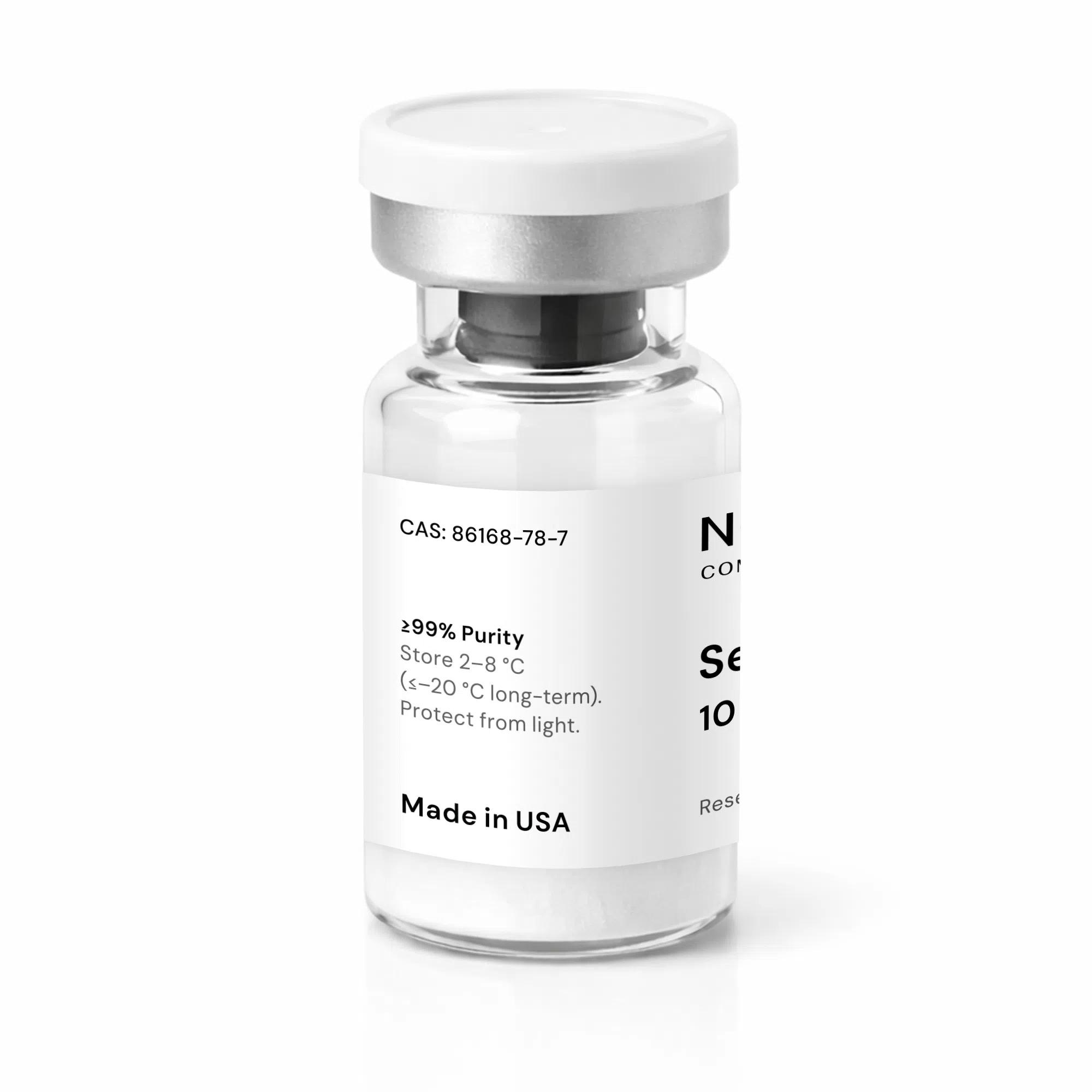
Sermorelin 10mg
Strength: 10 mg
CAS: 86168-78-7
Chemical Formula: C₁₄₉H₂₄₆N₄₄O₄₂S
Molecular weight: 3357.9 g/mol
Peptide Sequence: Tyr-Ala-Asp-Ala-Ile-Phe-Thr-Asn-Ser-Tyr-Arg-Lys-Val-Leu-Gly-Gln-Leu-Ser-Ala-Arg-Lys-Leu-Leu-Gln-Asp-Ile-Met-Ser-Arg-NH₂
Synonyms: GHRH (1-29)
Storage: Store 2–8 °C (≤–20 °C long-term). RT exposure during transport acceptable. Protect from light.
Shelf life: 24 months from the manufacturing date.
Sermorelin is a synthetic 29-amino acid peptide (GHRH 1-29) used as a research tool in endocrine signaling studies. It investigates GHRH pathway activation, growth factor responses, receptor interactions, and downstream molecular markers in controlled experimental models. Typical applications include pituitary signaling assays, protein expression profiling, and comparative pathway analysis. For laboratory research use only; not for diagnostic, therapeutic, or human use.


Why Choose Medica Depot
Shop hundreds of medical products with no minimums and free shipping on large orders.
 400+ products
 No order minimums
 Free shipping
 Loyalty rewards
 Trusted since 2007
 Account manager
 Verified LOT numbers
INFORMATION
What is Sermorelin (10 mg)?
Sermorelin (10 mg) is a synthetic 29–amino acid peptide fragment of human growth hormone–releasing hormone (GHRH; 1–29). In laboratory settings, it is used as a research tool to study endocrine signaling, particularly how the GHRH pathway influences downstream molecular readouts related to growth-factor biology, protein signaling, and metabolic regulation in experimental systems.
Product Specifications
- CAS Number: 86168-78-7
- Peptide Sequence: Tyr-Ala-Asp-Ala-Ile-Phe-Thr-Asn-Ser-Tyr-Arg-Lys-Val-Leu-Gly-Gln-Leu-Ser-Ala-Arg-Lys-Leu-Leu-Gln-Asp-Ile-Met-Ser-Arg-NH₂
- Category: Peptides
- Subcategory: Muscle Growth & Performance Peptides
- Molecular Formula: C₁₄₉H₂₄₆N₄₄O₄₂S
- Molecular Weight: 3357.9 g/mol
- Synonyms: GHRH (1-29)
- Purity: ≥99%
- Packaging Format: 10 mg
- Storage Conditions: Store at -20°C, avoid light exposure
- Designation: For Laboratory Research Use Only
Key Characteristics of Sermorelin (10 mg)
- Defined 29–Amino Acid Sequence: Supports consistent experimental work.
- High Purity (≥99%): Minimizes variability in controlled studies.
- Endocrine and Growth-Factor Pathway Research: Frequently used to track signaling markers linked to GHRH activity.
- Assay Development & Benchmarking: Useful for receptor-pathway readouts and downstream protein marker analysis.
How Sermorelin (10 mg) Supports Research
Sermorelin is used as a laboratory reagent to evaluate GHRH-related signaling in experimental models. Depending on the study design, it can support investigations into pituitary receptor signaling, growth factor–associated pathways, and downstream changes in measurable laboratory markers linked to metabolic or tissue-level responses.
Research Applications & Usage Information
Sermorelin (10 mg) is commonly used in laboratory research for:
- Endocrine Signaling Studies: Examining how GHRH-pathway activation affects downstream molecular markers.
- Receptor and Pathway Profiling: Comparative experiments tracking pathway activation patterns across peptide tools.
- Protein Signaling and Gene Expression: Measuring changes in selected biomarkers after experimental exposure.
- Growth-Factor Axis Research: Investigating GH/IGF-related pathways and related cellular readouts.
- Method Development/Assay Validation: Using a well-characterized peptide for repeatability checks and control comparisons.
Note: This material is intended for laboratory research only. Study methods and models vary by institution and protocol.
Handling and Storage Recommendations
- Store at -20°C and protect from light.
- Avoid repeated freeze–thaw cycles whenever possible to reduce the risk of degradation.
- Keep the vial tightly closed and handle it using clean lab technique to minimize contamination.
- Use standard PPE and follow your facility’s chemical hygiene, labeling, and disposal procedures.
Research Use Only Notice
This product is intended for laboratory research use only and is not approved for human or veterinary use. It is not intended for diagnostic, therapeutic, or clinical applications. Any reference to biological activity or potential effects is based solely on preclinical or in-vitro findings and should not be interpreted as validated clinical outcomes. Researchers are responsible for ensuring proper handling, storage, and disposal in accordance with institutional, federal, and international guidelines.
References
- National Center for Biotechnology Information. PubChem Compound Summary for CID 16132413, Sermorelin. https://pubchem.ncbi.nlm.nih.gov/compound/Sermorelin
- Sermorelin: Uses, interactions, mechanism of action. DrugBank. https://go.drugbank.com/drugs/DB00010
- Walker RF. Sermorelin: a better approach to management of adult-onset growth hormone insufficiency?. Clin Interv Aging. 2006;1(4):307-308. doi:10.2147/ciia.2006.1.4.307
- Thorner MO, Rivier J, Spiess J, et al. Human pancreatic growth-hormone-releasing factor selectively stimulates growth-hormone secretion in man. Lancet. 1983;1(8314-5):24-28. doi:10.1016/s0140-6736(83)91563-5
- Veldhuis JD, Iranmanesh A, Ho KK, Waters MJ, Johnson ML, Lizarralde G. Dual defects in pulsatile growth hormone secretion and clearance subserve the hyposomatotropism of obesity in man. J Clin Endocrinol Metab. 1991;72(1):51-59. doi:10.1210/jcem-72-1-51
What is Sermorelin (10 mg)?
Sermorelin (10 mg) is a synthetic 29–amino acid peptide fragment of human growth hormone–releasing hormone (GHRH; 1–29). In laboratory settings, it is used as a research tool to study endocrine signaling, particularly how the GHRH pathway influences downstream molecular readouts related to growth-factor biology, protein signaling, and metabolic regulation in experimental systems.
Product Specifications
- CAS Number: 86168-78-7
- Peptide Sequence: Tyr-Ala-Asp-Ala-Ile-Phe-Thr-Asn-Ser-Tyr-Arg-Lys-Val-Leu-Gly-Gln-Leu-Ser-Ala-Arg-Lys-Leu-Leu-Gln-Asp-Ile-Met-Ser-Arg-NH₂
- Category: Peptides
- Subcategory: Muscle Growth & Performance Peptides
- Molecular Formula: C₁₄₉H₂₄₆N₄₄O₄₂S
- Molecular Weight: 3357.9 g/mol
- Synonyms: GHRH (1-29)
- Purity: ≥99%
- Packaging Format: 10 mg
- Storage Conditions: Store at -20°C, avoid light exposure
- Designation: For Laboratory Research Use Only
Key Characteristics of Sermorelin (10 mg)
- Defined 29–Amino Acid Sequence: Supports consistent experimental work.
- High Purity (≥99%): Minimizes variability in controlled studies.
- Endocrine and Growth-Factor Pathway Research: Frequently used to track signaling markers linked to GHRH activity.
- Assay Development & Benchmarking: Useful for receptor-pathway readouts and downstream protein marker analysis.
How Sermorelin (10 mg) Supports Research
Sermorelin is used as a laboratory reagent to evaluate GHRH-related signaling in experimental models. Depending on the study design, it can support investigations into pituitary receptor signaling, growth factor–associated pathways, and downstream changes in measurable laboratory markers linked to metabolic or tissue-level responses.
Research Applications & Usage Information
Sermorelin (10 mg) is commonly used in laboratory research for:
- Endocrine Signaling Studies: Examining how GHRH-pathway activation affects downstream molecular markers.
- Receptor and Pathway Profiling: Comparative experiments tracking pathway activation patterns across peptide tools.
- Protein Signaling and Gene Expression: Measuring changes in selected biomarkers after experimental exposure.
- Growth-Factor Axis Research: Investigating GH/IGF-related pathways and related cellular readouts.
- Method Development/Assay Validation: Using a well-characterized peptide for repeatability checks and control comparisons.
Note: This material is intended for laboratory research only. Study methods and models vary by institution and protocol.
Handling and Storage Recommendations
- Store at -20°C and protect from light.
- Avoid repeated freeze–thaw cycles whenever possible to reduce the risk of degradation.
- Keep the vial tightly closed and handle it using clean lab technique to minimize contamination.
- Use standard PPE and follow your facility’s chemical hygiene, labeling, and disposal procedures.
Research Use Only Notice
This product is intended for laboratory research use only and is not approved for human or veterinary use. It is not intended for diagnostic, therapeutic, or clinical applications. Any reference to biological activity or potential effects is based solely on preclinical or in-vitro findings and should not be interpreted as validated clinical outcomes. Researchers are responsible for ensuring proper handling, storage, and disposal in accordance with institutional, federal, and international guidelines.
References
- National Center for Biotechnology Information. PubChem Compound Summary for CID 16132413, Sermorelin. https://pubchem.ncbi.nlm.nih.gov/compound/Sermorelin
- Sermorelin: Uses, interactions, mechanism of action. DrugBank. https://go.drugbank.com/drugs/DB00010
- Walker RF. Sermorelin: a better approach to management of adult-onset growth hormone insufficiency?. Clin Interv Aging. 2006;1(4):307-308. doi:10.2147/ciia.2006.1.4.307
- Thorner MO, Rivier J, Spiess J, et al. Human pancreatic growth-hormone-releasing factor selectively stimulates growth-hormone secretion in man. Lancet. 1983;1(8314-5):24-28. doi:10.1016/s0140-6736(83)91563-5
- Veldhuis JD, Iranmanesh A, Ho KK, Waters MJ, Johnson ML, Lizarralde G. Dual defects in pulsatile growth hormone secretion and clearance subserve the hyposomatotropism of obesity in man. J Clin Endocrinol Metab. 1991;72(1):51-59. doi:10.1210/jcem-72-1-51
Related products