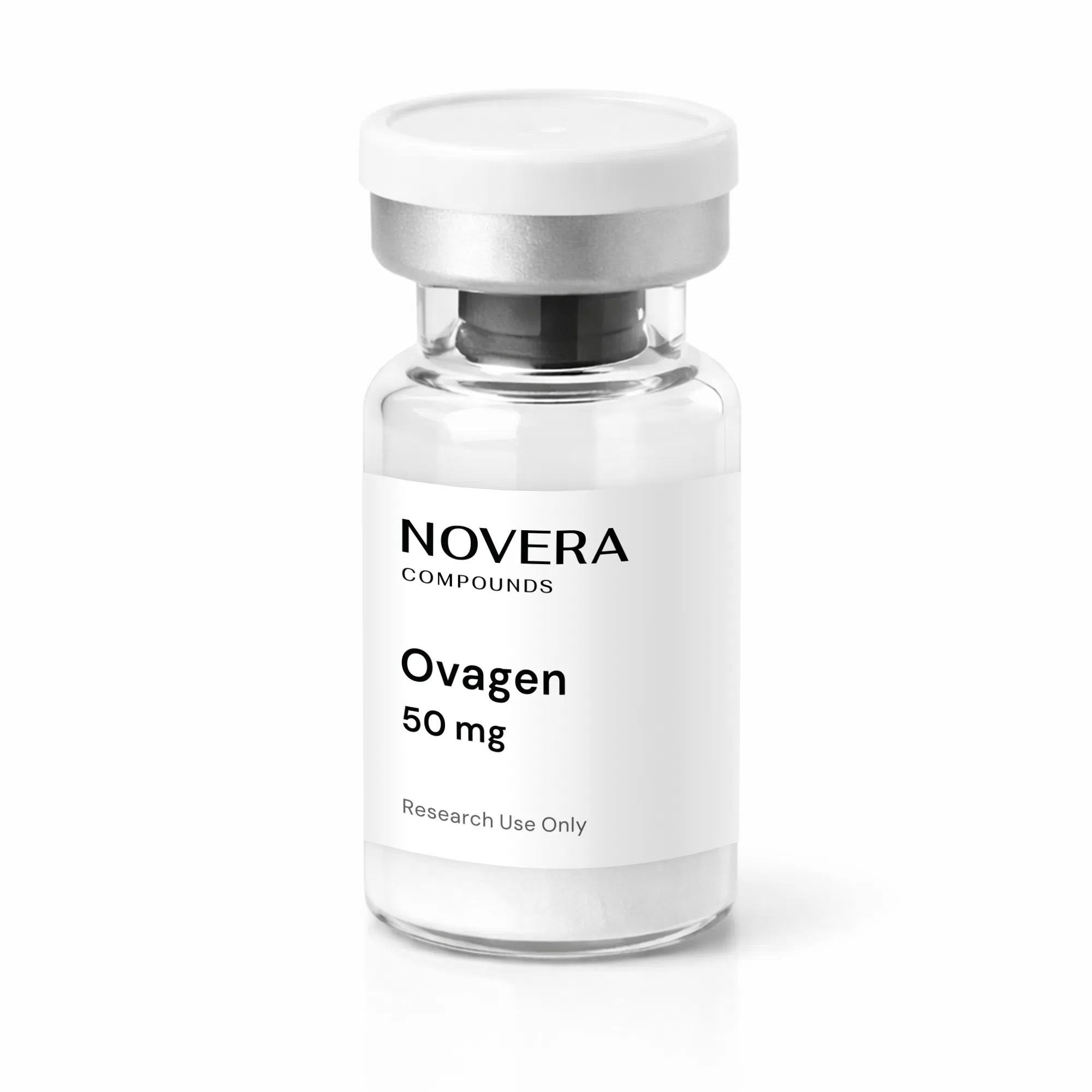
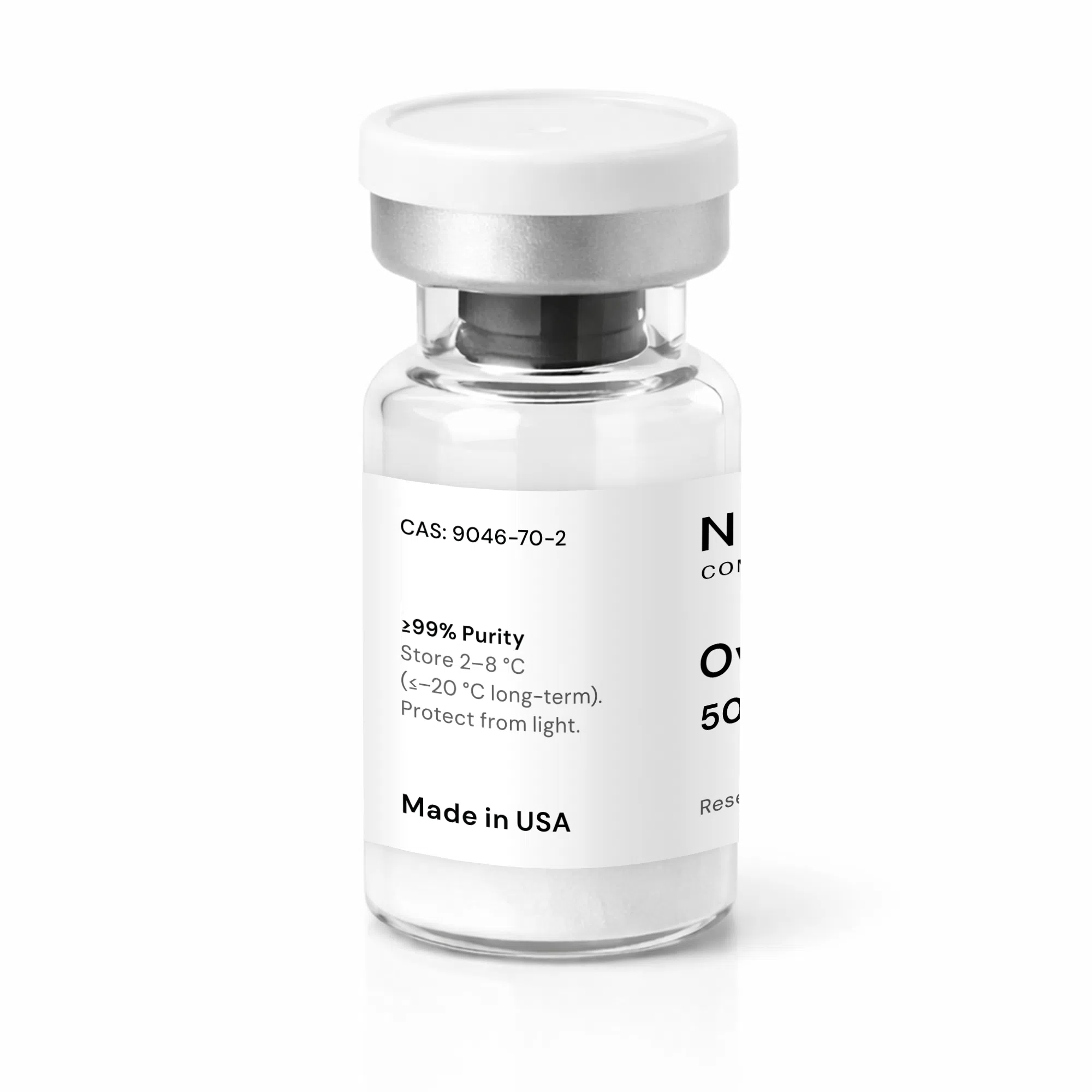
Ovagen 50mg
Strength: 50 mg
CAS: 9046-70-2
Chemical Formula: C₁₅H₂₅N₃O₈
Molecular weight: 375.37 g/mol
Peptide Sequence: Glu–Asp–Leu
Synonyms: Ovagen Bioregulator
Storage: Store 2–8 °C (≤–20 °C long-term). RT exposure during transport acceptable. Protect from light.
Shelf life: 24 months from the manufacturing date.
Ovagen is a synthetic tripeptide bioregulator (Glu Asp Leu; EDL) classified as an organ associated peptide with primary experimental use in liver and gastrointestinal research models. Research suggests that it may influence chromatin organization, gene expression, and markers of protein synthesis, antioxidant defense, fibrotic remodeling, and viral protease activity in preclinical liver and gut studies, without implying any clinical or therapeutic application.


Why Choose Medica Depot
Shop hundreds of medical products with no minimums and free shipping on large orders.
 400+ products
 No order minimums
 Free shipping
 Loyalty rewards
 Trusted since 2007
 Account manager
 Verified LOT numbers
INFORMATION
What is Ovagen (50 mg)?
Ovagen (50 mg) is a synthetic tripeptide bioregulator composed of three amino acids: glutamic acid, aspartic acid, and leucine (commonly written as Glu–Asp–Leu or EDL). It is classified as an organ-specific and bioregulator peptide, primarily studied in liver (hepatic) and gastrointestinal experimental models.
In laboratory research, Ovagen is used to explore how very short peptides may influence gene expression, chromatin organization (the packaging and accessibility of DNA), and cellular stress responses in controlled preclinical settings, particularly in liver- and gut-related systems.
Product Specifications
- Peptide Sequence: Glu–Asp–Leu
- Chemical Formula: C₁₅H₂₅N₃O₈
- Molecular Weight: 375.37 g/mol
- Purity: Research-grade, typically ≥98–99% by HPLC, with identity/purity confirmed by chromatographic and mass-spectrometric methods; lot results provided in a COA
- Packaging Format: 50 mg lyophilized (freeze-dried) peptide in a sealed laboratory vial; intended for reconstitution into stock solutions for in-vitro and in-vivo experimental workflows
- Storage Conditions: Store at −20 °C, protect from light and moisture; avoid repeated freeze–thaw cycles
- Intended Use: For laboratory research use only; not for human or veterinary use
Key Characteristics of Ovagen (50 mg)
- Short-chain bioregulator peptide: A tripeptide (Glu–Asp–Leu) linked to liver and gastrointestinal research models in Khavinson-related peptide literature.
- Studied for gene and chromatin effects (preclinical): Investigated as a low–molecular-weight regulator that may interact with nuclear/chromatin structures, with reported effects on transcriptional activity and chromatin accessibility in tissue-specific systems.
- Liver and gut model focus: Preclinical studies in the hepatic and gastrointestinal systems have examined markers of protein synthesis, antioxidant defenses, extracellular matrix organization, and cellular stress responses.
- Additional biochemical assay use: In-vitro studies have examined the peptide as a hydrophilic compound that interacts with viral proteases, using purified enzymes and model substrates to measure binding and inhibition behavior.
- Documented analytical profile: Supplied as a lyophilized research reagent with batch-level documentation (COA, HPLC, MS) to support reproducible use in gene-expression, chromatin-state, and enzyme-activity assays.
How Ovagen (50 mg) Supports Research
Ovagen (50 mg), also known as Ovagen bioregulator, is used as an organ-associated bioregulator peptide to explore how very short amino-acid sequences may interact with liver and gastrointestinal cellular systems.
In preclinical models, Ovagen has been associated with measurable changes in transcriptional patterns, chromatin organization, and biochemical markers relevant to hepatic metabolism and cellular protection. These help researchers investigate peptide-based regulation of liver-associated gene networks.
Because the EDL sequence has also been examined in enzyme-interaction assays and certain gastrointestinal experimental contexts, Ovagen serves as a versatile research tool across hepatic, mucosal, and biochemical systems—without implying clinical use.
Research Applications & Usage Information
- Hepatic Gene Regulation and Chromatin Studies: Used in liver-derived cell systems to study changes in transcription, chromatin accessibility, and nucleoprotein organization after exposure to short peptide bioregulators. It also supports research on gene expression shifts related to protein synthesis, antioxidant activity, and stress response signaling in hepatocellular models.
- Liver Injury, Fibrosis, and Cytoprotection Models: Applied in animal models of hepatic stress or injury to monitor fibrotic markers, cell proliferation indices, and biochemical indicators of hepatic function under controlled experimental conditions.
- Gastrointestinal Barrier and Mucosal Signaling: Used in gastrointestinal studies to assess epithelial barrier markers, mucosal signaling pathways, and cellular turnover in gut tissues, including chemically or diet-induced perturbation models.
- Enzyme Interaction and Virological Assays: Evaluated in vitro as a hydrophilic peptide interacting with viral proteases, with concentration-dependent effects measured using purified enzymes and standardized substrates.
- Bioregulator and Systems-Biology Research: Used as a liver-focused member of the Khavinson peptide family in broader studies of peptide bioregulation, aging-related models, and organ-specific gene-expression control in preclinical research.
Note: Experimental conditions (concentration, exposure time, and assay format) should be defined by qualified investigators based on study aims and institutional standards. No standardized dosing or clinical recommendations are provided or implied.
Handling and Storage Recommendations
- Keep lyophilized vials at −20 °C or below, tightly closed.
- Protect from light and humidity to maintain potency.
- Allow sealed vials to reach room temperature before use to reduce condensation.
- Store aliquots refrigerated or frozen based on internal stability data; discard if changes are observed or storage limits are exceeded.
- Dispose of materials per applicable laboratory waste requirements.
Research Use Only Notice
This product is intended for laboratory research use only and is not approved for human or veterinary use. It is not intended for diagnostic, therapeutic, or clinical applications. Any reference to biological activity or potential effects is based solely on preclinical or in‑vitro findings and should not be interpreted as validated clinical outcomes. Researchers are responsible for ensuring proper handling, storage, and disposal in accordance with institutional, federal, and international guidelines.
References
- Anisimov VN, Khavinson VKh. Peptide bioregulation of aging: results and prospects. Biogerontology. 2010;11(2):139‑149. doi:10.1007/s10522‑009‑9249‑8
- Ovagen overview. Peptide Database. https://peptide-db.com/peptides/ovagen
- Khavinson VKh, Anisimov VN. [Application of peptide bioregulators in gerontology: results and perspectives]. Biogerontology. 2000;1(1):55‑60. https://pubmed.ncbi.nlm.nih.gov/11019535/
- Louis JM, Dyda F, Nashed NT, Kimmel AR, Davies DR. Hydrophilic peptides derived from the transframe region of Gag-Pol inhibit the HIV-1 protease. Biochemistry. 1998;37(8):2105‑2110. doi:10.1021/bi972059x
What is Ovagen (50 mg)?
Ovagen (50 mg) is a synthetic tripeptide bioregulator composed of three amino acids: glutamic acid, aspartic acid, and leucine (commonly written as Glu–Asp–Leu or EDL). It is classified as an organ-specific and bioregulator peptide, primarily studied in liver (hepatic) and gastrointestinal experimental models.
In laboratory research, Ovagen is used to explore how very short peptides may influence gene expression, chromatin organization (the packaging and accessibility of DNA), and cellular stress responses in controlled preclinical settings, particularly in liver- and gut-related systems.
Product Specifications
- Peptide Sequence: Glu–Asp–Leu
- Chemical Formula: C₁₅H₂₅N₃O₈
- Molecular Weight: 375.37 g/mol
- Purity: Research-grade, typically ≥98–99% by HPLC, with identity/purity confirmed by chromatographic and mass-spectrometric methods; lot results provided in a COA
- Packaging Format: 50 mg lyophilized (freeze-dried) peptide in a sealed laboratory vial; intended for reconstitution into stock solutions for in-vitro and in-vivo experimental workflows
- Storage Conditions: Store at −20 °C, protect from light and moisture; avoid repeated freeze–thaw cycles
- Intended Use: For laboratory research use only; not for human or veterinary use
Key Characteristics of Ovagen (50 mg)
- Short-chain bioregulator peptide: A tripeptide (Glu–Asp–Leu) linked to liver and gastrointestinal research models in Khavinson-related peptide literature.
- Studied for gene and chromatin effects (preclinical): Investigated as a low–molecular-weight regulator that may interact with nuclear/chromatin structures, with reported effects on transcriptional activity and chromatin accessibility in tissue-specific systems.
- Liver and gut model focus: Preclinical studies in the hepatic and gastrointestinal systems have examined markers of protein synthesis, antioxidant defenses, extracellular matrix organization, and cellular stress responses.
- Additional biochemical assay use: In-vitro studies have examined the peptide as a hydrophilic compound that interacts with viral proteases, using purified enzymes and model substrates to measure binding and inhibition behavior.
- Documented analytical profile: Supplied as a lyophilized research reagent with batch-level documentation (COA, HPLC, MS) to support reproducible use in gene-expression, chromatin-state, and enzyme-activity assays.
How Ovagen (50 mg) Supports Research
Ovagen (50 mg), also known as Ovagen bioregulator, is used as an organ-associated bioregulator peptide to explore how very short amino-acid sequences may interact with liver and gastrointestinal cellular systems.
In preclinical models, Ovagen has been associated with measurable changes in transcriptional patterns, chromatin organization, and biochemical markers relevant to hepatic metabolism and cellular protection. These help researchers investigate peptide-based regulation of liver-associated gene networks.
Because the EDL sequence has also been examined in enzyme-interaction assays and certain gastrointestinal experimental contexts, Ovagen serves as a versatile research tool across hepatic, mucosal, and biochemical systems—without implying clinical use.
Research Applications & Usage Information
- Hepatic Gene Regulation and Chromatin Studies: Used in liver-derived cell systems to study changes in transcription, chromatin accessibility, and nucleoprotein organization after exposure to short peptide bioregulators. It also supports research on gene expression shifts related to protein synthesis, antioxidant activity, and stress response signaling in hepatocellular models.
- Liver Injury, Fibrosis, and Cytoprotection Models: Applied in animal models of hepatic stress or injury to monitor fibrotic markers, cell proliferation indices, and biochemical indicators of hepatic function under controlled experimental conditions.
- Gastrointestinal Barrier and Mucosal Signaling: Used in gastrointestinal studies to assess epithelial barrier markers, mucosal signaling pathways, and cellular turnover in gut tissues, including chemically or diet-induced perturbation models.
- Enzyme Interaction and Virological Assays: Evaluated in vitro as a hydrophilic peptide interacting with viral proteases, with concentration-dependent effects measured using purified enzymes and standardized substrates.
- Bioregulator and Systems-Biology Research: Used as a liver-focused member of the Khavinson peptide family in broader studies of peptide bioregulation, aging-related models, and organ-specific gene-expression control in preclinical research.
Note: Experimental conditions (concentration, exposure time, and assay format) should be defined by qualified investigators based on study aims and institutional standards. No standardized dosing or clinical recommendations are provided or implied.
Handling and Storage Recommendations
- Keep lyophilized vials at −20 °C or below, tightly closed.
- Protect from light and humidity to maintain potency.
- Allow sealed vials to reach room temperature before use to reduce condensation.
- Store aliquots refrigerated or frozen based on internal stability data; discard if changes are observed or storage limits are exceeded.
- Dispose of materials per applicable laboratory waste requirements.
Research Use Only Notice
This product is intended for laboratory research use only and is not approved for human or veterinary use. It is not intended for diagnostic, therapeutic, or clinical applications. Any reference to biological activity or potential effects is based solely on preclinical or in‑vitro findings and should not be interpreted as validated clinical outcomes. Researchers are responsible for ensuring proper handling, storage, and disposal in accordance with institutional, federal, and international guidelines.
References
- Anisimov VN, Khavinson VKh. Peptide bioregulation of aging: results and prospects. Biogerontology. 2010;11(2):139‑149. doi:10.1007/s10522‑009‑9249‑8
- Ovagen overview. Peptide Database. https://peptide-db.com/peptides/ovagen
- Khavinson VKh, Anisimov VN. [Application of peptide bioregulators in gerontology: results and perspectives]. Biogerontology. 2000;1(1):55‑60. https://pubmed.ncbi.nlm.nih.gov/11019535/
- Louis JM, Dyda F, Nashed NT, Kimmel AR, Davies DR. Hydrophilic peptides derived from the transframe region of Gag-Pol inhibit the HIV-1 protease. Biochemistry. 1998;37(8):2105‑2110. doi:10.1021/bi972059x
Related products