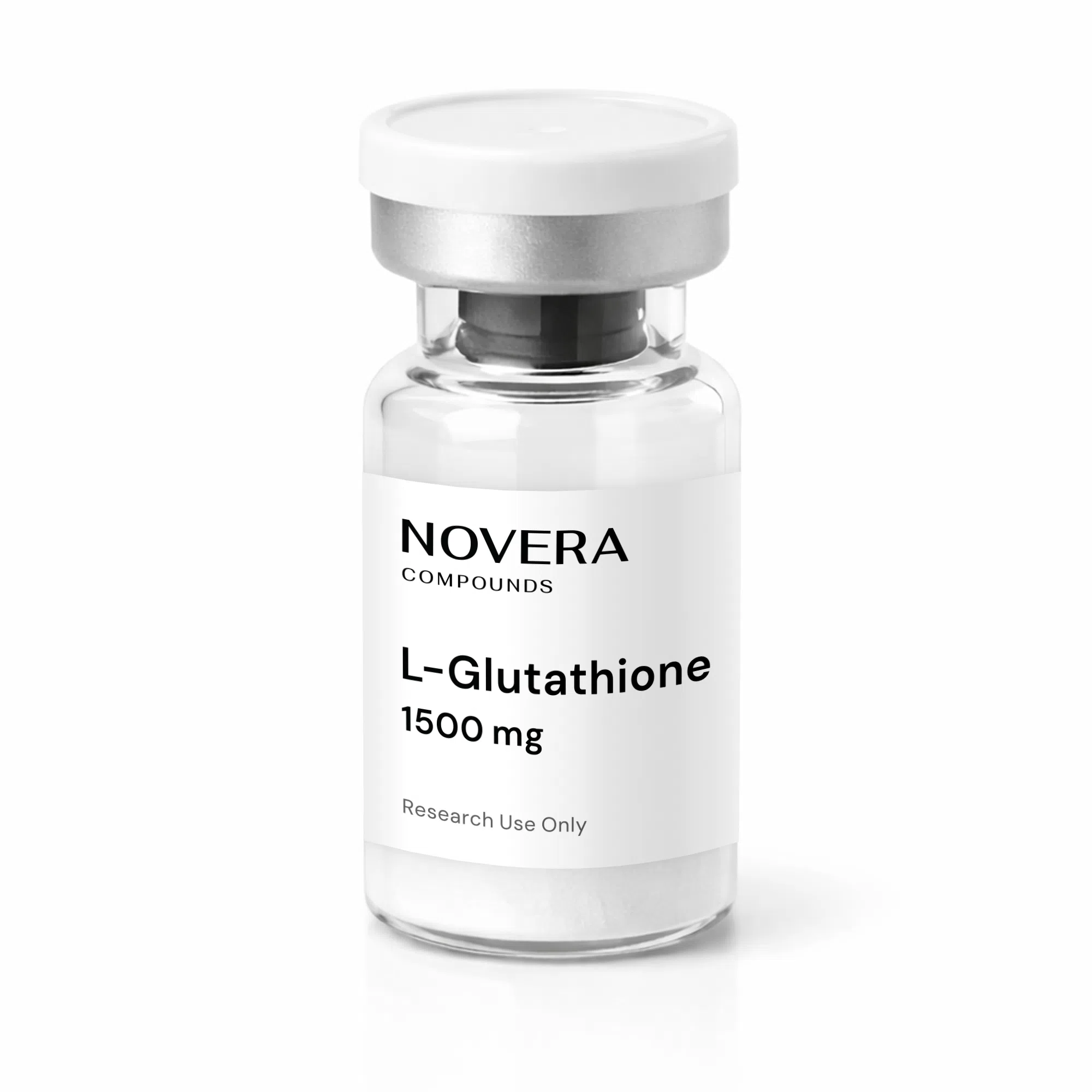
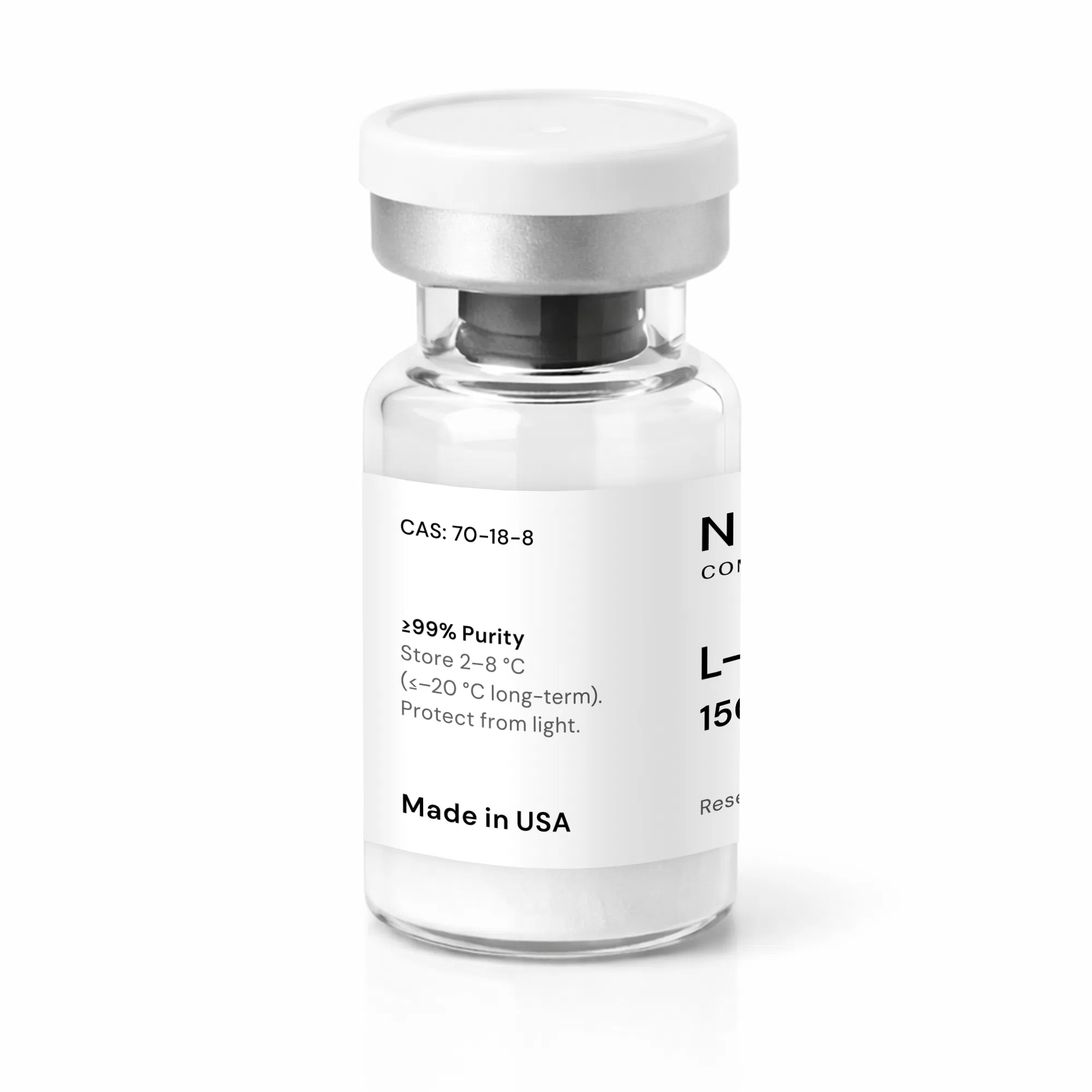
L-Glutathione 1500mg
Strength: 1500mg
CAS: 70-18-8
Chemical Formula: C₁₀H₁₇N₃O₆S
Molecular weight: 307.33 g/mol
Peptide Sequence: Γ-L-Glutamyl-L-cysteinylglycine
Synonyms: glutathione, L-Glutathione reduced, Glutathion
Storage: Store 2–8 °C (≤–20 °C long-term). RT exposure during transport acceptable. Protect from light.
Shelf life: 24 months from the manufacturing date.
L Glutathione is a γ linked tripeptide (γ L glutamyl L cysteinylglycine) and the most abundant low-molecular-weight thiol in cells. It functions as a central intracellular redox buffer and antioxidant. Research suggests it participates in detoxification, peroxide reduction, and redox signaling by serving as a cofactor for glutathione-dependent enzymes. It is commonly used in studies of oxidative stress, cellular rejuvenation, and redox-regulated pathways in experimental models.


Why Choose Medica Depot
Shop hundreds of medical products with no minimums and free shipping on large orders.
 400+ products
 No order minimums
 Free shipping
 Loyalty rewards
 Trusted since 2007
 Account manager
 Verified LOT numbers
INFORMATION
What is L‑Glutathione?
L‑Glutathione (5mg) is a naturally occurring tripeptide found in almost all aerobic cells, where it plays a central role in maintaining cellular redox balance, detoxification, and protection from oxidative stress.
As a redox-active molecule, L‑Glutathione is used widely in research applications to study antioxidant defense systems, stress responses, and cellular metabolism in vitro and in preclinical models.
Product Specifications
- Synonyms: Glutathione, L‑Glutathione (reduced, GSH), Glutathion, 70‑18‑8
- Peptide Sequence: γ‑L‑Glutamyl‑L‑cysteinylglycine
- Chemical Formula: C₁₀H₁₇N₃O₆S
- Molecular Weight: 307.33 g/mol (reduced L‑Glutathione, GSH)
- CAS Number: 70‑18‑8
- Purity: Research‑grade L‑Glutathione, typically ≥98–99% purity by HPLC, with identity and purity confirmed by chromatographic and mass‑spectrometric methods; lot‑specific analytical data are provided on the certificate of analysis (COA).
- Packaging Format: 1500 mg strength (1.5 g) of L‑Glutathione as a solid or lyophilized research material suitable for preparation of stock solutions for laboratory use.
- Storage Conditions: Store at −20°C, protected from light and moisture; avoid repeated freeze–thaw cycles to help maintain chemical stability and reduce degradation.
- Intended Use: For laboratory research use only; not for human or veterinary use.
Key Characteristics of L‑Glutathione
- Tripeptide Structure: Made of glutamate, cysteine, and glycine, with a γ-bond that helps resist rapid breakdown by common peptidases.
- Primary Intracellular Thiol: Serves as a major redox buffer in cells, often present at millimolar levels in many cell types.
- Redox Indicator: The GSH/GSSG ratio is widely used as a readout of cellular oxidative stress and redox state.
- Enzyme Cofactor: Supports antioxidant and detox pathways through enzymes such as glutathione peroxidases and glutathione S-transferases.
- Detoxification Support: Participates in phase II conjugation and helps neutralize reactive electrophiles in metabolic studies.
- Broad Model Compatibility: Useful in cell lines, tissue preparations, and biochemical assays where researchers need to measure or adjust glutathione status.
How L‑Glutathione Supports Research
L‑Glutathione is used in laboratory research as a well-defined redox-active molecule to study how redox balance influences cell survival, signaling, and metabolism. Researchers adjust glutathione levels or measure its oxidized and reduced forms (GSH/GSSG) to probe oxidative stress and cellular responses.
In models of stress and aging, L‑Glutathione serves as a reference antioxidant or standard for enzymatic assays, and helps standardize redox conditions in culture media.
Research Applications & Usage Information
- Redox Homeostasis and Oxidative Stress Models: Studies how shifts in GSH/GSSG affect ROS handling, stress signaling, and oxidative damage markers.
- Enzymology and Detoxification Pathways: Supports assays for glutathione-linked enzymes involved in antioxidant defense and xenobiotic conjugation.
- Cellular Rejuvenation and Mitochondrial Function Research: Examines how thiol balance relates to mitochondrial function, energy metabolism, and cell viability under stress.
- Signal Transduction and Redox Signaling: Investigates S-glutathionylation and how it can change enzyme activity and transcriptional control.
- Analytical Standards and Method Development: Used as a reference material for chromatography- and MS-based methods that quantify GSH/GSSG in biological samples.
Handling and Storage Recommendations
- Keep tightly closed at −20°C, dry, and protected from light.
- Minimize time at room temperature before using to avoid moisture during handling.
- Make fresh solutions when possible; follow your lab’s buffer/media requirements.
- When storing solutions, aliquot to reduce the risk of repeated freeze–thaw cycles and oxidation.
- Use standard PPE and dispose of waste in accordance with institutional laboratory procedures.
Research Use Only Notice
This product is intended for laboratory research use only and is not approved for human or veterinary use. It is not intended for diagnostic, therapeutic, or clinical applications. Any reference to biological activity or potential effects is based solely on preclinical or in‑vitro findings and should not be interpreted as validated clinical outcomes. Researchers are responsible for ensuring proper handling, storage, and disposal in accordance with institutional, federal, and international guidelines.
References
- Yudkoff M. Glutathione metabolism. Basic Neurochemistry – NCBI Bookshelf. Published 1999. https://www.ncbi.nlm.nih.gov/books/NBK28123/
- Aoyama K, Nakaki T. Glutathione in Cellular Redox Homeostasis: Association with the Excitatory Amino Acid Carrier 1 (EAAC1). Molecules. 2015;20(5):8742-8758. doi:10.3390/molecules20058742
- Lushchak VI. Glutathione homeostasis and functions: Potential targets for medical interventions. Journal of Amino Acids. 2012;2012:1-26. doi:10.1155/2012/736837
- Vašková J, Kočan L, Vaško L, Perjési P. Glutathione-Related Enzymes and Proteins: A review. Molecules. 2023;28(3):1447. doi:10.3390/molecules28031447
- Forman HJ, Zhang H, Rinna A. Glutathione: Overview of its protective roles, measurement, and biosynthesis. Molecular Aspects of Medicine. 2008;30(1-2):1-12. doi:10.1016/j.mam.2008.08.006
- Aquilano K, Baldelli S, Ciriolo MR. Glutathione: new roles in redox signaling for an old antioxidant. Frontiers in Pharmacology. 2014;5:196. doi:10.3389/fphar.2014.00196
What is L‑Glutathione?
L‑Glutathione (5mg) is a naturally occurring tripeptide found in almost all aerobic cells, where it plays a central role in maintaining cellular redox balance, detoxification, and protection from oxidative stress.
As a redox-active molecule, L‑Glutathione is used widely in research applications to study antioxidant defense systems, stress responses, and cellular metabolism in vitro and in preclinical models.
Product Specifications
- Synonyms: Glutathione, L‑Glutathione (reduced, GSH), Glutathion, 70‑18‑8
- Peptide Sequence: γ‑L‑Glutamyl‑L‑cysteinylglycine
- Chemical Formula: C₁₀H₁₇N₃O₆S
- Molecular Weight: 307.33 g/mol (reduced L‑Glutathione, GSH)
- CAS Number: 70‑18‑8
- Purity: Research‑grade L‑Glutathione, typically ≥98–99% purity by HPLC, with identity and purity confirmed by chromatographic and mass‑spectrometric methods; lot‑specific analytical data are provided on the certificate of analysis (COA).
- Packaging Format: 1500 mg strength (1.5 g) of L‑Glutathione as a solid or lyophilized research material suitable for preparation of stock solutions for laboratory use.
- Storage Conditions: Store at −20°C, protected from light and moisture; avoid repeated freeze–thaw cycles to help maintain chemical stability and reduce degradation.
- Intended Use: For laboratory research use only; not for human or veterinary use.
Key Characteristics of L‑Glutathione
- Tripeptide Structure: Made of glutamate, cysteine, and glycine, with a γ-bond that helps resist rapid breakdown by common peptidases.
- Primary Intracellular Thiol: Serves as a major redox buffer in cells, often present at millimolar levels in many cell types.
- Redox Indicator: The GSH/GSSG ratio is widely used as a readout of cellular oxidative stress and redox state.
- Enzyme Cofactor: Supports antioxidant and detox pathways through enzymes such as glutathione peroxidases and glutathione S-transferases.
- Detoxification Support: Participates in phase II conjugation and helps neutralize reactive electrophiles in metabolic studies.
- Broad Model Compatibility: Useful in cell lines, tissue preparations, and biochemical assays where researchers need to measure or adjust glutathione status.
How L‑Glutathione Supports Research
L‑Glutathione is used in laboratory research as a well-defined redox-active molecule to study how redox balance influences cell survival, signaling, and metabolism. Researchers adjust glutathione levels or measure its oxidized and reduced forms (GSH/GSSG) to probe oxidative stress and cellular responses.
In models of stress and aging, L‑Glutathione serves as a reference antioxidant or standard for enzymatic assays, and helps standardize redox conditions in culture media.
Research Applications & Usage Information
- Redox Homeostasis and Oxidative Stress Models: Studies how shifts in GSH/GSSG affect ROS handling, stress signaling, and oxidative damage markers.
- Enzymology and Detoxification Pathways: Supports assays for glutathione-linked enzymes involved in antioxidant defense and xenobiotic conjugation.
- Cellular Rejuvenation and Mitochondrial Function Research: Examines how thiol balance relates to mitochondrial function, energy metabolism, and cell viability under stress.
- Signal Transduction and Redox Signaling: Investigates S-glutathionylation and how it can change enzyme activity and transcriptional control.
- Analytical Standards and Method Development: Used as a reference material for chromatography- and MS-based methods that quantify GSH/GSSG in biological samples.
Handling and Storage Recommendations
- Keep tightly closed at −20°C, dry, and protected from light.
- Minimize time at room temperature before using to avoid moisture during handling.
- Make fresh solutions when possible; follow your lab’s buffer/media requirements.
- When storing solutions, aliquot to reduce the risk of repeated freeze–thaw cycles and oxidation.
- Use standard PPE and dispose of waste in accordance with institutional laboratory procedures.
Research Use Only Notice
This product is intended for laboratory research use only and is not approved for human or veterinary use. It is not intended for diagnostic, therapeutic, or clinical applications. Any reference to biological activity or potential effects is based solely on preclinical or in‑vitro findings and should not be interpreted as validated clinical outcomes. Researchers are responsible for ensuring proper handling, storage, and disposal in accordance with institutional, federal, and international guidelines.
References
- Yudkoff M. Glutathione metabolism. Basic Neurochemistry – NCBI Bookshelf. Published 1999. https://www.ncbi.nlm.nih.gov/books/NBK28123/
- Aoyama K, Nakaki T. Glutathione in Cellular Redox Homeostasis: Association with the Excitatory Amino Acid Carrier 1 (EAAC1). Molecules. 2015;20(5):8742-8758. doi:10.3390/molecules20058742
- Lushchak VI. Glutathione homeostasis and functions: Potential targets for medical interventions. Journal of Amino Acids. 2012;2012:1-26. doi:10.1155/2012/736837
- Vašková J, Kočan L, Vaško L, Perjési P. Glutathione-Related Enzymes and Proteins: A review. Molecules. 2023;28(3):1447. doi:10.3390/molecules28031447
- Forman HJ, Zhang H, Rinna A. Glutathione: Overview of its protective roles, measurement, and biosynthesis. Molecular Aspects of Medicine. 2008;30(1-2):1-12. doi:10.1016/j.mam.2008.08.006
- Aquilano K, Baldelli S, Ciriolo MR. Glutathione: new roles in redox signaling for an old antioxidant. Frontiers in Pharmacology. 2014;5:196. doi:10.3389/fphar.2014.00196
Related products