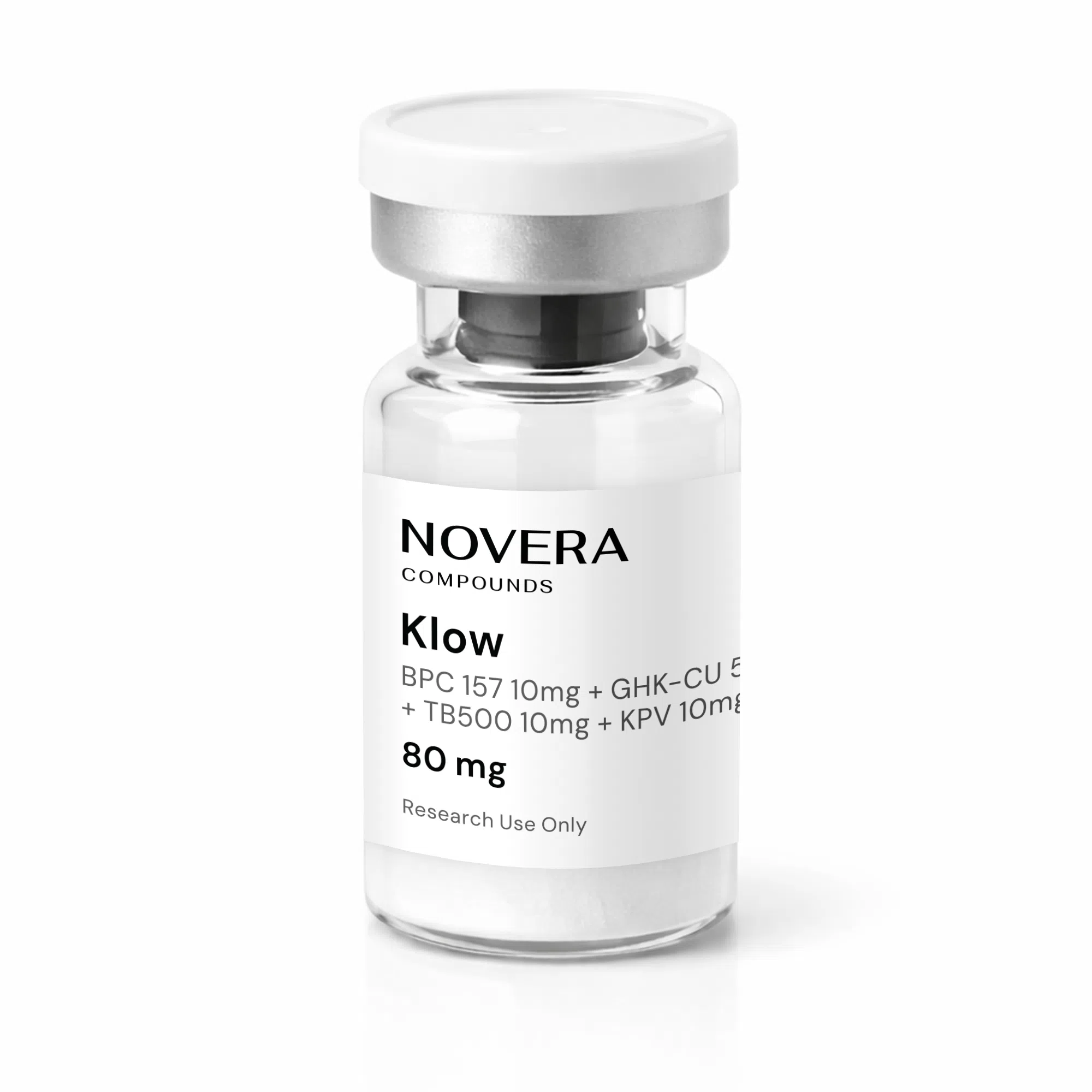
Klow BPC 157 10mg + GHK-CU 50mg + TB500 10mg + KPV 10mg
Strength: 80mg
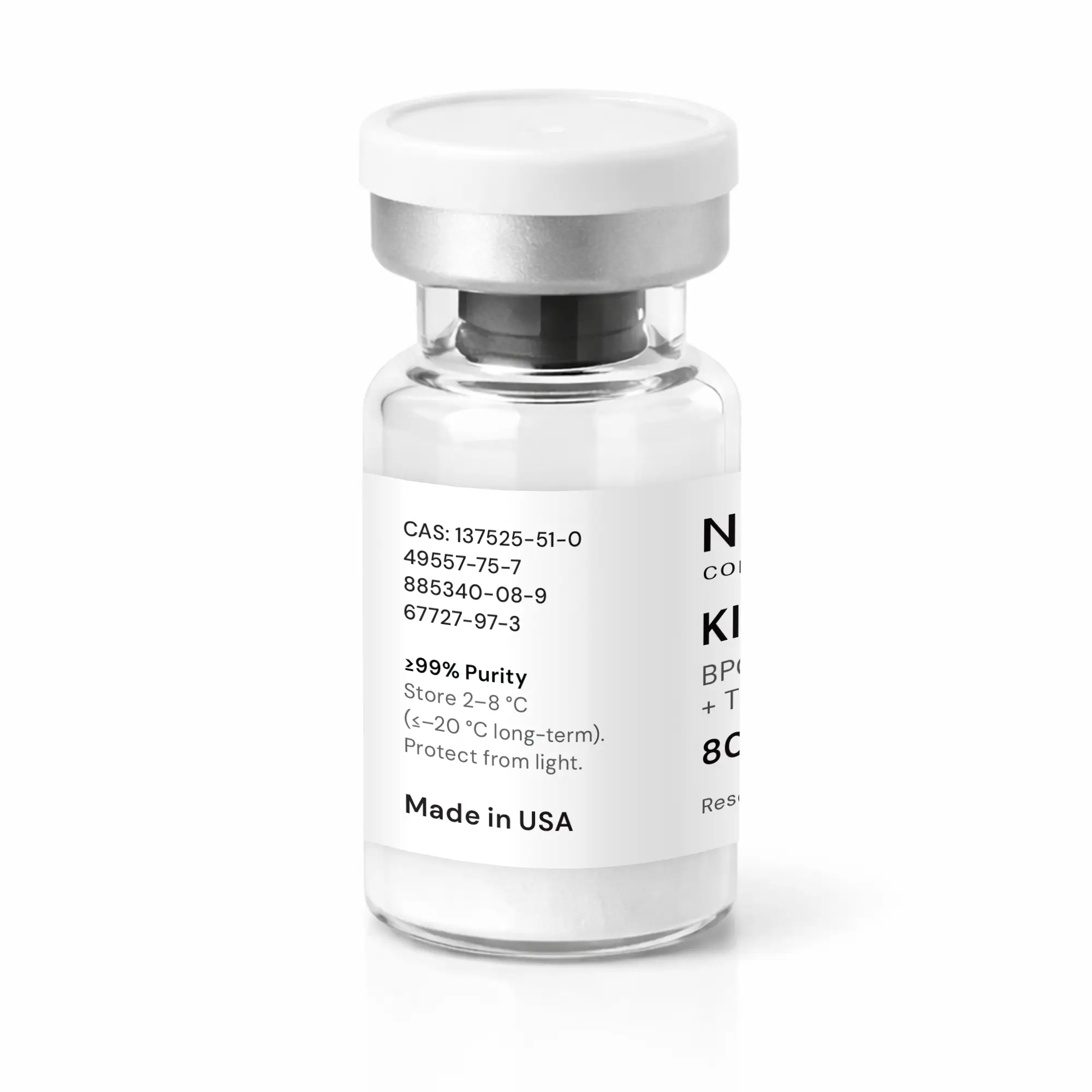
CAS: BPC-157: 137525-51-0 GHK-Cu: 49557-75-7 TB500: 885340-08-9 KPV: 67727-97-3
Chemical Formula: BPC-157: C₆₂H₉₈N₁₆O₂₂ GHK-CU: C₁₄H₂₁N₆O₄Cu TB500: C₃₈H₆₈N₁₀O₁₄ KPV: C₁₇H₃₂N₆O₄
Molecular weight: BPC-157: 1419.556 g/mol GHK-Cu: 401.91 TB-500(TB-4): 889.0 g/mol KPV: 384.48 g/mol
Peptide Sequence: BPC-157: Gly-Glu-Pro-Pro-Pro-Gly-Lys-Pro-Ala-Asp-Asp-Ala-Gly-Leu-Val; GHK-Cu: Gly-His-Lys·Cu; TB500: Ac-Ser-Asp-Lys-Pro-Asp-Met-Ala-Glu-Ile-Glu-Lys-Phe-Asp-Lys-Ser-Leu-Lys-Lys-Thr-Glu-Thr-Gln-Lys (or full TB4); KPV: Lys-Pro-Val klow, bpc157, tb500, thymosin beta 4, tb4, ghkcu, BPC-157, TB-500(TB-4)
Synonyms: klow, bpc157, tb500, thymosin beta 4, tb4, ghkcu, BPC-157, TB-500(TB-4)
Storage: Store 2–8 °C (≤–20 °C long-term). RT exposure during transport acceptable. Protect from light.
Shelf life: 24 months from the manufacturing date.
“Klow” BPC 157 10mg + GHK-CU 50mg + TB500 10mg + KPV 10mg is a multi-peptide research formulation that combines peptides studied for tissue repair, angiogenesis, and inflammatory pathways. Research suggests it can be used to explore epithelial barrier integrity, extracellular matrix remodeling, and cell migration in preclinical in-vitro and animal experiments. The data currently available reflects findings on the individual components rather than this specific combination, with no established safety or efficacy for human or veterinary applications.


Why Choose Medica Depot
Shop hundreds of medical products with no minimums and free shipping on large orders.
 400+ products
 No order minimums
 Free shipping
 Loyalty rewards
 Trusted since 2007
 Account manager
 Verified LOT numbers
INFORMATION
What is “Klow” BPC 157 10 mg + GHK‑Cu 50 mg + TB500 10 mg + KPV 10 mg?
“Klow” is a multi-component research peptide blend designed for controlled laboratory use. It combines the following research peptides into a single vial for experimental research: BPC-157, GHK-Cu, TB500 (a fragment related to thymosin beta-4), and KPV.
In peptide research classifications, “Klow” is a healing and regenerative peptide blend. Each individual component has been studied in preclinical models:
- BPC-157 (molecular weight: 1419.556 g/mol) is a synthetic fragment derived from a gastric protein, frequently examined in rodent studies on gastrointestinal integrity, vascular changes, and soft-tissue injury.
- GHK-Cu (molecular weight: 401.91 g/mol) is a naturally occurring copper-binding tripeptide studied for its role in skin biology, extracellular matrix remodeling, and wound repair models.
- TB500 (molecular weight: 889.0 g/mol) is a short peptide fragment derived from thymosin beta-4, a protein involved in cell migration and angiogenesis (new blood vessel formation) in experimental systems.
- KPV (molecular weight: 384.48 g/mol) is derived from the C-terminal end of α-MSH and has been investigated in models of intestinal and airway inflammation, as well as epithelial barrier function.
“Klow” is intended for in-vitro and non-clinical in-vivo research only. It is not approved for human or veterinary use, and no therapeutic or performance claims are made for this formulation.
Product Specifications
Components and CAS Numbers:
- BPC‑157: 10 mg — CAS 137525-51-0
- GHK‑Cu: 50 mg — CAS 49557-75-7
- TB500 (thymosin beta‑4 fragment): 10 mg — CAS 885340-08-9
- KPV: 10 mg — CAS 67727-97-3
Chemical Formulas:
- BPC-157: C₆₂H₉₈N₁₆O₂₂
- GHK-CU: C₁₄H₂₁N₆O₄Cu
- TB500: C₃₈H₆₈N₁₀O₁₄
- KPV: C₁₇H₃₂N₆O₄
- Peptide Sequence: Tyr–Asn–Trp–Asn–Ser–Phe–Gly–Leu–Arg–Phe–NH₂
- Purity: >99% purity, verified by HPLC and LC‑MS
- Packaging Format: 80mg strength in each vial
- Physical Form: Lyophilized powder for reconstitution by qualified personnel
- Storage Conditions (unreconstituted): Store at −20 °C; protect from light; keep in a sealed container
- Intended Use: For laboratory research use only; not for human or veterinary use
Key Characteristics of “Klow” BPC 157 10 mg + GHK‑Cu 50 mg + TB500 10 mg + KPV 10 mg
- Multi-peptide design: Combines four peptides studied in models related to tissue structure, vascular biology, and inflammatory signaling—supporting multi-pathway exploration in one formulation.
- Research-grade purity: >99% purity (HPLC/LC-MS) to support consistency across experiments.
- Defined composition: Fixed amounts of each component to simplify comparative and combination studies.
- Broad model compatibility: Applicable to cell-based and non-clinical animal models examining remodeling, barrier function, and inflammatory signaling.
- Lyophilized format: Freeze-dried form supports stability during storage and transport (reconstitution handled per lab protocols).
- Standard lab handling: Use typical peptide handling precautions and follow institutional biosafety procedures.
- Non-clinical only: Not intended for diagnostic, therapeutic, or clinical use.
How “Klow” Supports Research
“Klow” is designed to support pathway-focused research, not therapeutic use. Each component is commonly explored in preclinical or in-vitro settings:
- BPC-157: studied in tissue injury models focusing on integrity, circulation-related responses, and repair processes.
- GHK-Cu: examined for collagen and matrix-related effects, and broader cellular responses in dermal and soft-tissue models.
- TB500: used to explore cell migration, tissue organization, and angiogenesis in experimental systems.
- KPV: applied in mucosal and airway inflammation models to study epithelial barrier behavior and inflammatory signaling.
By combining these components, “Klow” may support study designs that:
- Compare different peptide types within the same experimental framework.
- Explore potential interactions across tissue structure, vascular signaling, and inflammation-related pathways.
- Generate exploratory data on multi-peptide exposure in controlled research models.
Important: The specific “Klow” combination has not been systematically evaluated in clinical studies. Findings from research models should not be interpreted as evidence of safety or effectiveness in humans or animals.
It is important to note that the specific “Klow” combination itself has not been systematically evaluated in clinical studies, and any observed effects in research models should not be interpreted as evidence of safety or efficacy in humans or animals.
Research Applications & Usage Information
In laboratory settings, “Klow” can be incorporated into various experimental designs. Representative applications include:
- Tissue Structure and Remodeling Studies: Investigating how peptide exposure influences cell behavior and tissue structure in cell-based and animal models.
- Barrier Function and Mucosal Models: Using BPC-157 and KPV-containing preparations to explore epithelial integrity in gastrointestinal and other mucosal tissues.
- Inflammatory Pathway Research: Examining inflammatory signaling in epithelial or immune cell systems using KPV-containing formulations.
- Angiogenesis and Vascular Biology: Evaluating TB500 and GHK-Cu in models of vascular responses, including new blood vessel formation and endothelial behavior.
- Skin and Soft-Tissue Models: Studying wound-related processes and tissue remodeling in skin and soft-tissue models using BPC-157, GHK-Cu, and thymosin beta-4-related fragments.
The concentration, exposure times, and model design are determined by the researcher based on the study’s objectives, prior literature, and institutional guidelines. No dosing or protocol recommendations are provided or implied.
Handling and Storage Recommendations
To maintain sample integrity and support safe laboratory practices, follow these guidelines:
- Store at −20 °C, sealed.
- Protect from light and moisture.
- Use standard PPE: gloves, lab coat, eye protection.
- Use appropriate containment if aerosols or biological materials are involved.
- Dispose of materials per institutional and regulatory waste requirements.
Research Use Only Notice
This product is intended for laboratory research use only and is not approved for human or veterinary use. It is not intended for diagnostic, therapeutic, or clinical applications. Any reference to biological activity or potential effects is based solely on preclinical or in-vitro findings and should not be interpreted as validated clinical outcomes. Researchers are responsible for ensuring proper handling, storage, and disposal in accordance with institutional, federal, and international guidelines.
References
- Bajramagic S, Sever M, Rasic F, et al. Stable Gastric Pentadecapeptide BPC 157 and Intestinal Anastomoses Therapy in Rats-A Review. Pharmaceuticals (Basel). 2024;17(8):1081. Published 2024 Aug 17. doi:10.3390/ph17081081
- Pickart L, Vasquez-Soltero JM, Margolina A. GHK Peptide as a Natural Modulator of Multiple Cellular Pathways in Skin Regeneration. Biomed Res Int. 2015;2015:648108. doi:10.1155/2015/648108
- Philp D, Goldstein AL, Kleinman HK. Thymosin β4 promotes angiogenesis, wound healing, and hair follicle development. Mechanisms of Ageing and Development. 2003;125(2):113-115. doi:10.1016/j.mad.2003.11.005
- Land SC. Inhibition of cellular and systemic inflammation cues in human bronchial epithelial cells by melanocortin-related peptides: mechanism of KPV action and a role for MC3R agonists. Int J Physiol Pathophysiol Pharmacol. 2012;4(2):59-73.
- Adnan SB, Maarof M, Fauzi MB, Fadilah NIM. Exploring the Role of Tripeptides in Wound Healing and Skin Regeneration: A Comprehensive Review. Int J Med Sci. 2025;22(16):4175-4200. Published 2025 Oct 1. doi:10.7150/ijms.118118
What is “Klow” BPC 157 10 mg + GHK‑Cu 50 mg + TB500 10 mg + KPV 10 mg?
“Klow” is a multi-component research peptide blend designed for controlled laboratory use. It combines the following research peptides into a single vial for experimental research: BPC-157, GHK-Cu, TB500 (a fragment related to thymosin beta-4), and KPV.
In peptide research classifications, “Klow” is a healing and regenerative peptide blend. Each individual component has been studied in preclinical models:
- BPC-157 (molecular weight: 1419.556 g/mol) is a synthetic fragment derived from a gastric protein, frequently examined in rodent studies on gastrointestinal integrity, vascular changes, and soft-tissue injury.
- GHK-Cu (molecular weight: 401.91 g/mol) is a naturally occurring copper-binding tripeptide studied for its role in skin biology, extracellular matrix remodeling, and wound repair models.
- TB500 (molecular weight: 889.0 g/mol) is a short peptide fragment derived from thymosin beta-4, a protein involved in cell migration and angiogenesis (new blood vessel formation) in experimental systems.
- KPV (molecular weight: 384.48 g/mol) is derived from the C-terminal end of α-MSH and has been investigated in models of intestinal and airway inflammation, as well as epithelial barrier function.
“Klow” is intended for in-vitro and non-clinical in-vivo research only. It is not approved for human or veterinary use, and no therapeutic or performance claims are made for this formulation.
Product Specifications
Components and CAS Numbers:
- BPC‑157: 10 mg — CAS 137525-51-0
- GHK‑Cu: 50 mg — CAS 49557-75-7
- TB500 (thymosin beta‑4 fragment): 10 mg — CAS 885340-08-9
- KPV: 10 mg — CAS 67727-97-3
Chemical Formulas:
- BPC-157: C₆₂H₉₈N₁₆O₂₂
- GHK-CU: C₁₄H₂₁N₆O₄Cu
- TB500: C₃₈H₆₈N₁₀O₁₄
- KPV: C₁₇H₃₂N₆O₄
- Peptide Sequence: Tyr–Asn–Trp–Asn–Ser–Phe–Gly–Leu–Arg–Phe–NH₂
- Purity: >99% purity, verified by HPLC and LC‑MS
- Packaging Format: 80mg strength in each vial
- Physical Form: Lyophilized powder for reconstitution by qualified personnel
- Storage Conditions (unreconstituted): Store at −20 °C; protect from light; keep in a sealed container
- Intended Use: For laboratory research use only; not for human or veterinary use
Key Characteristics of “Klow” BPC 157 10 mg + GHK‑Cu 50 mg + TB500 10 mg + KPV 10 mg
- Multi-peptide design: Combines four peptides studied in models related to tissue structure, vascular biology, and inflammatory signaling—supporting multi-pathway exploration in one formulation.
- Research-grade purity: >99% purity (HPLC/LC-MS) to support consistency across experiments.
- Defined composition: Fixed amounts of each component to simplify comparative and combination studies.
- Broad model compatibility: Applicable to cell-based and non-clinical animal models examining remodeling, barrier function, and inflammatory signaling.
- Lyophilized format: Freeze-dried form supports stability during storage and transport (reconstitution handled per lab protocols).
- Standard lab handling: Use typical peptide handling precautions and follow institutional biosafety procedures.
- Non-clinical only: Not intended for diagnostic, therapeutic, or clinical use.
How “Klow” Supports Research
“Klow” is designed to support pathway-focused research, not therapeutic use. Each component is commonly explored in preclinical or in-vitro settings:
- BPC-157: studied in tissue injury models focusing on integrity, circulation-related responses, and repair processes.
- GHK-Cu: examined for collagen and matrix-related effects, and broader cellular responses in dermal and soft-tissue models.
- TB500: used to explore cell migration, tissue organization, and angiogenesis in experimental systems.
- KPV: applied in mucosal and airway inflammation models to study epithelial barrier behavior and inflammatory signaling.
By combining these components, “Klow” may support study designs that:
- Compare different peptide types within the same experimental framework.
- Explore potential interactions across tissue structure, vascular signaling, and inflammation-related pathways.
- Generate exploratory data on multi-peptide exposure in controlled research models.
Important: The specific “Klow” combination has not been systematically evaluated in clinical studies. Findings from research models should not be interpreted as evidence of safety or effectiveness in humans or animals.
It is important to note that the specific “Klow” combination itself has not been systematically evaluated in clinical studies, and any observed effects in research models should not be interpreted as evidence of safety or efficacy in humans or animals.
Research Applications & Usage Information
In laboratory settings, “Klow” can be incorporated into various experimental designs. Representative applications include:
- Tissue Structure and Remodeling Studies: Investigating how peptide exposure influences cell behavior and tissue structure in cell-based and animal models.
- Barrier Function and Mucosal Models: Using BPC-157 and KPV-containing preparations to explore epithelial integrity in gastrointestinal and other mucosal tissues.
- Inflammatory Pathway Research: Examining inflammatory signaling in epithelial or immune cell systems using KPV-containing formulations.
- Angiogenesis and Vascular Biology: Evaluating TB500 and GHK-Cu in models of vascular responses, including new blood vessel formation and endothelial behavior.
- Skin and Soft-Tissue Models: Studying wound-related processes and tissue remodeling in skin and soft-tissue models using BPC-157, GHK-Cu, and thymosin beta-4-related fragments.
The concentration, exposure times, and model design are determined by the researcher based on the study’s objectives, prior literature, and institutional guidelines. No dosing or protocol recommendations are provided or implied.
Handling and Storage Recommendations
To maintain sample integrity and support safe laboratory practices, follow these guidelines:
- Store at −20 °C, sealed.
- Protect from light and moisture.
- Use standard PPE: gloves, lab coat, eye protection.
- Use appropriate containment if aerosols or biological materials are involved.
- Dispose of materials per institutional and regulatory waste requirements.
Research Use Only Notice
This product is intended for laboratory research use only and is not approved for human or veterinary use. It is not intended for diagnostic, therapeutic, or clinical applications. Any reference to biological activity or potential effects is based solely on preclinical or in-vitro findings and should not be interpreted as validated clinical outcomes. Researchers are responsible for ensuring proper handling, storage, and disposal in accordance with institutional, federal, and international guidelines.
References
- Bajramagic S, Sever M, Rasic F, et al. Stable Gastric Pentadecapeptide BPC 157 and Intestinal Anastomoses Therapy in Rats-A Review. Pharmaceuticals (Basel). 2024;17(8):1081. Published 2024 Aug 17. doi:10.3390/ph17081081
- Pickart L, Vasquez-Soltero JM, Margolina A. GHK Peptide as a Natural Modulator of Multiple Cellular Pathways in Skin Regeneration. Biomed Res Int. 2015;2015:648108. doi:10.1155/2015/648108
- Philp D, Goldstein AL, Kleinman HK. Thymosin β4 promotes angiogenesis, wound healing, and hair follicle development. Mechanisms of Ageing and Development. 2003;125(2):113-115. doi:10.1016/j.mad.2003.11.005
- Land SC. Inhibition of cellular and systemic inflammation cues in human bronchial epithelial cells by melanocortin-related peptides: mechanism of KPV action and a role for MC3R agonists. Int J Physiol Pathophysiol Pharmacol. 2012;4(2):59-73.
- Adnan SB, Maarof M, Fauzi MB, Fadilah NIM. Exploring the Role of Tripeptides in Wound Healing and Skin Regeneration: A Comprehensive Review. Int J Med Sci. 2025;22(16):4175-4200. Published 2025 Oct 1. doi:10.7150/ijms.118118
Related products