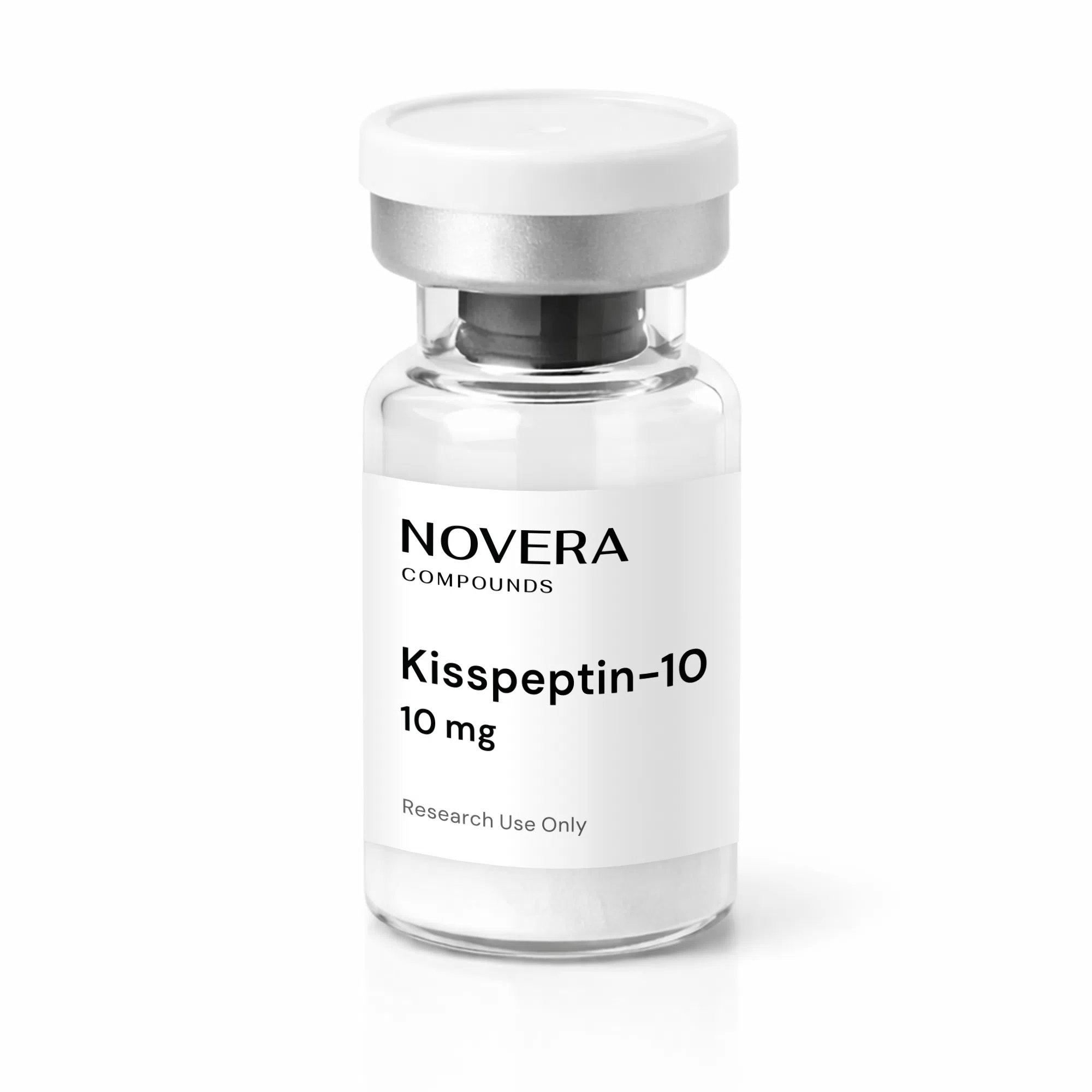
Kisspeptin 10mg
Strength: 10mg
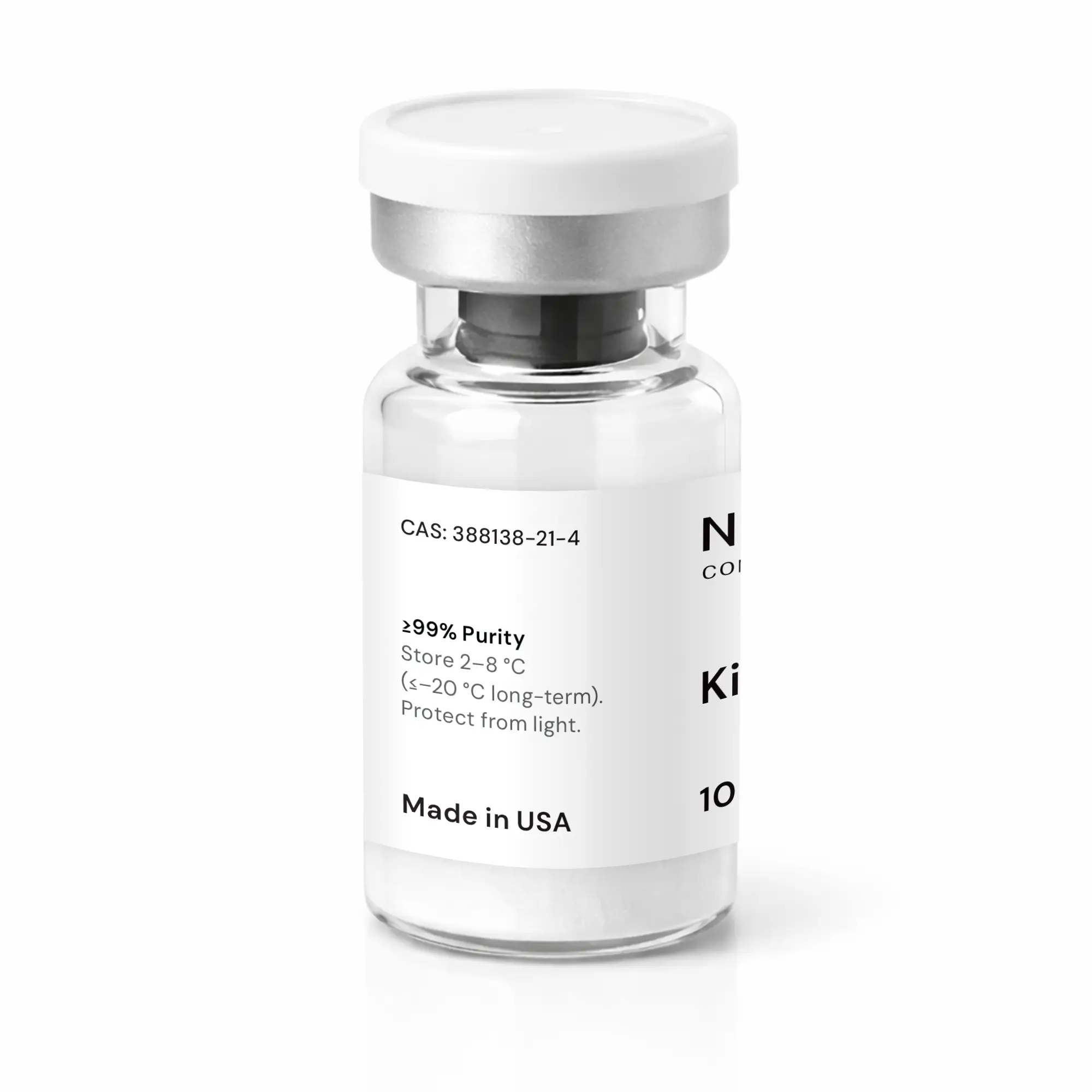
CAS: 388138-21-4
Chemical Formula: C₆₃H₈₃N₁₇O₁₄
Molecular weight: 1302.4 g/mol
Peptide Sequence: Tyr-Asn-Trp-Asn-Ser-Phe-Gly-Leu-Arg-Phe-NH₂
Synonyms: Metastin (45–54), KP-10
Storage: Store 2–8 °C (≤–20 °C long-term). RT exposure during transport acceptable. Protect from light.
Shelf life: 24 months from the manufacturing date.
Kisspeptin-10 is a regulatory peptide studied in reproductive and endocrine research. It plays a central role in signaling pathways that influence gonadotropin releasing hormone (GnRH) activity. In laboratory settings, kisspeptin-10 is used to investigate hypothalamic signaling, hormonal feedback mechanisms, and interactions between the KISS1R (GPR54) receptor and other components of the reproductive axis.


Why Choose Medica Depot
Shop hundreds of medical products with no minimums and free shipping on large orders.
 400+ products
 No order minimums
 Free shipping
 Loyalty rewards
 Trusted since 2007
 Account manager
 Verified LOT numbers
INFORMATION
What is Kisspeptin-10 (10mg)?
Kisspeptin-10 is a synthetic peptide studied in endocrine and neuroendocrine research, particularly for its role in regulating the reproductive system. It specifically interacts with the KISS1 receptor (GPR54), a key component of the signaling pathways that control gonadotropin-releasing hormone (GnRH).
In laboratory research, kisspeptin-10 is used to study its effects on GnRH release, receptor activation, and the associated hormonal feedback mechanisms that regulate the reproductive axis. Researchers value its defined structure and receptor specificity, making it ideal for controlled experiments involving neuroendocrine and reproductive pathway analysis.
Product Specifications
- CAS Number: 388138-21-4
- Peptide Sequence: Tyr-Asn-Trp-Asn-Ser-Phe-Gly-Leu-Arg-Phe-NH₂
- Chemical Formula: C₆₃H₈₃N₁₇O₁₄
- Molecular Weight:1302.4 g/mol
- Purity: ≥99%
- Packaging Format: 10mg lyophilized vial
- Storage Conditions: Store at -20°C, avoid light exposure
- Designation: For Laboratory Research Use Only
Key Characteristics of Kisspeptin-10 (10mg)
- Synthetic peptide with a stable, well-characterized molecular structure.
- High purity (≥99%) is ideal for reproducible laboratory experiments.
- Known for its selective binding to the KISS1R (GPR54) receptor, a crucial part of reproductive signaling.
- Primarily used in studies of endocrine and neuroendocrine pathways.
- Supplied as a lyophilized peptide for flexibility in experimental setups.
- Requires storage at low temperatures to preserve peptide integrity.
- Not intended for diagnostic, therapeutic, or clinical purposes.
How Kisspeptin-10 (10mg) Supports Research
Kisspeptin-10 is widely used in laboratory settings to explore signaling mechanisms that regulate the reproductive endocrine axis. Activating the KISS1 receptor in experimental models allows researchers to study GnRH pathway stimulation, hormonal feedback regulation, and peptide-receptor signaling dynamics.
Its defined structure supports reproducible experimental design in endocrine and neuroendocrine research systems.
Research Applications & Usage Information
Kisspeptin-10 (10mg) is commonly used in laboratory research for:
- Investigating GnRH pathway activation.
- Modeling reproductive endocrine axis regulation.
- Analyzing KISS1 receptor activation and binding.
- Studying hormonal feedback mechanisms.
- Conducting receptor interaction and binding assays.
- Comparative studies with other signaling peptides involved in reproduction.
- In vitro experiments focused on cellular receptor signaling.
This peptide is provided for research use only and must be handled in accordance with institutional safety guidelines and compliance standards.
Handling and Storage Recommendations
- Store at −20°C immediately after receipt.
- Protect the vial from light exposure.
- Keep the vial sealed tightly when not in use.
- Avoid repeated freeze-thaw cycles to maintain peptide stability.
- Handle with appropriate laboratory protective equipment.
- Follow standard handling and documentation protocols for bioactive peptides.
Proper storage and handling ensure the peptide’s integrity and contribute to consistent, reliable research results.
Research Use Only Notice
This product is intended for laboratory research use only and is not approved for human or veterinary use. It is not intended for diagnostic, therapeutic, or clinical applications. Any reference to biological activity or potential effects is based solely on preclinical or in-vitro findings and should not be interpreted as validated clinical outcomes. Researchers are responsible for ensuring proper handling, storage, and disposal in accordance with institutional, federal, and international guidelines.
References
- Kotani M, Detheux M, Vandenbogaerde A, et al. The metastasis suppressor gene KiSS-1 encodes kisspeptins, the natural ligands of the orphan G protein-coupled receptor GPR54. J Biol Chem. 2001;276(37):34631-34636. doi:10.1074/jbc.M104847200
- Oakley AE, Clifton DK, Steiner RA. Kisspeptin signaling in the brain. Endocr Rev. 2009;30(6):713-743. doi:10.1210/er.2009-0005
- Sliwowska JH, Woods NE, Alzahrani AR, Paspali E, Tate RJ, Ferro VA. Kisspeptin a potential therapeutic target in treatment of both metabolic and reproductive dysfunction. J Diabetes. 2024;16(4):e13541. doi:10.1111/1753-0407.13541
- Mills EGA, Dhillo WS, Comninos AN. Kisspeptin and the control of emotions, mood and reproductive behaviour. Journal of Endocrinology. 2018;239(1):R1-R12. doi:10.1530/joe-18-0269
What is Kisspeptin-10 (10mg)?
Kisspeptin-10 is a synthetic peptide studied in endocrine and neuroendocrine research, particularly for its role in regulating the reproductive system. It specifically interacts with the KISS1 receptor (GPR54), a key component of the signaling pathways that control gonadotropin-releasing hormone (GnRH).
In laboratory research, kisspeptin-10 is used to study its effects on GnRH release, receptor activation, and the associated hormonal feedback mechanisms that regulate the reproductive axis. Researchers value its defined structure and receptor specificity, making it ideal for controlled experiments involving neuroendocrine and reproductive pathway analysis.
Product Specifications
- CAS Number: 388138-21-4
- Peptide Sequence: Tyr-Asn-Trp-Asn-Ser-Phe-Gly-Leu-Arg-Phe-NH₂
- Chemical Formula: C₆₃H₈₃N₁₇O₁₄
- Molecular Weight:1302.4 g/mol
- Purity: ≥99%
- Packaging Format: 10mg lyophilized vial
- Storage Conditions: Store at -20°C, avoid light exposure
- Designation: For Laboratory Research Use Only
Key Characteristics of Kisspeptin-10 (10mg)
- Synthetic peptide with a stable, well-characterized molecular structure.
- High purity (≥99%) is ideal for reproducible laboratory experiments.
- Known for its selective binding to the KISS1R (GPR54) receptor, a crucial part of reproductive signaling.
- Primarily used in studies of endocrine and neuroendocrine pathways.
- Supplied as a lyophilized peptide for flexibility in experimental setups.
- Requires storage at low temperatures to preserve peptide integrity.
- Not intended for diagnostic, therapeutic, or clinical purposes.
How Kisspeptin-10 (10mg) Supports Research
Kisspeptin-10 is widely used in laboratory settings to explore signaling mechanisms that regulate the reproductive endocrine axis. Activating the KISS1 receptor in experimental models allows researchers to study GnRH pathway stimulation, hormonal feedback regulation, and peptide-receptor signaling dynamics.
Its defined structure supports reproducible experimental design in endocrine and neuroendocrine research systems.
Research Applications & Usage Information
Kisspeptin-10 (10mg) is commonly used in laboratory research for:
- Investigating GnRH pathway activation.
- Modeling reproductive endocrine axis regulation.
- Analyzing KISS1 receptor activation and binding.
- Studying hormonal feedback mechanisms.
- Conducting receptor interaction and binding assays.
- Comparative studies with other signaling peptides involved in reproduction.
- In vitro experiments focused on cellular receptor signaling.
This peptide is provided for research use only and must be handled in accordance with institutional safety guidelines and compliance standards.
Handling and Storage Recommendations
- Store at −20°C immediately after receipt.
- Protect the vial from light exposure.
- Keep the vial sealed tightly when not in use.
- Avoid repeated freeze-thaw cycles to maintain peptide stability.
- Handle with appropriate laboratory protective equipment.
- Follow standard handling and documentation protocols for bioactive peptides.
Proper storage and handling ensure the peptide’s integrity and contribute to consistent, reliable research results.
Research Use Only Notice
This product is intended for laboratory research use only and is not approved for human or veterinary use. It is not intended for diagnostic, therapeutic, or clinical applications. Any reference to biological activity or potential effects is based solely on preclinical or in-vitro findings and should not be interpreted as validated clinical outcomes. Researchers are responsible for ensuring proper handling, storage, and disposal in accordance with institutional, federal, and international guidelines.
References
- Kotani M, Detheux M, Vandenbogaerde A, et al. The metastasis suppressor gene KiSS-1 encodes kisspeptins, the natural ligands of the orphan G protein-coupled receptor GPR54. J Biol Chem. 2001;276(37):34631-34636. doi:10.1074/jbc.M104847200
- Oakley AE, Clifton DK, Steiner RA. Kisspeptin signaling in the brain. Endocr Rev. 2009;30(6):713-743. doi:10.1210/er.2009-0005
- Sliwowska JH, Woods NE, Alzahrani AR, Paspali E, Tate RJ, Ferro VA. Kisspeptin a potential therapeutic target in treatment of both metabolic and reproductive dysfunction. J Diabetes. 2024;16(4):e13541. doi:10.1111/1753-0407.13541
- Mills EGA, Dhillo WS, Comninos AN. Kisspeptin and the control of emotions, mood and reproductive behaviour. Journal of Endocrinology. 2018;239(1):R1-R12. doi:10.1530/joe-18-0269
This content was prepared and reviewed under our editorial guidelines , which govern how we source, verify, and update clinical and product information. Every claim is checked against peer-reviewed research, manufacturer documentation, or regulatory guidance before publication.
Related products