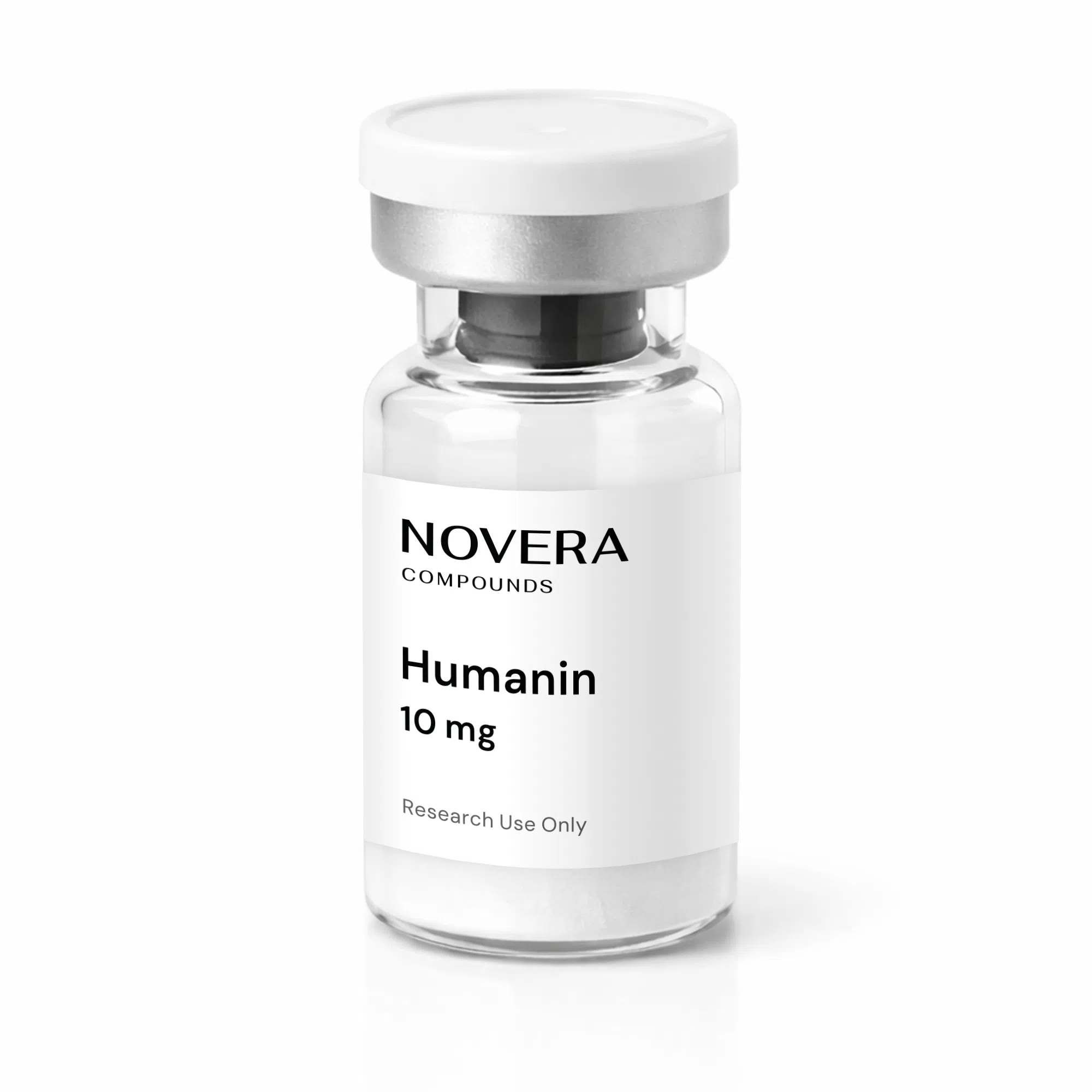
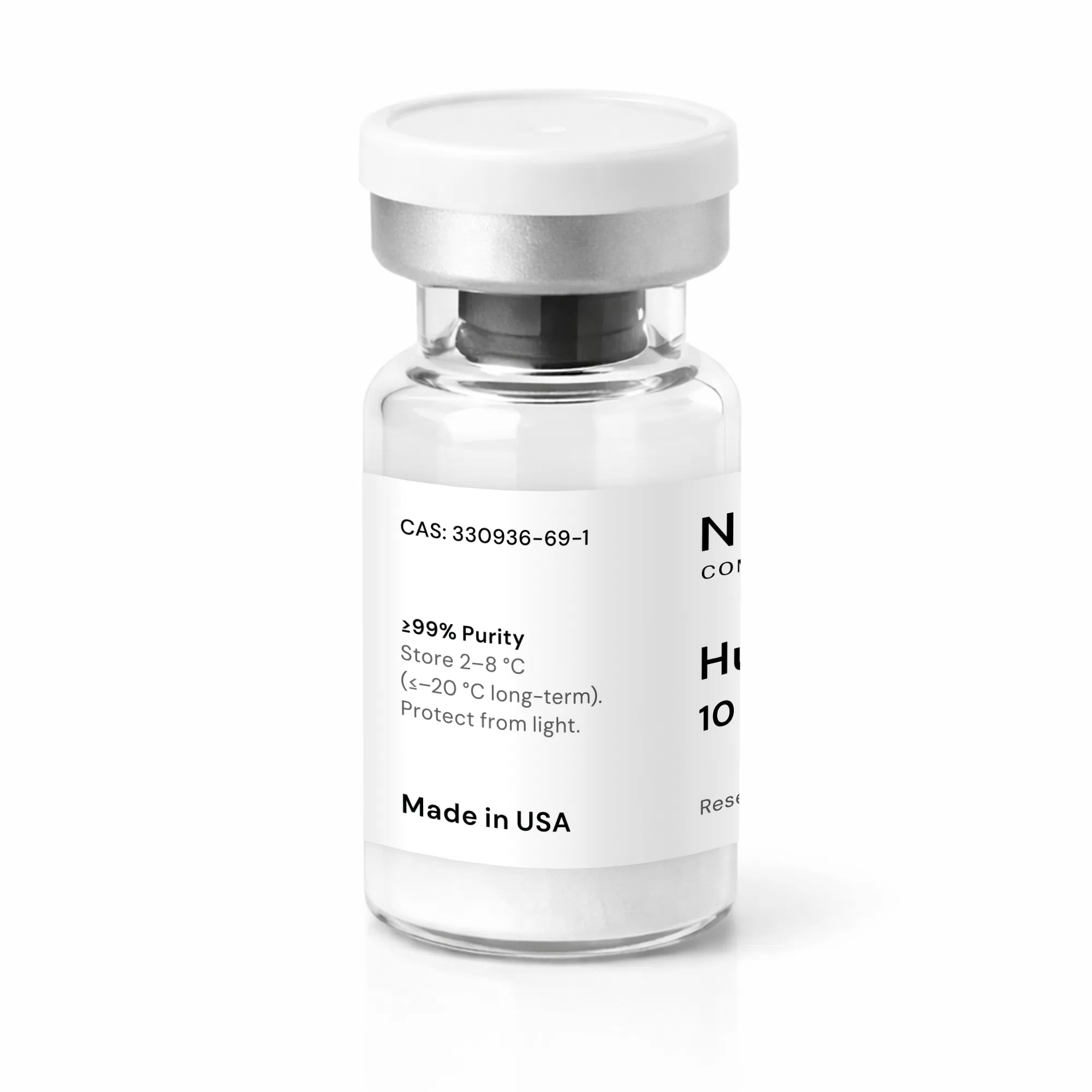
Humanin 10mg
Strength: 10 mg
CAS: 330936-69-1
Chemical Formula: C₁₁₉H₂₀₄N₃₄O₃₂S₂
Molecular weight: 2687.2 g/mol
Peptide Sequence: Met-Ala-Pro-Arg-Gly-Phe-Ser-Cys-Leu-Leu-Leu-Leu-Thr-Ser-Glu-Ile-Asp-Leu-Pro-Val-Lys-Arg-Arg-Ala
Synonyms: formyl humanin, HNGF6A protein
Storage: Store 2–8 °C (≤–20 °C long-term). RT exposure during transport acceptable. Protect from light.
Shelf life: 24 months from the manufacturing date.
Humanin is a synthetic mitochondrial-derived peptide supplied for laboratory research use only and categorized under mitochondrial and aging-related research peptides. It is studied in preclinical models for its involvement in mitochondrial signaling, cellular stress response, and apoptosis-related pathways. Provided as a high-purity lyophilized powder, Humanin is used as a tool compound in controlled in vitro and experimental models examining mitochondrial signaling, metabolic regulation, and age-associated cellular pathways.


Why Choose Medica Depot
Shop hundreds of medical products with no minimums and free shipping on large orders.
 400+ products
 No order minimums
 Free shipping
 Loyalty rewards
 Trusted since 2007
 Account manager
 Verified LOT numbers
INFORMATION
What is Humanin (10 mg)?
Humanin (10 mg) is a synthetic peptide modeled after a naturally occurring mitochondrial-derived peptide first identified in cellular stress research. In laboratory and preclinical studies, Humanin has been examined for its involvement in mitochondrial signaling, cellular stress adaptation, and survival-related pathways.
Because mitochondria play a central role in cellular energy production and redox balance, Humanin is used in experimental systems investigating how mitochondrial-encoded peptides interact with nuclear and cytoplasmic signaling networks.
Structurally, Humanin is a short-chain peptide composed of 24 amino acids with a defined molecular profile. Its relatively compact structure allows researchers to study peptide–protein interactions, receptor engagement, and downstream intracellular signaling in controlled environments. Research has examined its interactions with pathways involved in apoptosis regulation, oxidative stress responses, and metabolic adaptations in vitro and in preclinical models.
Product Specifications
- CAS Number: 330936-69-1
- Peptide Sequence:
Met–Ala–Pro–Arg–Gly–Phe–Ser–Cys–Leu–Leu–Leu–Leu–Thr–Ser–Glu–Ile–Asp–Leu–Pro–Val–Lys–Arg–Arg–Ala - Molecular Formula: C₁₁₉H₂₀₄N₃₄O₃₂S₂
- Molecular weight: 2687.2 g/mol
- Synonyms: Formyl Humanin, HNGF6A protein
- Purity: ≥95% (HPLC and MS verified)
- Packaging Format: 10 mg lyophilized powder in sealed research-grade vial
- Storage Conditions: Store at −20 °C; protect from light and moisture
- Intended Use: For Laboratory Research Use Only
Key Characteristics of Humanin (10 mg)
- Synthetic mitochondrial-derived peptide analog with a defined amino acid sequence.
- Compact molecular structure suitable for controlled in vitro experimentation.
- Lyophilized presentation enhances long-term stability and storage integrity.
- Verified through standard analytical testing for identity and purity.
- Studied in experimental models involving oxidative stress and apoptosis-related pathways.
How Humanin (10 mg) Supports Research
Humanin (10 mg) is primarily used as a research tool to investigate mitochondrial–nuclear signaling communication and stress-response pathways. In experimental settings, researchers study how Humanin interacts with proteins involved in apoptosis regulation and cellular defense mechanisms. Its presence in laboratory models allows examination of how short peptides may influence intracellular signaling cascades under oxidative or metabolic stress conditions.
Additionally, Humanin has been studied in research on age-associated molecular changes and mitochondrial efficiency. By providing a defined and reproducible peptide structure, Humanin enables structured evaluation of peptide–receptor interactions, signal transduction pathways, and mitochondrial-mediated cellular responses.
Typical experimental applications include mapping receptor-binding sites, analyzing protein–protein interactions, and evaluating transcriptional changes in response to oxidative stress or metabolic imbalance. All research applications remain investigational and confined to controlled laboratory environments.
Research Applications & Usage Information
Humanin (10 mg) is commonly incorporated into laboratory studies involving:
- Mitochondrial-derived peptide signaling research
- Oxidative stress and cellular defense pathway models
- Apoptosis-related signaling investigations
- Metabolic regulation and energy balance studies
- Protein–protein interaction analysis
- Aging-related cellular pathway research
- Comparative studies of mitochondrial peptides in vitro
This peptide is used solely in preclinical and experimental research.
Handling and Storage Recommendations
To maintain structural integrity and experimental reliability:
- Store unopened vials at −20 °C for long-term stability
- Protect from direct light, heat, and humidity
- Allow the vial to reach room temperature before opening to minimize condensation
- Reconstitute using sterile laboratory-grade solvent under controlled conditions
- After reconstitution, store at 2–8 °C and use within defined laboratory timeframes
- Avoid repeated freeze–thaw cycles to reduce peptide degradation
Research Use Only Notice
This product is intended for laboratory research use only and is not approved for human or veterinary use. It is not intended for diagnostic, therapeutic, or clinical applications. Any reference to biological activity or potential effects is based solely on preclinical or in vitro findings and should not be interpreted as validated clinical outcomes. Researchers are responsible for ensuring proper handling, storage, and disposal in accordance with institutional, federal, and international guidelines.
References
- Hashimoto Y, Niikura T, Tajima H, et al. A rescue factor abolishing neuronal cell death by a wide spectrum of familial Alzheimer’s disease genes and Abeta. Proc Natl Acad Sci U S A. 2001;98(11):6336-6341. doi:10.1073/pnas.101133498
- Muzumdar RH, Huffman DM, Atzmon G, et al. Humanin: a novel central regulator of peripheral insulin action. PLoS One. 2009;4(7):e6334. Published 2009 Jul 22. doi:10.1371/journal.pone.0006334
- Armas A, Sonois V, Mothes E, Mazarguil H, Faller P. Zinc(II) binds to the neuroprotective peptide humanin. J Inorg Biochem. 2006;100(10):1672-1678. doi:10.1016/j.jinorgbio.2006.06.002
- PubChem Compound Summary for CID 16131438. National Center for Biotechnology Information. Updated 2025. https://pubchem.ncbi.nlm.nih.gov/compound/Humanin
What is Humanin (10 mg)?
Humanin (10 mg) is a synthetic peptide modeled after a naturally occurring mitochondrial-derived peptide first identified in cellular stress research. In laboratory and preclinical studies, Humanin has been examined for its involvement in mitochondrial signaling, cellular stress adaptation, and survival-related pathways.
Because mitochondria play a central role in cellular energy production and redox balance, Humanin is used in experimental systems investigating how mitochondrial-encoded peptides interact with nuclear and cytoplasmic signaling networks.
Structurally, Humanin is a short-chain peptide composed of 24 amino acids with a defined molecular profile. Its relatively compact structure allows researchers to study peptide–protein interactions, receptor engagement, and downstream intracellular signaling in controlled environments. Research has examined its interactions with pathways involved in apoptosis regulation, oxidative stress responses, and metabolic adaptations in vitro and in preclinical models.
Product Specifications
- CAS Number: 330936-69-1
- Peptide Sequence:
Met–Ala–Pro–Arg–Gly–Phe–Ser–Cys–Leu–Leu–Leu–Leu–Thr–Ser–Glu–Ile–Asp–Leu–Pro–Val–Lys–Arg–Arg–Ala - Molecular Formula: C₁₁₉H₂₀₄N₃₄O₃₂S₂
- Molecular weight: 2687.2 g/mol
- Synonyms: Formyl Humanin, HNGF6A protein
- Purity: ≥95% (HPLC and MS verified)
- Packaging Format: 10 mg lyophilized powder in sealed research-grade vial
- Storage Conditions: Store at −20 °C; protect from light and moisture
- Intended Use: For Laboratory Research Use Only
Key Characteristics of Humanin (10 mg)
- Synthetic mitochondrial-derived peptide analog with a defined amino acid sequence.
- Compact molecular structure suitable for controlled in vitro experimentation.
- Lyophilized presentation enhances long-term stability and storage integrity.
- Verified through standard analytical testing for identity and purity.
- Studied in experimental models involving oxidative stress and apoptosis-related pathways.
How Humanin (10 mg) Supports Research
Humanin (10 mg) is primarily used as a research tool to investigate mitochondrial–nuclear signaling communication and stress-response pathways. In experimental settings, researchers study how Humanin interacts with proteins involved in apoptosis regulation and cellular defense mechanisms. Its presence in laboratory models allows examination of how short peptides may influence intracellular signaling cascades under oxidative or metabolic stress conditions.
Additionally, Humanin has been studied in research on age-associated molecular changes and mitochondrial efficiency. By providing a defined and reproducible peptide structure, Humanin enables structured evaluation of peptide–receptor interactions, signal transduction pathways, and mitochondrial-mediated cellular responses.
Typical experimental applications include mapping receptor-binding sites, analyzing protein–protein interactions, and evaluating transcriptional changes in response to oxidative stress or metabolic imbalance. All research applications remain investigational and confined to controlled laboratory environments.
Research Applications & Usage Information
Humanin (10 mg) is commonly incorporated into laboratory studies involving:
- Mitochondrial-derived peptide signaling research
- Oxidative stress and cellular defense pathway models
- Apoptosis-related signaling investigations
- Metabolic regulation and energy balance studies
- Protein–protein interaction analysis
- Aging-related cellular pathway research
- Comparative studies of mitochondrial peptides in vitro
This peptide is used solely in preclinical and experimental research.
Handling and Storage Recommendations
To maintain structural integrity and experimental reliability:
- Store unopened vials at −20 °C for long-term stability
- Protect from direct light, heat, and humidity
- Allow the vial to reach room temperature before opening to minimize condensation
- Reconstitute using sterile laboratory-grade solvent under controlled conditions
- After reconstitution, store at 2–8 °C and use within defined laboratory timeframes
- Avoid repeated freeze–thaw cycles to reduce peptide degradation
Research Use Only Notice
This product is intended for laboratory research use only and is not approved for human or veterinary use. It is not intended for diagnostic, therapeutic, or clinical applications. Any reference to biological activity or potential effects is based solely on preclinical or in vitro findings and should not be interpreted as validated clinical outcomes. Researchers are responsible for ensuring proper handling, storage, and disposal in accordance with institutional, federal, and international guidelines.
References
- Hashimoto Y, Niikura T, Tajima H, et al. A rescue factor abolishing neuronal cell death by a wide spectrum of familial Alzheimer’s disease genes and Abeta. Proc Natl Acad Sci U S A. 2001;98(11):6336-6341. doi:10.1073/pnas.101133498
- Muzumdar RH, Huffman DM, Atzmon G, et al. Humanin: a novel central regulator of peripheral insulin action. PLoS One. 2009;4(7):e6334. Published 2009 Jul 22. doi:10.1371/journal.pone.0006334
- Armas A, Sonois V, Mothes E, Mazarguil H, Faller P. Zinc(II) binds to the neuroprotective peptide humanin. J Inorg Biochem. 2006;100(10):1672-1678. doi:10.1016/j.jinorgbio.2006.06.002
- PubChem Compound Summary for CID 16131438. National Center for Biotechnology Information. Updated 2025. https://pubchem.ncbi.nlm.nih.gov/compound/Humanin
Related products