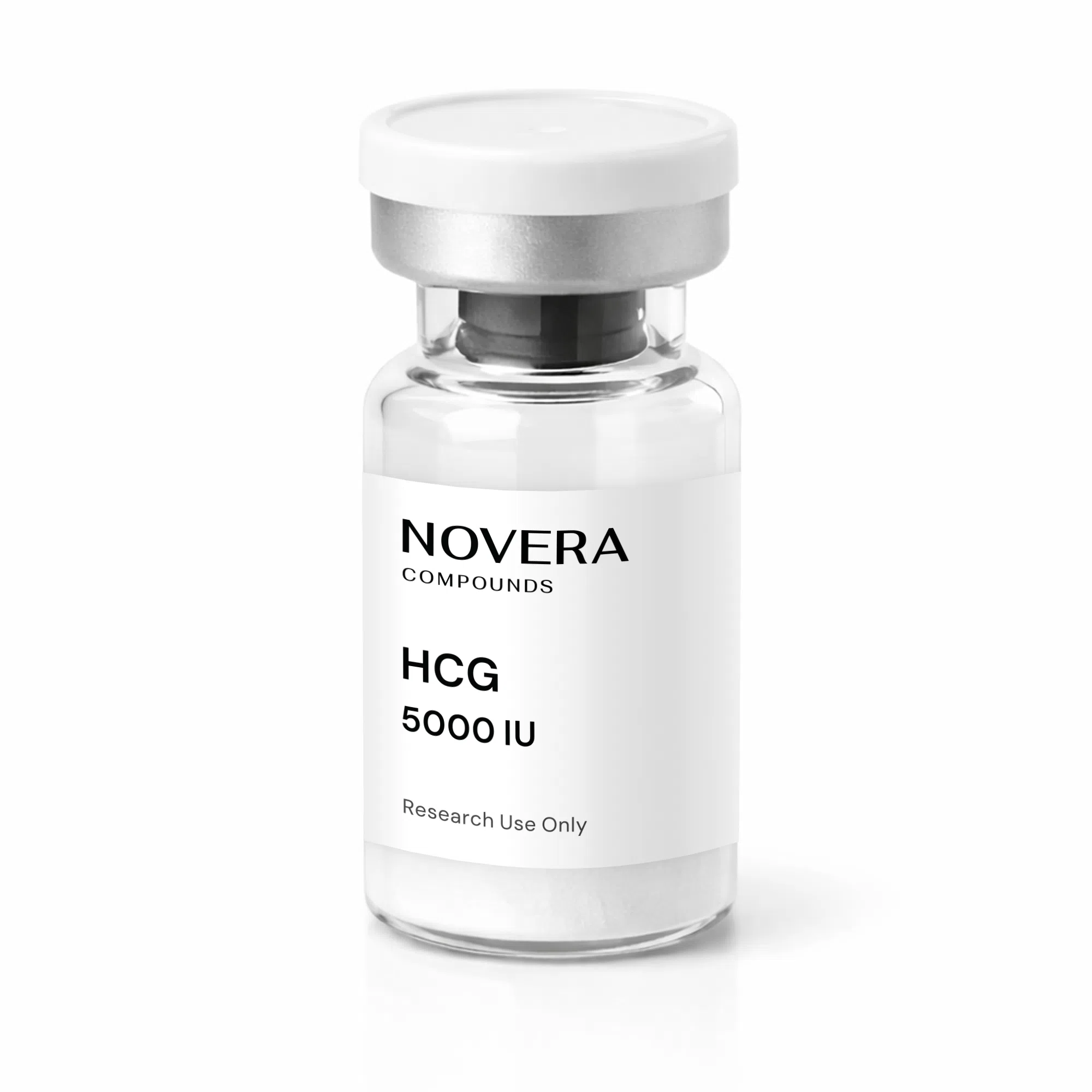
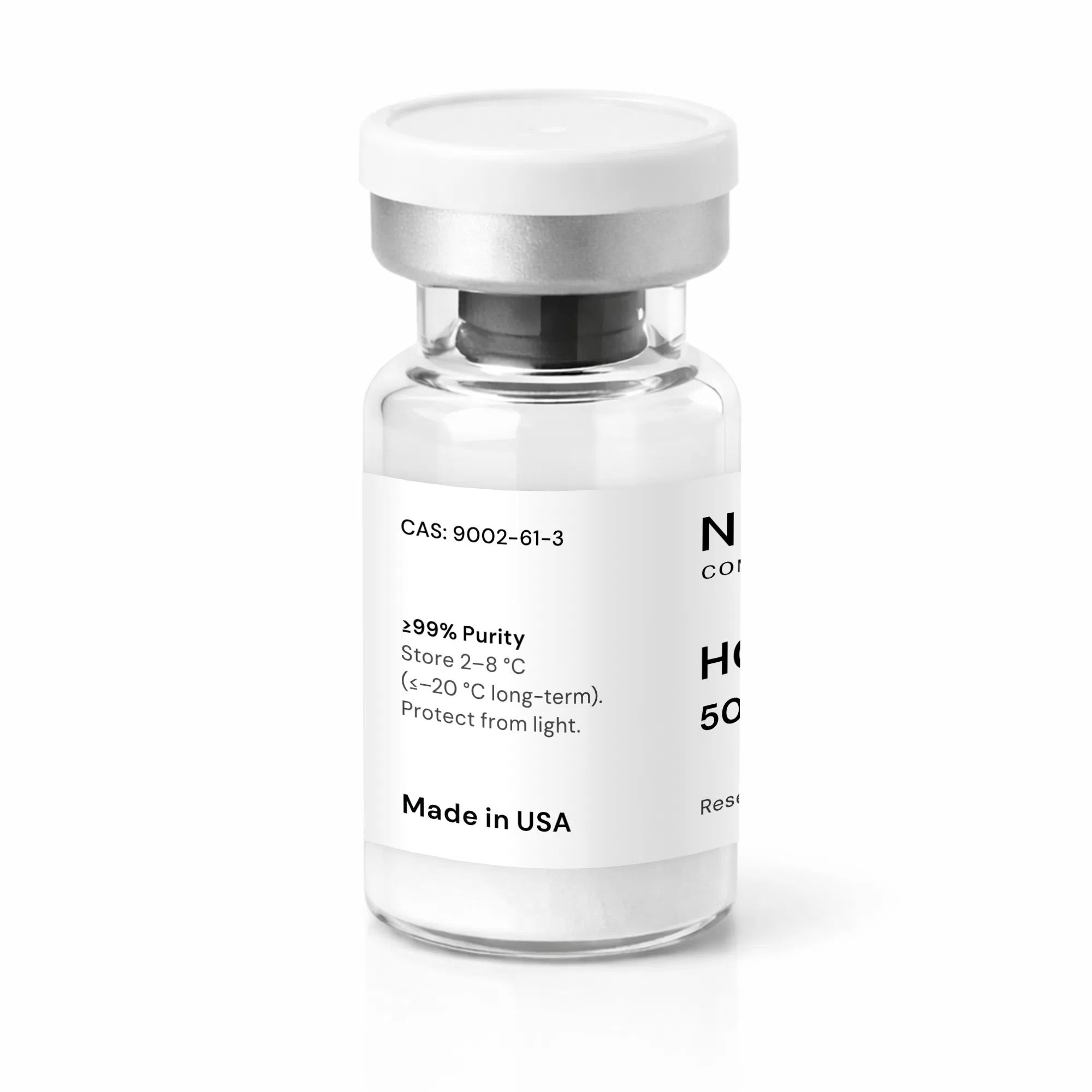
HCG 5000iu
Strength: 5000 iu
CAS: 9002-61-3
Chemical Formula: C₁₁₀₅H₁₇₇₀N₃₁₈O₃₃₆S₂₆
Molecular weight: ~36.7 kDa (37,000 Da)
Synonyms: Human Chorionic Gonadotropin, Chorionic gonadotropin, Choriogonin, Endocrine, Gonabion
Storage: Store 2–8 °C (≤–20 °C long-term). RT exposure during transport acceptable. Protect from light.
Shelf life: 24 months from the manufacturing date.
HCG is a heterodimeric glycoprotein hormone produced primarily by placental trophoblast cells, consisting of shared alpha and unique beta subunits and classified within the gonadotropin family. It has been studied for its role as a luteotropic and signaling molecule in pregnancy and is widely used in research on reproductive endocrinology, placental biology, tumor marker behavior, and HCG assay standardization.


Why Choose Medica Depot
Shop hundreds of medical products with no minimums and free shipping on large orders.
 400+ products
 No order minimums
 Free shipping
 Loyalty rewards
 Trusted since 2007
 Account manager
 Verified LOT numbers
INFORMATION
What is HCG (5000iu)?
HCG (5,000 IU) is a freeze-dried, laboratory-grade preparation of human chorionic gonadotropin (hCG)—a naturally occurring glycoprotein hormone released by placental cells during early pregnancy. In research, it is commonly grouped within sexual health and hormonal peptides and used in studies of reproductive endocrinology, placental signaling, and analytical assay development.
Because it is supplied in a defined IU format, HCG (5000 IU) helps researchers apply consistent, measurable hormone input across experiments, making it useful for evaluating dose-response patterns and downstream endocrine signaling in controlled models.
Product Specifications
- Synonyms: Human chorionic gonadotropin; chorionic gonadotropin; choriogonin; Gonabion; classified among endocrine gonadotropin hormones
- Chemical Formula: C₁₁₀₅H₁₇₇₀N₃₁₈O₃₃₆S₂₆
- Molecular Weight: ~36.7 kDa (37,000 Da)
- CAS Number: 9002‑61‑3
- Purity: Provided as a highly purified glycoprotein hormone suitable for analytical and experimental use, with identity and purity typically supported by biochemical and immunochemical testing and summarized in a lot‑specific certificate of analysis.
- Packaging Format: 5,000 IU lyophilized (freeze‑dried) HCG in a sealed research vial, intended for reconstitution prior to use in laboratory workflows.
- Storage Conditions: Store at −20°C, protected from light; limit moisture exposure and avoid repeated freeze–thaw cycles to help preserve structural and functional integrity.
- Intended Use: For laboratory research use only; not for human or veterinary use.
Key Characteristics of HCG (5000iu)
- Gonadotropin-class glycoprotein, composed of distinct α and β subunits—structurally related to LH but functionally unique
- Naturally expressed in early pregnancy and also reported in certain tumor contexts, supporting reproductive and biomarker research.
- Engages LH/HCG receptors, triggering hormone-mediated pathways relevant to implantation, corpus luteum function, and endocrine modulation
- Offered in a lyophilized format for stable handling, dilution, and repeatable dosing in lab workflows
- Suitable for a range of in vitro and in vivo models, including receptor assays, hormone pathway analysis, and placental biology research
- Investigated in multiple molecular forms (intact, free subunits, glycosylated isoforms), supporting diverse analytical and mechanistic research goals
How HCG (5000iu) Supports Research
This HCG preparation gives researchers a reconstitutable, standardized hormone source to study gonadotropin signaling without relying on naturally fluctuating levels. Investigators use it to examine receptor binding and activation, characterize dose-dependent responses, and map endocrine signaling networks relevant to reproductive biology.
Notably, HCG (5000 IU) is also widely used as a reference material when developing or validating detection methods (such as immunoassays) for measuring HCG in biological samples.
Research Applications & Usage Information
- Reproductive Signaling Studies: Modeling hormone-driven pathways linked to corpus luteum function and pregnancy-related endocrine signaling.
- Placental Biology Models: Investigating trophoblast behavior, differentiation, and implantation-related signaling under defined hCG exposure.
- Hormone Receptor Dynamics: Evaluating LH/hCG receptor binding, signaling pathways, and receptor regulation in vitro.
- Tumor Marker Investigations: Exploring HCG as a research biomarker in trophoblastic disease, germ cell tumors, and select epithelial cancers.
- Analytical Method Development: Used in calibration, precision testing, and sensitivity analysis of detection assays across multiple platforms
- Molecular Isoform Research: Supporting exploration of HCG variants and post-translational modifications relevant to disease and tissue specificity
No specific protocol, dose, or route is provided or implied. Research design and usage must be determined by qualified professionals under institutional oversight.
Handling and Storage Recommendations
- Store lyophilized vials at −20 °C or colder, shielded from light and humidity
- Allow sealed vials to equilibrate to room temperature to avoid condensation during opening
- Maintain reconstituted aliquots at refrigerated or frozen temperatures based on internal stability validation
- Handle with standard lab PPE; dispose of unused material and waste in compliance with local and international safety protocols
Research Use Only Notice
This product is intended for laboratory research use only and is not approved for human or veterinary use. It is not intended for diagnostic, therapeutic, or clinical applications. Any reference to biological activity or potential effects is based solely on preclinical or in‑vitro findings and should not be interpreted as validated clinical outcomes. Researchers are responsible for ensuring proper handling, storage, and disposal in accordance with institutional, federal, and international guidelines.
References
- Human Chorionic Gonadotropin. ScienceDirect. https://www.sciencedirect.com/topics/biochemistry-genetics-and-molecular-biology/human-chorionic-gonadotropin
- Betz D, Fane K. Human chorionic gonadotropin. StatPearls – NCBI Bookshelf. Published April 27, 2025. https://www.ncbi.nlm.nih.gov/books/NBK532950/
- Cole LA. New discoveries on the biology and detection of human chorionic gonadotropin. Reproductive Biology and Endocrinology. 2009;7(1):8. doi:10.1186/1477-7827-7-8
- Boime I, Ben-Menahem D. Glycoprotein hormone structure-function and analog design. PubMed. Published 1999. https://pubmed.ncbi.nlm.nih.gov/10548880/
- Theofanakis C, Drakakis P, Besharat A, Loutradis D. Human chorionic gonadotropin: the pregnancy hormone and more. International Journal of Molecular Sciences. 2017;18(5):1059. doi:10.3390/ijms18051059
- Stenman UH, Alfthan H, Hotakainen K. Human chorionic gonadotropin in cancer. Clinical Biochemistry. 2004;37(7):549-561. doi:10.1016/j.clinbiochem.2004.05.008
What is HCG (5000iu)?
HCG (5,000 IU) is a freeze-dried, laboratory-grade preparation of human chorionic gonadotropin (hCG)—a naturally occurring glycoprotein hormone released by placental cells during early pregnancy. In research, it is commonly grouped within sexual health and hormonal peptides and used in studies of reproductive endocrinology, placental signaling, and analytical assay development.
Because it is supplied in a defined IU format, HCG (5000 IU) helps researchers apply consistent, measurable hormone input across experiments, making it useful for evaluating dose-response patterns and downstream endocrine signaling in controlled models.
Product Specifications
- Synonyms: Human chorionic gonadotropin; chorionic gonadotropin; choriogonin; Gonabion; classified among endocrine gonadotropin hormones
- Chemical Formula: C₁₁₀₅H₁₇₇₀N₃₁₈O₃₃₆S₂₆
- Molecular Weight: ~36.7 kDa (37,000 Da)
- CAS Number: 9002‑61‑3
- Purity: Provided as a highly purified glycoprotein hormone suitable for analytical and experimental use, with identity and purity typically supported by biochemical and immunochemical testing and summarized in a lot‑specific certificate of analysis.
- Packaging Format: 5,000 IU lyophilized (freeze‑dried) HCG in a sealed research vial, intended for reconstitution prior to use in laboratory workflows.
- Storage Conditions: Store at −20°C, protected from light; limit moisture exposure and avoid repeated freeze–thaw cycles to help preserve structural and functional integrity.
- Intended Use: For laboratory research use only; not for human or veterinary use.
Key Characteristics of HCG (5000iu)
- Gonadotropin-class glycoprotein, composed of distinct α and β subunits—structurally related to LH but functionally unique
- Naturally expressed in early pregnancy and also reported in certain tumor contexts, supporting reproductive and biomarker research.
- Engages LH/HCG receptors, triggering hormone-mediated pathways relevant to implantation, corpus luteum function, and endocrine modulation
- Offered in a lyophilized format for stable handling, dilution, and repeatable dosing in lab workflows
- Suitable for a range of in vitro and in vivo models, including receptor assays, hormone pathway analysis, and placental biology research
- Investigated in multiple molecular forms (intact, free subunits, glycosylated isoforms), supporting diverse analytical and mechanistic research goals
How HCG (5000iu) Supports Research
This HCG preparation gives researchers a reconstitutable, standardized hormone source to study gonadotropin signaling without relying on naturally fluctuating levels. Investigators use it to examine receptor binding and activation, characterize dose-dependent responses, and map endocrine signaling networks relevant to reproductive biology.
Notably, HCG (5000 IU) is also widely used as a reference material when developing or validating detection methods (such as immunoassays) for measuring HCG in biological samples.
Research Applications & Usage Information
- Reproductive Signaling Studies: Modeling hormone-driven pathways linked to corpus luteum function and pregnancy-related endocrine signaling.
- Placental Biology Models: Investigating trophoblast behavior, differentiation, and implantation-related signaling under defined hCG exposure.
- Hormone Receptor Dynamics: Evaluating LH/hCG receptor binding, signaling pathways, and receptor regulation in vitro.
- Tumor Marker Investigations: Exploring HCG as a research biomarker in trophoblastic disease, germ cell tumors, and select epithelial cancers.
- Analytical Method Development: Used in calibration, precision testing, and sensitivity analysis of detection assays across multiple platforms
- Molecular Isoform Research: Supporting exploration of HCG variants and post-translational modifications relevant to disease and tissue specificity
No specific protocol, dose, or route is provided or implied. Research design and usage must be determined by qualified professionals under institutional oversight.
Handling and Storage Recommendations
- Store lyophilized vials at −20 °C or colder, shielded from light and humidity
- Allow sealed vials to equilibrate to room temperature to avoid condensation during opening
- Maintain reconstituted aliquots at refrigerated or frozen temperatures based on internal stability validation
- Handle with standard lab PPE; dispose of unused material and waste in compliance with local and international safety protocols
Research Use Only Notice
This product is intended for laboratory research use only and is not approved for human or veterinary use. It is not intended for diagnostic, therapeutic, or clinical applications. Any reference to biological activity or potential effects is based solely on preclinical or in‑vitro findings and should not be interpreted as validated clinical outcomes. Researchers are responsible for ensuring proper handling, storage, and disposal in accordance with institutional, federal, and international guidelines.
References
- Human Chorionic Gonadotropin. ScienceDirect. https://www.sciencedirect.com/topics/biochemistry-genetics-and-molecular-biology/human-chorionic-gonadotropin
- Betz D, Fane K. Human chorionic gonadotropin. StatPearls – NCBI Bookshelf. Published April 27, 2025. https://www.ncbi.nlm.nih.gov/books/NBK532950/
- Cole LA. New discoveries on the biology and detection of human chorionic gonadotropin. Reproductive Biology and Endocrinology. 2009;7(1):8. doi:10.1186/1477-7827-7-8
- Boime I, Ben-Menahem D. Glycoprotein hormone structure-function and analog design. PubMed. Published 1999. https://pubmed.ncbi.nlm.nih.gov/10548880/
- Theofanakis C, Drakakis P, Besharat A, Loutradis D. Human chorionic gonadotropin: the pregnancy hormone and more. International Journal of Molecular Sciences. 2017;18(5):1059. doi:10.3390/ijms18051059
- Stenman UH, Alfthan H, Hotakainen K. Human chorionic gonadotropin in cancer. Clinical Biochemistry. 2004;37(7):549-561. doi:10.1016/j.clinbiochem.2004.05.008
Related products