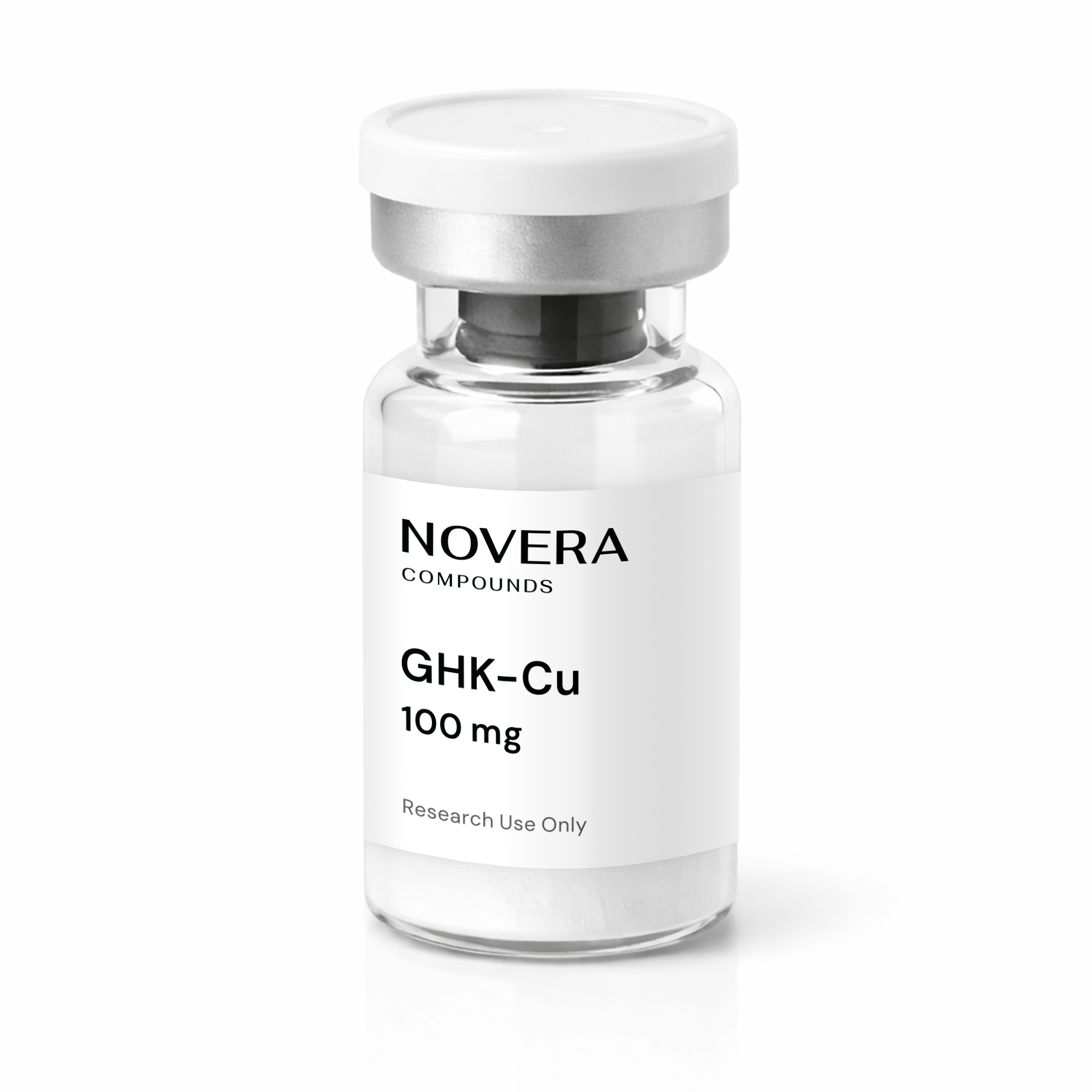
GHK-Cu (100mg)
All products are 100% genuine and sourced from trusted manufacturers, with authenticity that can be verified for complete peace of mind.
Order exactly what you need with no minimum quantity required, whether it’s a single unit or a larger order.
Your order is guaranteed to arrive safely, with full shipment tracking and dedicated support to ensure a smooth delivery experience.
Your payments are protected with industry-standard encryption and trusted payment providers, ensuring every transaction is safe, private, and secure.
 99% PURITY GUARANTEE
 99% PURITY GUARANTEE
Each peptide batch is tested and verified to meet or exceed 98–99% purity (HPLC). Full analytical reports are available in the Certificate of Analysis section.


 Preparation & Handling Notice
The product is delivered in powdered (lyophilized) form and must be properly reconstituted prior to research use.
 RESEARCH USE ONLY
This product is intended for research use only. It is not for human or veterinary use, not for diagnostic or therapeutic purposes, and should only be handled by qualified professionals.
Strength: 100 mg
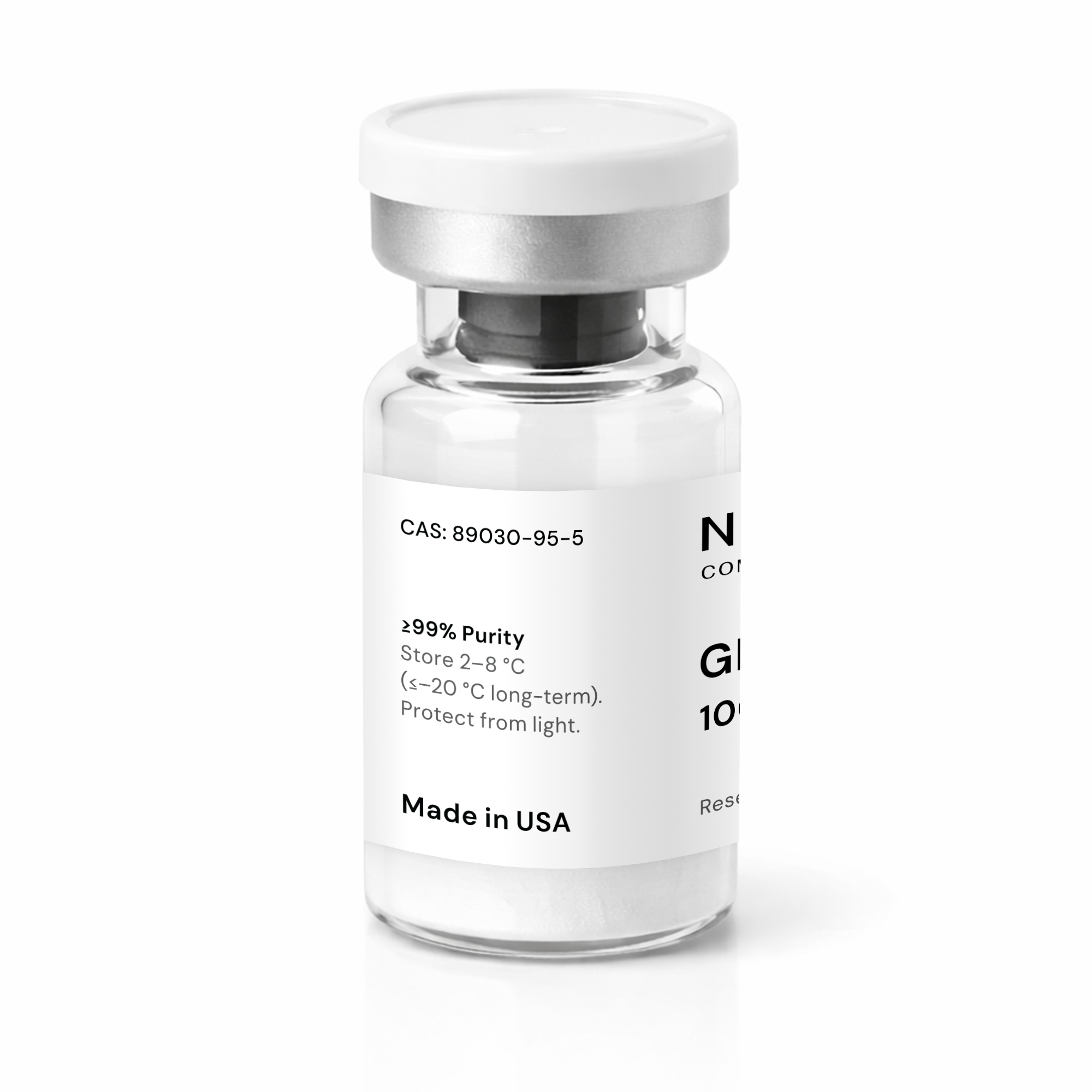
CAS: 89030-95-5
Chemical Formula: C₁₄H₂₁N₆O₄Cu
Molecular weight: 401.91 g/mol
Peptide Sequence: Gly-His-Lys(Cu2+)
Synonyms: Copper peptide, GHK, Tripeptide, ghkcu, GHK-Cu acetate, Gly-His-Lys-Cu(II)
Storage: Store 2–8 °C (≤–20 °C long-term). RT exposure during transport acceptable. Protect from light.
Shelf life: 24 months from the manufacturing date.
GHK Cu is a synthetic copper–tripeptide complex composed of glycyl L histidyl L lysine (GHK) chelated with copper(II), used in research to study tissue remodeling, extracellular matrix regulation, and copper dependent signaling in vitro and in animal models. Research has associated GHK Cu with changes in collagen synthesis, antioxidant and inflammatory markers, and gene expression profiles in defined experimental systems. All findings are limited to controlled cell based and preclinical settings and do not imply therapeutic use.
-
Cold chain shipping available for temperature-sensitive products.
-
Orders are processed within 1–2 business days.
-
Delivery timelines vary by destination and shipping method — view our Shipping Policy for region-specific estimates.
-
Tracking information will be provided once shipped.
-
No order minimum applies.
-
If your shipment is delayed, lost, or arrives damaged, you're covered under our Refund & Replacement Policy.
We accept Visa, Mastercard, and American Express. Apple Pay and Google Pay are available upon request via your account manager.
All transactions are processed through a secure, PCI DSS–compliant system to ensure your data is fully protected.
Why Choose NOVERA COMPOUNDS Peptides?
Novera Research delivers high-quality research peptides developed under strict manufacturing and quality-control standards. Each product is carefully synthesized, tested, and handled to ensure consistency, reliability, and transparency for advanced research applications.
- High-purity, research-grade peptide synthesis
- Analytical testing to verify quality and composition
- Consistent batch-to-batch performance
- Batch identification on every vial for traceability
- Stored and shipped under controlled conditions
 High-purity, research-grade peptide synthesis

Why Choose Medica Depot
Shop hundreds of medical products with no minimums and free shipping on large orders.
 400+ products
 No order minimums
 Free shipping
 Loyalty rewards
 Trusted since 2007
 Account manager
 Verified LOT numbers
INFORMATION
What is GHK-Cu (100mg)?
GHK-Cu (100 mg) is a synthetic research peptide complex in the healing and regenerative research category. It combines the naturally occurring tripeptide glycyl-L-histidyl-L-lysine (GHK) with copper(II) to form a small peptide–metal complex that is also found in human fluids and tissue matrices.
GHK binds copper very strongly, and many reported research effects link to the copper-bound form (GHK-Cu). In laboratory settings, researchers use GHK-Cu as a model compound to study tissue remodeling, extracellular matrix (ECM) regulation, copper handling, and redox (oxidation-reduction) signaling.
Studies have examined GHK-Cu in controlled systems such as fibroblast and keratinocyte cultures, endothelial and neuronal models, and animal research models related to wound repair, oxidative stress, and gene-expression changes. These findings remain preclinical/experimental and do not imply therapeutic use.
Product Specifications
- Synonyms: Copper peptide; GHK; GHK‑Cu; Tripeptide copper complex; GHK‑Cu acetate; Gly‑His‑Lys‑Cu(II); Gly‑His‑Lys(Cu²⁺)
- Peptide Sequence: Gly‑His‑Lys(Cu²⁺)
- Chemical Formula: C₁₄H₂₃N₆O₄Cu (GHK‑Cu complex)
- Molecular Weight: 401.91 g/mol
- CAS Number: 89030‑95‑5
- Purity: Typically ≥99% (HPLC) for research use; each lot is characterized by HPLC and mass spectrometry, with specific purity values reported on the Certificate of Analysis.
- Packaging Format: 100 mg GHK‑Cu per vial, supplied as a lyophilized (freeze‑dried) powder in a sealed research‑grade container.
- Storage Conditions: Store at −20°C or below, protected from light and moisture; avoid repeated freeze–thaw cycles.
- Intended Use: For Laboratory Research Use Only (not for human or veterinary use).
Key Characteristics of GHK-Cu (100mg)
- Naturally Occurring Complex: Researchers detect GHK-Cu in human plasma and extracellular matrix; reported levels decline with age.
- Strong Copper Binding: GHK forms a stable Cu(II) complex, supporting controlled studies of copper delivery and redox behavior in biological systems.
- Extracellular Matrix Research Tool: Fibroblast studies report collagen-related effects at very low concentrations, suggesting a targeted impact on matrix processes rather than cell growth alone.
- Wound-Model Findings (preclinical): Animal wound-chamber research has linked local exposure to increased connective-tissue components such as collagen and glycosaminoglycans.
- Broad Gene-Expression Signal (experimental): Reported studies show changes in gene sets tied to ECM remodeling, antioxidant defenses, inflammatory signaling, and nervous-system pathways.
- Skin and Dermal Model Use: Research includes fibroblast migration, keratinocyte activity, integrin expression, and dermal matrix organization in controlled systems.
- Research-Grade Format: High-purity, lyophilized material supports reproducible work across biochemical assays, cell culture, and animal models.
- Traceability: HPLC/MS documentation supports batch consistency across experiments.
How GHK-Cu (100mg) Supports Research
Researchers use GHK-Cu as a practical way to connect trace-metal biology with tissue remodeling and cell signaling. Because GHK binds Cu(II) tightly, it offers a controlled system for studying how copper may relate to collagen pathways, antioxidant enzyme activity, and gene-expression regulation.
Across in-vitro and in-vivo models, investigators have used GHK-Cu to examine wound repair, ECM turnover, oxidative stress responses, and neuro-related endpoints by measuring readouts such as collagen deposition, inflammatory markers, vascular responses, and gene-expression profiles. These outcomes describe research observations, not clinical performance.
Research Applications & Usage Information
GHK‑Cu (100 mg) is commonly included in laboratory studies focused on:
- Investigation of fibroblast function and collagen synthesis: In monolayer and 3‑D culture systems, including studies demonstrating stimulation of type I collagen production by GHK‑Cu in human fibroblasts.
- Use in wound‑healing and tissue‑injury models: Investigated in rat subcutaneous wound chambers and skin‑injury paradigms, to assess effects on connective‑tissue accumulation, angiogenesis, inflammatory markers, and antioxidant enzyme activity.
- Dermal and cosmetic‑science research: This includes controlled human-skin studies evaluating changes in skin density, elasticity, wrinkle appearance, and histologic markers after topical GHK‑Cu formulations, interpreted strictly within the study designs.
- Exploration of gene‑expression modulation: GHK‑Cu has been reported to up‑ or down‑regulate large panels of genes associated with tissue remodeling, oxidative stress control, and repair processes in various cell types.
- Neuronal and neurodegeneration models: Investigating how GHK‑Cu may affect oxidative stress, inflammatory mediators, and survival‑related pathways in nervous‑system cell lines and animal models.
- Studies of copper transport and homeostasis: This includes work showing that GHK‑Cu can compete with albumin for copper binding and facilitate cellular copper uptake in a non‑toxic form.
- Evaluation of interactions: This includes interactions with antimicrobial peptides, integrin signaling, and stem‑cell‑related markers in the context of tissue regeneration and matrix remodeling.
Across these applications, GHK‑Cu functions as a research reagent for dissecting biochemical and cellular pathways. Any observed biological effects are specific to experimental models and conditions and are not equivalent to established clinical outcomes.
Handling and Storage Recommendations
To preserve the quality and reproducibility of GHK‑Cu (100 mg):
- Keep vials sealed at −20°C or colder, dry, and protected from light.
- Brief room temperature exposure is allowed during transport or shipping.
- Store 2-8°C (short-term) or −20°C (long-term) per your lab’s validated practice.
- Use standard laboratory PPE (gloves, lab coat, eye protection).
- Dispose of unused material, solutions, and contaminated items according to institutional and local chemical/biological waste rules.
Research Use Only Notice
This product is intended for laboratory research use only and is not approved for human or veterinary use. It is not intended for diagnostic, therapeutic, or clinical applications. Any reference to biological activity or potential effects is based solely on preclinical or in-vitro findings and should not be interpreted as validated clinical outcomes. Researchers are responsible for ensuring proper handling, storage, and disposal in accordance with institutional, federal, and international guidelines.
References
- Pickart L, Vasquez-Soltero JM, Margolina A. GHK peptide as a natural modulator of multiple cellular pathways in skin regeneration. BioMed Research International. 2015;2015:1-7. doi:10.1155/2015/648108
- Maquart FX, Pickart L, Laurent M, Gillery P, Monboisse JC, Borel JP. Stimulation of collagen synthesis in fibroblast cultures by the tripeptide‐copper complex glycyl‐L‐histidyl‐L‐lysine‐Cu2+. FEBS Letters. 1988;238(2):343-346. doi:10.1016/0014-5793(88)80509-x
- Maquart FX, Bellon G, Chaqour B, et al. In vivo stimulation of connective tissue accumulation by the tripeptide-copper complex glycyl-L-histidyl-L-lysine-Cu2+ in rat experimental wounds. Journal of Clinical Investigation. 1993;92(5):2368-2376. doi:10.1172/jci116842
- Pickart L, Vasquez-Soltero JM, Margolina A. The Human Tripeptide GHK-CU in Prevention of Oxidative Stress and Degenerative Conditions of aging: Implications for Cognitive Health. Oxidative Medicine and Cellular Longevity. 2012;2012:1-8. doi:10.1155/2012/324832
- Siméon A, Wegrowski Y, Bontemps Y, Maquart FX. Expression of glycosaminoglycans and small proteoglycans in wounds: modulation by the Tripeptide–Copper complex Glycyl-L-Histidyl-L-Lysine-CU2+. Journal of Investigative Dermatology. 2000;115(6):962-968. doi:10.1046/j.1523-1747.2000.00166.x
What is GHK-Cu (100mg)?
GHK-Cu (100 mg) is a synthetic research peptide complex in the healing and regenerative research category. It combines the naturally occurring tripeptide glycyl-L-histidyl-L-lysine (GHK) with copper(II) to form a small peptide–metal complex that is also found in human fluids and tissue matrices.
GHK binds copper very strongly, and many reported research effects link to the copper-bound form (GHK-Cu). In laboratory settings, researchers use GHK-Cu as a model compound to study tissue remodeling, extracellular matrix (ECM) regulation, copper handling, and redox (oxidation-reduction) signaling.
Studies have examined GHK-Cu in controlled systems such as fibroblast and keratinocyte cultures, endothelial and neuronal models, and animal research models related to wound repair, oxidative stress, and gene-expression changes. These findings remain preclinical/experimental and do not imply therapeutic use.
Product Specifications
- Synonyms: Copper peptide; GHK; GHK‑Cu; Tripeptide copper complex; GHK‑Cu acetate; Gly‑His‑Lys‑Cu(II); Gly‑His‑Lys(Cu²⁺)
- Peptide Sequence: Gly‑His‑Lys(Cu²⁺)
- Chemical Formula: C₁₄H₂₃N₆O₄Cu (GHK‑Cu complex)
- Molecular Weight: 401.91 g/mol
- CAS Number: 89030‑95‑5
- Purity: Typically ≥99% (HPLC) for research use; each lot is characterized by HPLC and mass spectrometry, with specific purity values reported on the Certificate of Analysis.
- Packaging Format: 100 mg GHK‑Cu per vial, supplied as a lyophilized (freeze‑dried) powder in a sealed research‑grade container.
- Storage Conditions: Store at −20°C or below, protected from light and moisture; avoid repeated freeze–thaw cycles.
- Intended Use: For Laboratory Research Use Only (not for human or veterinary use).
Key Characteristics of GHK-Cu (100mg)
- Naturally Occurring Complex: Researchers detect GHK-Cu in human plasma and extracellular matrix; reported levels decline with age.
- Strong Copper Binding: GHK forms a stable Cu(II) complex, supporting controlled studies of copper delivery and redox behavior in biological systems.
- Extracellular Matrix Research Tool: Fibroblast studies report collagen-related effects at very low concentrations, suggesting a targeted impact on matrix processes rather than cell growth alone.
- Wound-Model Findings (preclinical): Animal wound-chamber research has linked local exposure to increased connective-tissue components such as collagen and glycosaminoglycans.
- Broad Gene-Expression Signal (experimental): Reported studies show changes in gene sets tied to ECM remodeling, antioxidant defenses, inflammatory signaling, and nervous-system pathways.
- Skin and Dermal Model Use: Research includes fibroblast migration, keratinocyte activity, integrin expression, and dermal matrix organization in controlled systems.
- Research-Grade Format: High-purity, lyophilized material supports reproducible work across biochemical assays, cell culture, and animal models.
- Traceability: HPLC/MS documentation supports batch consistency across experiments.
How GHK-Cu (100mg) Supports Research
Researchers use GHK-Cu as a practical way to connect trace-metal biology with tissue remodeling and cell signaling. Because GHK binds Cu(II) tightly, it offers a controlled system for studying how copper may relate to collagen pathways, antioxidant enzyme activity, and gene-expression regulation.
Across in-vitro and in-vivo models, investigators have used GHK-Cu to examine wound repair, ECM turnover, oxidative stress responses, and neuro-related endpoints by measuring readouts such as collagen deposition, inflammatory markers, vascular responses, and gene-expression profiles. These outcomes describe research observations, not clinical performance.
Research Applications & Usage Information
GHK‑Cu (100 mg) is commonly included in laboratory studies focused on:
- Investigation of fibroblast function and collagen synthesis: In monolayer and 3‑D culture systems, including studies demonstrating stimulation of type I collagen production by GHK‑Cu in human fibroblasts.
- Use in wound‑healing and tissue‑injury models: Investigated in rat subcutaneous wound chambers and skin‑injury paradigms, to assess effects on connective‑tissue accumulation, angiogenesis, inflammatory markers, and antioxidant enzyme activity.
- Dermal and cosmetic‑science research: This includes controlled human-skin studies evaluating changes in skin density, elasticity, wrinkle appearance, and histologic markers after topical GHK‑Cu formulations, interpreted strictly within the study designs.
- Exploration of gene‑expression modulation: GHK‑Cu has been reported to up‑ or down‑regulate large panels of genes associated with tissue remodeling, oxidative stress control, and repair processes in various cell types.
- Neuronal and neurodegeneration models: Investigating how GHK‑Cu may affect oxidative stress, inflammatory mediators, and survival‑related pathways in nervous‑system cell lines and animal models.
- Studies of copper transport and homeostasis: This includes work showing that GHK‑Cu can compete with albumin for copper binding and facilitate cellular copper uptake in a non‑toxic form.
- Evaluation of interactions: This includes interactions with antimicrobial peptides, integrin signaling, and stem‑cell‑related markers in the context of tissue regeneration and matrix remodeling.
Across these applications, GHK‑Cu functions as a research reagent for dissecting biochemical and cellular pathways. Any observed biological effects are specific to experimental models and conditions and are not equivalent to established clinical outcomes.
Handling and Storage Recommendations
To preserve the quality and reproducibility of GHK‑Cu (100 mg):
- Keep vials sealed at −20°C or colder, dry, and protected from light.
- Brief room temperature exposure is allowed during transport or shipping.
- Store 2-8°C (short-term) or −20°C (long-term) per your lab’s validated practice.
- Use standard laboratory PPE (gloves, lab coat, eye protection).
- Dispose of unused material, solutions, and contaminated items according to institutional and local chemical/biological waste rules.
Research Use Only Notice
This product is intended for laboratory research use only and is not approved for human or veterinary use. It is not intended for diagnostic, therapeutic, or clinical applications. Any reference to biological activity or potential effects is based solely on preclinical or in-vitro findings and should not be interpreted as validated clinical outcomes. Researchers are responsible for ensuring proper handling, storage, and disposal in accordance with institutional, federal, and international guidelines.
References
- Pickart L, Vasquez-Soltero JM, Margolina A. GHK peptide as a natural modulator of multiple cellular pathways in skin regeneration. BioMed Research International. 2015;2015:1-7. doi:10.1155/2015/648108
- Maquart FX, Pickart L, Laurent M, Gillery P, Monboisse JC, Borel JP. Stimulation of collagen synthesis in fibroblast cultures by the tripeptide‐copper complex glycyl‐L‐histidyl‐L‐lysine‐Cu2+. FEBS Letters. 1988;238(2):343-346. doi:10.1016/0014-5793(88)80509-x
- Maquart FX, Bellon G, Chaqour B, et al. In vivo stimulation of connective tissue accumulation by the tripeptide-copper complex glycyl-L-histidyl-L-lysine-Cu2+ in rat experimental wounds. Journal of Clinical Investigation. 1993;92(5):2368-2376. doi:10.1172/jci116842
- Pickart L, Vasquez-Soltero JM, Margolina A. The Human Tripeptide GHK-CU in Prevention of Oxidative Stress and Degenerative Conditions of aging: Implications for Cognitive Health. Oxidative Medicine and Cellular Longevity. 2012;2012:1-8. doi:10.1155/2012/324832
- Siméon A, Wegrowski Y, Bontemps Y, Maquart FX. Expression of glycosaminoglycans and small proteoglycans in wounds: modulation by the Tripeptide–Copper complex Glycyl-L-Histidyl-L-Lysine-CU2+. Journal of Investigative Dermatology. 2000;115(6):962-968. doi:10.1046/j.1523-1747.2000.00166.x
Related products