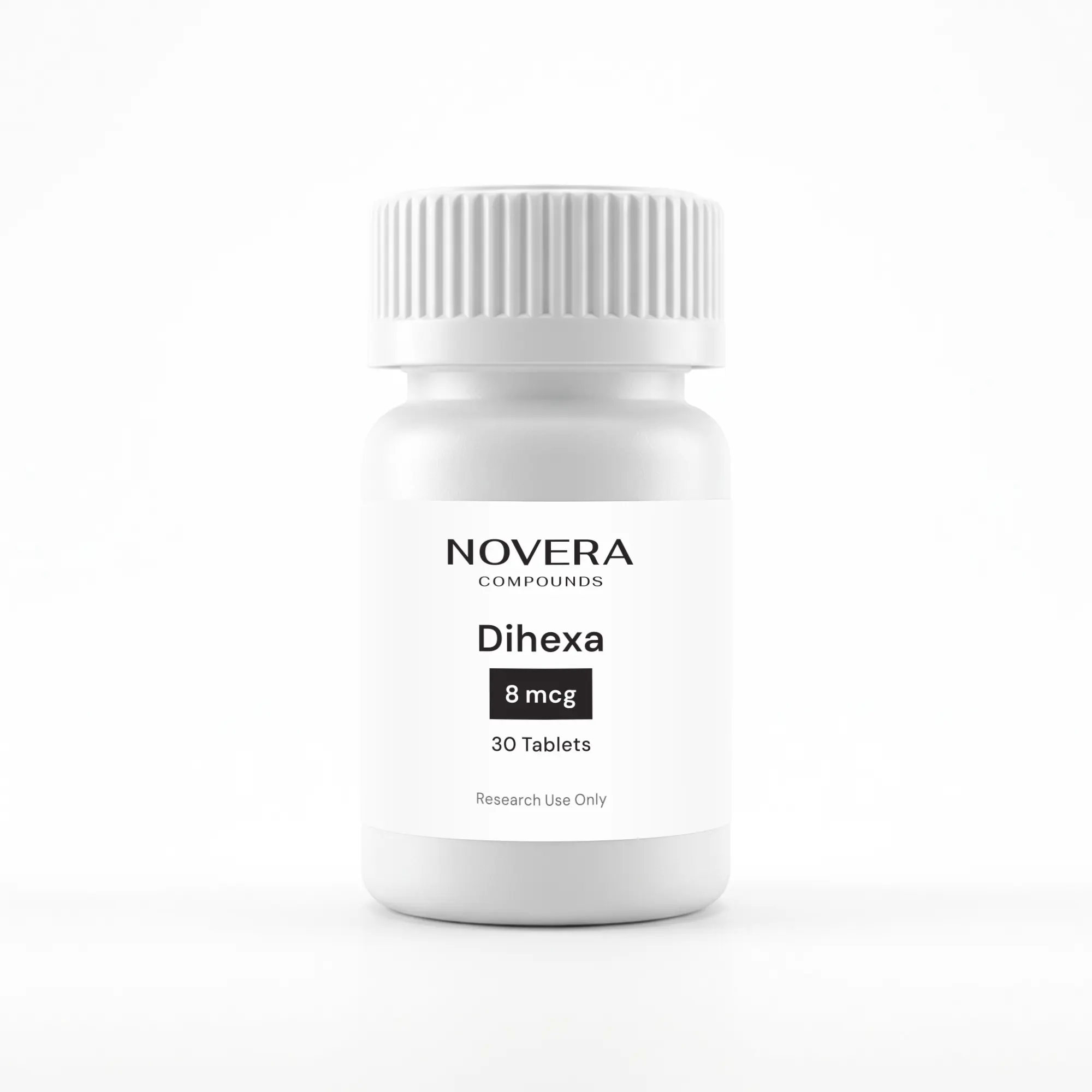
Dihexa 30 Tablets 8mg
Strength: 8 mg
CAS: 1401708-83-5
Chemical Formula: C₂₇H₄₄N₄O₅
Molecular weight: 504.66 g/mol
Peptide Sequence: Hexanoyl-Tyr-Ile-Unk (N-Hexanoyl-L-tyrosyl-N-(6-amino-6-oxohexyl)-L-isoleucinamide
Synonyms: PNB-0408, fosgonimeto
Storage: Store 2–8 °C (≤–20 °C long-term). RT exposure during transport acceptable. Protect from light.
Shelf life: 24 months from the manufacturing date.
Dihexa is a synthetic peptide-derived compound supplied for laboratory research. Structurally related to angiotensin IV analogs, it is studied in controlled experimental settings for its interaction with hepatocyte growth factor (HGF)/c-Met signaling pathways and its role in cellular communication and neurobiological research models. This product is intended strictly for laboratory research use.


Why Choose Medica Depot
Shop hundreds of medical products with no minimums and free shipping on large orders.
 400+ products
 No order minimums
 Free shipping
 Loyalty rewards
 Trusted since 2007
 Account manager
 Verified LOT numbers
INFORMATION
How Dihexa (8 mg) Supports Research
Dihexa (8 mg) is used in laboratory research to investigate cellular signaling pathways, particularly those involving growth factor receptors like HGF/c-Met. It is incorporated into experiments examining synaptic communication, cellular differentiation, and receptor-mediated signaling.
In research settings, Dihexa is used to explore neurobiological processes, molecular pathway activation, and changes in cellular structure. Its chemical structure allows researchers to study receptor-binding interactions in a controlled laboratory environment.
Research Applications & Usage Information
Dihexa (8 mg) is commonly used for:
- HGF/c-Met receptor pathway studies
- Neurobiology and synaptic signaling research
- Cellular communication and growth factor signaling analysis
- Molecular pathway modeling in preclinical systems
- Investigations into receptor-binding and intracellular signaling
- Experimental studies of peptide-derived small molecule analogs
All applications are investigational and intended for laboratory research use only.
Handling and Storage Recommendations
- Store at 2–8 °C (≤–20 °C for long-term storage). Protect from light.
- Keep the container tightly sealed to prevent moisture exposure.
- Handle tablets with clean laboratory gloves and tools to maintain integrity.
- Avoid exposure to excessive heat or direct light during handling.
- Follow institutional laboratory protocols for storage, preparation, and disposal.
Research Use Only Notice
This product is intended for laboratory research use only and is not approved for human or veterinary use. It is not intended for diagnostic, therapeutic, or clinical applications. Any reference to biological activity or potential effects is based solely on preclinical or in vitro findings and should not be interpreted as validated clinical outcomes. Researchers are responsible for ensuring proper handling, storage, and disposal in accordance with institutional, federal, and international guidelines.
References
- Uribe PM, Kawas LH, Harding JW, Coffin AB. Hepatocyte growth factor mimetic protects lateral line hair cells from aminoglycoside exposure. Front Cell Neurosci. 2015;9:3. Published 2015 Jan 28. doi:10.3389/fncel.2015.00003
- Uribe PM, Hudson AM, Lockard G, et al. Hepatocyte growth factor mimetic confers protection from aminoglycoside-induced hair cell death in vitro. Hear Res. 2023;434:108786. doi:10.1016/j.heares.2023.108786
- Pournajaf S, Baerz MM, Khoshsirat S. The mTOR Pathway in Hearing Disorders: Mechanistic Links to Aging, Regeneration, and Neurodegeneration. Mol Neurobiol. 2026;63(1):388. Published 2026 Jan 22. doi:10.1007/s12035-025-05653-3
How Dihexa (8 mg) Supports Research
Dihexa (8 mg) is used in laboratory research to investigate cellular signaling pathways, particularly those involving growth factor receptors like HGF/c-Met. It is incorporated into experiments examining synaptic communication, cellular differentiation, and receptor-mediated signaling.
In research settings, Dihexa is used to explore neurobiological processes, molecular pathway activation, and changes in cellular structure. Its chemical structure allows researchers to study receptor-binding interactions in a controlled laboratory environment.
Research Applications & Usage Information
Dihexa (8 mg) is commonly used for:
- HGF/c-Met receptor pathway studies
- Neurobiology and synaptic signaling research
- Cellular communication and growth factor signaling analysis
- Molecular pathway modeling in preclinical systems
- Investigations into receptor-binding and intracellular signaling
- Experimental studies of peptide-derived small molecule analogs
All applications are investigational and intended for laboratory research use only.
Handling and Storage Recommendations
- Store at 2–8 °C (≤–20 °C for long-term storage). Protect from light.
- Keep the container tightly sealed to prevent moisture exposure.
- Handle tablets with clean laboratory gloves and tools to maintain integrity.
- Avoid exposure to excessive heat or direct light during handling.
- Follow institutional laboratory protocols for storage, preparation, and disposal.
Research Use Only Notice
This product is intended for laboratory research use only and is not approved for human or veterinary use. It is not intended for diagnostic, therapeutic, or clinical applications. Any reference to biological activity or potential effects is based solely on preclinical or in vitro findings and should not be interpreted as validated clinical outcomes. Researchers are responsible for ensuring proper handling, storage, and disposal in accordance with institutional, federal, and international guidelines.
References
- Uribe PM, Kawas LH, Harding JW, Coffin AB. Hepatocyte growth factor mimetic protects lateral line hair cells from aminoglycoside exposure. Front Cell Neurosci. 2015;9:3. Published 2015 Jan 28. doi:10.3389/fncel.2015.00003
- Uribe PM, Hudson AM, Lockard G, et al. Hepatocyte growth factor mimetic confers protection from aminoglycoside-induced hair cell death in vitro. Hear Res. 2023;434:108786. doi:10.1016/j.heares.2023.108786
- Pournajaf S, Baerz MM, Khoshsirat S. The mTOR Pathway in Hearing Disorders: Mechanistic Links to Aging, Regeneration, and Neurodegeneration. Mol Neurobiol. 2026;63(1):388. Published 2026 Jan 22. doi:10.1007/s12035-025-05653-3
Related products