Cagrilintide 5mg
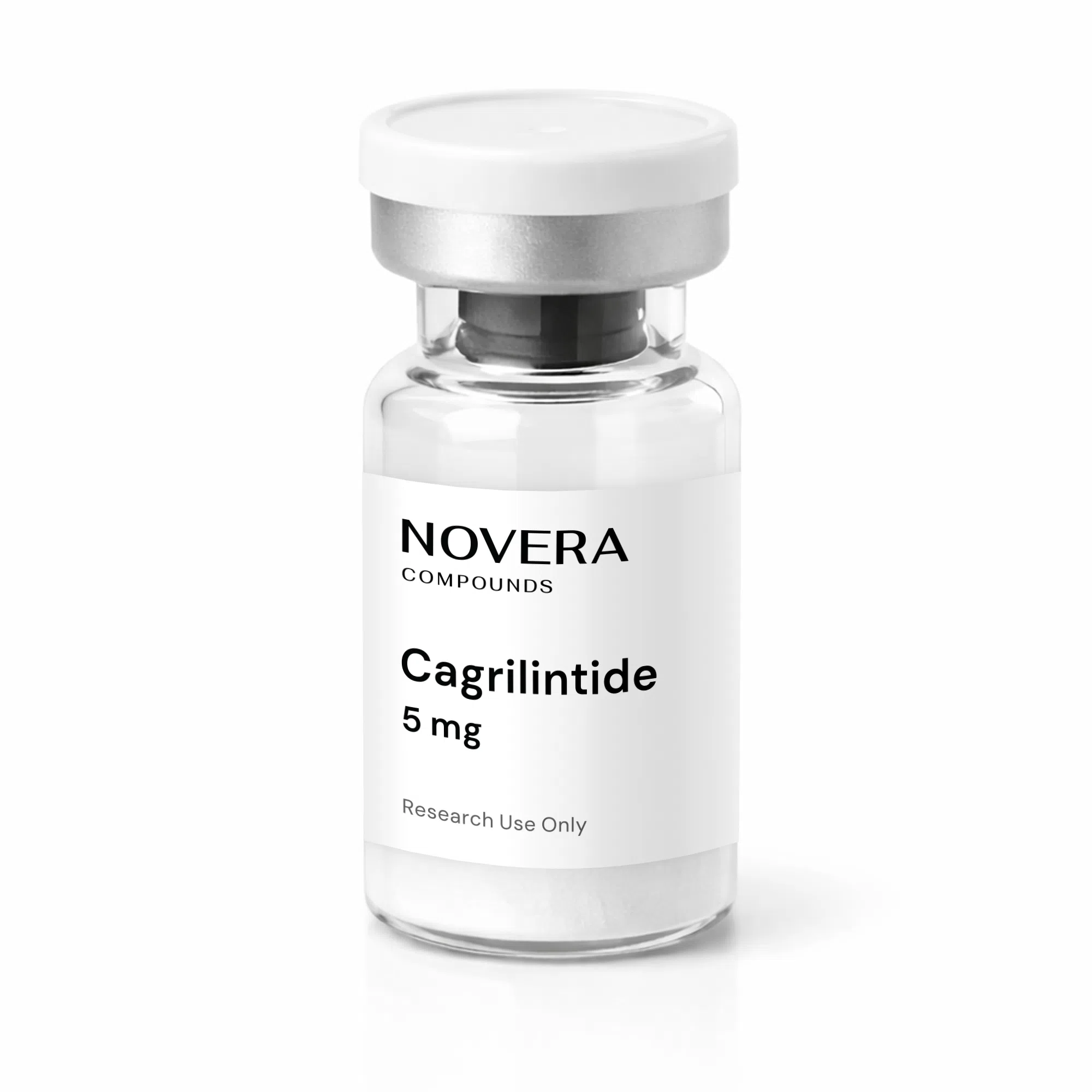
Strength: 5 mg
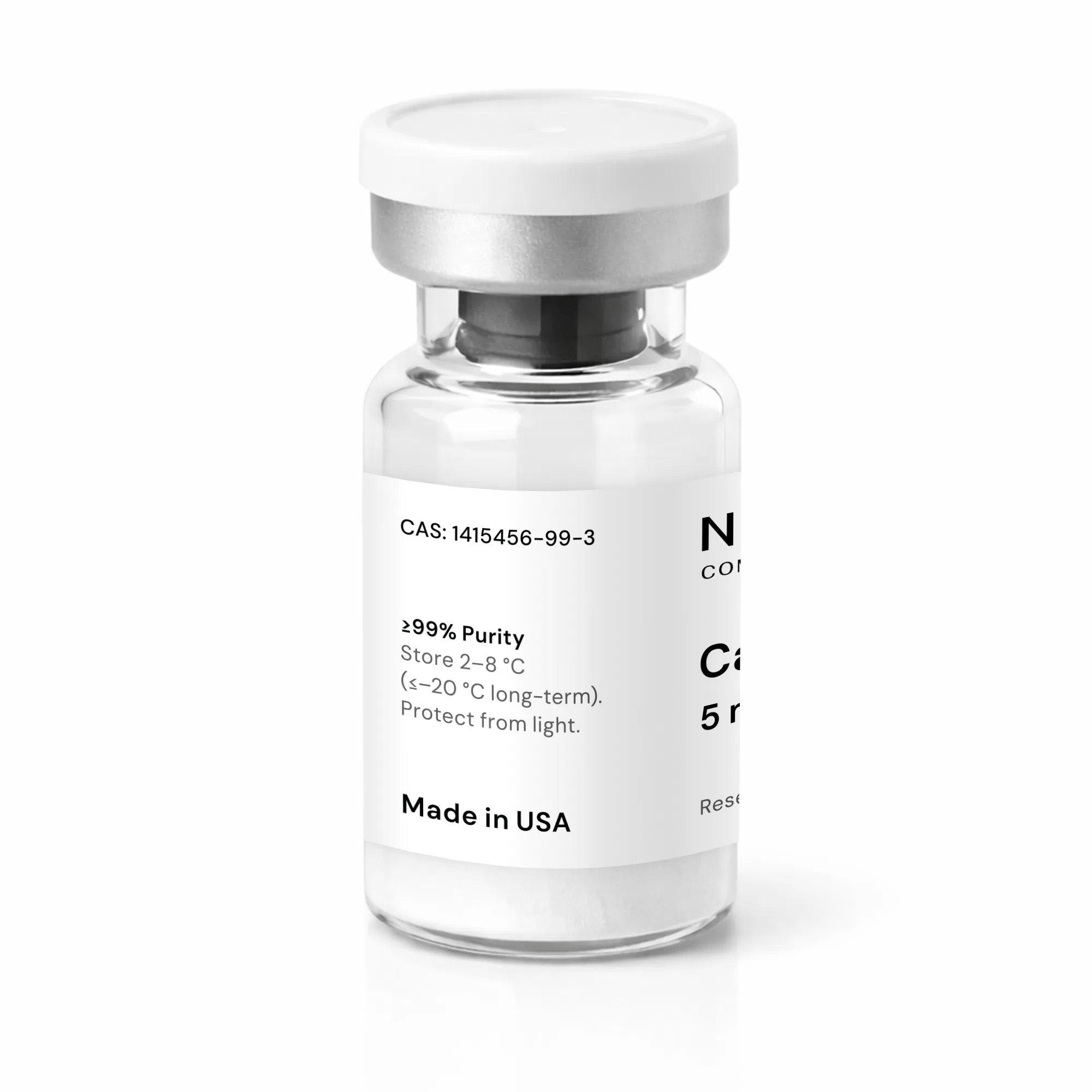
CAS: 1415456-99-3
Chemical Formula: C₁₉₄H₃₁₂N₅₄O₅₉S₂
Molecular weight: 4409 g/mol
Peptide Sequence: XKCNTATCATQRLAEFLRHSSNNFGPILPPTNVGSNTP
Synonyms: NN0174-0833, AM833, EX-A10092
Storage: Store 2–8 °C (≤–20 °C long-term). RT exposure during transport acceptable. Protect from light.
Shelf life: 24 months from the manufacturing date.
Cagrilintide is a long acting synthetic amylin analogue that activates amylin and calcitonin receptors involved in appetite and energy balance. It is under investigation in preclinical and clinical studies on overweight, obesity, and metabolic disorders, where researchers have examined its effects on body weight and energy intake, including when combined with GLP 1 receptor agonists such as semaglutide, but it is not an approved therapy.


Why Choose Medica Depot
Shop hundreds of medical products with no minimums and free shipping on large orders.
 400+ products
 No order minimums
 Free shipping
 Loyalty rewards
 Trusted since 2007
 Account manager
 Verified LOT numbers
INFORMATION
What is Cagrilintide (5mg)?
Cagrilintide (5 mg) is a synthetic research peptide used in studies of body-weight regulation and metabolic control. It is a long-acting analogue of amylin, a hormone released alongside insulin that helps regulate appetite, gastric emptying, and energy balance.
Researchers use cagrilintide as a tool compound because it extends amylin-like signaling at receptors in the calcitonin family. This makes it useful for studying mechanisms involved in satiety, food intake, and downstream metabolic effects in both preclinical models and clinical research settings.
Cagrilintide is a 39–amino-acid peptide with structural modifications (including an N-terminal fatty diacid chain) designed to improve stability and reduce fibril formation compared with native amylin. It is typically supplied as a white to off-white lyophilized powder for reconstitution into assay-appropriate solutions.
- Synonyms: NN0174-0833, AM833, EX‑A10092
Product Specifications
- CAS Number: 1415456‑99‑3
- Peptide Sequence: XKCNTATCATQRLAEFLRHSSNNFGPILPPTNVGSNTP
- Molecular Weight: 4409 g/mol
- Chemical Formula: C₁₉₄H₃₁₂N₅₄O₅₉S₂
- Purity: Typically supplied at ≥98% purity by HPLC; exact lot purity and analytical data are reported on the accompanying Certificate of Analysis.
- Packaging Format: 5 mg cagrilintide per vial, lyophilized (freeze‑dried) peptide in a sealed research-use container.
- Storage Conditions: Store at −20°C or below, protected from light and moisture; avoid repeated freeze–thaw cycles.
- Intended Use: For Laboratory Research Use Only (not for human or veterinary use).
Key Characteristics of Cagrilintide (5mg)
- Long-Acting Amylin Analogue: Cagrilintide is designed to activate amylin and calcitonin receptors with a prolonged duration of action compared to natural amylin, supporting models that require sustained receptor activation.
- Receptor Profile: Cagrilintide acts as a nonselective agonist at amylin receptors (AMY1/2/3) and the calcitonin receptor, which are involved in appetite regulation, gastric emptying, and energy homeostasis.
- High-Purity Research Grade: Cagrilintide is manufactured to a high purity (typically ≥98–99% by HPLC), with identity verified by techniques such as LC-MS. Batch-specific data are provided on the Certificate of Analysis (CoA).
- Stable Lyophilized Format: Supplied as a freeze-dried powder to maintain stability during shipping and long-term storage, with recommended storage at −20°C or below.
- Convenient 5mg Presentation: The 5mg vial format is commonly used in studies requiring smaller peptide quantities, pilot experiments, or titration series.
- Used Across Model Systems: Employed in cell-based assays, animal models, and clinical research settings to explore satiety-related measures, changes in body weight, metabolic markers, and hormonal interactions.
- Compatible with Combination Protocols: Frequently studied alongside GLP-1 receptor agonists like semaglutide to explore multi-hormone strategies for appetite and metabolic regulation.
- Backed by Growing Clinical Literature: Evaluated in phase 2 trials for its effects on body weight, energy intake, and metabolic markers in individuals with overweight or obesity, providing a basis for further translational and mechanistic research.
How Cagrilintide (5mg) Supports Research
Researchers use cagrilintide to study how amylin-related pathways influence satiety, food intake, and body weight. Because it produces longer-lasting receptor activation, it helps investigators model sustained signaling and track downstream effects on behavior, gastric function, and metabolic markers over time.
Clinical research has evaluated cagrilintide for changes in body weight, energy intake, and metabolic parameters, often alongside lifestyle interventions. These data help researchers understand how gut–brain hormone systems interact and how those interactions affect appetite and metabolic readouts within controlled study designs.
Research Applications & Usage Information
Cagrilintide (5mg) is commonly used in research studies on body weight regulation, metabolism, and receptor signaling. Typical applications include:
- Metabolic and Obesity Research: Tracking body weight, energy intake, satiety measures, and related metabolic endpoints in preclinical and clinical research settings.
- Gut–Brain Axis and Neuroendocrine Signaling: Examining how peripheral peptide signals influence CNS pathways involved in hunger, fullness, and food choice.
- Receptor Pharmacology and Signaling Pathways: Characterizing activation of amylin/calcitonin receptors, downstream signaling, and functional readouts in different cell systems.
- Combination-Therapy and Polyhormonal Models: Studying cagrilintide alongside GLP-1 receptor agonists (e.g., semaglutide) to assess multi-pathway effects on appetite and metabolic markers.
- Pharmacokinetic and Pharmacodynamic Evaluation: Assessing absorption, distribution, half-life, and exposure–response relationships for long-acting peptide analogues, including the effects of lipidation and albumin binding.
- Comparative Peptide Design Studies: Using cagrilintide as a benchmark to compare stability, fibril formation, receptor activity, and performance versus other amylin analogues.
Cagrilintide is not intended to be used for tissue regeneration, clinical treatment, or any therapeutic purpose. Any observations regarding changes in body weight or metabolic parameters that arise within controlled experimental protocols should not be generalized beyond those research settings.
Handling and Storage Recommendations
To preserve peptide quality and ensure consistent experimental performance, follow these guidelines:
- Store unopened vials at −20°C or below, protected from light and moisture.
- Store in a sealed container or secondary packaging to limit exposure to humidity and air.
- Room temperature exposure may be acceptable during transport or shipping.
- For short-term use, store at 2-8°C; for longer-term storage, −20°C is generally preferred.
- Discard any solution that shows visible particulates, discoloration, or signs of degradation, following institutional waste procedures.
Research Use Only Notice
This product is intended for laboratory research use only and is not approved for human or veterinary use. It is not intended for diagnostic, therapeutic, or clinical applications. Any reference to biological activity or potential effects is based solely on preclinical or in-vitro findings and should not be interpreted as validated clinical outcomes. Researchers are responsible for ensuring proper handling, storage, and disposal in accordance with institutional, federal, and international guidelines.
References
- Lau DCW, Erichsen L, Francisco AM, et al. Once-weekly cagrilintide for weight management in people with overweight and obesity: a multicentre, randomised, double-blind, placebo-controlled and active-controlled, dose-finding phase 2 trial. Lancet. 2021;398(10317):2160-2172. doi:10.1016/S0140-6736(21)01751-7
- D’Ascanio AM, Mullally JA, Frishman WH. Cagrilintide: A Long-Acting Amylin Analog for the Treatment of Obesity. Cardiol Rev. 2024;32(1):83-90. doi:10.1097/CRD.0000000000000513
- Kruse T, Hansen JL, Dahl K, et al. Development of Cagrilintide, a Long-Acting Amylin Analogue. J Med Chem. 2021;64(15):11183-11194. doi:10.1021/acs.jmedchem.1c00565
- Eržen S, Tonin G, Jurišić Eržen D, Klen J. Amylin, Another Important Neuroendocrine Hormone for the Treatment of Diabesity. Int J Mol Sci. 2024;25(3):1517. Published 2024 Jan 26. doi:10.3390/ijms25031517
What is Cagrilintide (5mg)?
Cagrilintide (5 mg) is a synthetic research peptide used in studies of body-weight regulation and metabolic control. It is a long-acting analogue of amylin, a hormone released alongside insulin that helps regulate appetite, gastric emptying, and energy balance.
Researchers use cagrilintide as a tool compound because it extends amylin-like signaling at receptors in the calcitonin family. This makes it useful for studying mechanisms involved in satiety, food intake, and downstream metabolic effects in both preclinical models and clinical research settings.
Cagrilintide is a 39–amino-acid peptide with structural modifications (including an N-terminal fatty diacid chain) designed to improve stability and reduce fibril formation compared with native amylin. It is typically supplied as a white to off-white lyophilized powder for reconstitution into assay-appropriate solutions.
- Synonyms: NN0174-0833, AM833, EX‑A10092
Product Specifications
- CAS Number: 1415456‑99‑3
- Peptide Sequence: XKCNTATCATQRLAEFLRHSSNNFGPILPPTNVGSNTP
- Molecular Weight: 4409 g/mol
- Chemical Formula: C₁₉₄H₃₁₂N₅₄O₅₉S₂
- Purity: Typically supplied at ≥98% purity by HPLC; exact lot purity and analytical data are reported on the accompanying Certificate of Analysis.
- Packaging Format: 5 mg cagrilintide per vial, lyophilized (freeze‑dried) peptide in a sealed research-use container.
- Storage Conditions: Store at −20°C or below, protected from light and moisture; avoid repeated freeze–thaw cycles.
- Intended Use: For Laboratory Research Use Only (not for human or veterinary use).
Key Characteristics of Cagrilintide (5mg)
- Long-Acting Amylin Analogue: Cagrilintide is designed to activate amylin and calcitonin receptors with a prolonged duration of action compared to natural amylin, supporting models that require sustained receptor activation.
- Receptor Profile: Cagrilintide acts as a nonselective agonist at amylin receptors (AMY1/2/3) and the calcitonin receptor, which are involved in appetite regulation, gastric emptying, and energy homeostasis.
- High-Purity Research Grade: Cagrilintide is manufactured to a high purity (typically ≥98–99% by HPLC), with identity verified by techniques such as LC-MS. Batch-specific data are provided on the Certificate of Analysis (CoA).
- Stable Lyophilized Format: Supplied as a freeze-dried powder to maintain stability during shipping and long-term storage, with recommended storage at −20°C or below.
- Convenient 5mg Presentation: The 5mg vial format is commonly used in studies requiring smaller peptide quantities, pilot experiments, or titration series.
- Used Across Model Systems: Employed in cell-based assays, animal models, and clinical research settings to explore satiety-related measures, changes in body weight, metabolic markers, and hormonal interactions.
- Compatible with Combination Protocols: Frequently studied alongside GLP-1 receptor agonists like semaglutide to explore multi-hormone strategies for appetite and metabolic regulation.
- Backed by Growing Clinical Literature: Evaluated in phase 2 trials for its effects on body weight, energy intake, and metabolic markers in individuals with overweight or obesity, providing a basis for further translational and mechanistic research.
How Cagrilintide (5mg) Supports Research
Researchers use cagrilintide to study how amylin-related pathways influence satiety, food intake, and body weight. Because it produces longer-lasting receptor activation, it helps investigators model sustained signaling and track downstream effects on behavior, gastric function, and metabolic markers over time.
Clinical research has evaluated cagrilintide for changes in body weight, energy intake, and metabolic parameters, often alongside lifestyle interventions. These data help researchers understand how gut–brain hormone systems interact and how those interactions affect appetite and metabolic readouts within controlled study designs.
Research Applications & Usage Information
Cagrilintide (5mg) is commonly used in research studies on body weight regulation, metabolism, and receptor signaling. Typical applications include:
- Metabolic and Obesity Research: Tracking body weight, energy intake, satiety measures, and related metabolic endpoints in preclinical and clinical research settings.
- Gut–Brain Axis and Neuroendocrine Signaling: Examining how peripheral peptide signals influence CNS pathways involved in hunger, fullness, and food choice.
- Receptor Pharmacology and Signaling Pathways: Characterizing activation of amylin/calcitonin receptors, downstream signaling, and functional readouts in different cell systems.
- Combination-Therapy and Polyhormonal Models: Studying cagrilintide alongside GLP-1 receptor agonists (e.g., semaglutide) to assess multi-pathway effects on appetite and metabolic markers.
- Pharmacokinetic and Pharmacodynamic Evaluation: Assessing absorption, distribution, half-life, and exposure–response relationships for long-acting peptide analogues, including the effects of lipidation and albumin binding.
- Comparative Peptide Design Studies: Using cagrilintide as a benchmark to compare stability, fibril formation, receptor activity, and performance versus other amylin analogues.
Cagrilintide is not intended to be used for tissue regeneration, clinical treatment, or any therapeutic purpose. Any observations regarding changes in body weight or metabolic parameters that arise within controlled experimental protocols should not be generalized beyond those research settings.
Handling and Storage Recommendations
To preserve peptide quality and ensure consistent experimental performance, follow these guidelines:
- Store unopened vials at −20°C or below, protected from light and moisture.
- Store in a sealed container or secondary packaging to limit exposure to humidity and air.
- Room temperature exposure may be acceptable during transport or shipping.
- For short-term use, store at 2-8°C; for longer-term storage, −20°C is generally preferred.
- Discard any solution that shows visible particulates, discoloration, or signs of degradation, following institutional waste procedures.
Research Use Only Notice
This product is intended for laboratory research use only and is not approved for human or veterinary use. It is not intended for diagnostic, therapeutic, or clinical applications. Any reference to biological activity or potential effects is based solely on preclinical or in-vitro findings and should not be interpreted as validated clinical outcomes. Researchers are responsible for ensuring proper handling, storage, and disposal in accordance with institutional, federal, and international guidelines.
References
- Lau DCW, Erichsen L, Francisco AM, et al. Once-weekly cagrilintide for weight management in people with overweight and obesity: a multicentre, randomised, double-blind, placebo-controlled and active-controlled, dose-finding phase 2 trial. Lancet. 2021;398(10317):2160-2172. doi:10.1016/S0140-6736(21)01751-7
- D’Ascanio AM, Mullally JA, Frishman WH. Cagrilintide: A Long-Acting Amylin Analog for the Treatment of Obesity. Cardiol Rev. 2024;32(1):83-90. doi:10.1097/CRD.0000000000000513
- Kruse T, Hansen JL, Dahl K, et al. Development of Cagrilintide, a Long-Acting Amylin Analogue. J Med Chem. 2021;64(15):11183-11194. doi:10.1021/acs.jmedchem.1c00565
- Eržen S, Tonin G, Jurišić Eržen D, Klen J. Amylin, Another Important Neuroendocrine Hormone for the Treatment of Diabesity. Int J Mol Sci. 2024;25(3):1517. Published 2024 Jan 26. doi:10.3390/ijms25031517
This content was prepared and reviewed under our editorial guidelines , which govern how we source, verify, and update clinical and product information. Every claim is checked against peer-reviewed research, manufacturer documentation, or regulatory guidance before publication.
Product authenticity is an important part of making informed decisions in medical aesthetics and pharmaceuticals. Medica Depot provides information for clinics and practitioners on how to check authenticity claims. Learn more about how we recognize authentic products.
Related products