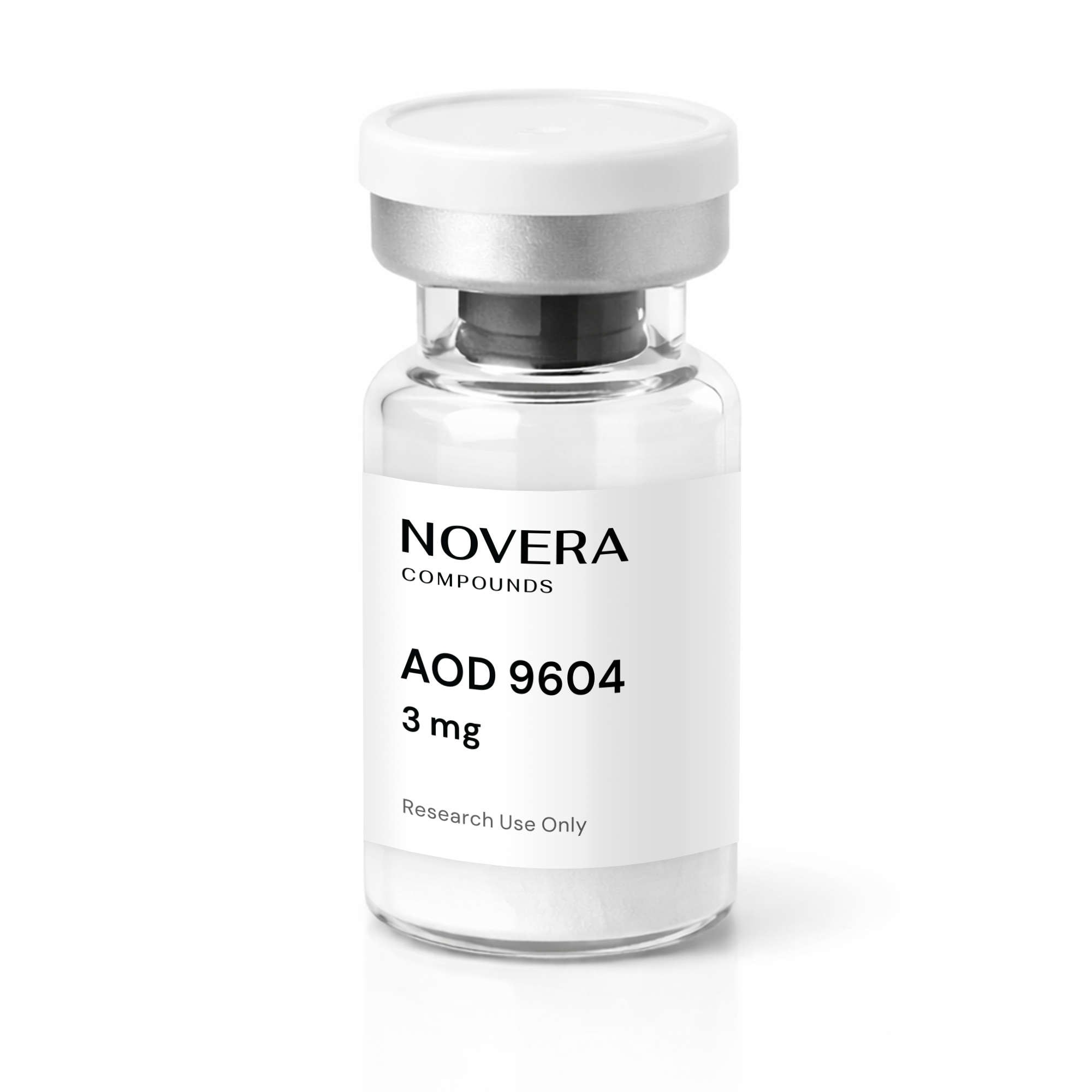
AOD 9604 (3mg)
All products are 100% genuine and sourced from trusted manufacturers, with authenticity that can be verified for complete peace of mind.
Order exactly what you need with no minimum quantity required, whether it’s a single unit or a larger order.
Your order is guaranteed to arrive safely, with full shipment tracking and dedicated support to ensure a smooth delivery experience.
Your payments are protected with industry-standard encryption and trusted payment providers, ensuring every transaction is safe, private, and secure.
 99% PURITY GUARANTEE
 99% PURITY GUARANTEE
Each peptide batch is tested and verified to meet or exceed 98–99% purity (HPLC). Full analytical reports are available in the Certificate of Analysis section.
 Preparation & Handling Notice
The product is delivered in powdered (lyophilized) form and must be properly reconstituted prior to research use.
 RESEARCH USE ONLY
This product is intended for research use only. It is not for human or veterinary use, not for diagnostic or therapeutic purposes, and should only be handled by qualified professionals.
Strength: 3 mg
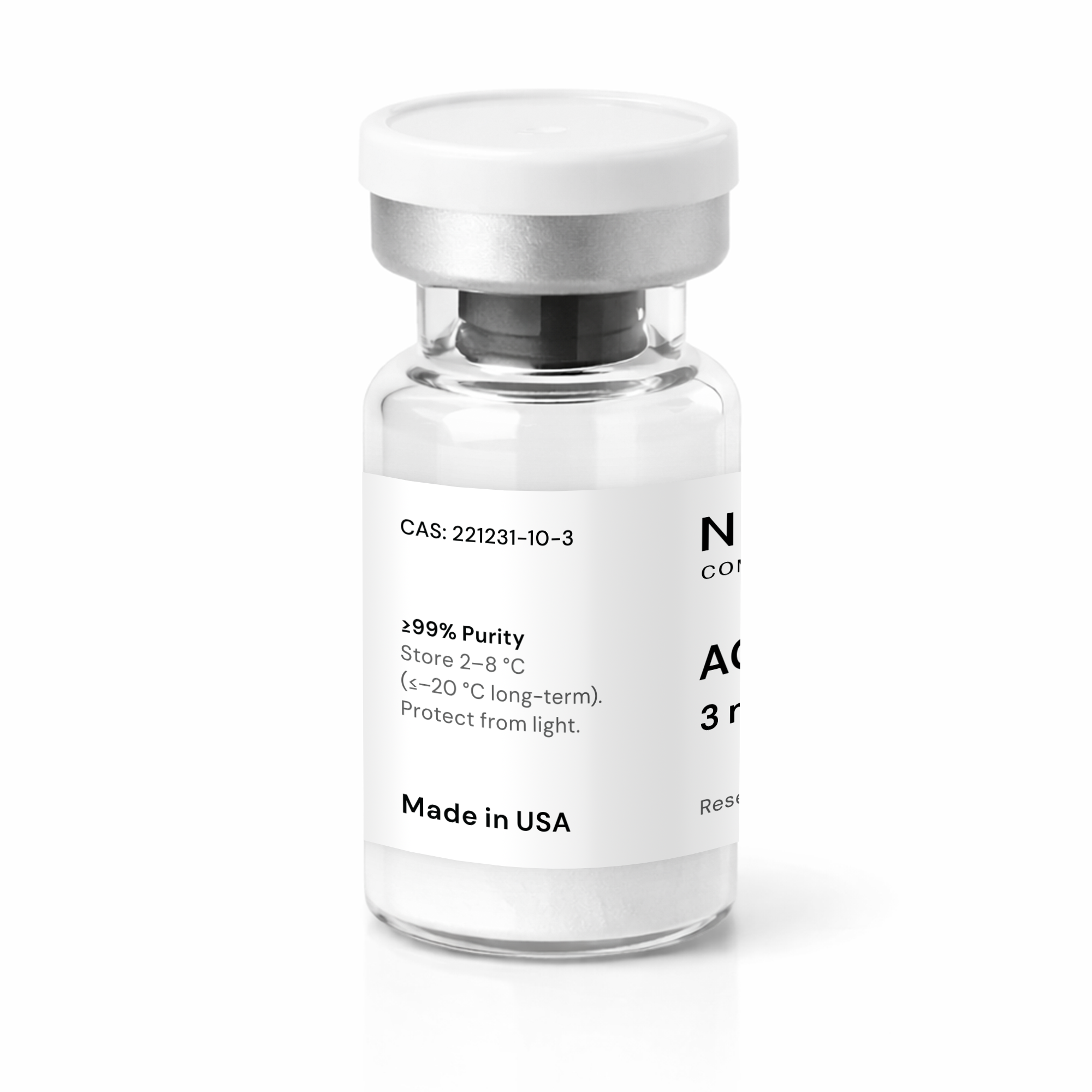
CAS: 24623-10-03
Chemical Formula: C₇₈H₁₂₃N₂₃O₂₃S₂
Molecular weight: 1815.10 g/mol
Peptide Sequence: Tyr-Leu-Arg-Ile-Val-Gln-Cys-Arg-Ser-Val-Glu-Gly-Ser-Cys-Gly-Phe-OH
Synonyms: AOD-9604, AOD 9604
Storage: Store 2–8 °C (≤–20 °C long-term). RT exposure during transport acceptable. Protect from light.
Shelf life: 24 months from the manufacturing date.
AOD 9604 is a synthetic 16-amino-acid fragment of human growth hormone (residues 176–191), developed for studying fat and energy metabolism. Research in obese rodent models has explored its effects on weight gain and fat oxidation, without the broader hormonal actions of full-length growth hormone.
-
Cold chain shipping available for temperature-sensitive products.
-
Orders are processed within 1–2 business days.
-
Delivery timelines vary by destination and shipping method — view our Shipping Policy for region-specific estimates.
-
Tracking information will be provided once shipped.
-
No order minimum applies.
-
If your shipment is delayed, lost, or arrives damaged, you're covered under our Refund & Replacement Policy.
We accept Visa, Mastercard, and American Express. Apple Pay and Google Pay are available upon request via your account manager.
All transactions are processed through a secure, PCI DSS–compliant system to ensure your data is fully protected.
Why Choose NOVERA COMPOUNDS Peptides?
Novera Research delivers high-quality research peptides developed under strict manufacturing and quality-control standards. Each product is carefully synthesized, tested, and handled to ensure consistency, reliability, and transparency for advanced research applications.
- High-purity, research-grade peptide synthesis
- Analytical testing to verify quality and composition
- Consistent batch-to-batch performance
- Batch identification on every vial for traceability
- Stored and shipped under controlled conditions
 High-purity, research-grade peptide synthesis

Why Choose Medica Depot
Shop hundreds of medical products with no minimums and free shipping on large orders.
 400+ products
 No order minimums
 Free shipping
 Loyalty rewards
 Trusted since 2007
 Account manager
 Verified LOT numbers
INFORMATION
What is AOD 9604 (3mg)?
AOD 9604 (3 mg) is a synthetic research peptide studied in models of weight regulation and metabolic function. It is a 16–amino-acid fragment from the C-terminal region of human growth hormone (often described as hGH 177–191). Most research has focused on how this fragment may influence fat and energy metabolism in preclinical systems.
In laboratory research, AOD 9604 is used to explore pathways involved in fat breakdown (lipolysis), fat storage (lipogenesis), and energy use, without the broader endocrine activity associated with full-length growth hormone.
Research use only: This product is intended for in-vitro and non-clinical in-vivo research. It is not approved for human or veterinary use, and no therapeutic claims are made.
Product Specifications
- CAS Number: 221231‑10‑3
- Peptide Sequence: Tyr‑Leu‑Arg‑Ile‑Val‑Gln‑Cys‑Arg‑Ser‑Val‑Glu‑Gly‑Ser‑Cys‑Gly‑Phe‑OH
- Molecular Weight: 1815.10 g/mol
- Chemical Formula: C₇₈H₁₂₃N₂₃O₂₃S₂
- Purity: >99%
- Packaging Format: 3mg strength of lyophilized powder
- Storage Conditions (unreconstituted): Store at −20 °C; avoid light exposure; keep container tightly closed
- Intended Use: For laboratory research use only; not for human or veterinary use
Key Characteristics of AOD 9604 (3mg)
- Defined growth hormone fragment: A 16–amino-acid segment from the C-terminal region of human growth hormone, used to study metabolism-focused activity in research models.
- Metabolic research focus: Studied in obese rodent models for effects on fat oxidation, weight gain trends, and markers linked to fat breakdown and storage.
- Human data are limited and mixed: Clinical studies have largely assessed safety and metabolism, while weight-related outcomes were modest and inconsistent; development as an obesity drug was not continued.
- High-purity material: >99% purity supports consistency in cell-based and non-clinical animal research.
- Distinct from classical GH signaling (experimental): Research suggests minimal stimulation of IGF-1 and limited activation of pathways typically driven by full-length growth hormone.
- Mechanistic tool in preclinical work: Used to explore lipid and glucose metabolism pathways in controlled models of energy balance.
- Standard peptide format: Provided as a lyophilized powder for laboratory reconstitution and storage per institutional procedures.
How AOD 9604 (3mg) Supports Research
AOD 9604 (3 mg) is used as a probe compound to study how a growth hormone–derived fragment may affect fat and energy metabolism without the full hormone’s broader activity profile.
Preclinical studies in rodent models have evaluated outcomes such as fat oxidation, body-weight change patterns, and metabolic markers tied to fat breakdown and storage. In cell and tissue systems, it is often used to examine adipocyte (fat cell) behavior and related signaling pathways.
Human studies have mainly described pharmacokinetics, safety, and tolerability, rather than demonstrating strong clinical effectiveness. For this reason, AOD 9604 should be treated as a research tool for metabolic pathway investigation—not an established treatment.
Research Applications & Usage Information
In laboratory research, AOD 9604 (3mg) is commonly employed in controlled in-vitro and non-clinical in-vivo models. Typical applications include:
- Obesity and Body-Weight Regulation Models: Studying how chronic AOD 9604 exposure affects body weight, fat, and energy expenditure in obese rodents, often using indirect calorimetry and body composition analyses.
- Adipocyte (Fat Cell) Function Studies: Investigating changes in fat breakdown (lipolysis) and fat storage (lipogenesis) in isolated adipose tissue or cultured fat cells, including measurement of glycerol and free fatty acid release as metabolic markers.
- Pathway-Focused Metabolic Research: Exploring how AOD 9604 influences β-adrenergic-linked pathways and AMPK activity, both of which regulate cellular energy status and lipid metabolism.
- Comparative Growth Hormone Fragment Studies: Comparing AOD 9604 with full-length human growth hormone and other C-terminal fragments to better understand which regions of the hormone drive specific metabolic effects and which pathways operate independently of classical GH receptor signaling.
- Safety and Pharmacology Evaluations: Conducting preclinical toxicology, pharmacokinetic, and receptor-binding studies to characterize how AOD 9604 is handled in vivo and confirm it does not activate growth hormone-like proliferative pathways.
The specific concentration, exposure time, and experimental protocols are determined by the researcher based on the study design, existing literature, and institutional guidelines. No dosing or regimen recommendations are provided or implied.
Handling and Storage Recommendations
To preserve sample integrity and support safe laboratory practices, the following guidelines should be followed:
- Store at −20 °C or below (non-frost-free preferred).
- Keep sealed and protected from light.
- Limit temperature cycling; room temperature only as needed for handling/transport.
- Use standard PPE: gloves, lab coat, eye protection.
- Dispose of materials per applicable waste regulations and institutional policy.
Research Use Only Notice
This product is intended for laboratory research use only and is not approved for human or veterinary use. It is not intended for diagnostic, therapeutic, or clinical applications. Any reference to biological activity or potential effects is based solely on preclinical or in-vitro findings and should not be interpreted as validated clinical outcomes. Researchers are responsible for ensuring proper handling, storage, and disposal in accordance with institutional, federal, and international guidelines.
References
- Ng FM, Sun J, Sharma L, Libinaka R, Jiang WJ, Gianello R. Metabolic studies of a synthetic lipolytic domain (AOD9604) of human growth hormone. Horm Res. 2000;53(6):274-278. doi:10.1159/000053183
- Heffernan M, Summers RJ, Thorburn A, et al. The effects of human GH and its lipolytic fragment (AOD9604) on lipid metabolism following chronic treatment in obese mice and beta(3)-AR knock-out mice. Endocrinology. 2001;142(12):5182-5189. doi:10.1210/endo.142.12.8522
- Heffernan MA, Thorburn AW, Fam B, et al. Increase of fat oxidation and weight loss in obese mice caused by chronic treatment with human growth hormone or a modified C-terminal fragment. Int J Obes Relat Metab Disord. 2001;25(10):1442-1449. doi:10.1038/sj.ijo.0801740
- Moré MI, Kenley D. Safety and metabolism of AOD9604, a novel nutraceutical ingredient for improved metabolic health. Journal of Endocrinology and Metabolism. Published online June 27, 2014. doi:10.14740/jem.v4i3.213
- Misra M. Obesity pharmacotherapy: current perspectives and future directions. Curr Cardiol Rev. 2013;9(1):33-54. doi:10.2174/157340313805076322
What is AOD 9604 (3mg)?
AOD 9604 (3 mg) is a synthetic research peptide studied in models of weight regulation and metabolic function. It is a 16–amino-acid fragment from the C-terminal region of human growth hormone (often described as hGH 177–191). Most research has focused on how this fragment may influence fat and energy metabolism in preclinical systems.
In laboratory research, AOD 9604 is used to explore pathways involved in fat breakdown (lipolysis), fat storage (lipogenesis), and energy use, without the broader endocrine activity associated with full-length growth hormone.
Research use only: This product is intended for in-vitro and non-clinical in-vivo research. It is not approved for human or veterinary use, and no therapeutic claims are made.
Product Specifications
- CAS Number: 221231‑10‑3
- Peptide Sequence: Tyr‑Leu‑Arg‑Ile‑Val‑Gln‑Cys‑Arg‑Ser‑Val‑Glu‑Gly‑Ser‑Cys‑Gly‑Phe‑OH
- Molecular Weight: 1815.10 g/mol
- Chemical Formula: C₇₈H₁₂₃N₂₃O₂₃S₂
- Purity: >99%
- Packaging Format: 3mg strength of lyophilized powder
- Storage Conditions (unreconstituted): Store at −20 °C; avoid light exposure; keep container tightly closed
- Intended Use: For laboratory research use only; not for human or veterinary use
Key Characteristics of AOD 9604 (3mg)
- Defined growth hormone fragment: A 16–amino-acid segment from the C-terminal region of human growth hormone, used to study metabolism-focused activity in research models.
- Metabolic research focus: Studied in obese rodent models for effects on fat oxidation, weight gain trends, and markers linked to fat breakdown and storage.
- Human data are limited and mixed: Clinical studies have largely assessed safety and metabolism, while weight-related outcomes were modest and inconsistent; development as an obesity drug was not continued.
- High-purity material: >99% purity supports consistency in cell-based and non-clinical animal research.
- Distinct from classical GH signaling (experimental): Research suggests minimal stimulation of IGF-1 and limited activation of pathways typically driven by full-length growth hormone.
- Mechanistic tool in preclinical work: Used to explore lipid and glucose metabolism pathways in controlled models of energy balance.
- Standard peptide format: Provided as a lyophilized powder for laboratory reconstitution and storage per institutional procedures.
How AOD 9604 (3mg) Supports Research
AOD 9604 (3 mg) is used as a probe compound to study how a growth hormone–derived fragment may affect fat and energy metabolism without the full hormone’s broader activity profile.
Preclinical studies in rodent models have evaluated outcomes such as fat oxidation, body-weight change patterns, and metabolic markers tied to fat breakdown and storage. In cell and tissue systems, it is often used to examine adipocyte (fat cell) behavior and related signaling pathways.
Human studies have mainly described pharmacokinetics, safety, and tolerability, rather than demonstrating strong clinical effectiveness. For this reason, AOD 9604 should be treated as a research tool for metabolic pathway investigation—not an established treatment.
Research Applications & Usage Information
In laboratory research, AOD 9604 (3mg) is commonly employed in controlled in-vitro and non-clinical in-vivo models. Typical applications include:
- Obesity and Body-Weight Regulation Models: Studying how chronic AOD 9604 exposure affects body weight, fat, and energy expenditure in obese rodents, often using indirect calorimetry and body composition analyses.
- Adipocyte (Fat Cell) Function Studies: Investigating changes in fat breakdown (lipolysis) and fat storage (lipogenesis) in isolated adipose tissue or cultured fat cells, including measurement of glycerol and free fatty acid release as metabolic markers.
- Pathway-Focused Metabolic Research: Exploring how AOD 9604 influences β-adrenergic-linked pathways and AMPK activity, both of which regulate cellular energy status and lipid metabolism.
- Comparative Growth Hormone Fragment Studies: Comparing AOD 9604 with full-length human growth hormone and other C-terminal fragments to better understand which regions of the hormone drive specific metabolic effects and which pathways operate independently of classical GH receptor signaling.
- Safety and Pharmacology Evaluations: Conducting preclinical toxicology, pharmacokinetic, and receptor-binding studies to characterize how AOD 9604 is handled in vivo and confirm it does not activate growth hormone-like proliferative pathways.
The specific concentration, exposure time, and experimental protocols are determined by the researcher based on the study design, existing literature, and institutional guidelines. No dosing or regimen recommendations are provided or implied.
Handling and Storage Recommendations
To preserve sample integrity and support safe laboratory practices, the following guidelines should be followed:
- Store at −20 °C or below (non-frost-free preferred).
- Keep sealed and protected from light.
- Limit temperature cycling; room temperature only as needed for handling/transport.
- Use standard PPE: gloves, lab coat, eye protection.
- Dispose of materials per applicable waste regulations and institutional policy.
Research Use Only Notice
This product is intended for laboratory research use only and is not approved for human or veterinary use. It is not intended for diagnostic, therapeutic, or clinical applications. Any reference to biological activity or potential effects is based solely on preclinical or in-vitro findings and should not be interpreted as validated clinical outcomes. Researchers are responsible for ensuring proper handling, storage, and disposal in accordance with institutional, federal, and international guidelines.
References
- Ng FM, Sun J, Sharma L, Libinaka R, Jiang WJ, Gianello R. Metabolic studies of a synthetic lipolytic domain (AOD9604) of human growth hormone. Horm Res. 2000;53(6):274-278. doi:10.1159/000053183
- Heffernan M, Summers RJ, Thorburn A, et al. The effects of human GH and its lipolytic fragment (AOD9604) on lipid metabolism following chronic treatment in obese mice and beta(3)-AR knock-out mice. Endocrinology. 2001;142(12):5182-5189. doi:10.1210/endo.142.12.8522
- Heffernan MA, Thorburn AW, Fam B, et al. Increase of fat oxidation and weight loss in obese mice caused by chronic treatment with human growth hormone or a modified C-terminal fragment. Int J Obes Relat Metab Disord. 2001;25(10):1442-1449. doi:10.1038/sj.ijo.0801740
- Moré MI, Kenley D. Safety and metabolism of AOD9604, a novel nutraceutical ingredient for improved metabolic health. Journal of Endocrinology and Metabolism. Published online June 27, 2014. doi:10.14740/jem.v4i3.213
- Misra M. Obesity pharmacotherapy: current perspectives and future directions. Curr Cardiol Rev. 2013;9(1):33-54. doi:10.2174/157340313805076322
Related products