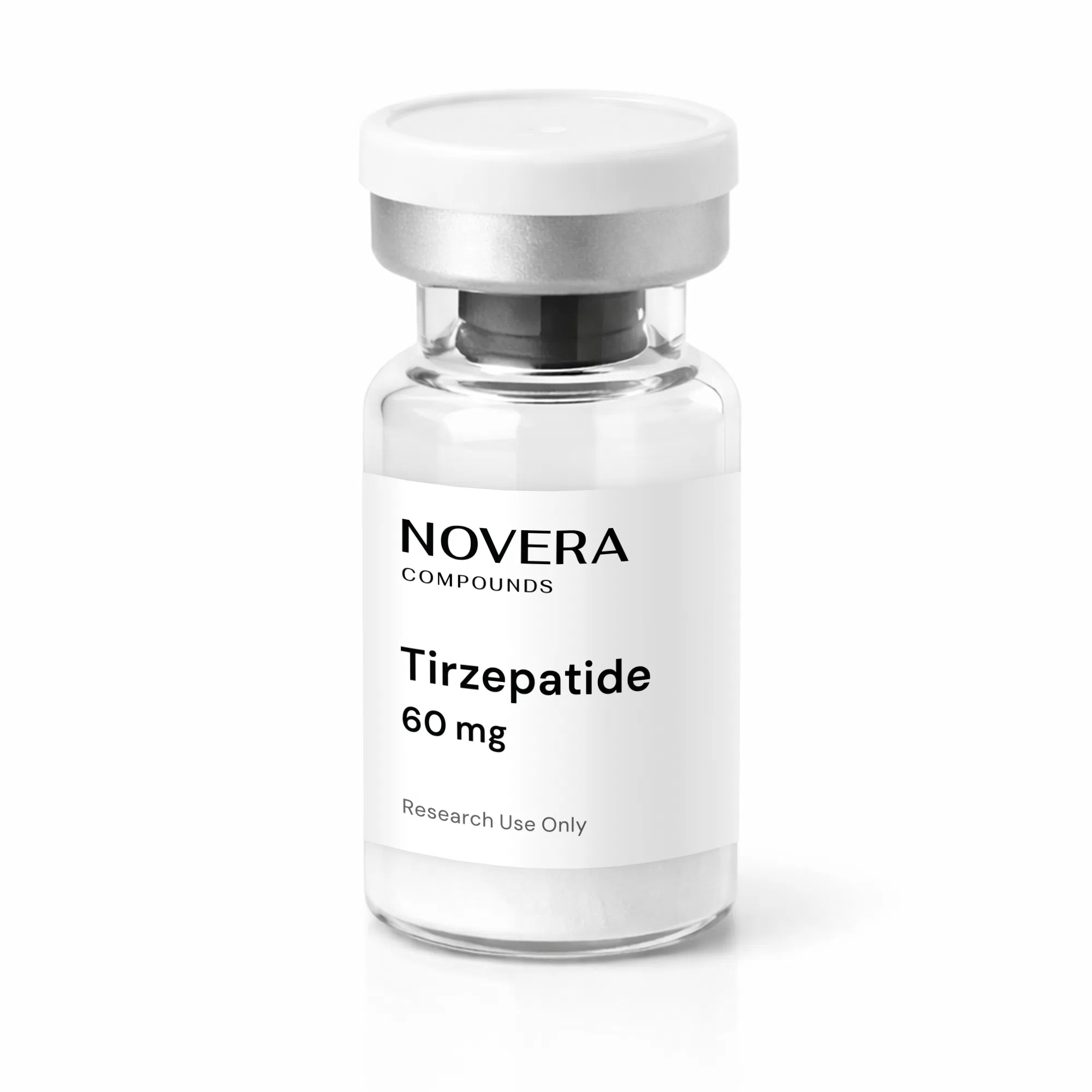
Tirzepatide 60mg
Strength: 60 mg
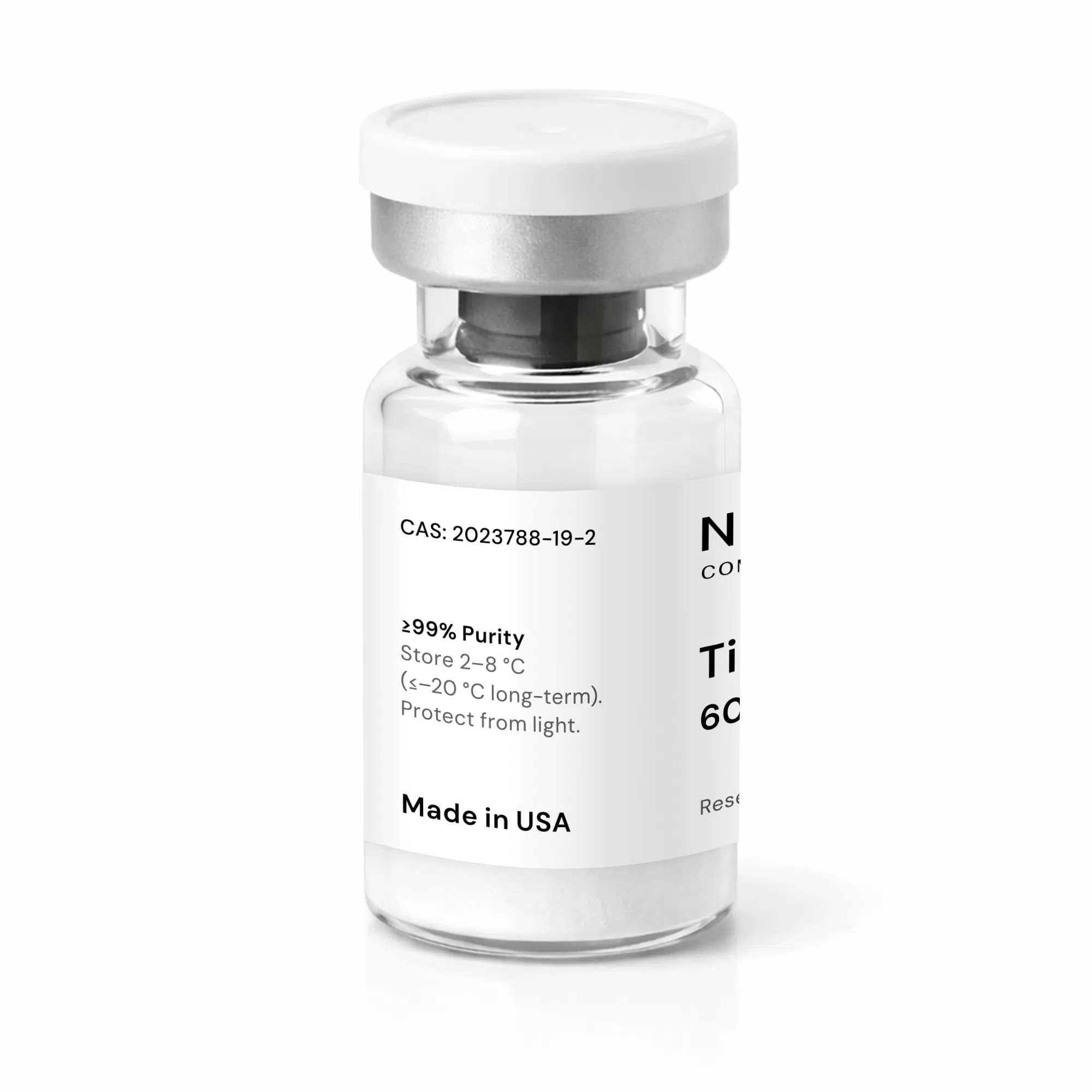
CAS: 2023788-19-2
Chemical Formula: C₂₂₅H₃₄₈N₄₈O₆₈
Molecular weight: 4813.48 g/mol
Peptide Sequence: Tyr-Aib-Glu-Gly-Thr-Phe-Thr-Ser-Asp-Tyr-Ser-Ile-Aib-Leu-Asp-Lys(C20-linker)-Ile-Ala-Gln-Lys-Ala-Phe-Val-Gln-Trp-Leu-Ile-Ala-Gly-Gly-Pro-Ser-Ser-Gly-Ala-Pro-Pro-Pro-Ser-NH₂
Synonyms: P1206, LY3298176, tirzepatida, tirzepatidum, OYN3CCI6QE
Storage: Store 2–8 °C (≤–20 °C long-term). RT exposure during transport acceptable. Protect from light.
Shelf life: 24 months from the manufacturing date.
Tirzepatide, also known as LY3298176 or P1206, is a synthetic dual receptor–targeted peptide supplied as a high-purity lyophilized powder for laboratory research. It is widely studied in metabolic and endocrine research models to investigate hormone receptor signaling, glucose regulation pathways, and energy balance mechanisms under controlled experimental conditions.v


Why Choose Medica Depot
Shop hundreds of medical products with no minimums and free shipping on large orders.
 400+ products
 No order minimums
 Free shipping
 Loyalty rewards
 Trusted since 2007
 Account manager
 Verified LOT numbers
INFORMATION
What is Tirzepatide (60 mg)?
Tirzepatide (60 mg) is a synthetic peptide designed for advanced research in metabolic and endocrine systems. It acts as a dual agonist of the glucose-dependent insulinotropic polypeptide (GIP) and glucagon-like peptide-1 (GLP-1) receptors in experimental settings. This dual receptor targeting enables researchers to examine the integrated role of incretin signaling in coordinating metabolic pathways and cellular communication.
The peptide is engineered with specific amino acid substitutions, including α-aminoisobutyric acid (Aib) residues, along with a C20 fatty acid side-chain modification. These modifications enhance its resistance to enzymatic breakdown and facilitate prolonged receptor interaction, making it suitable for sustained signaling studies compared to natural incretin hormones.
The 60 mg format is optimized for large-scale experimental programs, repeated assay validation, and extended multi-phase research requiring consistent peptide availability. This product is intended strictly for laboratory research use.
Product Specifications
- Synonyms: LY3298176, P1206, tirzepatida, tirzepatidum
- CAS Number: 2023788-19-2
- Molecular Formula: C₂₂₅H₃₄₈N₄₈O₆₈
- Molecular Weight:48 g/mol
- Peptide Sequence:
Tyr-Aib-Glu-Gly-Thr-Phe-Thr-Ser-Asp-Tyr-Ser-Ile-Aib-Leu-Asp-Lys-Ile-Ala-Gln-Lys(C20)-Ala-Phe-Val-Gln-Trp-Leu-Ile-Ala-Gly-Gly-Pro-Ser-Ser-Gly-Ala-Pro-Pro-Pro-Ser-NH₂ - Purity: ≥95% (verified by HPLC and mass spectrometry)
- Packaging Format: 60 mg lyophilized powder in a sealed research-grade vial
- Storage Conditions: Store 2–8 °C (≤–20 °C long term). Protect from light.
- Intended Use: For Laboratory Research Use Only
Key Characteristics of Tirzepatide (60 mg)
- Synthetic dual incretin receptor agonist designed for metabolic research
- Targets both GIP and GLP-1 receptors for integrated signaling studies
- C20 fatty acid side-chain modification enhances molecular stability and receptor interaction
- Amino acid substitutions improve resistance to enzymatic degradation
- High analytical purity confirmed by HPLC and mass spectrometry
- Supplied as a lyophilized powder to preserve molecular integrity before reconstitution
- Ideal for in vitro assays and preclinical metabolic research models
How Tirzepatide (60 mg) Supports Research
Tirzepatide (60 mg) is employed in laboratory research to study dual receptor signaling. By engaging both GIP and GLP-1 receptors, it enables the investigation of coordinated intracellular signaling events, such as cyclic AMP (cAMP) activation, and the modulation of metabolic pathways.
Researchers incorporate Tirzepatide into cellular assays and preclinical models to study receptor binding dynamics, hormone-receptor communication, and integrated metabolic signaling. Its structural stability allows for sustained receptor engagement and comparative analysis with single-pathway incretin analogs under controlled experimental conditions.
Research Applications & Usage Information
Experts typically use Tirzepatide (60 mg) in laboratory research involving:
- Dual GIP and GLP-1 receptor signaling investigations
- Glucose metabolism and endocrine communication studies
- Energy balance and metabolic pathway modeling
- Cellular signal transduction and second-messenger pathway analysis
- Comparative research of long-acting incretin analogs
- Preclinical metabolic disorder models
- Hormone-receptor interaction and pharmacodynamic research
All applications are investigational and restricted to controlled laboratory research environments.
Handling and Storage Recommendations
- Store 2–8 °C (≤–20 °C for long-term storage). Protect from light exposure.
- Keep vials tightly sealed and protected from moisture until reconstitution.
- Allow the vial to equilibrate before opening to minimize exposure to condensation.
- After reconstitution, store solutions at 2–8 °C according to laboratory protocol.
- Avoid repeated freeze-thaw cycles to support research applications.
- Use sterile laboratory techniques during preparation and experimentation.
Research Use Only Notice
This product is intended for laboratory research use only and is not approved for human or veterinary use. It is not intended for diagnostic, therapeutic, or clinical applications. Any reference to biological activity or potential effects is based solely on preclinical or in vitro findings and should not be interpreted as validated clinical outcomes. Researchers are responsible for ensuring proper handling, storage, and disposal in accordance with institutional, federal, and international guidelines.
References
- Willard FS, Douros JD, Gabe MB, et al. Tirzepatide is an imbalanced and biased dual GIP and GLP-1 receptor agonist. JCI Insight. 2020;5(17):e140532. Published 2020 Sep 3. doi:10.1172/jci.insight.140532
- Fisman EZ, Tenenbaum A. The dual glucose-dependent insulinotropic polypeptide (GIP) and glucagon-like peptide-1 (GLP-1) receptor agonist tirzepatide: a novel cardiometabolic therapeutic prospect. Cardiovasc Diabetol. 2021;20(1):225. Published 2021 Nov 24. doi:10.1186/s12933-021-01412-5
- Coskun T, Sloop KW, Loghin C, et al. LY3298176, a novel dual GIP and GLP-1 receptor agonist for the treatment of type 2 diabetes mellitus: From discovery to clinical proof of concept. Mol Metab. 2018;18:3-14. doi:10.1016/j.molmet.2018.09.009
What is Tirzepatide (60 mg)?
Tirzepatide (60 mg) is a synthetic peptide designed for advanced research in metabolic and endocrine systems. It acts as a dual agonist of the glucose-dependent insulinotropic polypeptide (GIP) and glucagon-like peptide-1 (GLP-1) receptors in experimental settings. This dual receptor targeting enables researchers to examine the integrated role of incretin signaling in coordinating metabolic pathways and cellular communication.
The peptide is engineered with specific amino acid substitutions, including α-aminoisobutyric acid (Aib) residues, along with a C20 fatty acid side-chain modification. These modifications enhance its resistance to enzymatic breakdown and facilitate prolonged receptor interaction, making it suitable for sustained signaling studies compared to natural incretin hormones.
The 60 mg format is optimized for large-scale experimental programs, repeated assay validation, and extended multi-phase research requiring consistent peptide availability. This product is intended strictly for laboratory research use.
Product Specifications
- Synonyms: LY3298176, P1206, tirzepatida, tirzepatidum
- CAS Number: 2023788-19-2
- Molecular Formula: C₂₂₅H₃₄₈N₄₈O₆₈
- Molecular Weight:48 g/mol
- Peptide Sequence:
Tyr-Aib-Glu-Gly-Thr-Phe-Thr-Ser-Asp-Tyr-Ser-Ile-Aib-Leu-Asp-Lys-Ile-Ala-Gln-Lys(C20)-Ala-Phe-Val-Gln-Trp-Leu-Ile-Ala-Gly-Gly-Pro-Ser-Ser-Gly-Ala-Pro-Pro-Pro-Ser-NH₂ - Purity: ≥95% (verified by HPLC and mass spectrometry)
- Packaging Format: 60 mg lyophilized powder in a sealed research-grade vial
- Storage Conditions: Store 2–8 °C (≤–20 °C long term). Protect from light.
- Intended Use: For Laboratory Research Use Only
Key Characteristics of Tirzepatide (60 mg)
- Synthetic dual incretin receptor agonist designed for metabolic research
- Targets both GIP and GLP-1 receptors for integrated signaling studies
- C20 fatty acid side-chain modification enhances molecular stability and receptor interaction
- Amino acid substitutions improve resistance to enzymatic degradation
- High analytical purity confirmed by HPLC and mass spectrometry
- Supplied as a lyophilized powder to preserve molecular integrity before reconstitution
- Ideal for in vitro assays and preclinical metabolic research models
How Tirzepatide (60 mg) Supports Research
Tirzepatide (60 mg) is employed in laboratory research to study dual receptor signaling. By engaging both GIP and GLP-1 receptors, it enables the investigation of coordinated intracellular signaling events, such as cyclic AMP (cAMP) activation, and the modulation of metabolic pathways.
Researchers incorporate Tirzepatide into cellular assays and preclinical models to study receptor binding dynamics, hormone-receptor communication, and integrated metabolic signaling. Its structural stability allows for sustained receptor engagement and comparative analysis with single-pathway incretin analogs under controlled experimental conditions.
Research Applications & Usage Information
Experts typically use Tirzepatide (60 mg) in laboratory research involving:
- Dual GIP and GLP-1 receptor signaling investigations
- Glucose metabolism and endocrine communication studies
- Energy balance and metabolic pathway modeling
- Cellular signal transduction and second-messenger pathway analysis
- Comparative research of long-acting incretin analogs
- Preclinical metabolic disorder models
- Hormone-receptor interaction and pharmacodynamic research
All applications are investigational and restricted to controlled laboratory research environments.
Handling and Storage Recommendations
- Store 2–8 °C (≤–20 °C for long-term storage). Protect from light exposure.
- Keep vials tightly sealed and protected from moisture until reconstitution.
- Allow the vial to equilibrate before opening to minimize exposure to condensation.
- After reconstitution, store solutions at 2–8 °C according to laboratory protocol.
- Avoid repeated freeze-thaw cycles to support research applications.
- Use sterile laboratory techniques during preparation and experimentation.
Research Use Only Notice
This product is intended for laboratory research use only and is not approved for human or veterinary use. It is not intended for diagnostic, therapeutic, or clinical applications. Any reference to biological activity or potential effects is based solely on preclinical or in vitro findings and should not be interpreted as validated clinical outcomes. Researchers are responsible for ensuring proper handling, storage, and disposal in accordance with institutional, federal, and international guidelines.
References
- Willard FS, Douros JD, Gabe MB, et al. Tirzepatide is an imbalanced and biased dual GIP and GLP-1 receptor agonist. JCI Insight. 2020;5(17):e140532. Published 2020 Sep 3. doi:10.1172/jci.insight.140532
- Fisman EZ, Tenenbaum A. The dual glucose-dependent insulinotropic polypeptide (GIP) and glucagon-like peptide-1 (GLP-1) receptor agonist tirzepatide: a novel cardiometabolic therapeutic prospect. Cardiovasc Diabetol. 2021;20(1):225. Published 2021 Nov 24. doi:10.1186/s12933-021-01412-5
- Coskun T, Sloop KW, Loghin C, et al. LY3298176, a novel dual GIP and GLP-1 receptor agonist for the treatment of type 2 diabetes mellitus: From discovery to clinical proof of concept. Mol Metab. 2018;18:3-14. doi:10.1016/j.molmet.2018.09.009
Related products