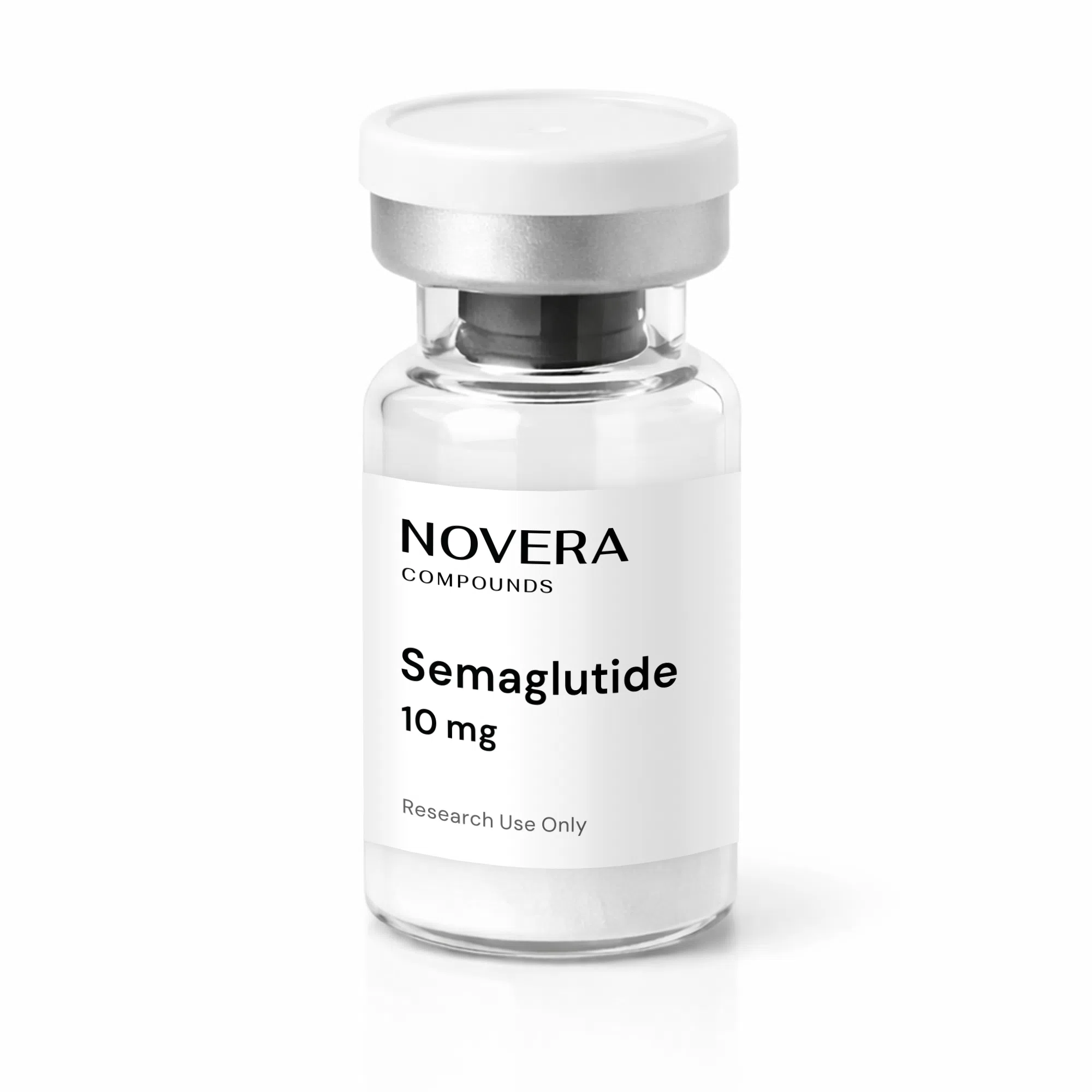
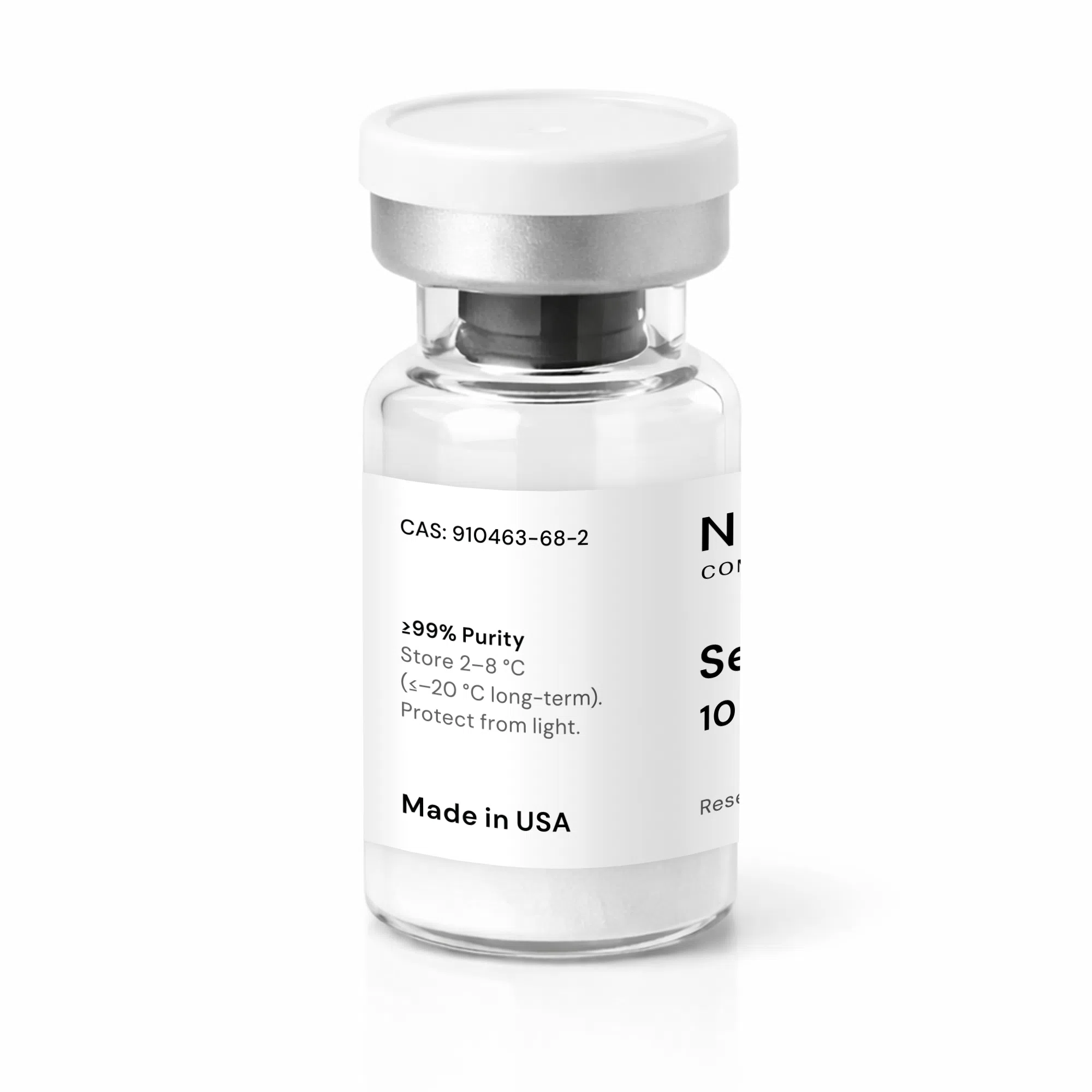
Semaglutide 10mg
Strength: 10 mg
CAS: 910463-68-2
Chemical Formula: C₁₈₇H₂₉₁N₄₅O₅₉
Molecular weight: 4113.6 g/mol
Peptide Sequence: H-His-Aib-Glu-Gly-Thr-Phe-Thr-Ser-Asp-Val-Ser-Ser-Tyr-Leu-Glu-Gly-Gln-Ala-Ala-Lys(AEEAc-AEEAc-γ-Glu-17-carboxyheptadecanoyl)-Glu-Phe-Ile-Ala-Trp-Leu-Val-Arg-Gly-OH
Synonyms: NN9535
Storage: Store 2–8 °C (≤–20 °C long-term). RT exposure during transport acceptable. Protect from light.
Shelf life: 24 months from the manufacturing date.
Semaglutide is a synthetic GLP-1 receptor agonist analog supplied as a high-purity lyophilized peptide for laboratory research. It is widely studied in metabolic and endocrine research models to investigate glucose regulation, hormone signaling, and receptor-mediated cellular responses under controlled experimental conditions.


Why Choose Medica Depot
Shop hundreds of medical products with no minimums and free shipping on large orders.
 400+ products
 No order minimums
 Free shipping
 Loyalty rewards
 Trusted since 2007
 Account manager
 Verified LOT numbers
INFORMATION
What is Semaglutide (10 mg)?
Semaglutide (10 mg) is a synthetic peptide commonly studied in metabolic and endocrine research. It is a modified analog of glucagon-like peptide-1 (GLP-1), a naturally occurring incretin hormone involved in glucose signaling and energy regulation.
This peptide contains specific amino acid substitutions and a fatty acid side-chain modification that enhance its stability and prolong receptor interaction in experimental systems. These modifications make Semaglutide suitable for studying sustained GLP-1 receptor activation and downstream signaling, unlike native GLP-1, which is rapidly degraded under physiological conditions.
Product Specifications
- CAS Number: 910463-68-2
- Synonym: NN9535
- Peptide Sequence: H-His-Aib-Glu-Gly-Thr-Phe-Thr-Ser-Asp-Val-Ser-Ser-Tyr-Leu-Glu-Gly-Gln-Ala-Ala-Lys(AEEAc-AEEAc-γ-Glu-17-carboxyheptadecanoyl)-Glu-Phe-Ile-Ala-Trp-Leu-Val-Arg-Gly-OH
- Molecular Formula: C₁₈₇H₂₉₁N₄₅O₅₉
- Molecular Weight:6 g/mol
- Purity: ≥95% (verified by HPLC and mass spectrometry)
- Packaging Format: 10 mg lyophilized powder in a sealed research-grade vial
- Storage Conditions: Store 2–8 °C (≤–20 °C long term). Protect from light.
- Intended Use: For Laboratory Research Use Only
Key Characteristics of Semaglutide (10 mg)
- Synthetic GLP-1 receptor agonist analog developed for controlled research use
- Structurally modified to resist enzymatic degradation in experimental models
- Fatty acid conjugation supports prolonged receptor interaction in vitro
- High analytical purity confirmed using HPLC and mass spectrometry
- Supplied as a lyophilized powder to preserve structural integrity before reconstitution
- Suitable for metabolic, endocrine, and receptor signaling studies
- Compatible with standard peptide preparation and analytical laboratory procedures
How Semaglutide (10 mg) Supports Research
Semaglutide (10 mg) is used in research to study GLP-1 receptor–mediated signaling and related metabolic pathways. Researchers use this peptide to examine receptor binding, second-messenger activation (e.g., cAMP signaling), and changes in protein expression under controlled conditions.
Thanks to its structural stability, Semaglutide allows for the study of sustained receptor engagement and prolonged signaling activity. This makes it useful for evaluating time-dependent responses, receptor desensitization, and comparative analysis of GLP-1 analogs in cellular and preclinical research models.
Research Applications & Usage Information
Semaglutide (10 mg) is commonly used in laboratory research focused on:
- GLP-1 receptor activation and binding assays
- Incretin hormone signaling pathway investigations
- Studies of glucose metabolism and endocrine communication
- Cellular signaling and protein phosphorylation analysis
- Comparative research on long-acting peptide analogs
- Preclinical metabolic model development
All uses are investigational and restricted to controlled in vitro or preclinical research settings.
Handling and Storage Recommendations
- Store at 2–8 °C (≤–20 °C for long-term storage). Protect from light.
- Keep the vial tightly sealed until ready for use.
- Minimize exposure to moisture and direct light during handling.
- Allow the vial to equilibrate before opening to reduce condensation.
- After reconstitution, store solutions at 2–8 °C according to laboratory protocols.
- Avoid repeated freeze-thaw cycles to support research applications.
Research Use Only Notice
This product is intended for laboratory research use only and is not approved for human or veterinary use. It is not intended for diagnostic, therapeutic, or clinical applications. Any reference to biological activity or potential effects is based solely on preclinical or in-vitro findings and should not be interpreted as validated clinical outcomes. Researchers are responsible for ensuring proper handling, storage, and disposal in accordance with institutional, federal, and international guidelines.
References
- Lau J, Bloch P, Schäffer L, et al. Discovery of the Once-Weekly Glucagon-Like Peptide-1 (GLP-1) Analogue Semaglutide. J Med Chem. 2015;58(18):7370-7380. doi:10.1021/acs.jmedchem.5b00726
- Loomba R, Abdelmalek MF, Armstrong MJ, et al. Semaglutide 2·4 mg once weekly in patients with non-alcoholic steatohepatitis-related cirrhosis: a randomised, placebo-controlled phase 2 trial. Lancet Gastroenterol Hepatol. 2023;8(6):511-522. doi:10.1016/S2468-1253(23)00068-7
- Knudsen LB, Lau J. The Discovery and Development of Liraglutide and Semaglutide. Front Endocrinol (Lausanne). 2019;10:155. Published 2019 Apr 12. doi:10.3389/fendo.2019.00155
What is Semaglutide (10 mg)?
Semaglutide (10 mg) is a synthetic peptide commonly studied in metabolic and endocrine research. It is a modified analog of glucagon-like peptide-1 (GLP-1), a naturally occurring incretin hormone involved in glucose signaling and energy regulation.
This peptide contains specific amino acid substitutions and a fatty acid side-chain modification that enhance its stability and prolong receptor interaction in experimental systems. These modifications make Semaglutide suitable for studying sustained GLP-1 receptor activation and downstream signaling, unlike native GLP-1, which is rapidly degraded under physiological conditions.
Product Specifications
- CAS Number: 910463-68-2
- Synonym: NN9535
- Peptide Sequence: H-His-Aib-Glu-Gly-Thr-Phe-Thr-Ser-Asp-Val-Ser-Ser-Tyr-Leu-Glu-Gly-Gln-Ala-Ala-Lys(AEEAc-AEEAc-γ-Glu-17-carboxyheptadecanoyl)-Glu-Phe-Ile-Ala-Trp-Leu-Val-Arg-Gly-OH
- Molecular Formula: C₁₈₇H₂₉₁N₄₅O₅₉
- Molecular Weight:6 g/mol
- Purity: ≥95% (verified by HPLC and mass spectrometry)
- Packaging Format: 10 mg lyophilized powder in a sealed research-grade vial
- Storage Conditions: Store 2–8 °C (≤–20 °C long term). Protect from light.
- Intended Use: For Laboratory Research Use Only
Key Characteristics of Semaglutide (10 mg)
- Synthetic GLP-1 receptor agonist analog developed for controlled research use
- Structurally modified to resist enzymatic degradation in experimental models
- Fatty acid conjugation supports prolonged receptor interaction in vitro
- High analytical purity confirmed using HPLC and mass spectrometry
- Supplied as a lyophilized powder to preserve structural integrity before reconstitution
- Suitable for metabolic, endocrine, and receptor signaling studies
- Compatible with standard peptide preparation and analytical laboratory procedures
How Semaglutide (10 mg) Supports Research
Semaglutide (10 mg) is used in research to study GLP-1 receptor–mediated signaling and related metabolic pathways. Researchers use this peptide to examine receptor binding, second-messenger activation (e.g., cAMP signaling), and changes in protein expression under controlled conditions.
Thanks to its structural stability, Semaglutide allows for the study of sustained receptor engagement and prolonged signaling activity. This makes it useful for evaluating time-dependent responses, receptor desensitization, and comparative analysis of GLP-1 analogs in cellular and preclinical research models.
Research Applications & Usage Information
Semaglutide (10 mg) is commonly used in laboratory research focused on:
- GLP-1 receptor activation and binding assays
- Incretin hormone signaling pathway investigations
- Studies of glucose metabolism and endocrine communication
- Cellular signaling and protein phosphorylation analysis
- Comparative research on long-acting peptide analogs
- Preclinical metabolic model development
All uses are investigational and restricted to controlled in vitro or preclinical research settings.
Handling and Storage Recommendations
- Store at 2–8 °C (≤–20 °C for long-term storage). Protect from light.
- Keep the vial tightly sealed until ready for use.
- Minimize exposure to moisture and direct light during handling.
- Allow the vial to equilibrate before opening to reduce condensation.
- After reconstitution, store solutions at 2–8 °C according to laboratory protocols.
- Avoid repeated freeze-thaw cycles to support research applications.
Research Use Only Notice
This product is intended for laboratory research use only and is not approved for human or veterinary use. It is not intended for diagnostic, therapeutic, or clinical applications. Any reference to biological activity or potential effects is based solely on preclinical or in-vitro findings and should not be interpreted as validated clinical outcomes. Researchers are responsible for ensuring proper handling, storage, and disposal in accordance with institutional, federal, and international guidelines.
References
- Lau J, Bloch P, Schäffer L, et al. Discovery of the Once-Weekly Glucagon-Like Peptide-1 (GLP-1) Analogue Semaglutide. J Med Chem. 2015;58(18):7370-7380. doi:10.1021/acs.jmedchem.5b00726
- Loomba R, Abdelmalek MF, Armstrong MJ, et al. Semaglutide 2·4 mg once weekly in patients with non-alcoholic steatohepatitis-related cirrhosis: a randomised, placebo-controlled phase 2 trial. Lancet Gastroenterol Hepatol. 2023;8(6):511-522. doi:10.1016/S2468-1253(23)00068-7
- Knudsen LB, Lau J. The Discovery and Development of Liraglutide and Semaglutide. Front Endocrinol (Lausanne). 2019;10:155. Published 2019 Apr 12. doi:10.3389/fendo.2019.00155
Related products