Selank 10mg
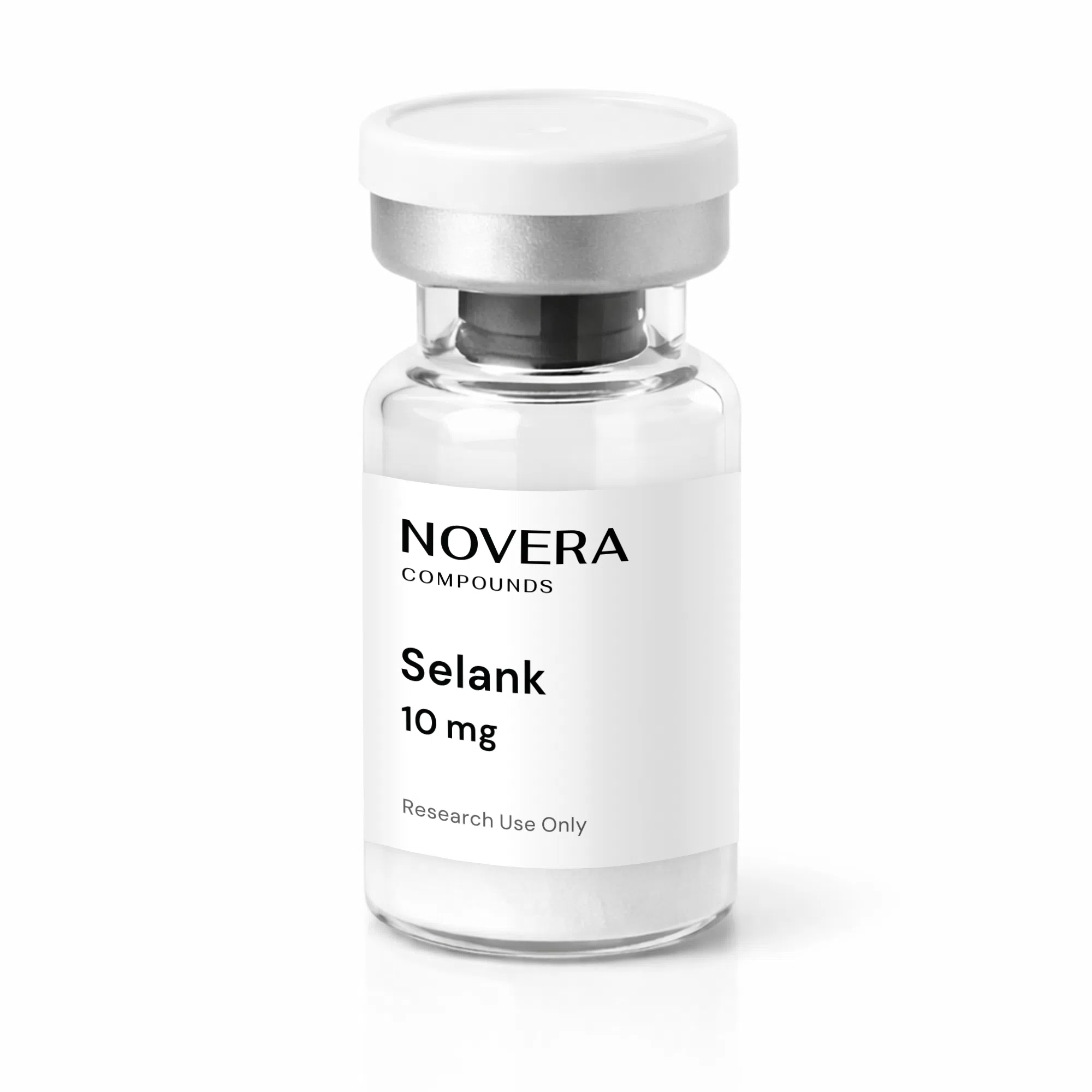
Strength: 10 mg
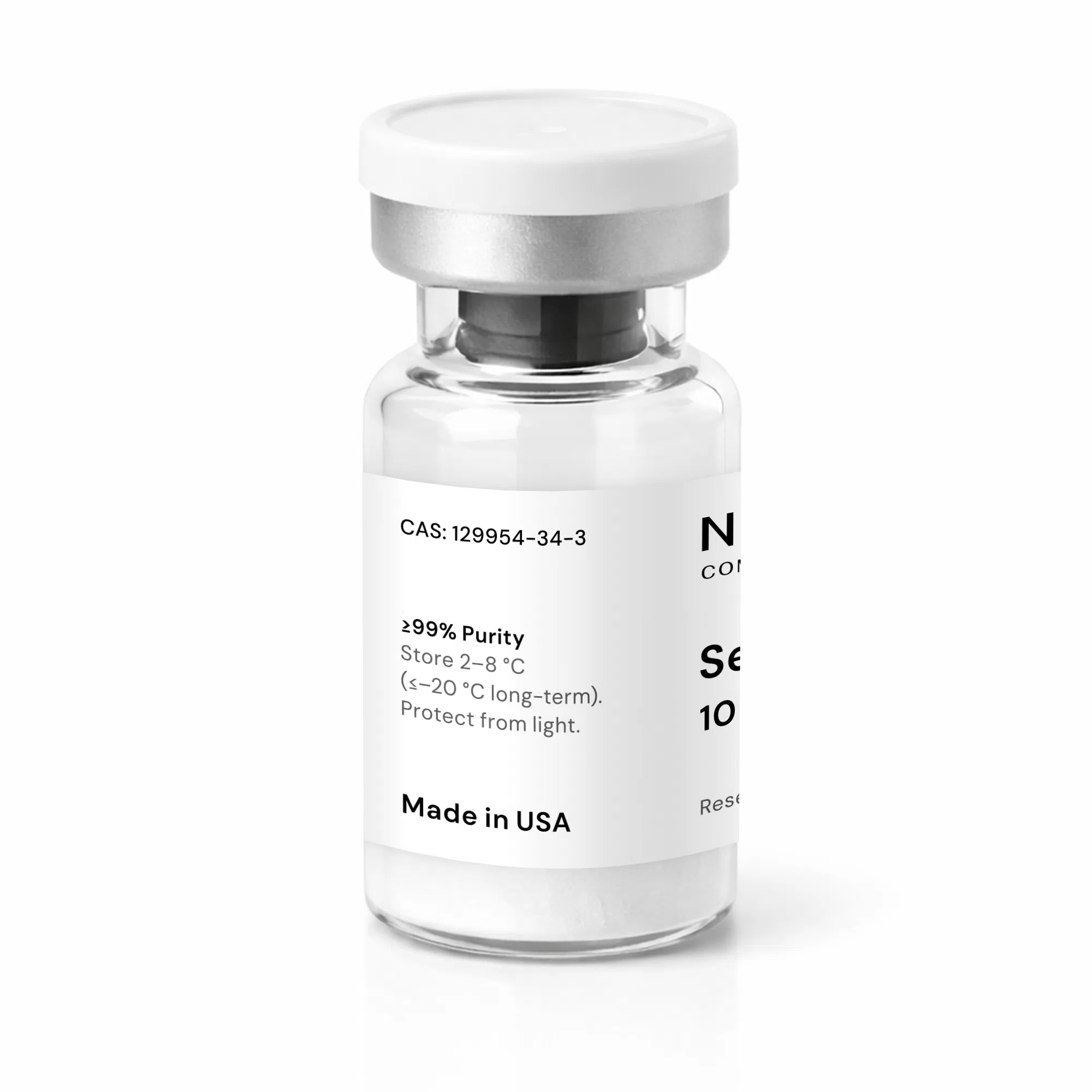
CAS: 129954-34-3
Chemical Formula: C₃₃H₅₇N₁₁O₉
Molecular weight: 751.878 g/mol
Peptide Sequence: Thr-Lys-Pro-Arg-Pro-Gly-Pro
Synonyms: Selanc
Storage: Store 2–8 °C (≤–20 °C long-term). RT exposure during transport acceptable. Protect from light.
Shelf life: 24 months from the manufacturing date.
Selank is a synthetic heptapeptide derived from tuftsin, a natural immune signal, used in brain and cognitive research. Research suggests it may influence brain-calming signals (GABA), mood chemicals, growth factors for brain cells (BDNF), and immune signals, such as IL-6, in animal stress studies.


Why Choose Medica Depot
Shop hundreds of medical products with no minimums and free shipping on large orders.
 400+ products
 No order minimums
 Free shipping
 Loyalty rewards
 Trusted since 2007
 Account manager
 Verified LOT numbers
INFORMATION
What is Selank (10 mg)?
Selank (10 mg) is a synthetic heptapeptide (7 amino acids) with the sequence Thr-Lys-Pro-Arg-Pro-Gly-Pro (TKPRPGP). It was developed from tuftsin, an endogenous peptide found in human immune systems, and is often studied in the context of brain function, cognitive processes, and nootropic research.
In laboratory research, Selank (also known as Selanc) is used to explore how it affects neurochemical signaling, gene expression, and the interactions between the brain and immune system.
Research has primarily focused on pathways related to GABAergic signaling, serotonin systems, brain-derived neurotrophic factor (BDNF), and cytokine signaling, particularly in models of stress and cognition.
Product Specifications
- Peptide Sequence: Thr-Lys-Pro-Arg-Pro-Gly-Pro
- Chemical Formula: C₃₃H₅₇N₁₁O₉
- Molecular Weight: 751.878 g/mol
- CAS Number: 129954-34-3
- Purity: Supplied as a research-grade synthetic peptide, typically ≥98–99% by HPLC. Identity and molecular mass are typically confirmed with HPLC and mass spectrometry. Lot-specific results are provided in the certificate of analysis (COA).
- Packaging Format: 10 mg lyophilized (freeze-dried) Selank in a sealed vial, suitable for preparing controlled stocks for in vitro assays or qualified preclinical studies.
- Storage Conditions: Store at −20 °C, protected from light and moisture. Avoid repeated temperature cycling to help maintain stability.
- Intended Use: For laboratory research use only; not for human or veterinary use.
Key Characteristics of Selank (10 mg)
- Tuftsin-based heptapeptide: Structurally related to tuftsin, a peptide involved in immune regulation, with a glyproline (PGP) motif that contributes to its stability and potential relevance for central nervous system (CNS) studies.
- GABAergic gene-expression effects: Studies have shown that Selank can influence the expression of GABA_A receptor subunits and related neurotransmission proteins in the brain, supporting its role in regulating the GABAergic system.
- Monoamines and neurotrophic factors: In preclinical studies, Selank has been shown to affect monoamine systems (including serotonin) and increase BDNF expression in brain regions like the hippocampus.
- Neuroimmune modulation: Selank is studied for its effects on immune signaling, including changes in IL-6 expression and shifts in cytokine balance, providing insights into neuroimmune interactions.
- Reproducible research format: The lyophilized form, with supporting batch documentation, ensures consistency across gene expression, signaling, and immune modulation studies.
How Selank (10 mg) Supports Research
Selank (10 mg) is used as a research tool to study the connection between neurochemical signaling and immune responses. Researchers use it to explore how Selank influences GABA-related gene regulation, serotonin pathways, neurotrophic signaling (like BDNF), and cytokines such as IL-6.
These studies help investigate how Selank may impact brain function, stress responses, cognition, and neuroimmune regulation in preclinical models—without implying any therapeutic use.
Research Applications & Usage Information
- Neurotransmission and GABAergic Signaling: Used in rodent brain studies to evaluate changes in the expression of GABA_A receptor subunits, GABA transporters, and other neurotransmission-related genes. This includes studies using intranasal delivery methods, which have been explored in the literature.
- Monoamine and Neurotrophic Pathways: Applied in experiments to assess their effects on serotonin metabolism and BDNF expression in brain regions such as the hippocampus and frontal cortex, particularly in models involving stress and ethanol exposure.
- Neuroimmune and Cytokine Signaling: Used in in vitro and in vivo studies, Selank is used to investigate its effects on IL-6 and other cytokines, the Th1/Th2 balance, and broader immune-gene transcription patterns in both brain and peripheral tissues.
- Enkephalinase and Peptidase Activity: Included in biochemical assays to measure the activity of enkephalin-degrading enzymes, helping to explore their potential impact on peptide turnover and receptor-ligand availability.
- Systems-Level Gene-Expression Profiling: Used in transcriptomic approaches to profile neurotransmission- and immune-related genes, mapping Selank-responsive signaling networks in both brain and immune tissues.
Note: Study parameters (e.g., concentration, exposure time, route, controls, and model choice) must be defined by qualified investigators under applicable ethics and regulatory requirements. No dosing or clinical recommendations are provided or implied.
Handling and Storage Recommendations
- Store the sealed vial at −20 °C, protected from light and moisture.
- Let the vial reach room temperature before opening to reduce condensation.
- Use standard laboratory personal protective equipment (PPE) and follow good laboratory practices when handling bioactive peptides.
- When preparing research solutions, follow your lab’s validated procedures to minimize temperature cycling and ensure stability, labeling, and disposal.
- Dispose of unused material and contaminated consumables according to institutional and regulatory requirements.
Research Use Only Notice
This product is intended for laboratory research use only and is not approved for human or veterinary use. It is not intended for diagnostic, therapeutic, or clinical applications. Any reference to biological activity or potential effects is based solely on preclinical or in‑vitro findings and should not be interpreted as validated clinical outcomes. Researchers are responsible for ensuring proper handling, storage, and disposal in accordance with institutional, federal, and international guidelines.
References
- Volkova A, Shadrina M, Kolomin T, et al. Selank administration affects the expression of some genes involved in GABAergic neurotransmission. Frontiers in Pharmacology. 2016;7:31. doi:10.3389/fphar.2016.00031
- Kolik LG, Nadorova AV, Antipova TA, Kruglov SV, Kudrin VS, Durnev AD. Selank, peptide analogue of tuftsin, protects against Ethanol-Induced memory impairment by regulating of BDNF content in the hippocampus and prefrontal cortex in rats. Bulletin of Experimental Biology and Medicine. 2019;167(5):641-644. doi:10.1007/s10517-019-04588-9
- Kolomin T, Shadrina M, Slominsky P, Limborska S, Myasoedov N. A new generation of drugs: synthetic peptides based on natural regulatory peptides. Neuroscience &Amp Medicine. 2013;04(04):223-252. doi:10.4236/nm.2013.44035
- Zozulya AA, Kost NV, Sokolov OYu, et al. The inhibitory effect of Selank on Enkephalin-Degrading enzymes as a possible mechanism of its anxiolytic activity. Bulletin of Experimental Biology and Medicine. 2001;131(4):315-317. doi:10.1023/a:1017979514274
What is Selank (10 mg)?
Selank (10 mg) is a synthetic heptapeptide (7 amino acids) with the sequence Thr-Lys-Pro-Arg-Pro-Gly-Pro (TKPRPGP). It was developed from tuftsin, an endogenous peptide found in human immune systems, and is often studied in the context of brain function, cognitive processes, and nootropic research.
In laboratory research, Selank (also known as Selanc) is used to explore how it affects neurochemical signaling, gene expression, and the interactions between the brain and immune system.
Research has primarily focused on pathways related to GABAergic signaling, serotonin systems, brain-derived neurotrophic factor (BDNF), and cytokine signaling, particularly in models of stress and cognition.
Product Specifications
- Peptide Sequence: Thr-Lys-Pro-Arg-Pro-Gly-Pro
- Chemical Formula: C₃₃H₅₇N₁₁O₉
- Molecular Weight: 751.878 g/mol
- CAS Number: 129954-34-3
- Purity: Supplied as a research-grade synthetic peptide, typically ≥98–99% by HPLC. Identity and molecular mass are typically confirmed with HPLC and mass spectrometry. Lot-specific results are provided in the certificate of analysis (COA).
- Packaging Format: 10 mg lyophilized (freeze-dried) Selank in a sealed vial, suitable for preparing controlled stocks for in vitro assays or qualified preclinical studies.
- Storage Conditions: Store at −20 °C, protected from light and moisture. Avoid repeated temperature cycling to help maintain stability.
- Intended Use: For laboratory research use only; not for human or veterinary use.
Key Characteristics of Selank (10 mg)
- Tuftsin-based heptapeptide: Structurally related to tuftsin, a peptide involved in immune regulation, with a glyproline (PGP) motif that contributes to its stability and potential relevance for central nervous system (CNS) studies.
- GABAergic gene-expression effects: Studies have shown that Selank can influence the expression of GABA_A receptor subunits and related neurotransmission proteins in the brain, supporting its role in regulating the GABAergic system.
- Monoamines and neurotrophic factors: In preclinical studies, Selank has been shown to affect monoamine systems (including serotonin) and increase BDNF expression in brain regions like the hippocampus.
- Neuroimmune modulation: Selank is studied for its effects on immune signaling, including changes in IL-6 expression and shifts in cytokine balance, providing insights into neuroimmune interactions.
- Reproducible research format: The lyophilized form, with supporting batch documentation, ensures consistency across gene expression, signaling, and immune modulation studies.
How Selank (10 mg) Supports Research
Selank (10 mg) is used as a research tool to study the connection between neurochemical signaling and immune responses. Researchers use it to explore how Selank influences GABA-related gene regulation, serotonin pathways, neurotrophic signaling (like BDNF), and cytokines such as IL-6.
These studies help investigate how Selank may impact brain function, stress responses, cognition, and neuroimmune regulation in preclinical models—without implying any therapeutic use.
Research Applications & Usage Information
- Neurotransmission and GABAergic Signaling: Used in rodent brain studies to evaluate changes in the expression of GABA_A receptor subunits, GABA transporters, and other neurotransmission-related genes. This includes studies using intranasal delivery methods, which have been explored in the literature.
- Monoamine and Neurotrophic Pathways: Applied in experiments to assess their effects on serotonin metabolism and BDNF expression in brain regions such as the hippocampus and frontal cortex, particularly in models involving stress and ethanol exposure.
- Neuroimmune and Cytokine Signaling: Used in in vitro and in vivo studies, Selank is used to investigate its effects on IL-6 and other cytokines, the Th1/Th2 balance, and broader immune-gene transcription patterns in both brain and peripheral tissues.
- Enkephalinase and Peptidase Activity: Included in biochemical assays to measure the activity of enkephalin-degrading enzymes, helping to explore their potential impact on peptide turnover and receptor-ligand availability.
- Systems-Level Gene-Expression Profiling: Used in transcriptomic approaches to profile neurotransmission- and immune-related genes, mapping Selank-responsive signaling networks in both brain and immune tissues.
Note: Study parameters (e.g., concentration, exposure time, route, controls, and model choice) must be defined by qualified investigators under applicable ethics and regulatory requirements. No dosing or clinical recommendations are provided or implied.
Handling and Storage Recommendations
- Store the sealed vial at −20 °C, protected from light and moisture.
- Let the vial reach room temperature before opening to reduce condensation.
- Use standard laboratory personal protective equipment (PPE) and follow good laboratory practices when handling bioactive peptides.
- When preparing research solutions, follow your lab’s validated procedures to minimize temperature cycling and ensure stability, labeling, and disposal.
- Dispose of unused material and contaminated consumables according to institutional and regulatory requirements.
Research Use Only Notice
This product is intended for laboratory research use only and is not approved for human or veterinary use. It is not intended for diagnostic, therapeutic, or clinical applications. Any reference to biological activity or potential effects is based solely on preclinical or in‑vitro findings and should not be interpreted as validated clinical outcomes. Researchers are responsible for ensuring proper handling, storage, and disposal in accordance with institutional, federal, and international guidelines.
References
- Volkova A, Shadrina M, Kolomin T, et al. Selank administration affects the expression of some genes involved in GABAergic neurotransmission. Frontiers in Pharmacology. 2016;7:31. doi:10.3389/fphar.2016.00031
- Kolik LG, Nadorova AV, Antipova TA, Kruglov SV, Kudrin VS, Durnev AD. Selank, peptide analogue of tuftsin, protects against Ethanol-Induced memory impairment by regulating of BDNF content in the hippocampus and prefrontal cortex in rats. Bulletin of Experimental Biology and Medicine. 2019;167(5):641-644. doi:10.1007/s10517-019-04588-9
- Kolomin T, Shadrina M, Slominsky P, Limborska S, Myasoedov N. A new generation of drugs: synthetic peptides based on natural regulatory peptides. Neuroscience &Amp Medicine. 2013;04(04):223-252. doi:10.4236/nm.2013.44035
- Zozulya AA, Kost NV, Sokolov OYu, et al. The inhibitory effect of Selank on Enkephalin-Degrading enzymes as a possible mechanism of its anxiolytic activity. Bulletin of Experimental Biology and Medicine. 2001;131(4):315-317. doi:10.1023/a:1017979514274
Related products