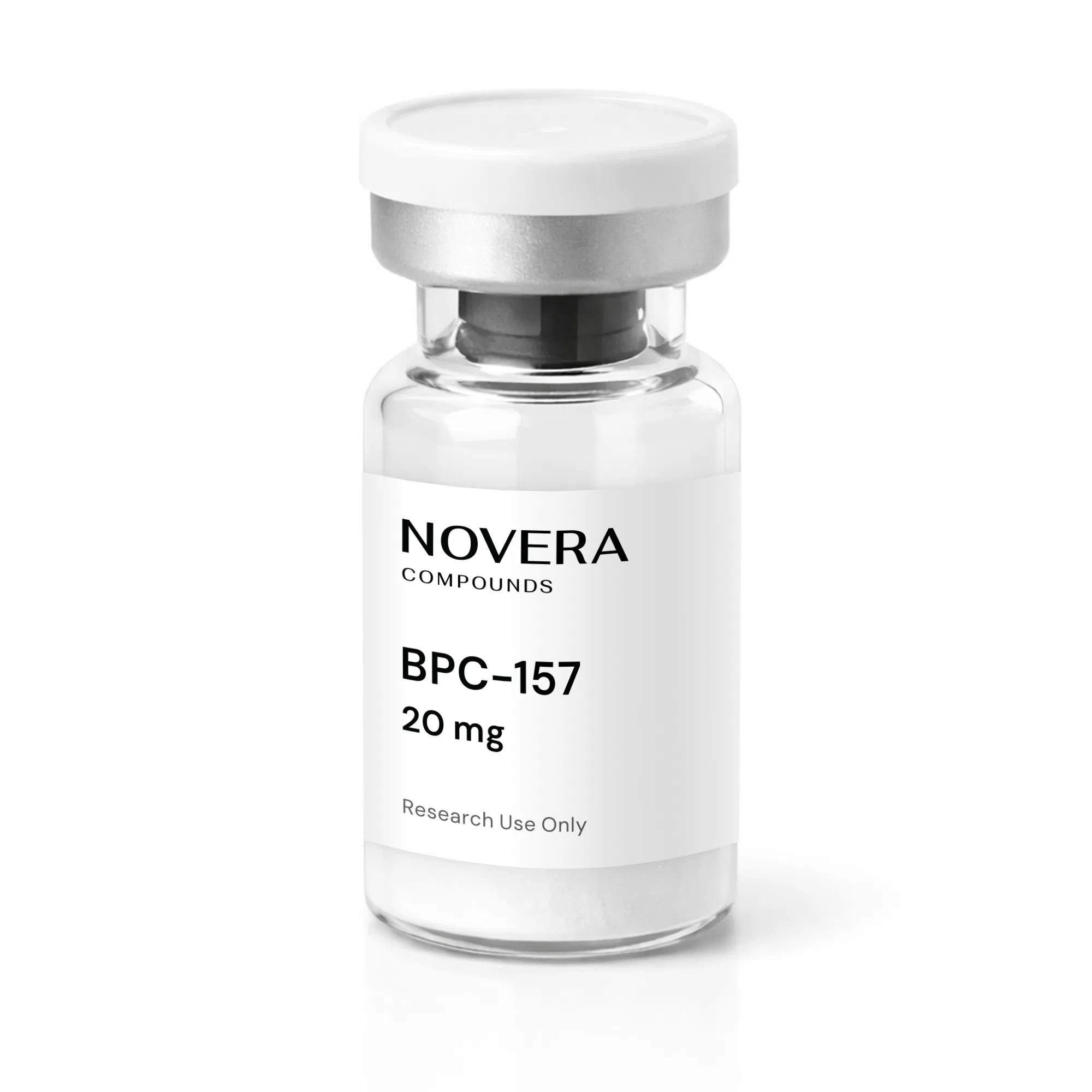
BPC-157 20mg
Strength: 20 mg
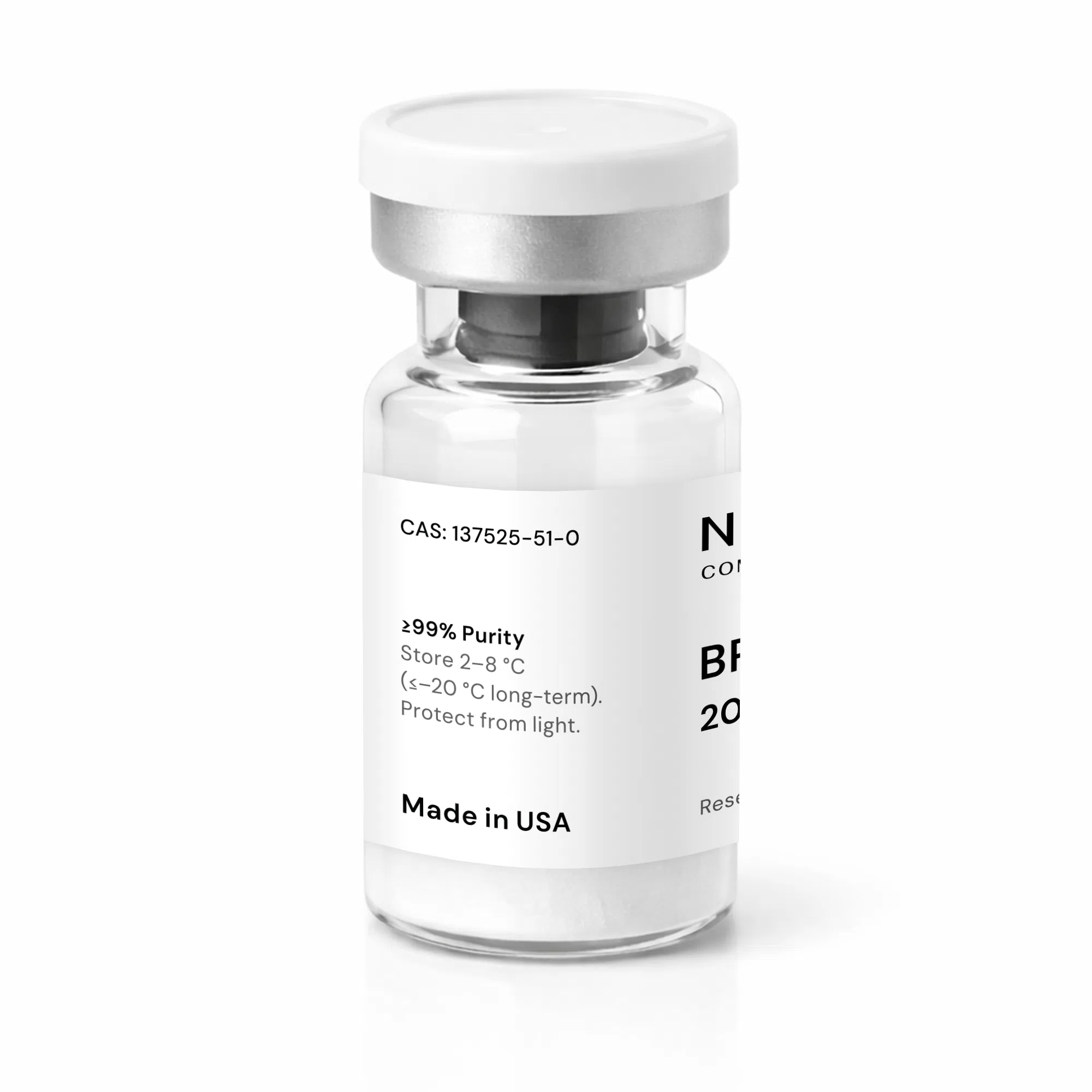
CAS: 137525-51-0
Chemical Formula: C₆₂H₉₈N₁₆O₂₂
Molecular weight: 1419.5 g/mol
Peptide Sequence: Gly-Glu-Pro-Pro-Pro-Gly-Lys-Pro-Ala-Asp-Asp-Ala-Gly-Leu-Val
Synonyms: BPC157, Bepecin
Storage: Store 2–8 °C (≤–20 °C long-term). RT exposure during transport acceptable. Protect from light.
Shelf life: 24 months from the manufacturing date.
BPC 157 is a synthetic research peptide used in laboratory and preclinical studies to explore peptide driven cellular signaling, tissue integrity, and adaptive biological responses. Supplied as a high purity lyophilized powder, it is intended solely for laboratory research use.


Why Choose Medica Depot
Shop hundreds of medical products with no minimums and free shipping on large orders.
 400+ products
 No order minimums
 Free shipping
 Loyalty rewards
 Trusted since 2007
 Account manager
 Verified LOT numbers
INFORMATION
What is BPC-157 (20mg)?
BPC-157 (Body Protection Compound-157) is a short 15-amino-acid synthetic peptide widely used in preclinical research to examine how tissues respond to experimentally induced stress or injury in controlled laboratory models.
Derived from a fragment of a naturally occurring gastric protein, BPC-157 is used as a research tool to explore how peptides interact with cellular systems involved in maintenance and response processes.
Product Specifications
- Peptide Name: BPC-157
- Category: Peptides
- Subcategory: Healing & Regenerative Peptides
- CAS Number: 137525-51-0
- Peptide Sequence: Gly–Glu–Pro–Pro–Pro–Gly–Lys–Pro–Ala–Asp–Asp–Ala–Gly–Leu–Val
- Molecular Formula: C₆₂H₉₈N₁₆O₂₂
- Molecular Weight: 53 g/mol
- Purity: ≥99% (HPLC‑verified; identity confirmed by standard analytical methods)
- Packaging Format: 20 mg lyophilized (freeze‑dried) powder in a sealed research‑use vial
- Storage Conditions: Store at 2–8 °C (≤ –20 °C for long-term storage). Protect from light.
- Intended Use: For laboratory research use only; not for human or veterinary use
Key Characteristics of BPC-157 (20mg)
- Supplied as a high-purity, lyophilized research peptide
- Defined amino acid sequence supports consistent and reproducible experimental outcomes
- Commonly used in cell-based and tissue-focused research models
- Higher total peptide content supports extended or multi-phase experimental workflows
- Stable under recommended storage conditions
- Compatible with standard laboratory peptide handling and reconstitution protocols
- Used in non-clinical research contexts to investigate biological responses linked to tissue organization, vascular behavior, and signaling pathways, including endpoints such as cell migration, barrier integrity markers, and extracellular-matrix-related readouts in preclinical models.
How BPC-157 (20mg) Supports Research
In research settings, BPC-157 is used to study peptide-driven cellular communication and signaling. Researchers utilize this peptide to observe how cells respond to signaling cues, structural stress, and environmental changes within controlled laboratory systems, particularly in models of tissue disruption or barrier compromise.
Its role in research is exploratory and focused on mechanistic understanding, rather than producing therapeutic outcomes.
Research Applications & Usage Information
BPC-157 (20 mg) is generally used in laboratory research for:
- Studies of cellular signaling and communication, focusing on peptide-mediated signaling changes.
- Tissue-related and regenerative research models, where structural integrity, matrix remodeling, or barrier function are endpoints.
- Exploratory investigations of peptide–protein interactions in cell and tissue systems.
- Comparative studies involving repair-associated peptides in preclinical models.
- Preclinical research examining cellular adaptation and response to experimentally induced stress or injury.
All use is restricted to in-vitro and preclinical research settings.
Handling and Storage Recommendations
- Store unopened vials at 2–8 °C, with ≤ –20 °C recommended for long-term storage
- Protect from light and moisture
- After reconstitution, store solutions at 2–8 °C and use within laboratory-defined timeframes
- Avoid repeated freeze-thaw cycles
- Follow standard laboratory safety, labeling, and handling procedures
All handling is performed within laboratory research environments; BPC-157 is not intended for human or veterinary administration.
Research Use Only Notice
This product is intended for laboratory research use only and is not approved for human or veterinary use. It is not intended for diagnostic, therapeutic, or clinical applications. Any reference to biological activity or potential effects is based solely on preclinical or in-vitro findings and should not be interpreted as validated clinical outcomes. Researchers are responsible for ensuring proper handling, storage, and disposal in accordance with institutional, federal, and international guidelines.
References
- Sikiric P, Seiwerth S, Brcic L, et al. Stable gastric pentadecapeptide BPC 157 in trials for inflammatory bowel disease (PL-10, PLD-116, PL 14736, Pliva, Croatia). Full and distended stomach, and vascular response. Inflammopharmacology. 2006;14(5-6):214-221. doi:10.1007/s10787-006-1531-7
- Sikiric P. The pharmacological properties of the novel peptide BPC 157 (PL-10). Inflammopharmacology. 1999;7(1):1-14. doi:10.1007/s10787-999-0022-z
- Xu C, Sun L, Ren F, et al. Preclinical safety evaluation of body protective compound-157, a potential drug for treating various wounds. Regul Toxicol Pharmacol. 2020;114:104665. doi:10.1016/j.yrtph.2020.104665
- Chang CH, Tsai WC, Lin MS, Hsu YH, Pang JHS. The promoting effect of pentadecapeptide BPC 157 on tendon healing involves tendon outgrowth, cell survival, and cell migration. Journal of Applied Physiology. 2010;110(3):774-780. doi:10.1152/japplphysiol.00945.2010
- Sikiric P, Blagaic AB, Strbe S, et al. The Stable Gastric Pentadecapeptide BPC 157 Pleiotropic Beneficial Activity and Its Possible Relations with Neurotransmitter Activity. Pharmaceuticals. 2024;17(4):461. doi:10.3390/ph17040461
- McGuire FP, Martinez R, Lenz A, Skinner L, Cushman DM. Regeneration or Risk? A Narrative Review of BPC-157 for Musculoskeletal Healing. Curr Rev Musculoskelet Med. 2025;18(12):611-619. doi:10.1007/s12178-025-09990-7
What is BPC-157 (20mg)?
BPC-157 (Body Protection Compound-157) is a short 15-amino-acid synthetic peptide widely used in preclinical research to examine how tissues respond to experimentally induced stress or injury in controlled laboratory models.
Derived from a fragment of a naturally occurring gastric protein, BPC-157 is used as a research tool to explore how peptides interact with cellular systems involved in maintenance and response processes.
Product Specifications
- Peptide Name: BPC-157
- Category: Peptides
- Subcategory: Healing & Regenerative Peptides
- CAS Number: 137525-51-0
- Peptide Sequence: Gly–Glu–Pro–Pro–Pro–Gly–Lys–Pro–Ala–Asp–Asp–Ala–Gly–Leu–Val
- Molecular Formula: C₆₂H₉₈N₁₆O₂₂
- Molecular Weight: 53 g/mol
- Purity: ≥99% (HPLC‑verified; identity confirmed by standard analytical methods)
- Packaging Format: 20 mg lyophilized (freeze‑dried) powder in a sealed research‑use vial
- Storage Conditions: Store at 2–8 °C (≤ –20 °C for long-term storage). Protect from light.
- Intended Use: For laboratory research use only; not for human or veterinary use
Key Characteristics of BPC-157 (20mg)
- Supplied as a high-purity, lyophilized research peptide
- Defined amino acid sequence supports consistent and reproducible experimental outcomes
- Commonly used in cell-based and tissue-focused research models
- Higher total peptide content supports extended or multi-phase experimental workflows
- Stable under recommended storage conditions
- Compatible with standard laboratory peptide handling and reconstitution protocols
- Used in non-clinical research contexts to investigate biological responses linked to tissue organization, vascular behavior, and signaling pathways, including endpoints such as cell migration, barrier integrity markers, and extracellular-matrix-related readouts in preclinical models.
How BPC-157 (20mg) Supports Research
In research settings, BPC-157 is used to study peptide-driven cellular communication and signaling. Researchers utilize this peptide to observe how cells respond to signaling cues, structural stress, and environmental changes within controlled laboratory systems, particularly in models of tissue disruption or barrier compromise.
Its role in research is exploratory and focused on mechanistic understanding, rather than producing therapeutic outcomes.
Research Applications & Usage Information
BPC-157 (20 mg) is generally used in laboratory research for:
- Studies of cellular signaling and communication, focusing on peptide-mediated signaling changes.
- Tissue-related and regenerative research models, where structural integrity, matrix remodeling, or barrier function are endpoints.
- Exploratory investigations of peptide–protein interactions in cell and tissue systems.
- Comparative studies involving repair-associated peptides in preclinical models.
- Preclinical research examining cellular adaptation and response to experimentally induced stress or injury.
All use is restricted to in-vitro and preclinical research settings.
Handling and Storage Recommendations
- Store unopened vials at 2–8 °C, with ≤ –20 °C recommended for long-term storage
- Protect from light and moisture
- After reconstitution, store solutions at 2–8 °C and use within laboratory-defined timeframes
- Avoid repeated freeze-thaw cycles
- Follow standard laboratory safety, labeling, and handling procedures
All handling is performed within laboratory research environments; BPC-157 is not intended for human or veterinary administration.
Research Use Only Notice
This product is intended for laboratory research use only and is not approved for human or veterinary use. It is not intended for diagnostic, therapeutic, or clinical applications. Any reference to biological activity or potential effects is based solely on preclinical or in-vitro findings and should not be interpreted as validated clinical outcomes. Researchers are responsible for ensuring proper handling, storage, and disposal in accordance with institutional, federal, and international guidelines.
References
- Sikiric P, Seiwerth S, Brcic L, et al. Stable gastric pentadecapeptide BPC 157 in trials for inflammatory bowel disease (PL-10, PLD-116, PL 14736, Pliva, Croatia). Full and distended stomach, and vascular response. Inflammopharmacology. 2006;14(5-6):214-221. doi:10.1007/s10787-006-1531-7
- Sikiric P. The pharmacological properties of the novel peptide BPC 157 (PL-10). Inflammopharmacology. 1999;7(1):1-14. doi:10.1007/s10787-999-0022-z
- Xu C, Sun L, Ren F, et al. Preclinical safety evaluation of body protective compound-157, a potential drug for treating various wounds. Regul Toxicol Pharmacol. 2020;114:104665. doi:10.1016/j.yrtph.2020.104665
- Chang CH, Tsai WC, Lin MS, Hsu YH, Pang JHS. The promoting effect of pentadecapeptide BPC 157 on tendon healing involves tendon outgrowth, cell survival, and cell migration. Journal of Applied Physiology. 2010;110(3):774-780. doi:10.1152/japplphysiol.00945.2010
- Sikiric P, Blagaic AB, Strbe S, et al. The Stable Gastric Pentadecapeptide BPC 157 Pleiotropic Beneficial Activity and Its Possible Relations with Neurotransmitter Activity. Pharmaceuticals. 2024;17(4):461. doi:10.3390/ph17040461
- McGuire FP, Martinez R, Lenz A, Skinner L, Cushman DM. Regeneration or Risk? A Narrative Review of BPC-157 for Musculoskeletal Healing. Curr Rev Musculoskelet Med. 2025;18(12):611-619. doi:10.1007/s12178-025-09990-7
Related products