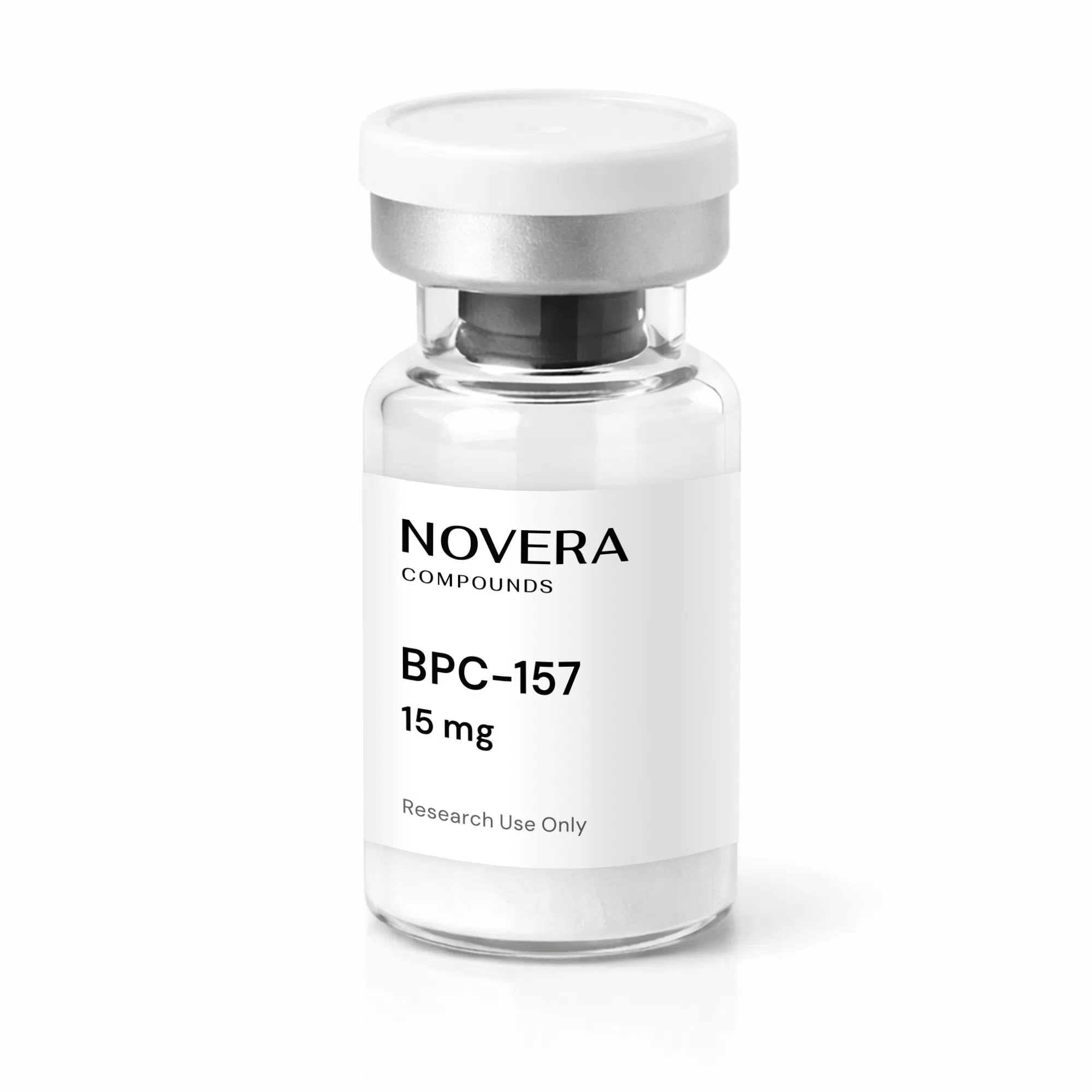
BPC-157 15mg
Strength: 15 mg
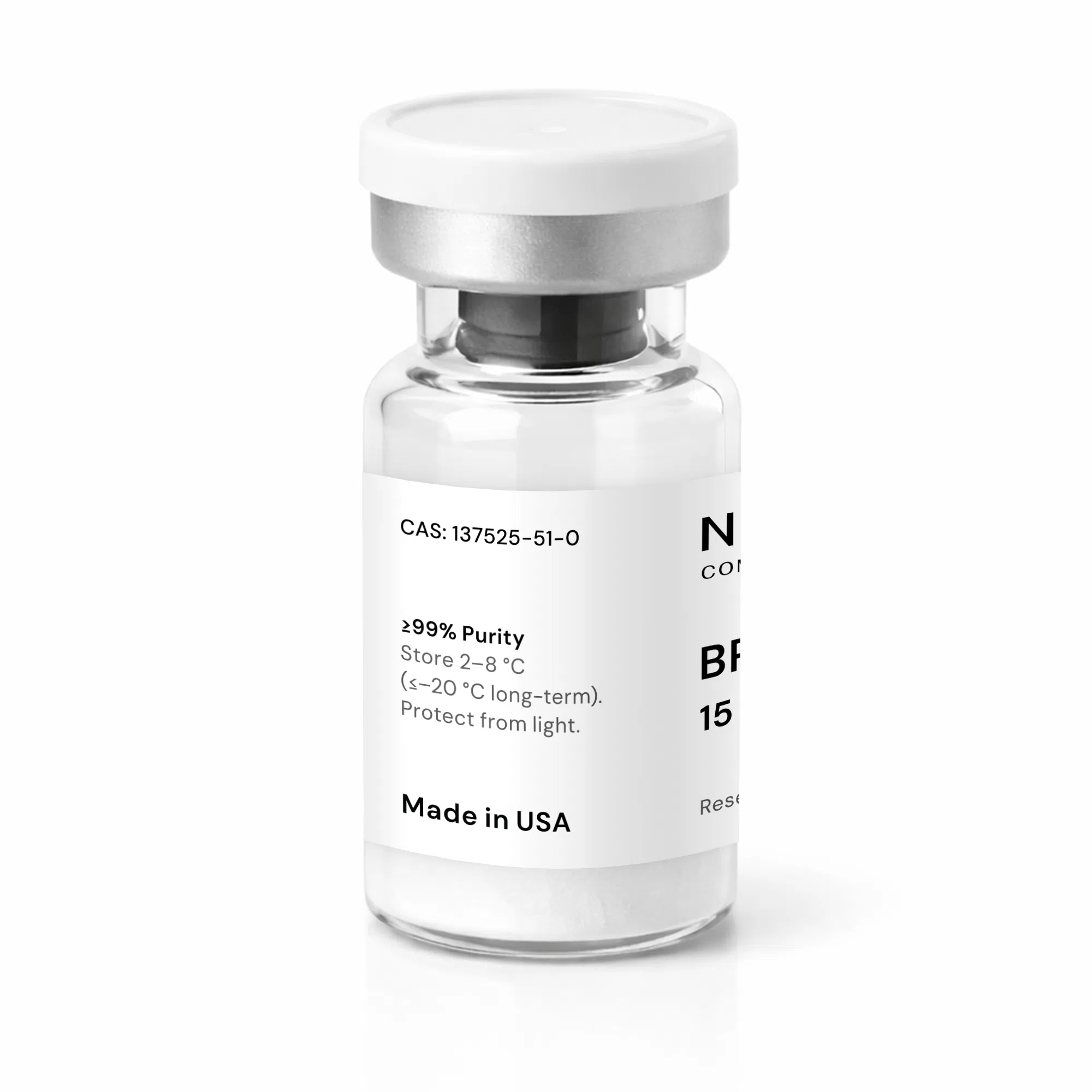
CAS: 137525-51-0
Chemical Formula: C₆₂H₉₈N₁₆O₂₂
Molecular weight: 1419.5 g/mol
Peptide Sequence: Gly-Glu-Pro-Pro-Pro-Gly-Lys-Pro-Ala-Asp-Asp-Ala-Gly-Leu-Val
Synonyms: BPC157, Bepecin
Storage: Store 2–8 °C (≤–20 °C long-term). RT exposure during transport acceptable. Protect from light.
Shelf life: 24 months from the manufacturing date.
BPC 157 is a synthetic research peptide used in laboratory and preclinical studies to explore peptide driven cellular signaling, tissue integrity, and adaptive biological responses. Supplied as a high purity lyophilized powder, it is intended solely for laboratory research use.


Why Choose Medica Depot
Shop hundreds of medical products with no minimums and free shipping on large orders.
 400+ products
 No order minimums
 Free shipping
 Loyalty rewards
 Trusted since 2007
 Account manager
 Verified LOT numbers
INFORMATION
What is BPC-157 (15 mg)?
BPC-157 (Body Protection Compound-157) is a synthetic research peptide classified as healing & regenerative. In laboratory and preclinical research settings, BPC-157 is studied for its role in cellular signaling, tissue integrity, and adaptive biological responses under controlled experimental conditions.
Derived from a fragment of a naturally occurring gastric protein, BPC-157 is used as a research tool to explore how peptides interact with cellular systems involved in maintenance and response processes. In preclinical work, BPC-157 has been evaluated in cell-based and animal models, in which investigators examine tissue integrity, barrier function, and responses to experimentally induced stress or injury under controlled conditions.
Product Specifications
- Peptide Name: BPC-157
- Subcategory: Healing & Regenerative Peptides
- CAS Number: 137525-51-0
- Peptide Sequence:
Gly–Glu–Pro–Pro–Pro–Gly–Lys–Pro–Ala–Asp–Asp–Ala–Gly–Leu–Val - Molecular Formula: C₆₂H₉₈N₁₆O₂₂
- Molecular Weight: ~1419.5 g/mol
- Purity: ≥ 95% (verified using standard analytical methods)
- Packaging Format: Lyophilized powder, 15 mg vial
- Storage Conditions: Store at 2–8 °C (≤ –20 °C for long-term storage). Protect from light.
- Intended Use: For laboratory research use only
Key Characteristics of BPC-157 (15 mg)
- Supplied as a high-purity, lyophilized research peptide
- Defined amino acid sequence supports consistent and reproducible experimental outcomes
- Commonly used in cell-based and tissue-focused research models where structural integrity, barrier properties, or injury-related responses are measured
- Higher total peptide content supports extended or multi-phase experimental workflows
- Stable under recommended storage conditions
- Compatible with standard laboratory peptide handling and reconstitution protocols
How BPC-157 (15 mg) Supports Research
In research settings, BPC-157 is used to study peptide-driven cellular communication and signaling. Researchers utilize this peptide to observe how cells respond to signaling cues, structural stress, and environmental changes within controlled laboratory systems, particularly in models of tissue disruption or barrier compromise.
Its role in research is exploratory and focused on mechanistic understanding, rather than producing therapeutic outcomes. The 15 mg format allows researchers to maintain continuity across experiments that require repeated preparation or comparative analysis.
Research Applications & Usage Information
BPC-157 (15 mg) is generally used in laboratory research for:
- Studies of cellular signaling and communication, with a focus on peptide-mediated signaling changes.
- Tissue-related and regenerative research models where structural integrity, matrix remodeling, or barrier function are endpoints.
- Exploratory investigations of peptide–protein interactions in cell and tissue systems.
- Comparative studies involving repair-associated peptides in preclinical models.
- Preclinical research examining cellular adaptation and response to experimentally induced stress or injury.
All use is restricted to in-vitro and preclinical research settings.
Handling and Storage Recommendations
- Store unopened vials at 2–8 °C, with ≤ –20 °C recommended for long-term storage
- Protect from light and moisture
- After reconstitution, store solutions at 2–8 °C and use within laboratory-defined timeframes
- Avoid repeated freeze-thaw cycles
- Follow standard laboratory safety, labeling, and handling procedures
All handling and storage are carried out within laboratory research environments; BPC‑157 is not intended for human or veterinary administration.
Research Use Only Notice
This product is intended for laboratory research use only and is not approved for human or veterinary use. It is not intended for diagnostic, therapeutic, or clinical applications. Any reference to biological activity or potential effects is based solely on preclinical or in-vitro findings and should not be interpreted as validated clinical outcomes. Researchers are responsible for ensuring proper handling, storage, and disposal in accordance with institutional, federal, and international guidelines.
References
- Vasireddi N, Hahamyan H, Salata MJ, et al. Emerging Use of BPC-157 in Orthopaedic Sports Medicine: A Systematic Review. HSS J. Published online July 31, 2025. doi:10.1177/15563316251355551
- Gwyer D, Wragg NM, Wilson SL. Gastric pentadecapeptide body protection compound BPC 157 and its role in accelerating musculoskeletal soft tissue healing. Cell Tissue Res. 2019;377(2):153-159. doi:10.1007/s00441-019-03016-8
- Mayfield CK, Bolia IK, Feingold CL, et al. Injectable Peptide Therapy: A Primer for Orthopaedic and Sports Medicine Physicians. Am J Sports Med. 2026;54(1):223-229. doi:10.1177/03635465251357593
What is BPC-157 (15 mg)?
BPC-157 (Body Protection Compound-157) is a synthetic research peptide classified as healing & regenerative. In laboratory and preclinical research settings, BPC-157 is studied for its role in cellular signaling, tissue integrity, and adaptive biological responses under controlled experimental conditions.
Derived from a fragment of a naturally occurring gastric protein, BPC-157 is used as a research tool to explore how peptides interact with cellular systems involved in maintenance and response processes. In preclinical work, BPC-157 has been evaluated in cell-based and animal models, in which investigators examine tissue integrity, barrier function, and responses to experimentally induced stress or injury under controlled conditions.
Product Specifications
- Peptide Name: BPC-157
- Subcategory: Healing & Regenerative Peptides
- CAS Number: 137525-51-0
- Peptide Sequence:
Gly–Glu–Pro–Pro–Pro–Gly–Lys–Pro–Ala–Asp–Asp–Ala–Gly–Leu–Val - Molecular Formula: C₆₂H₉₈N₁₆O₂₂
- Molecular Weight: ~1419.5 g/mol
- Purity: ≥ 95% (verified using standard analytical methods)
- Packaging Format: Lyophilized powder, 15 mg vial
- Storage Conditions: Store at 2–8 °C (≤ –20 °C for long-term storage). Protect from light.
- Intended Use: For laboratory research use only
Key Characteristics of BPC-157 (15 mg)
- Supplied as a high-purity, lyophilized research peptide
- Defined amino acid sequence supports consistent and reproducible experimental outcomes
- Commonly used in cell-based and tissue-focused research models where structural integrity, barrier properties, or injury-related responses are measured
- Higher total peptide content supports extended or multi-phase experimental workflows
- Stable under recommended storage conditions
- Compatible with standard laboratory peptide handling and reconstitution protocols
How BPC-157 (15 mg) Supports Research
In research settings, BPC-157 is used to study peptide-driven cellular communication and signaling. Researchers utilize this peptide to observe how cells respond to signaling cues, structural stress, and environmental changes within controlled laboratory systems, particularly in models of tissue disruption or barrier compromise.
Its role in research is exploratory and focused on mechanistic understanding, rather than producing therapeutic outcomes. The 15 mg format allows researchers to maintain continuity across experiments that require repeated preparation or comparative analysis.
Research Applications & Usage Information
BPC-157 (15 mg) is generally used in laboratory research for:
- Studies of cellular signaling and communication, with a focus on peptide-mediated signaling changes.
- Tissue-related and regenerative research models where structural integrity, matrix remodeling, or barrier function are endpoints.
- Exploratory investigations of peptide–protein interactions in cell and tissue systems.
- Comparative studies involving repair-associated peptides in preclinical models.
- Preclinical research examining cellular adaptation and response to experimentally induced stress or injury.
All use is restricted to in-vitro and preclinical research settings.
Handling and Storage Recommendations
- Store unopened vials at 2–8 °C, with ≤ –20 °C recommended for long-term storage
- Protect from light and moisture
- After reconstitution, store solutions at 2–8 °C and use within laboratory-defined timeframes
- Avoid repeated freeze-thaw cycles
- Follow standard laboratory safety, labeling, and handling procedures
All handling and storage are carried out within laboratory research environments; BPC‑157 is not intended for human or veterinary administration.
Research Use Only Notice
This product is intended for laboratory research use only and is not approved for human or veterinary use. It is not intended for diagnostic, therapeutic, or clinical applications. Any reference to biological activity or potential effects is based solely on preclinical or in-vitro findings and should not be interpreted as validated clinical outcomes. Researchers are responsible for ensuring proper handling, storage, and disposal in accordance with institutional, federal, and international guidelines.
References
- Vasireddi N, Hahamyan H, Salata MJ, et al. Emerging Use of BPC-157 in Orthopaedic Sports Medicine: A Systematic Review. HSS J. Published online July 31, 2025. doi:10.1177/15563316251355551
- Gwyer D, Wragg NM, Wilson SL. Gastric pentadecapeptide body protection compound BPC 157 and its role in accelerating musculoskeletal soft tissue healing. Cell Tissue Res. 2019;377(2):153-159. doi:10.1007/s00441-019-03016-8
- Mayfield CK, Bolia IK, Feingold CL, et al. Injectable Peptide Therapy: A Primer for Orthopaedic and Sports Medicine Physicians. Am J Sports Med. 2026;54(1):223-229. doi:10.1177/03635465251357593
This content was prepared and reviewed under our editorial guidelines , which govern how we source, verify, and update clinical and product information. Every claim is checked against peer-reviewed research, manufacturer documentation, or regulatory guidance before publication.