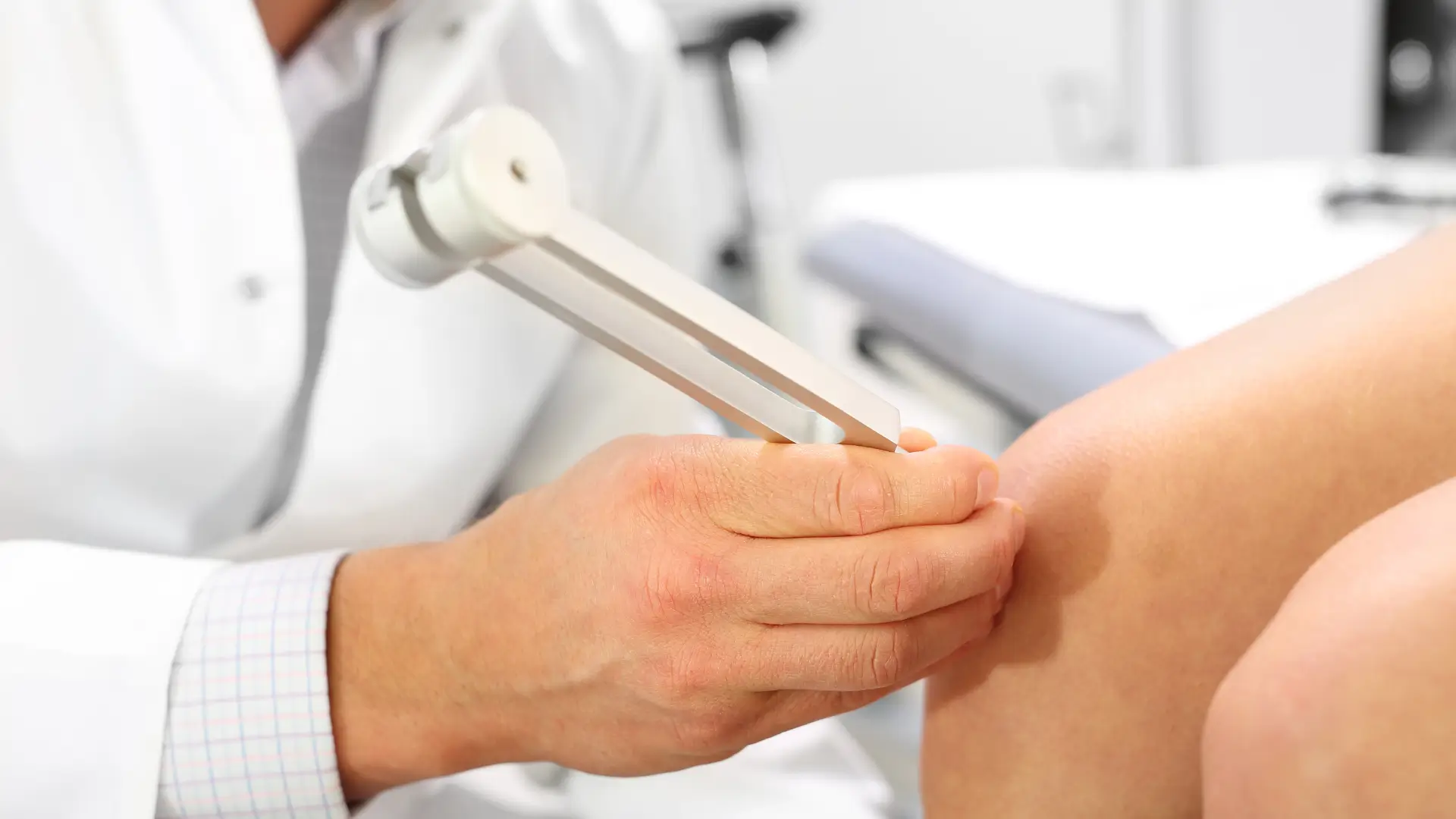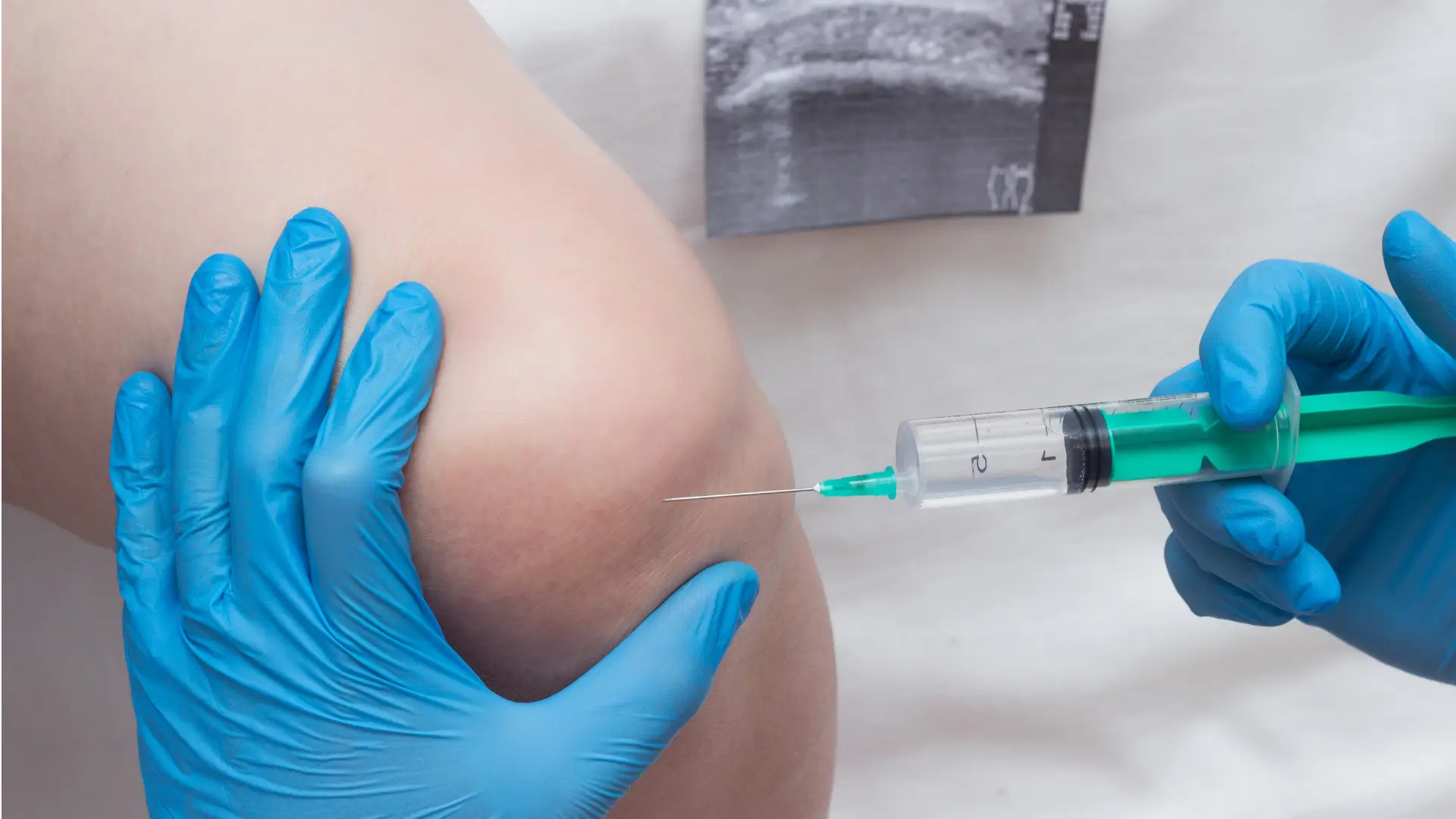
Orthopedic stem cell injections are a regenerative-medicine approach in which autologous cells—most often drawn from a patient’s bone marrow or adipose tissue—are processed and delivered into or around an affected joint, tendon, or ligament to support the local healing environment.
This article will explore the cell types used in these procedures, how they are administered, the clinical evidence and its limitations, patient selection, potential risks, US regulatory status, and typical cost.
Clinic owners and providers building out a regenerative orthopedics offering can buy orthopedic injections through Medica Depot, which stocks orthopedic injection products alongside its broader catalog of medical injectables and supplies for licensed professionals.
Key Takeaways
- Orthopedic stem cell injections most commonly use cell-containing autologous preparations from bone marrow (BMAC) or adipose tissue. Enzymatically isolated stromal vascular fraction (SVF), mechanically produced microfragmented adipose, and culture-expanded ADSCs are distinct preparations with different regulatory implications.
- Current evidence, drawn largely from knee osteoarthritis studies, suggests modest short-term improvements in pain and patient-reported function; certainty is low, placebo and contextual effects complicate interpretation, and structural disease modification has not been demonstrated.
- No stem-cell product is FDA-approved for an orthopedic indication in the United States. Autologous use or same-day handling alone does not establish regulatory eligibility; the preparation must independently satisfy the applicable HCT/P criteria.
About: Medica Depot is your trusted all-in-one supplier, offering a range of high-quality medical injectables and supplies. We offer a worry-free experience in searching for the best and most popular products on the market, like orthopedic stem cell injections. Whether for health professionals, plastic surgeons, dermatologists, licensed estheticians, or other specialists, we can offer genuine, brand-name products you may need. With Medica Depot, we prioritize serving you better to improve the patient’s quality of life.
What Are Orthopedic Stem Cell Injections?
Orthopedic stem cell injections deliver a cell-containing autologous preparation into or around a site of orthopedic injury — most often a joint affected by osteoarthritis, but also tendons and ligaments affected by chronic overuse.
Mesenchymal stromal/stem cells (MSCs) can differentiate into several musculoskeletal lineages in laboratory settings and secrete trophic, immunomodulatory, and anti-inflammatory factors. Durable tissue regeneration and differentiation after intra-articular injection remain proposed and experimental rather than established clinical effects. Where clinical benefit is observed, it is currently thought to relate more strongly to a proposed paracrine modulation of the joint environment than to durable differentiation into new cartilage or other joint tissue.
In practice, most orthopedic stem cell injections are autologous and are minimally processed within a single clinical visit. This sets these preparations apart from culture-expanded cell products, which involve laboratory expansion over days to weeks and fall under a different, stricter regulatory pathway.
What Types of Stem Cells Are Used in Orthopedic Injections?
Two tissue sources dominate current clinical use: bone marrow and adipose tissue. Preparations derived from them are not interchangeable, and the literature recognizes resulting protocol heterogeneity [1].
Bone Marrow Aspirate Concentrate (BMAC)
Bone marrow is most commonly aspirated from the iliac crest, though the proximal tibia and other sites are also used in clinical practice; the Pintore comparative trial, for example, harvested from the proximal tibia rather than the iliac crest [1]. Centrifugation then concentrates the aspirate into bone marrow concentrate (BMC) or bone marrow aspirate concentrate (BMAC). BMAC is a heterogeneous, cell-containing autologous preparation comprising progenitor and stromal-cell populations together with hematopoietic cells, platelets, and soluble signaling factors; it is not a purified MSC product.
Adipose-Derived Preparations
Adipose tissue is obtained by small-volume lipoaspirate and can be processed in several ways. Enzymatic digestion isolates the stromal vascular fraction (SVF). Mechanical processing typically produces microfragmented adipose tissue or another cell-containing adipose preparation without enzymatic isolation.
Adipose-derived stem cells (ADSCs) refer to culture-isolated cells and represent a different product category. The joint IFATS/ISCT statement distinguishes fresh SVF populations from culture-expanded, plastic-adherent adipose-derived stromal/stem cells [2]; mechanically microfragmented adipose should also be described by its specific processing method and product configuration.
Because both tissue sources yield the patient’s own cells, they are categorized as autologous adult cell preparations rather than embryonic or induced pluripotent stem cell products.
Platelet-rich plasma (PRP) is sometimes discussed alongside these injections. PRP is prepared by centrifuging a patient’s own blood to concentrate platelets and is blood-derived rather than cell-based, so it sits outside the cell-preparation category described here. Providers weigh regenerative options alongside corticosteroid and viscosupplementation, often reviewing the wider landscape of orthopedic injection types before choosing a treatment protocol for each patient.
A prospective comparative trial of 102 knee osteoarthritis patients (51 BMAC, 51 adipose-derived) found significant within-group improvements in pain and function at one and six months, with no statistically significant difference on the principal pain and function measures [1]. Treatment was allocated by treatment week rather than randomized, and no placebo or standard-treatment comparator was included, so the trial supports observed short-term improvement but cannot separate treatment effect from contextual and placebo contributions.
How Are Orthopedic Stem Cell Injections Administered?
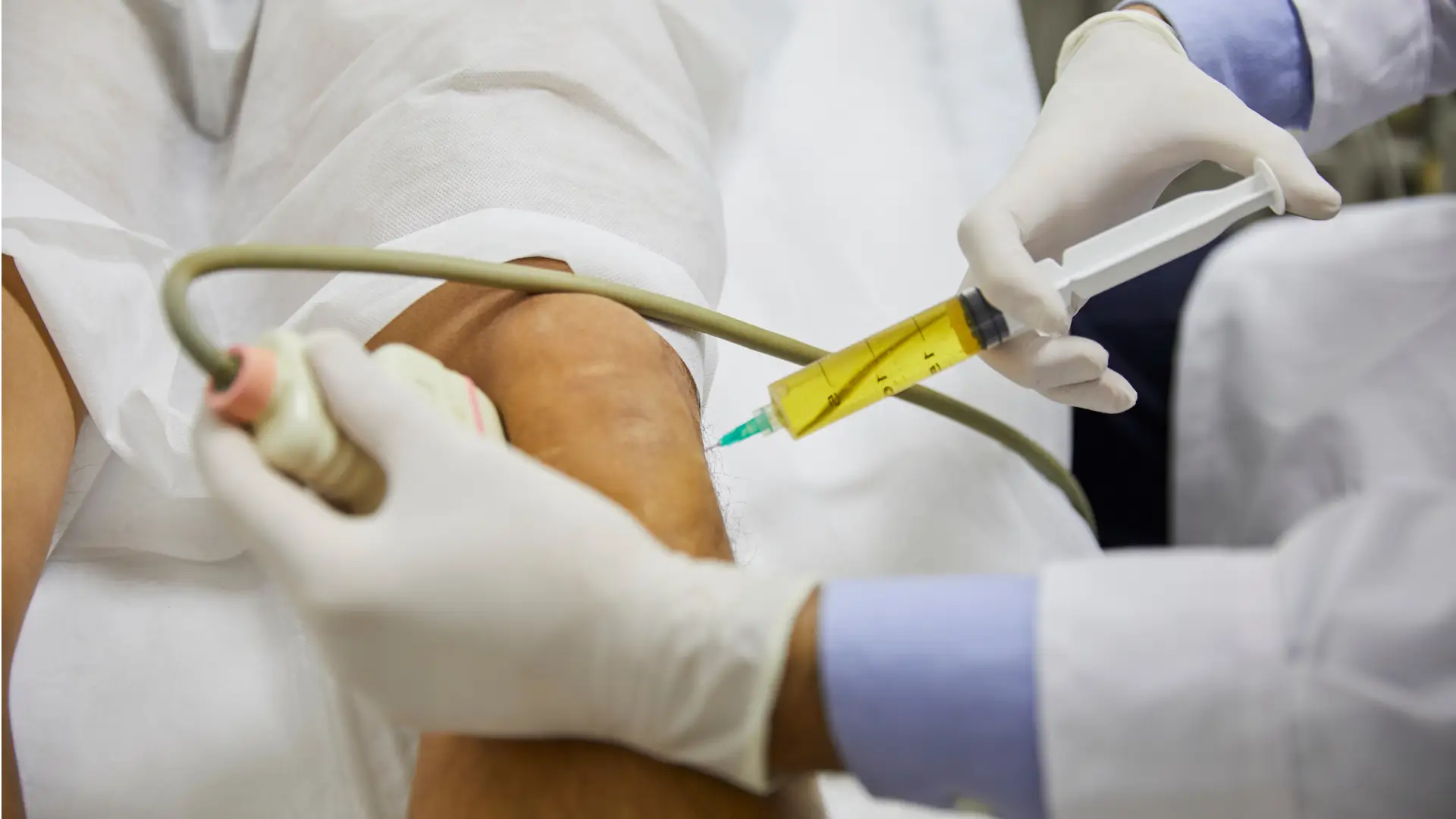
Administration commonly begins with tissue harvest under local anesthetic in an outpatient setting, though protocols vary. Tissue is obtained by bone marrow aspiration — typically from the iliac crest or proximal tibia — or by mini-liposuction, then processed, usually by centrifugation, to concentrate the cellular fraction within the same clinical encounter.
The concentrated preparation is injected into the target joint or soft-tissue structure, generally under ultrasound or fluoroscopic guidance. There is no standardized post-injection protocol. Visit duration, injection number, and follow-up care vary meaningfully by preparation, indication, and provider: many protocols use a single injection, while others use a short series, and structured physical therapy may be included during the recovery window.
What Are the Current Clinical Applications and Evidence?
The largest body of evidence involves knee osteoarthritis. Multiple prospective studies and systematic reviews report reductions in pain and modest improvements in patient-reported function following BMAC or adipose-derived cell injection, though outcomes vary meaningfully by study, cell preparation, dose, and patient selection. Evidence certainty remains low, and durable structural disease modification has not been demonstrated.
A 2022 systematic review and meta-analysis of ten studies covering 472 patients found that BMAC and adipose-derived SVF each produced short-term symptomatic improvement, with SVF associated with greater pain reduction and WOMAC-based function scores equivalent between the two preparations [3].
A phase-3 trial randomized 475 patients and analyzed 440 at one year, comparing BMAC, SVF, and an umbilical-cord tissue preparation with corticosteroid injection for knee osteoarthritis. No orthobiologic injection was superior to corticosteroid injection or to one another on the primary pain and function outcomes; no group showed significant MRI-based structural improvement, and no treatment-related serious adverse events were reported [4].
Beyond the knee, smaller studies and case series describe use in hip, shoulder, and ankle osteoarthritis and in chronic tendinopathies. The evidence base for these applications is less mature than for the knee.
Candidacy, Contraindications, and Treatment Limitations
Providers generally consider a patient for a stem cell procedure when mild-to-moderate osteoarthritis or a chronic soft-tissue injury has not responded adequately to conservative measures — physical therapy, activity modification, or standard injections — and when the patient wishes to delay or avoid surgery. These are case-selection preferences rather than universally accepted criteria.
Because outcomes vary and may be influenced by osteoarthritis severity, cell preparation, dose, and patient selection, response in advanced, bone-on-bone joint degeneration may be less predictable or less pronounced. Providers weigh imaging findings, overall health status, and any active infection, malignancy, or bleeding disorder that would preclude the harvest or injection procedure.
Common questions patients raise include how many treatments are typically needed, how long observed relief tends to last, and how the therapy fits alongside other orthopedic treatment options already in use.
What Are the Risks and US Regulatory Status?
The safety profile depends on which preparation is used and how it is processed. For same-day, minimally processed autologous procedures such as BMAC and mechanically prepared adipose tissue, the complication profile is generally lower than that of surgical alternatives. Reported adverse events include injection-site pain, swelling, transient inflammatory flare in the treated joint, bruising or discomfort at the harvest site, and a small risk of infection at either site. Enzymatically isolated SVF and culture-expanded ADSCs involve more processing and cannot be described as minimally manipulated by default; their safety and regulatory profiles are considered separately. There is also a theoretical risk of tissue reaction if any preparation is contaminated or improperly processed.
FDA has not approved any stem-cell product for orthopedic indications [5]. Under 21 CFR 1271.10(a), HCT/Ps that are marketed without premarket review must satisfy requirements concerning minimal manipulation, homologous intended use, prohibited combinations, and systemic effect. The same-surgical-procedure provision in 21 CFR 1271.15(b) is narrower and generally does not encompass cell isolation, activation, expansion, or enzymatic digestion. The FDA treats adipose tissue as structural tissue whose primary functions include cushioning and support, so cell isolation from adipose may constitute more than minimal manipulation, and intra-articular injection into an osteoarthritic joint may raise nonhomologous-use concerns. Same-day autologous status alone does not make SVF, BMAC, or related preparations automatically compliant.
Cost, Coverage, and Availability
Orthopedic stem cell injections generally cost several thousand dollars per procedure and vary widely by cell source, joint complexity, and provider; some may pay out of pocket.
Because these injections lack FDA approval for orthopedic indications, many commercial US insurers classify the procedure as experimental or investigational. Medicare’s national coverage policy is narrower and more specific: the stem-cell transplantation National Coverage Determination addresses hematopoietic stem-cell transplantation and does not specifically cover intra-articular MSC, BMAC, SVF, or related injections for osteoarthritis or tendinopathy; absent national or local coverage determinations, any coverage is generally established at the Medicare Administrative Contractor or Medicare Advantage plan level. The therapy is generally available through sports medicine clinics, orthopedic specialty practices, and dedicated regenerative medicine centers.
The contents of this page are meant for licensed medical professionals. They serve informational purposes only and are not to be taken as medical advice.
Citations
[1] Pintore, Andrea et al. “Intra-articular injection of bone marrow aspirate concentrate (BMAC) or adipose-derived stem cells (ADSCs) for knee osteoarthritis: a prospective comparative clinical trial.” Journal of orthopaedic surgery and research vol. 18,1 350. 11 May. 2023, doi:10.1186/s13018-023-03841-2
[2] Bourin, Philippe et al. “Stromal cells from the adipose tissue-derived stromal vascular fraction and culture expanded adipose tissue-derived stromal/stem cells: a joint statement of the International Federation for Adipose Therapeutics and Science (IFATS) and the International Society for Cellular Therapy (ISCT).” Cytotherapy vol. 15,6 (2013): 641-8. doi:10.1016/j.jcyt.2013.02.006
[3] Bolia, Ioanna K et al. “Clinical Efficacy of Bone Marrow Aspirate Concentrate Versus Stromal Vascular Fraction Injection in Patients With Knee Osteoarthritis: A Systematic Review and Meta-analysis.” The American journal of sports medicine vol. 50,5 (2022): 1451-1461. doi:10.1177/03635465211014500
[4] Mautner, Ken et al. “Cell-based versus corticosteroid injections for knee pain in osteoarthritis: a randomized phase 3 trial.” Nature medicine vol. 29,12 (2023): 3120-3126. doi:10.1038/s41591-023-02632-w
[5] U.S. Food and Drug Administration. “Consumer Alert on Regenerative Medicine Products Including Stem Cells and Exosomes.” U.S. Food and Drug Administration, updated 24 Mar. 2021, www.fda.gov/vaccines-blood-biologics/consumers-biologics/consumer-alert-regenerative-medicine-products-including-stem-cells-and-exosomes.
This content was prepared and reviewed under our editorial guidelines , which govern how we source, verify, and update clinical and product information. Every claim is checked against peer-reviewed research, manufacturer documentation, or regulatory guidance before publication.