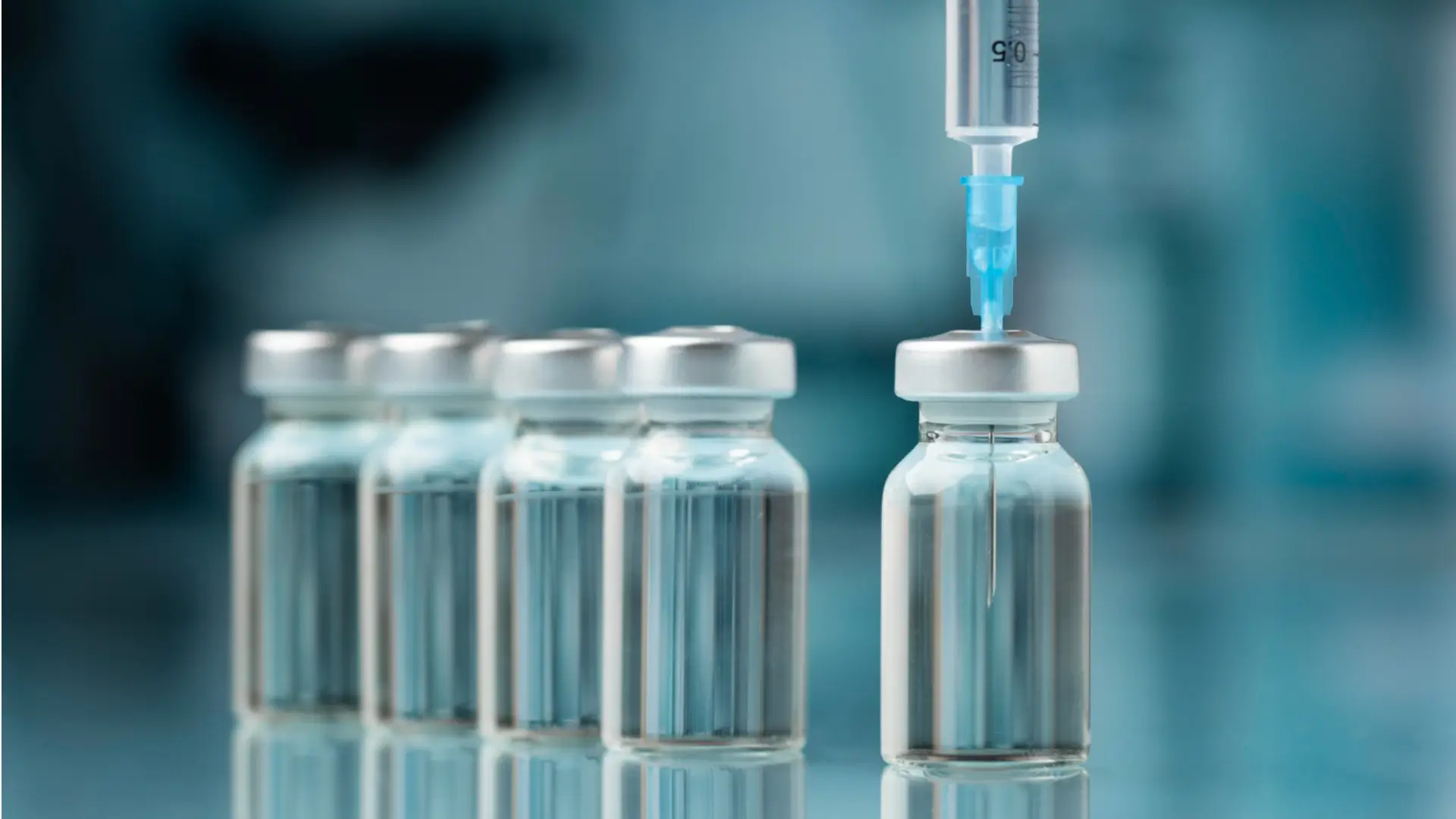
Determining an appropriate Ipamorelin dosage for research involves more than selecting a fixed amount. Published studies report dose by body weight, route, schedule, and study objective, so Ipamorelin peptide dosage depends on study design rather than a universal standard.[2]
This article examines published research on Ipamorelin dosage, including concentration ranges, dosing schedules, pulse timing, and dosage considerations when Ipamorelin is evaluated alone or with other GH-axis peptides. The discussion is presented solely within a research context and should not be interpreted as clinical prescribing guidance.
Researchers seeking additional sourcing information before they buy Ipamorelin wholesale may consult Medica Depot for guidance on investigational peptide products intended for legitimate research by licensed professionals.
Key Takeaways
- Research protocols define Ipamorelin dosage by mg/kg, administration route, and timing relative to the GH response. Vial concentration and injection volume are calculation steps used to reach that mg/kg exposure, not independent findings from the pharmacokinetic studies.[2]
- Human studies have primarily evaluated intravenous doses of 0.003–0.1 mg/kg in healthy men and 0.03 mg/kg twice daily in postoperative ileus trials.[2][4]
- Published human Ipamorelin studies have evaluated the peptide alone. Combination protocols with other GH-axis peptides are not standardized in the peer-reviewed literature and would require predefined timing, total exposure, and endocrine monitoring if studied.
About: Medica Depot is your trusted all-in-one supplier, offering a range of high-quality medical injectables and supplies. We offer a worry-free experience in searching for the best and most popular products on the market, like Ipamorelin. Whether for health professionals, plastic surgeons, dermatologists, licensed estheticians, or other specialists, we can offer genuine, brand-name products you may need. With Medica Depot, we prioritize serving you better to improve the patient’s quality of life.
What Are the Key Ipamorelin Dosage Parameters in Research?
Published studies define Ipamorelin dosage using body weight (mg/kg), administration route, dosing frequency, and timing. Human pharmacokinetic studies evaluated intravenous infusions between 0.003 and 0.1 mg/kg in healthy men, demonstrating dose-proportional exposure and a transient GH response after each administration.[2]
Researchers may also convert a target mg/kg dose into injection volume, sometimes described as Ipamorelin dosage in mL, using vial strength and reconstitution volume. For example, reconstituting a 5 mg vial with 2 mL of diluent yields a concentration of 2.5 mg/mL, allowing the injection volume to be calculated according to the subject’s weight. That example illustrates a calculation, not a method used in the cited human trials.
Timing is equally important. Ipamorelin has an elimination half-life of approximately two hours, while GH concentrations typically peak about 40 minutes after intravenous administration before returning toward baseline.[2] Research protocols therefore specify dose, interval between administrations, fasting status, and timing relative to endogenous GH pulses.
Investigators typically specify:
- weight-based dose (mg/kg)
- administration route
- pulse frequency and interval
- number of administrations
- protocol duration
Concentration after reconstitution, injection volume in mL, and timing relative to fasting or sleep are protocol-design choices set by each investigator. They are not findings shared across the pharmacokinetic literature, and they only become meaningful when linked back to the mg/kg exposure the protocol is trying to reach.
| Research model | Route | Representative dose | Frequency | Primary endpoint |
| Healthy volunteers | IV infusion | 0.003–0.1 mg/kg | Single administration | GH pharmacokinetics and pharmacodynamics[2] |
| Rodent postoperative ileus | IV bolus | 0.1–1 mg/kg | Four daily doses at 3-hour intervals | Gastrointestinal motility[3] |
| Postoperative ileus following bowel resection | IV infusion | 0.03 mg/kg | Twice daily for up to 7 days | Recovery following surgery[5] |
Research Reference Only: These dosage ranges summarize published experimental protocols and are not clinical dosing recommendations.
Researchers determine target exposure first, then calculate injection volume from concentration and subject weight. Timing, fasting status, and pulse interval are protocol-design choices and should be specified separately from the mg/kg dose reported in pharmacokinetic studies.
How Do Research Protocols Define Ipamorelin Dosage Per Day?

Ipamorelin dosage per day refers to the total weight-adjusted exposure administered over 24 hours rather than the amount delivered in a single injection. Published multi-dose protocols calculate daily exposure by combining the dose per administration with pulse frequency, depending on the study objective.[3][4]
Preclinical studies demonstrate how frequency affects total exposure. In a rodent postoperative ileus model, intravenous Ipamorelin peptide was administered at 0.1–1 mg/kg four times daily, resulting in cumulative daily exposure of 0.4–4 mg/kg and improved gastrointestinal motility compared with controls.[3]
Human studies have evaluated substantially lower daily exposure. In a randomized Phase II trial following bowel resection, participants received 0.03 mg/kg twice daily, equivalent to 0.06 mg/kg per day. For a 70 kg participant, this corresponds to approximately 2.1 mg per infusion or 4.2 mg daily under controlled inpatient monitoring.[4] Although the regimen demonstrated acceptable tolerability, it did not significantly improve the primary efficacy endpoint versus placebo.[4]
Because Ipamorelin produces relatively brief GH elevations after each dose,[2] some multi-dose protocols increase total daily exposure through repeated administrations rather than a single larger dose. Investigators developing Ipamorelin dosage and timing protocols generally define:
- total daily exposure (mg/kg)
- number of daily administrations
- timing relative to fasting or sleep
- administration route
- study duration
- GH and IGF-1 monitoring
Ipamorelin dosage per day should always be interpreted within the context of the specific research protocol rather than generalized across different study populations.
Does Ipamorelin Dosage Differ for Fat Loss vs. Muscle Research?
Interest in Ipamorelin dosage for fat loss stems from GH’s role in metabolism and body composition. Current human evidence, however, does not establish separate dosage recommendations for fat loss, lean muscle development, or other body-composition outcomes. Human studies have instead evaluated pharmacokinetics, endocrine response, or gastrointestinal recovery.[2][4]
Animal studies have reported growth-related effects after repeated Ipamorelin administration, including changes in body weight and skeletal measures in rats. Those findings should not be interpreted as support for distinct human dosing protocols targeting fat reduction or muscle gain.
Instead, researchers select dosage based on predefined study endpoints, including GH secretion, IGF-1 concentrations, metabolic markers, imaging findings, or functional assessments, rather than anticipated weight loss outcomes.
Current literature likewise provides little evidence supporting different Ipamorelin dosage for women versus Ipamorelin dosage for men. Most published protocols use standardized weight-based dosing. Participant characteristics such as age, endocrine status, body composition, and concomitant therapies primarily influence eligibility and monitoring rather than dosage selection.[2][4]
Investigators may include optional secondary endpoints such as sleep quality, appetite, insulin sensitivity, or lipid metabolism, since GH physiology intersects with each. These are not literature-derived Ipamorelin dosage drivers, and they would be specified per protocol rather than inferred from monotherapy trials. Overall, available evidence indicates that protocol objectives, not sex or intended body-composition outcome, drive dosage selection.
How Does CJC-1295 Change Ipamorelin Dosage in Stack Protocols?
When researchers evaluate Ipamorelin cjc 1295 dosage, the goal is to study how two complementary GH-axis pathways interact rather than maximize GH release. Ipamorelin stimulates the ghrelin receptor, whereas CJC-1295 is a growth hormone-releasing hormone (GHRH) analog.
Human evidence defining a standardized CJC-1295/ipamorelin dosage is lacking because published studies have evaluated Ipamorelin alone. Any combination protocol would therefore be exploratory. Investigators typically start from established Ipamorelin monotherapy ranges and would need to define pulse timing and GH/IGF-1 monitoring rather than infer those details from existing stack trials.
Some protocols also evaluate appetite or gastrointestinal outcomes because ghrelin receptor agonists may influence these pathways, which is why some researchers have questions like, “Does ipamorelin increase appetite?”
Current literature does not support a standardized stacking protocol. Combination studies should remain exploratory and include clearly defined objectives, dosing schedules, endocrine monitoring, and safety endpoints.
What Safety and Monitoring Principles Should Guide Ipamorelin Dosage?
Safety monitoring is central to any Ipamorelin dosage protocol. Early endocrine studies demonstrated that Ipamorelin selectively stimulated GH secretion with minimal effects on ACTH or cortisol compared with earlier GH secretagogues such as GHRP-2 and GHRP-6.[1] Prolactin was not increased in those experiments, but that finding was not unique to Ipamorelin versus the comparator secretagogues.
Investigators typically monitor:
- GH and IGF-1 concentrations
- adverse events and clinical labs
- cortisol or prolactin, when appropriate
- baseline hormone levels and their trajectory across the protocol
Beck included routine laboratory assessments and adverse-event monitoring throughout twice-daily 0.03 mg/kg IV administration in postoperative ileus participants, illustrating that careful surveillance is essential regardless of the dosage being investigated.[4] Additional biomarkers such as glucose metabolism, lipid profile, or cardiovascular risk parameters are protocol-specific choices rather than a standard Ipamorelin monitoring panel drawn from the published trials.
Within research settings, medical supervision also includes predefined eligibility criteria, baseline laboratory testing, scheduled follow-up, and stopping rules. These safeguards are especially important when investigators evaluate Ipamorelin with other GH-axis peptides, since coadministration adds interpretive complexity that monotherapy data cannot fully anticipate.
Research Considerations When Finding the Optimal Ipamorelin Dosage
For licensed professionals, selecting an appropriate Ipamorelin dosage begins with defining the research objective rather than choosing a predetermined amount. Published studies consistently support matching dosage to the intended endpoint, whether the study evaluates GH secretion, gastrointestinal recovery, endocrine biomarkers, or other investigational outcomes, and staying within dosage ranges explored in peer-reviewed research.[2][4]
A practical Ipamorelin dosage guide should define:
- primary and secondary study endpoints
- weight-based dosing (mg/kg)
- vial concentration and calculated injection volume
- dosing frequency and timing
- protocol duration
- laboratory monitoring and safety assessments
Investigators sometimes compile a working Ipamorelin dosage chart drawn from these ranges to keep concentrations, mg/kg exposure, and pulse intervals visible during protocol design. Participant factors such as age, baseline endocrine function, metabolic status, concomitant medications, and eligibility criteria may then influence protocol design and monitoring intensity while remaining consistent with published evidence.[4]
Because Ipamorelin remains an investigational GH secretagogue, there is no universally accepted “optimal” dosage. Instead, researchers should select protocol-specific dosage ranges supported by pharmacokinetic data, predefined study objectives, and comprehensive safety monitoring. This evidence-based approach helps investigators explore potential areas of clinical interest while maintaining scientific rigor and participant safety.[2]
The contents of this page are meant for licensed medical professionals. They serve informational purposes only and are not to be taken as medical advice.
Citations
[1] Raun, K et al. “Ipamorelin, the first selective growth hormone secretagogue.” European journal of endocrinology vol. 139,5 (1998): 552-61. doi:10.1530/eje.0.1390552
[2] Gobburu, J V et al. “Pharmacokinetic-pharmacodynamic modeling of ipamorelin, a growth hormone releasing peptide, in human volunteers.” Pharmaceutical research vol. 16,9 (1999): 1412-6. doi:10.1023/a:1018955126402
[3] Venkova, Kalina et al. “Efficacy of ipamorelin, a novel ghrelin mimetic, in a rodent model of postoperative ileus.” The Journal of pharmacology and experimental therapeutics vol. 329,3 (2009): 1110-6. doi:10.1124/jpet.108.149211
[4] Beck, David E et al. “Prospective, randomized, controlled, proof-of-concept study of the Ghrelin mimetic ipamorelin for the management of postoperative ileus in bowel resection patients.” International journal of colorectal disease vol. 29,12 (2014): 1527-34. doi:10.1007/s00384-014-2030-8
This content was prepared and reviewed under our editorial guidelines , which govern how we source, verify, and update clinical and product information. Every claim is checked against peer-reviewed research, manufacturer documentation, or regulatory guidance before publication.