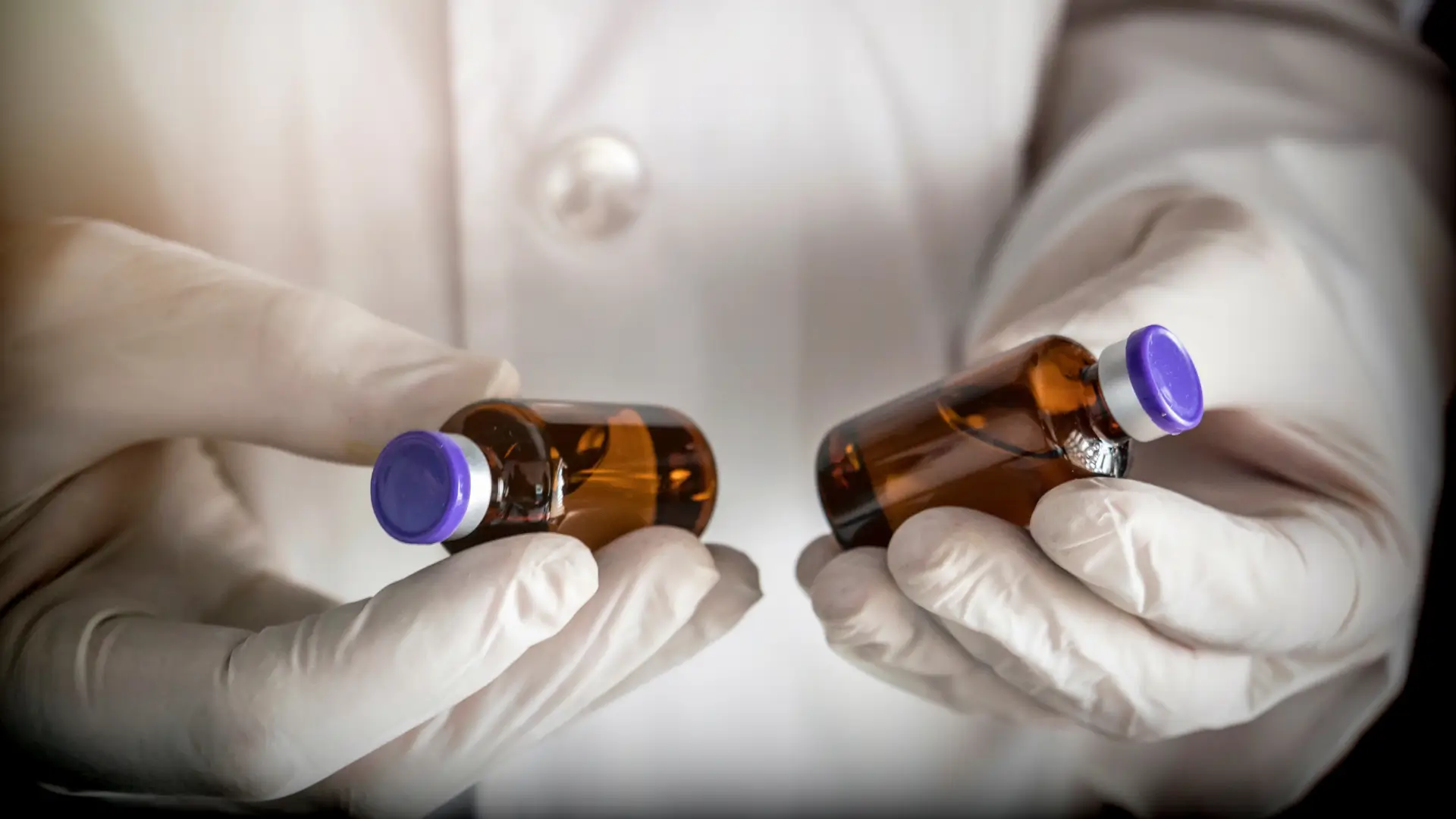
Growth hormone secretagogues stimulate endogenous GH release while preserving physiological pulsatility, but they don’t all work through the same receptor pathway. In the Ipamorelin vs Sermorelin comparison, both peptides increase GH secretion through distinct mechanisms, and those differences matter for research protocol design.
The sections below cover the mechanism, comparative benefits, side-effect profiles, protocol considerations, and how Tesamorelin fits into the broader picture. For qualified professionals exploring where to buy Ipamorelin, Medica Depot’s support representatives can provide sourcing guidance on Ipamorelin peptides and the documentation that should accompany research-grade compounds.
Key Takeaways
- Ipamorelin selectively activates the growth hormone secretagogue receptor (GHS-R1a), while Sermorelin stimulates the GHRH receptor on pituitary somatotrophs. These are distinct pathways, and differences in receptor targets have real implications for how each compound behaves in research settings.
- Both peptides support physiological GH pulsatility, but their pharmacokinetics and receptor selectivity profiles differ in ways that can influence protocol design, dosing schedules, and monitoring requirements.
- Tesamorelin is a stabilized GHRH analogue with an FDA-approved indication for HIV-associated lipodystrophy. That clinical track record provides useful context when comparing Ipamorelin, Sermorelin, and Tesamorelin, but the approval should not be generalized to other applications.
About: Medica Depot is your trusted all-in-one supplier, offering a range of high-quality medical injectables and supplies. We offer a worry-free experience in searching for the best and most popular products on the market, like ipamorelin. Whether for health professionals, plastic surgeons, dermatologists, licensed estheticians, or other specialists, we can offer genuine, brand-name products you may need. With Medica Depot, we prioritize serving you better to improve the patient’s quality of life.
How Do Ipamorelin and Sermorelin Differ in Their Mechanisms of Action?
The receptor pharmacology is the place to start. Both peptides stimulate endogenous GH release, but they do so through entirely different receptors and signaling pathways. That distinction is the foundation of the differences in mechanism of action between Ipamorelin and Sermorelin.[1][2]
Ipamorelin is a selective GH secretagogue that binds the growth hormone secretagogue receptor type 1a (GHS-R1a), commonly referred to as the ghrelin receptor.[1] Sermorelin is a synthetic analogue of endogenous GHRH that acts on the GHRH receptor on pituitary somatotrophs, stimulating GH secretion through the physiological GHRH pathway.[2] Because they work at different receptor sites, these two compounds are typically investigated for distinct research objectives rather than treated as interchangeable.
How Does Receptor Selectivity Influence GH Release?
Ipamorelin was developed specifically to improve receptor selectivity relative to earlier growth hormone-releasing peptides such as GHRP-2 and GHRP-6. In the animal models studied, it stimulated GH secretion without producing significant increases in ACTH or cortisol, a selectivity finding that distinguished it from earlier compounds in the same class.[1] That finding should be read as a preclinical observation tied to the models used, not as a guaranteed clinical property.
Sermorelin achieves selectivity differently. It structurally mimics endogenous GHRH and acts via the GHRH receptor on pituitary somatotrophs, making it a useful research tool for studying normal hypothalamic-pituitary regulation of GH secretion.[2]
Both peptides stimulate endogenous GH production while preserving physiological feedback regulation. They differ in receptor activation, pharmacokinetics, and how they fit into particular protocol goals.
How Do the Benefits of Ipamorelin and Sermorelin Compare?
When evaluating Ipamorelin vs Sermorelin, the practical question is whether a given compound aligns with the research objective. Both increase downstream insulin-like growth factor-1 (IGF-1) through GH stimulation, but pathway differences can matter depending on what the study measures.[1][2]
Which Peptide Is Better Suited for Body Composition Research?
Both peptides have been investigated in body composition contexts because GH and IGF-1 influence lipid metabolism and lean body mass.[5] Ipamorelin selectively activates the ghrelin receptor, whereas Sermorelin acts via the GHRH pathway.[1][2] Current evidence does not consistently favor one over the other for body composition outcomes, and results vary considerably depending on protocol design, study population, and measured endpoints.[5]
How Do They Compare for Tissue Repair and Muscle Growth?
GH and IGF-1 contribute to connective tissue remodeling and protein metabolism, which is why comparisons between Ipamorelin and Sermorelin for muscle growth frequently appear in the research literature. Neither peptide has shown consistently superior outcomes in this area. Results depend heavily on dosing, cycle length, participant characteristics, and study design rather than on the compound itself.[1][2]
Are There Special Considerations for Women?
While GH secretion varies with age and hormonal status, available literature does not identify major sex-specific pharmacological differences between the two compounds. Researchers generally account for individual endocrine function, metabolic baseline, and study objectives when selecting between the two peptides. Comparative clinical data remain limited, so protocol-specific assessment continues to be the standard approach.[1][2]
Which Peptide Is Better for Your Research Protocol?
There is no single answer to the question of which compound is better. Both Ipamorelin and Sermorelin stimulate endogenous GH secretion through distinct receptor pathways, and the difference often determines which one fits a given protocol.
Ipamorelin is often chosen when investigators want to study selective GHS-R1a activation. Its preclinical selectivity profile, particularly the absence of significant increases in ACTH and cortisol in the models studied, is one reason it has been investigated as an alternative to earlier, less selective GHRPs.[1] Sermorelin is more commonly chosen when research focuses on physiological GHRH signaling or the regulation of the hypothalamic-pituitary GH axis.[2]
When assessing the Ipamorelin vs Sermorelin key differences, the variables worth examining include:
- The receptor pathway being studied
- Dosing frequency and overall protocol design
- Participant characteristics and baseline endocrine status
- Laboratory monitoring requirements
- The quality and relevance of available clinical evidence for each compound
Current literature does not establish either peptide as consistently superior across all research settings. Protocol selection should follow the scientific question and the practical demands of the study, not anecdotal comparisons or isolated findings.
Qualified professionals researching where to buy Ipamorelin wholesale should evaluate suppliers based on verifiable purity documentation, lot-number traceability, and an available certificate of analysis. Medica Depot’s support representatives can provide sourcing guidance and help qualified professionals understand the documentation required for research-grade compounds.
What Are the Key Differences in Side Effects?
Both Sermorelin and Ipamorelin side effects are described as mild and transient. The most meaningful distinction comes back to receptor selectivity. In the animal models studied, Ipamorelin stimulated GH secretion without producing significant increases in ACTH or cortisol, a finding that set it apart from earlier-generation growth hormone-releasing peptides.[1] This is a preclinical observation of selectivity, and researchers should interpret it in that context rather than as a clinical guarantee.
Sermorelin has a documented history of clinical use in specific medical contexts. The adverse effects most commonly reported include:
- Injection-site discomfort, redness, or swelling
- Temporary flushing
- Headache
- Dizziness
- Sleepiness
- Occasional nausea or metallic taste[5]
Both peptides can cause injection-site reactions, and appropriate site rotation is recommended. Because increased GH and IGF-1 may contribute to edema or joint discomfort in some individuals, monitoring remains a relevant consideration in the protocol for either compound.
Ipamorelin vs Sermorelin vs Tesamorelin — A Brief Comparison

Like Sermorelin, Tesamorelin is a synthetic GHRH analogue. Unlike Sermorelin, it has been structurally modified to extend its biological activity and improve in vivo stability. That longer duration differentiates it from Sermorelin’s shorter half-life and has supported a larger body of clinical evidence.[3]
Tesamorelin is also the only peptide in this group with an FDA-approved indication. It is approved for reducing excess visceral abdominal fat in adults with HIV-associated lipodystrophy, an indication supported by randomized clinical trials.[3][4] That approval reflects evidence for a specific population and a specific indication. It should not be generalized to other uses or patient groups.
Note: Tesamorelin belongs to the same family of growth hormone-related compounds, so it frequently appears alongside Ipamorelin and Sermorelin in research discussions. Its inclusion here is for context only.
Comparison Overview
| Peptide | Mechanism | Primary Research Focus | Key Distinction |
| Ipamorelin | Selective GHS-R1a agonist | Selective endogenous GH stimulation | Did not produce significant increases in ACTH or cortisol in the animal models studied.[1] |
| Sermorelin | GHRH receptor agonist on pituitary somatotrophs | Physiological GH regulation | Mimics endogenous GHRH; useful for studying the hypothalamic-pituitary GH axis.[2] |
| Tesamorelin | Stabilized GHRH analogue | Visceral adiposity research | Only peptide in this group with an FDA-approved indication.[3][4] |
Receptor target, pharmacokinetics, and available clinical evidence often matter more in protocol selection than comparing peak GH output alone.
How Do Storage, Dosing, and Protocol Considerations Differ?
Storage and handling requirements are broadly similar. Both peptides are commonly supplied as lyophilized powders that require reconstitution before use and should be refrigerated post-reconstitution according to the manufacturer’s instructions.
The more meaningful practical difference is in dosing schedules. Sermorelin’s relatively short half-life means research protocols often administer it once daily, typically in the evening to align with the body’s natural GH pulse.[2] Ipamorelin has been studied across a wider range of dosing schedules depending on protocol objectives and study design.[1]
Practical factors that researchers commonly weigh when selecting between the two include:
- The receptor pathway under investigation
- Required dosing frequency
- Study duration and washout design
- Participant adherence demands
- Peptide handling and reconstitution requirements
- Laboratory monitoring needs
Both compounds act on the endocrine system, so appropriate medical oversight throughout the research protocol is a reasonable standard. Consistent preparation, storage, and monitoring practices also improve reproducibility across studies.
FAQs
1) Is Ipamorelin stronger than Sermorelin?
Neither peptide has consistently demonstrated superior efficacy in the research literature. Selection depends on the receptor pathway being investigated, the study objective, and the practical requirements of the protocol rather than on overall potency.
2) Can Ipamorelin and Sermorelin be used together?
Some research protocols explore combining a GHS-R1a agonist with a GHRH analogue on the basis that they activate distinct physiological pathways. Any combination approach should be evaluated under appropriate research or medical oversight.
3) What is the main difference between Ipamorelin and Sermorelin?
Ipamorelin selectively activates the ghrelin receptor (GHS-R1a), while Sermorelin acts on the GHRH receptor on pituitary somatotrophs. Both promote endogenous GH secretion, but they differ in receptor targets, pharmacology, and protocol considerations.
The contents of this page are meant for licensed medical professionals. They serve informational purposes only and are not to be taken as medical advice.
References
[1] Raun K, Hansen BS, Johansen NL, et al. Ipamorelin, the first selective growth hormone secretagogue. Eur J Endocrinol. 1998;139(5):552-561. doi:10.1530/eje.0.1390552
[2] Prakash A, Goa KL. Sermorelin: a review of its use in the diagnosis and treatment of children with idiopathic growth hormone deficiency. BioDrugs. 1999;12(2):139-157. doi:10.2165/00063030-199912020-00007
[3] Dhillon S. Tesamorelin: a review of its use in the management of HIV-associated lipodystrophy. Drugs. 2011;71(8):1071-1091. doi:10.2165/11202240-000000000-00000
[4] US Food and Drug Administration. EGRIFTA (tesamorelin for injection): Highlights of Prescribing Information. https://www.accessdata.fda.gov/drugsatfda_docs/label/2019/022505Orig1s010lbl.pdf
[5] Devesa J, Almengló C, Devesa P. Multiple Effects of Growth Hormone in the Body: Is it Really the Hormone for Growth?. Clin Med Insights Endocrinol Diabetes. 2016;9:47-71. Published 2016 Oct 12. doi:10.4137/CMED.S38201
This content was prepared and reviewed under our editorial guidelines , which govern how we source, verify, and update clinical and product information. Every claim is checked against peer-reviewed research, manufacturer documentation, or regulatory guidance before publication.


