
The latest retatrutide sleep apnea findings come from Eli Lilly and Company’s Phase 3 development program, where obstructive sleep apnea (OSA) is being evaluated within a nested trial arm. Current results offer an early look at how retatrutide for sleep apnea may affect apnea-hypopnea index (AHI), body weight, and safety, but they do not yet come from a dedicated, completed OSA study.
Medica Depot includes retatrutide within its broader peptide research library. Professionals considering whether to buy retatrutide online for legitimate research pathways should first confirm the regulatory, labeling, and distribution requirements that apply in their setting.
This article reviews what the retatrutide sleep apnea trial has reported so far, including changes in apnea events per hour, how the findings relate to weight loss, how they compare with bariatric surgery research, and what is currently known about safety and availability.
Key Takeaways
- Retatrutide is an investigational once-weekly triple agonist being studied in a Phase 3 program that includes a nested obstructive sleep apnea trial alongside its obesity studies [1][2].
- In the OSA basket, the 12 mg dose was reported to reduce AHI by up to 36.1 events per hour, or 60.6% from a mean baseline of 58.6, after 80 weeks [2].
- Retatrutide is not approved for OSA or any other indication. Current findings remain investigational, while established approaches such as PAP therapy and bariatric surgery remain evidence-based standards of care [2][3].
What Are Trials Investigating About Retatrutide Sleep Apnea?
Retatrutide is an investigational, once-weekly triple agonist designed to activate the receptors for glucose-dependent insulinotropic polypeptide (GIP), glucagon-like peptide-1 (GLP-1), and glucagon at the same time [1]. This combined mechanism places it among newer weight-loss drugs being studied beyond single- and dual-receptor incretin therapies.
Questions like “What is retatrutide?” are relevant to its OSA research because the compound’s three-receptor activity is being studied across several obesity-related conditions, not sleep apnea alone.
Obesity is a major contributor to upper-airway collapsibility. Lilly’s TRIUMPH Phase 3 program was therefore designed to include participants with obesity-related conditions, including moderate-to-severe OSA. Within TRIUMPH-1, a nested basket trial specifically tracks AHI together with changes in body weight [2].
This design allows researchers to examine whether substantial weight reduction occurs alongside measurable improvement in OSA severity.
Note: The OSA findings should be viewed as one part of the wider TRIUMPH obesity program rather than as results from a separate, completed sleep apnea trial.
What Is Obstructive Sleep Apnea and How Is Severity Measured?
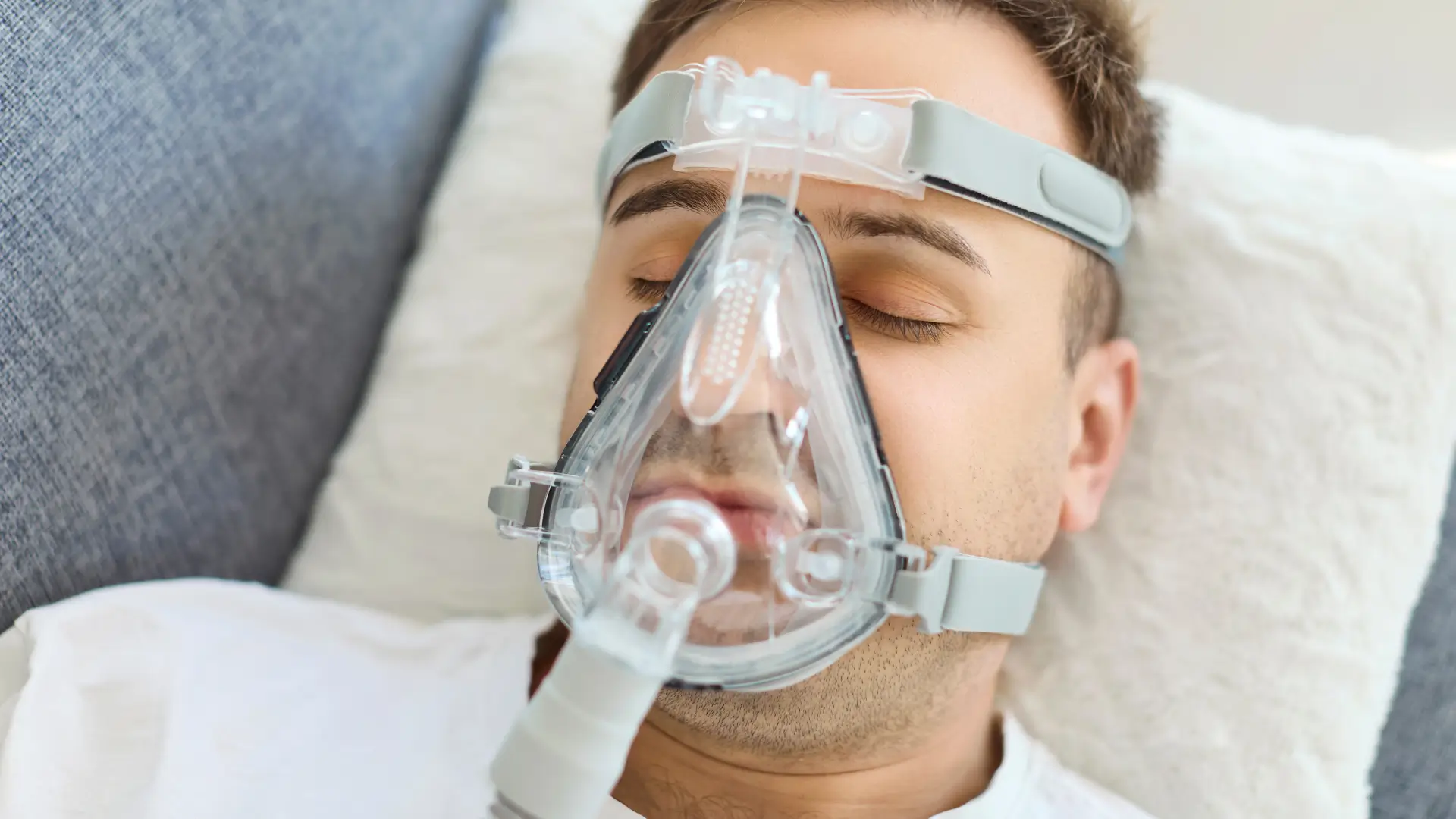
Obstructive sleep apnea occurs when the upper airway repeatedly narrows or collapses during sleep. These episodes can reduce or stop airflow, lower oxygen levels, and interrupt normal sleep [3]. Symptoms commonly include loud snoring, witnessed pauses in breathing, daytime fatigue, and impaired sleep quality.
OSA severity is typically measured using the apnea-hypopnea index. AHI represents the number of apnea and hypopnea events recorded during each hour of sleep [3].
Severity is commonly grouped as follows:
- Fewer than 5 events per hour: considered normal
- 5 to 14.9 events per hour: mild
- 15 to 29.9 events per hour: moderate
- 30 or more events per hour: severe
This classification provides important context for the Phase 3 findings. Participants in the OSA basket started with a mean AHI of 58.6 events per hour, placing the average participant well within the severe OSA range [2].
What Does the Phase 3 Trial Show About OSA Severity?
The phase 3 trial findings reported so far come from the OSA basket nested within TRIUMPH-1, Lilly’s pivotal obesity study. Because participants started with a mean AHI of 58.6, researchers were evaluating a population with substantial OSA severity at baseline [2].
At 80 weeks, the 12 mg retatrutide group was reported to have an AHI reduction of up to 36.1 events per hour. This represented a 60.6% decrease from baseline. Lower doses showed smaller, dose-dependent improvements compared with placebo [2].
The reduction moved the average participant from the severe OSA range toward the moderate category.
How Clinically Meaningful Were the Changes?
Lilly described the reported improvement as clinically meaningful and stated that the safety and efficacy findings in the OSA basket were broadly consistent with those seen in the wider Phase 3 program [2].
Still, the level of evidence matters. Full peer-reviewed publication of the polysomnography results and subgroup analyses is pending. The figures currently available are company-reported topline results presented in a scientific setting, rather than a fully published and independently adjudicated dataset [2].
For professionals asking whether retatrutide helps with sleep apnea, the findings show a substantial reduction in AHI in the population studied. They do not yet establish retatrutide as an approved treatment for OSA.
How Does Retatrutide Compare With Bariatric Surgery for OSA?
Weight reduction is already recognized as an important part of managing OSA in people with obesity. Sleep medicine guidance also supports considering bariatric surgery for adults with OSA and class II to III obesity who cannot tolerate or maintain PAP therapy [3].
Bariatric surgery can substantially improve AHI and cardiometabolic risk. However, the degree of weight loss and OSA improvement varies by procedure and patient, and sleep apnea may persist even after surgery.
The 60.6% AHI reduction reported in the TRIUMPH-1 OSA basket is numerically similar to improvements described in some bariatric surgery cohorts [2][3]. That comparison needs careful interpretation.
Why Can’t the Two Approaches Be Compared Directly?
There are several important differences:
- Retatrutide findings come from an 80-week pharmacologic study.
- Bariatric surgery is an established surgical intervention with a different evidence base.
- Retatrutide and bariatric surgery have not been compared head-to-head.
- Long-term durability after retatrutide treatment is stopped has not been established.
- Relapse rates following retatrutide have not been directly compared with outcomes after bariatric weight loss surgery.
For these reasons, the available research supports only a preliminary numerical comparison. It does not show that retatrutide is better than, equal to, or interchangeable with bariatric surgery for controlling sleep apnea.
How Does Weight Loss Relate to These OSA Findings?
In the broader TRIUMPH-1 study, the 12 mg retatrutide group was associated with an average body-weight reduction of about 28% over 80 weeks [2].
This is directly relevant to retatrutide and sleep apnea because adiposity and neck soft-tissue volume can affect upper-airway collapsibility. A reduction of this size is therefore likely to contribute to the improvement in AHI observed in the OSA basket.
The available results do not establish how much of the change in OSA severity came from weight loss alone or whether retatrutide may have additional weight-independent effects. Later analyses may provide more detail on that question.
The TRIUMPH program was designed to include people with obesity-related complications, including type 2 diabetes and knee osteoarthritis, so researchers could examine whether reductions in body weight were accompanied by measurable improvement in these conditions [2].
In the OSA basket, the key point is that changes in breathing events occurred alongside substantial weight loss rather than independently of it.
What Do Trials Report About Adverse Events and Heart Rate?

Earlier Phase 2 research reported a safety profile broadly consistent with other incretin-based therapies [1]. Gastrointestinal adverse events were the most frequently reported and included:
- Nausea
- Vomiting
- Diarrhea
These events were generally dose-related and were often manageable through gradual dose escalation [1].
What Happened to Resting Heart Rate?
Phase 2 research also observed a modest, dose-dependent rise in resting heart rate. At the highest dose, the increase was roughly in the mid-single digits of beats per minute. It generally peaked around week 24 before stabilizing [1].
Within the Phase 3 program, Lilly reported that adverse events in the OSA basket were broadly consistent with those seen in the rest of the obesity trial population. To date, the reported findings have not identified a new safety signal specific to participants with OSA [2].
Rare or serious side effects, including cardiac arrhythmias, have been reported at low rates and have not so far been associated with a clear increase in major adverse cardiovascular events [1][2].
A dedicated cardiovascular outcomes trial is still underway to provide more information about longer-term safety.
Note: Until OSA-specific safety findings are fully published and retatrutide completes regulatory review, the available results do not support substituting an investigational agent for PAP therapy or other guideline-directed OSA treatment.
What Might Retatrutide Cost, and Is It Available?
Retatrutide remains investigational and has not been approved by the FDA or other major regulators for OSA, obesity, or any other indication [2][4]. Access is currently limited to Lilly’s clinical trial program.
Specific pricing has not been announced. The available market context comes from existing GLP-1 and GIP/GLP-1 weight-loss medications, where manufacturer prices may range from the high hundreds to low thousands of dollars per month before savings programs or insurance adjustments.
That range should not be treated as an estimate of what retatrutide may eventually cost. No official pricing has been established.
What Do the Retatrutide Sleep Apnea Findings Mean Overall?
The Phase 3 findings reported so far suggest that retatrutide may substantially reduce OSA severity in people with obesity and moderate-to-severe sleep apnea.
In the nested TRIUMPH-1 OSA basket, participants receiving the 12 mg dose had an AHI reduction of up to 36.1 events per hour after 80 weeks, equal to a 60.6% decrease from baseline [2]. That change moved the average participant from the severe OSA range toward the moderate category.
The results are notable, but several questions remain. The improvement occurred alongside substantial weight loss, so weight reduction likely contributed significantly to the AHI change. The available data also come from a nested trial within a broader obesity program, and full peer-reviewed polysomnography and subgroup findings are still pending.
Retatrutide also remains investigational. It has not been approved for OSA, and the reported findings do not replace established treatment approaches such as PAP therapy or appropriate bariatric surgery.
For now, the retatrutide sleep apnea data are best viewed as promising Phase 3 research rather than evidence of an established OSA treatment.
Looking to buy retatrutide online? Get in touch with our customer service representatives at Medica Depot for further guidance.
The contents of this page are meant for licensed medical professionals. They serve informational purposes only and are not to be taken as medical advice.
Citations
[1] Jastreboff, Ania M et al. “Triple-Hormone-Receptor Agonist Retatrutide for Obesity – A Phase 2 Trial.” The New England journal of medicine vol. 389,6 (2023): 514-526. doi:10.1056/NEJMoa2301972
[2] Eli Lilly and Company. “Lilly’s Triple Agonist, Retatrutide, Drove Substantial Improvements in Weight, A1C, Knee Osteoarthritis Pain, and Obstructive Sleep Apnea, Demonstrating Its Remarkable Potential to Treat Obesity and Its Complications.” investor.lilly.com/news-releases/news-release-details/lillys-triple-agonist-retatrutide-drove-substantial-improvements.
[3] Kent, David et al. “Referral of adults with obstructive sleep apnea for surgical consultation: an American Academy of Sleep Medicine clinical practice guideline.” Journal of clinical sleep medicine : JCSM : official publication of the American Academy of Sleep Medicine vol. 17,12 (2021): 2499-2505. doi:10.5664/jcsm.9592
[4] Giblin, Kathryn et al. “Retatrutide for the treatment of obesity, obstructive sleep apnea and knee osteoarthritis: Rationale and design of the TRIUMPH registrational clinical trials.” Diabetes, obesity & metabolism vol. 28,1 (2026): 83-93. doi:10.1111/dom.70209
This content was prepared and reviewed under our editorial guidelines , which govern how we source, verify, and update clinical and product information. Every claim is checked against peer-reviewed research, manufacturer documentation, or regulatory guidance before publication.