In injectable aesthetics, biostimulators for face have moved from a specialty subcategory into mainstream provider practice. Where traditional dermal fillers add immediate volume with hyaluronic acid, the best biostimulators for face take a slower, indirect route. They cue fibroblasts to build primarily new collagen (and some elastin) at the treatment site over the weeks and months that follow.
This article will explore how the leading biostimulators for face work, how they differ from HA fillers, how the top brands compare on mechanism, longevity, and cost, and which options best fit specific signs of aging.
For clinics evaluating which biostimulator for the face to add to their offering, Medica Depot supplies genuine, manufacturer-sourced options. Practices building out a regenerative aesthetics service can buy biostimulators directly through our catalog.
Key Takeaways
- Biostimulators for face work by cueing the patient’s own fibroblasts to lay down primarily collagen (and some elastin), so change appears gradually rather than the moment the syringe is emptied.
- The three product classes that dominate this space differ meaningfully on onset, duration, and regulatory reach: PLLA (Sculptra®) and CaHA (Radiesse®) hold FDA approval (PMA) in the US, while PCL (Ellansé®) is CE-marked and used across Europe and Asia but is not FDA-approved.
- The total cost of a treatment plan depends less on per-vial or per-syringe price than on how many sessions a patient needs and how long results are expected to last.
About: Medica Depot is your trusted all-in-one supplier, offering a range of high-quality medical injectables and supplies. We offer a worry-free experience in searching for the best and most popular products on the market, like biostimulators for face. Whether for health professionals, plastic surgeons, dermatologists, licensed estheticians, or other specialists, we can offer genuine, brand-name products you may need. With Medica Depot, we prioritize serving you better to improve the patient’s quality of life.
What Are Facial Biostimulators?
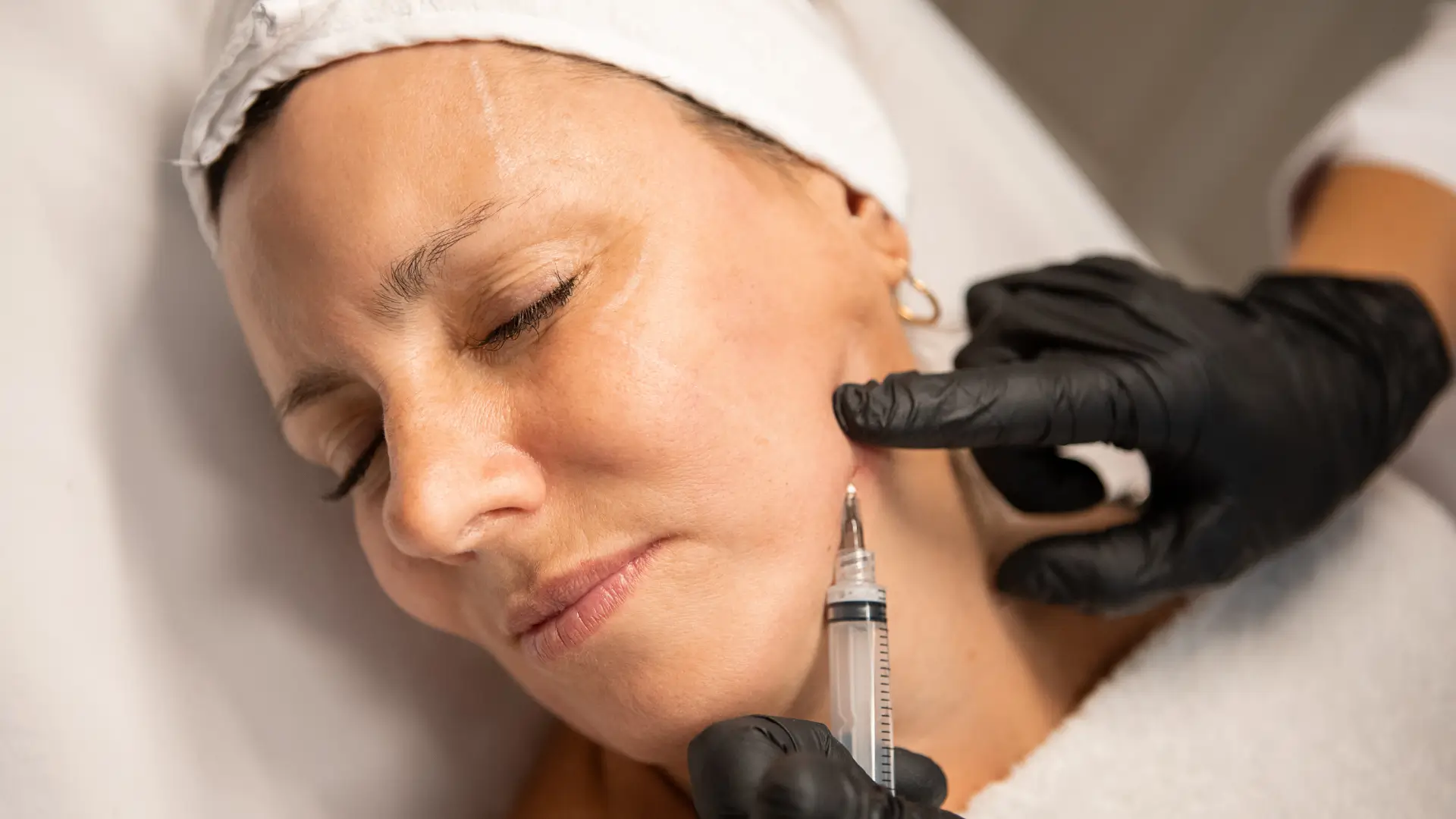
Facial biostimulators are injectable devices that trigger a controlled tissue response, recruiting macrophages and fibroblasts to the treatment site. Fibroblasts then lay down new collagen along the material’s surface over the following weeks and months, gradually restoring facial volume and refining skin quality. Because change accumulates, clinicians typically administer biostimulator treatments as a series across two or three appointments rather than in a single visit.
So what are biostimulators for face specifically, and which brands define the category? Three material classes cover the great majority of clinical use today:
- Poly-L-lactic acid (PLLA), marketed most widely as Sculptra®.
- Calcium hydroxyapatite (CaHA), marketed most widely as Radiesse®.
- Polycaprolactone (PCL), marketed most widely as Ellansé®.
All three share the same broad goal: helping the face look refreshed through the body’s own repair processes rather than added filler bulk. They differ in how quickly change appears, how long it lasts, and where they can legally be used.
How Do Biostimulators Build Collagen?
The mechanism that separates biostimulators from traditional volumizers begins the moment particles are placed in the dermis or subdermal plane. Rather than provoking classic inflammation, biostimulator particles act as a scaffold that recruits macrophages and fibroblasts, which in turn lay down new type I collagen along the material’s surface as the particles are slowly resorbed.
Calcium hydroxyapatite is a particularly well-studied example of this dual mechanism. Clinical literature on CaHA-based biostimulators describes an initial, immediate volumizing effect from the gel carrier, followed by longer-term stimulation of the body’s natural collagen as the microspheres integrate with surrounding tissue and are gradually resorbed [2].
The slow, two-phase profile matters for skin rejuvenation with biostimulators. Patients notice subtle changes at first, then more visible improvements in skin quality and firmness over the following months as production of collagen and, to a smaller degree, elastin continues.
How Are Biostimulators Different From Traditional Dermal Fillers?

When comparing biostimulators vs fillers, it comes down to mechanism and timeline. Hyaluronic acid (HA) fillers add volume directly at the moment of injection, produce a visible result immediately, and are gradually broken down by the body’s own hyaluronidase enzymes within roughly six to twelve months.
Biostimulators take the opposite approach. Results build gradually over weeks to months as new collagen forms, and the effect can hold considerably longer once a treatment series is complete.
Providers often choose biostimulators over traditional fillers for patients who want a subtler, more progressive change to facial contour and skin quality, or who want to extend the interval between maintenance appointments. Practitioners also tend to plan biostimulators as a series across two to three sessions, because the collagen response develops cumulatively rather than reaching its ceiling after a single visit.
Top Brands: The Best Biostimulators for Face Compared
When practitioners weigh the top biostimulator brands for the face, three products dominate clinical use and provider demand. The sections below serve as a biostimulator for face comparing brands overview across mechanism, US regulatory reach, and typical use case.
US indications at a glance:
- Sculptra®: HIV-associated facial lipoatrophy; nasolabial folds and other facial wrinkles; cheek wrinkles [4][5].
- Radiesse®: Moderate-to-severe facial wrinkles and folds (including nasolabial folds); HIV-associated facial fat loss; hand augmentation [3].
- Ellansé®: Not FDA-approved in the US; CE-marked and widely used across Europe and Asia.
Sculptra® (Poly-L-Lactic Acid)
Initially approved for HIV-associated facial lipoatrophy, Sculptra® later received FDA approval for nasolabial folds and other facial wrinkles, and more recently for correcting fine lines and wrinkles in the cheek area [4][5]. PLLA induces collagen synthesis through a gradual, macrophage-mediated response. Visible improvement typically emerges over several weeks and continues to build across a multi-session series. Sculptra® is generally reached for when the aesthetic goal is diffuse volume restoration and an overall skin refresh rather than a single point of contour.
Radiesse® (Calcium Hydroxyapatite)
Radiesse® holds FDA approval for subdermal correction of moderate to severe facial wrinkles and folds, including nasolabial folds, and for correction of facial fat loss associated with HIV [3]. Its calcium hydroxyapatite microspheres provide immediate structural support while stimulating longer-term collagen production. This dual-action profile makes Radiesse® a common choice when immediate contouring is desired alongside biostimulation.
Ellansé® (Polycaprolactone)
Built on PCL microspheres suspended in a carboxymethylcellulose gel, Ellansé® is positioned as a long-acting biostimulator. A 2025 randomized head-to-head trial in nasolabial folds reported PCL as more durable than PLLA at six and twelve months, with a comparable safety profile [1]. That finding is specific to the nasolabial fold indication in a single study, and should not be read as a class-wide superiority across every facial area. Ellansé® is not FDA-approved in the United States, but it carries a CE mark and is widely used across Europe and Asia.
Medica Depot stocks genuine Sculptra® and Radiesse® for US-based providers, and carries a broader range of facial biostimulators so clinics can source exactly what a given treatment plan calls for.
How Long Do Facial Biostimulator Results Last?
When seeking the best biostimulators for face, patients strongly consider the cost. Pricing of Longevity is one of the biggest differentiators across brands, and it is one of the most patient-, area-, and technique-dependent numbers in the category. Ranges cited in current reviews cluster roughly as follows:
- CaHA (Radiesse®): commonly around 12 to 18 months for approved facial indications, with longer durations reported under certain dilution and layering protocols (some off-label).
- PLLA (Sculptra®): up to about 24 months after a full treatment series, once the collagen response has had time to consolidate.
- PCL (Ellansé®): up to about 24 to 30+ months in some formulations, depending on the specific product variant used.
Typical treatment course also varies by product. Sculptra® is typically administered as a series of two to three sessions, spaced about four to six weeks apart, with results assessed a few months after the final session. Radiesse® commonly reaches an initial correction in fewer sessions because of its immediate gel-carrier volume, though top-up sessions are still planned as collagen builds. PCL products are often positioned around a single-visit correction with maintenance timed further out.
Note: Do not quote any of these numbers to a patient as a promise. They help providers plan; patient counseling should stay grounded in the phrase “up to.”
Can Biostimulators Be Combined With Other Treatments?
Biostimulators are commonly layered into broader treatment plans alongside other modalities. Frequent pairings in practice include:
- Neuromodulators, to address dynamic lines while the biostimulator builds collagen over time.
- HA fillers, for immediate structural correction in specific areas, alongside a biostimulator working more gradually elsewhere on the face.
- Energy-based skin tightening devices, sequenced before or after the biostimulator series depending on the device modality.
Because the collagen response takes weeks to months to develop, providers often stage biostimulator sessions ahead of an event or milestone, and plan maintenance visits at wider intervals than they would with a purely volumizing filler.
Sequencing also depends on the treatment area and depth of placement, so a patient’s complete injectable history should shape how a biostimulator fits into an existing plan.
Which Are the Best Biostimulators for Face for Each Sign of Aging?
The right choice ultimately follows the sign of aging in question and how quickly the patient wants change:
- Diffuse mid-face and lower-face volume loss with an overall skin refresh goal: Sculptra’s gradual, PLLA-driven collagen response is often a strong fit.
- Loss of contour where some immediate lift is desired alongside biostimulation: Radiesse’s dual-action profile is commonly chosen.
- Longer-duration correction in markets where it is approved: PCL-based products such as Ellansé® are often chosen.
Choosing the Best Biostimulator for Face for Your Patient
Because patient selection shapes outcomes as much as product choice, choosing the best biostimulator for face for a given patient means weighing mechanism, expected longevity, and regulatory availability together. The best biostimulator for face on paper is not always the one that fits the patient in the chair; injection depth, treatment area, and prior filler history all move the answer.
Clinics that buy biostimulators online through Medica Depot can pair that decision with a known-good sourcing routine, so the product on the tray matches the plan on the chart, and the practice’s regenerative aesthetics offering builds on genuine, brand-name inventory rather than supply-side uncertainty.
The contents of this page are meant for licensed medical professionals. They serve informational purposes only and are not to be taken as medical advice.
Citations
[1] Hu, Kaixuan, and Shanqing Wang. “Comparing the Safety and Effectiveness of PCL and PLLA Injections for Nasolabial Fold Correction.” Journal of cosmetic dermatology vol. 24,9 (2025): e70414. doi:10.1111/jocd.70414
[2] Jacovella, Patricio F. “Use of calcium hydroxylapatite (Radiesse) for facial augmentation.” Clinical interventions in aging vol. 3,1 (2008): 161-74. doi:10.2147/cia.s2065
[3] U.S. Food and Drug Administration. RADIESSE® Injectable Implant Instructions For Use. www.accessdata.fda.gov/cdrh_docs/pdf5/p050037c.pdf.
[4] U.S. Food and Drug Administration. Sculptra: Summary of Safety and Effectiveness Data (SSED), P030050/S039. https://www.accessdata.fda.gov/cdrh_docs/pdf3/P030050S039B.pdf.
[5] Galderma. “Galderma Receives FDA Approval for Sculptra® for the Correction of Cheek Wrinkles.” Galderma, 26 Apr. 2023, www.galderma.com/news/galderma-receives-fda-approval-sculptrar-cheek-wrinkles-0.
This content was prepared and reviewed under our editorial guidelines , which govern how we source, verify, and update clinical and product information. Every claim is checked against peer-reviewed research, manufacturer documentation, or regulatory guidance before publication.