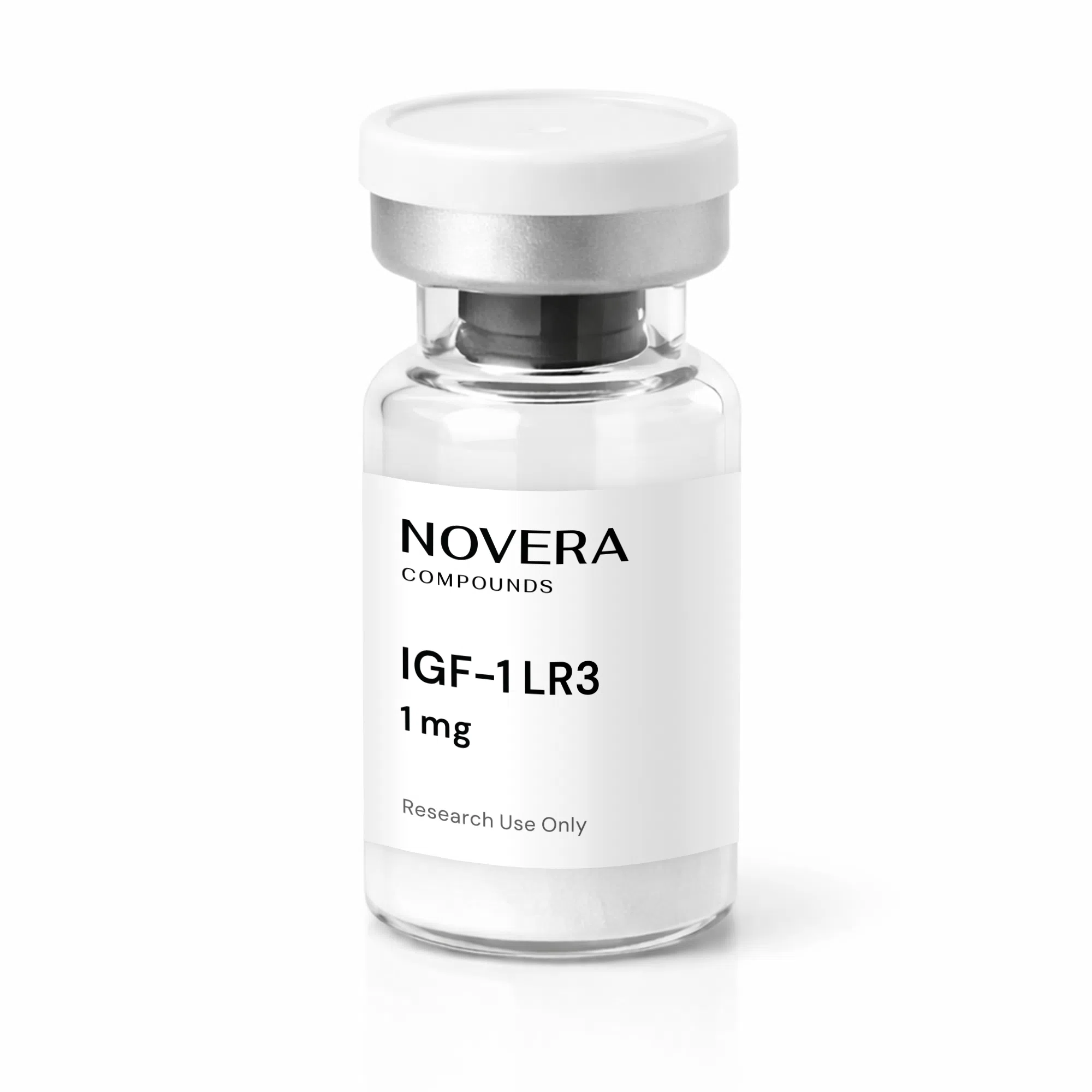
IGF-1 LR3 1mg
Strength: 1 mg
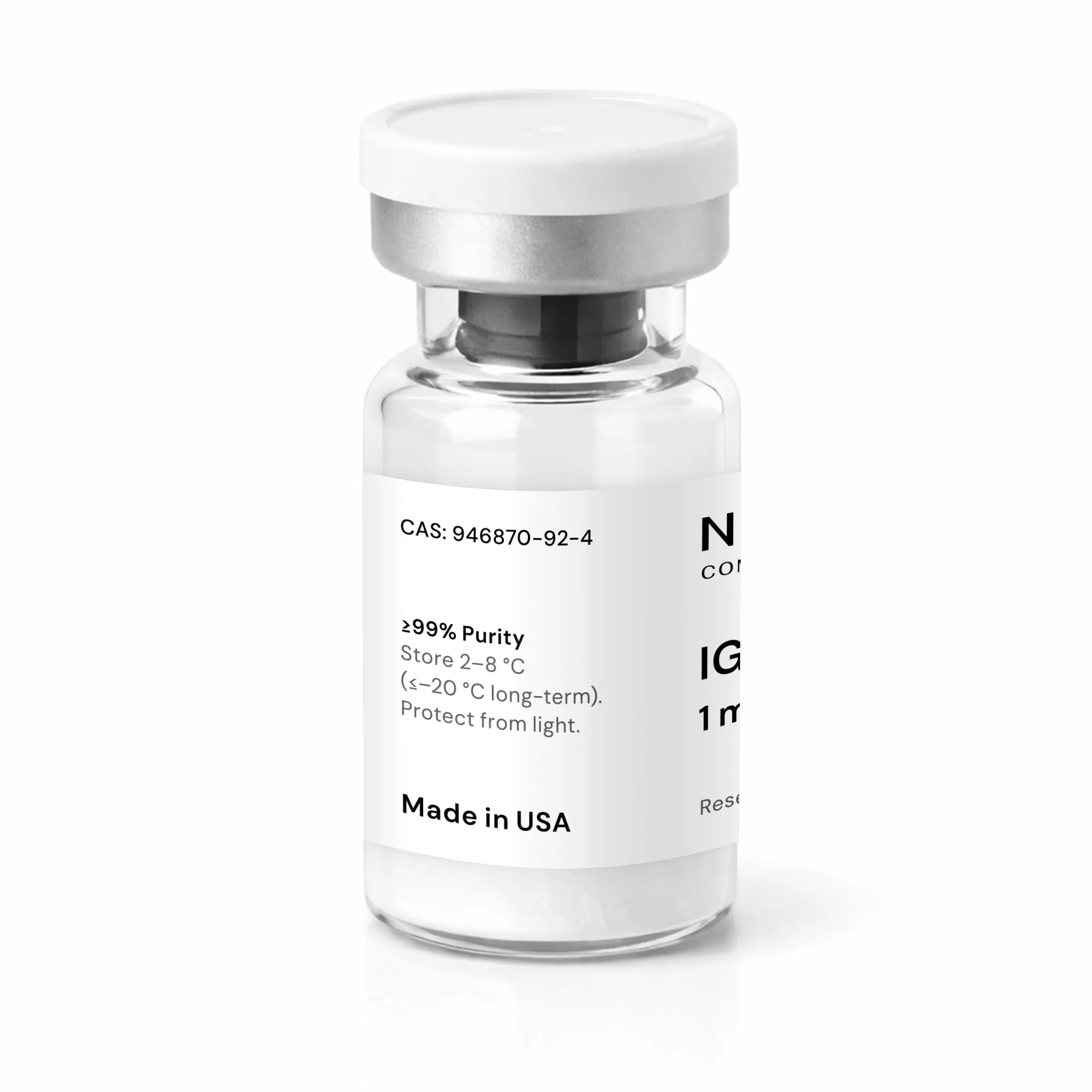
CAS: 946870-92-4
Chemical Formula: C₄₀₀H₆₂₅N₁₁₁O₁₁₅S₉
Molecular weight: 9117.60 g/mol
Peptide Sequence: MFPAMPLSSL–FVNGPRTLCG–AYGGSCASFR–RGFYFNKPTG–YGSSTKKAYG–NNYRRHPLLK–PPIKSAQG
Synonyms: Long R3-IGF-1, M9L22Y19H9, 143045-27-6, Long-(arg3)insulin-like growth factor-i, IGF-I analog
Storage: Store 2–8 °C (≤–20 °C long-term). RT exposure during transport acceptable. Protect from light.
Shelf life: 24 months from the manufacturing date.
IGF-1 LR3 is a recombinant long-acting insulin-like growth factor-1 analog supplied for laboratory research use only. Structurally modified to reduce binding to IGF-binding proteins, it is commonly used in in vitro and preclinical studies investigating receptor activation, cellular growth signaling, protein synthesis, and regulation of metabolic pathways.


Why Choose Medica Depot
Shop hundreds of medical products with no minimums and free shipping on large orders.
 400+ products
 No order minimums
 Free shipping
 Loyalty rewards
 Trusted since 2007
 Account manager
 Verified LOT numbers
INFORMATION
What is IGF-1 LR3 (1mg)?
IGF-1 LR3 (1 mg) is a synthetic recombinant analog of insulin-like growth factor-1 (IGF-1), categorized under growth factor and muscle biology research peptides, and supplied exclusively for laboratory research use. It is structurally modified from native human IGF-1 through two primary alterations: an arginine substitution at position 3 and the addition of a 13–amino acid extension at the N-terminus. These modifications distinguish IGF-1 LR3 from endogenous IGF-1 and are designed to alter receptor interaction dynamics and binding affinity in experimental systems.
In laboratory research, IGF-1 LR3 is used to investigate growth factor–mediated signaling pathways that regulate cellular proliferation, differentiation, metabolism, and protein synthesis. Because of its structural differences, IGF-1 LR3 shows reduced affinity for certain IGF-binding proteins (IGFBPs) in vitro, enabling researchers to study more sustained receptor engagement and downstream signaling under controlled conditions. The 1 mg presentation provides a standardized research quantity suitable for cell culture experiments, biochemical assays, and comparative growth factor studies.
Product Specifications
- CAS Number: 946870-92-4
- Peptide Type: Recombinant IGF-1 analog (Long R3-IGF-1)
- Molecular Formula: C₄₀₀H₆₂₅N₁₁₁O₁₁₅S₉
- Molecular Weight:60 g/mol
- Purity: ≥95% (HPLC-verified; identity confirmed via mass spectrometry)
- Packaging Format: 1 mg sterile, lyophilized powder in a sealed research-grade vial
- Storage Conditions: Store at −20°C; protect from light and moisture
- Intended Use: For Laboratory Research Use Only
Key Characteristics of IGF-1 LR3 (1mg)
- Recombinant long-acting IGF-1 analog engineered for experimental applications.
- Modified structure designed to reduce binding to IGF-binding proteins (IGFBPs) in vitro.
- Frequently used in receptor signaling and growth factor research models.
- Supplied in lyophilized form for convenient storage and handling in research settings.
- Manufactured under controlled conditions for batch-to-batch consistency.
- Verified using analytical methods such as HPLC and mass spectrometry.
- Suitable for cellular assays, receptor-binding studies, and mechanistic research.
- Designed for use in strictly controlled in vitro and preclinical models.
- Requires low-temperature storage to maintain peptide stability.
How IGF-1 LR3 (1mg) Supports Research
IGF-1 LR3 (1 mg) is widely used in experimental research to study insulin-like growth factor receptor (IGF-1R) activation and downstream signaling cascades. In vitro studies commonly evaluate its influence on intracellular pathways such as PI3K/Akt and MAPK/ERK signaling, which are associated with cellular growth, metabolic regulation, and protein synthesis in laboratory models.
Due to its structural extension and amino acid substitution, IGF-1 LR3 enables researchers to explore sustained growth factor signaling dynamics compared to native IGF-1. This makes it particularly useful in experiments assessing cell survival, tissue growth markers, myoblast proliferation, and metabolic signaling under controlled laboratory conditions. All findings remain investigational and confined to research environments.
Research Applications & Usage Information
IGF-1 LR3 (1 mg) is commonly incorporated into laboratory and preclinical research involving:
- IGF-1 receptor activation and binding affinity studies
- Myoblast and muscle cell culture experiments
- Cellular proliferation and differentiation assays
- Protein synthesis and anabolic signaling research
- Intracellular signaling pathway analysis (e.g., PI3K/Akt, MAPK/ERK)
- Comparative evaluation of native IGF-1 versus long-acting analogs
- Metabolic regulation and glucose-uptake research models
- Tissue growth and regenerative pathway investigations
All applications are investigational and limited to in vitro or preclinical research settings.
Handling and Storage Recommendations
To maintain structural integrity and experimental reliability:
- Store unopened vials at −20°C in a dry, light-protected environment.
- Minimize exposure to elevated temperatures prior to reconstitution.
- Allow vial to equilibrate to room temperature before opening to minimize condensation.
- Reconstitute under sterile laboratory conditions using an appropriate diluent.
- After reconstitution, store solutions at 2–8°C and use according to laboratory protocols.
- Avoid repeated freeze–thaw cycles to preserve peptide stability.
- Dispose of unused material in accordance with institutional laboratory safety protocols.
Proper storage and careful handling help maintain peptide integrity and ensure reliable experimental outcomes.
Research Use Only Notice
This product is intended for laboratory research use only and is not approved for human or veterinary use. It is not intended for diagnostic, therapeutic, or clinical applications. Any reference to biological activity or potential effects is based solely on preclinical or in-vitro findings and should not be interpreted as validated clinical outcomes. Researchers are responsible for ensuring proper handling, storage, and disposal in accordance with institutional, federal, and international guidelines.
References
- Bailes J, Soloviev M. Insulin-Like Growth Factor-1 (IGF-1) and Its Monitoring in Medical Diagnostic and in Sports. Biomolecules. 2021;11(2):217. Published 2021 Feb 4. doi:10.3390/biom11020217
- Bach LA, Hsieh S, Sakano K, Fujiwara H, Perdue JF, Rechler MM. Binding of mutants of human insulin-like growth factor II to insulin-like growth factor binding proteins 1-6. J Biol Chem. 1993;268(13):9246-9254.
- Abellan R, Ventura R, Palmi I, et al. Immunoassays for the measurement of IGF-II, IGFBP-2 and -3, and ICTP as indirect biomarkers of recombinant human growth hormone misuse in sport. Values in selected population of athletes. J Pharm Biomed Anal. 2008;48(3):844-852. doi:10.1016/j.jpba.2008.05.037
- Lu Z, Liu N, Huang H, et al. Recombinant expression of IGF-1 and LR3 IGF-1 fused with xylanase in Pichia pastoris. Applied Microbiology and Biotechnology. 2023;107(14):4543-4551. doi:10.1007/s00253-023-12606-0
What is IGF-1 LR3 (1mg)?
IGF-1 LR3 (1 mg) is a synthetic recombinant analog of insulin-like growth factor-1 (IGF-1), categorized under growth factor and muscle biology research peptides, and supplied exclusively for laboratory research use. It is structurally modified from native human IGF-1 through two primary alterations: an arginine substitution at position 3 and the addition of a 13–amino acid extension at the N-terminus. These modifications distinguish IGF-1 LR3 from endogenous IGF-1 and are designed to alter receptor interaction dynamics and binding affinity in experimental systems.
In laboratory research, IGF-1 LR3 is used to investigate growth factor–mediated signaling pathways that regulate cellular proliferation, differentiation, metabolism, and protein synthesis. Because of its structural differences, IGF-1 LR3 shows reduced affinity for certain IGF-binding proteins (IGFBPs) in vitro, enabling researchers to study more sustained receptor engagement and downstream signaling under controlled conditions. The 1 mg presentation provides a standardized research quantity suitable for cell culture experiments, biochemical assays, and comparative growth factor studies.
Product Specifications
- CAS Number: 946870-92-4
- Peptide Type: Recombinant IGF-1 analog (Long R3-IGF-1)
- Molecular Formula: C₄₀₀H₆₂₅N₁₁₁O₁₁₅S₉
- Molecular Weight:60 g/mol
- Purity: ≥95% (HPLC-verified; identity confirmed via mass spectrometry)
- Packaging Format: 1 mg sterile, lyophilized powder in a sealed research-grade vial
- Storage Conditions: Store at −20°C; protect from light and moisture
- Intended Use: For Laboratory Research Use Only
Key Characteristics of IGF-1 LR3 (1mg)
- Recombinant long-acting IGF-1 analog engineered for experimental applications.
- Modified structure designed to reduce binding to IGF-binding proteins (IGFBPs) in vitro.
- Frequently used in receptor signaling and growth factor research models.
- Supplied in lyophilized form for convenient storage and handling in research settings.
- Manufactured under controlled conditions for batch-to-batch consistency.
- Verified using analytical methods such as HPLC and mass spectrometry.
- Suitable for cellular assays, receptor-binding studies, and mechanistic research.
- Designed for use in strictly controlled in vitro and preclinical models.
- Requires low-temperature storage to maintain peptide stability.
How IGF-1 LR3 (1mg) Supports Research
IGF-1 LR3 (1 mg) is widely used in experimental research to study insulin-like growth factor receptor (IGF-1R) activation and downstream signaling cascades. In vitro studies commonly evaluate its influence on intracellular pathways such as PI3K/Akt and MAPK/ERK signaling, which are associated with cellular growth, metabolic regulation, and protein synthesis in laboratory models.
Due to its structural extension and amino acid substitution, IGF-1 LR3 enables researchers to explore sustained growth factor signaling dynamics compared to native IGF-1. This makes it particularly useful in experiments assessing cell survival, tissue growth markers, myoblast proliferation, and metabolic signaling under controlled laboratory conditions. All findings remain investigational and confined to research environments.
Research Applications & Usage Information
IGF-1 LR3 (1 mg) is commonly incorporated into laboratory and preclinical research involving:
- IGF-1 receptor activation and binding affinity studies
- Myoblast and muscle cell culture experiments
- Cellular proliferation and differentiation assays
- Protein synthesis and anabolic signaling research
- Intracellular signaling pathway analysis (e.g., PI3K/Akt, MAPK/ERK)
- Comparative evaluation of native IGF-1 versus long-acting analogs
- Metabolic regulation and glucose-uptake research models
- Tissue growth and regenerative pathway investigations
All applications are investigational and limited to in vitro or preclinical research settings.
Handling and Storage Recommendations
To maintain structural integrity and experimental reliability:
- Store unopened vials at −20°C in a dry, light-protected environment.
- Minimize exposure to elevated temperatures prior to reconstitution.
- Allow vial to equilibrate to room temperature before opening to minimize condensation.
- Reconstitute under sterile laboratory conditions using an appropriate diluent.
- After reconstitution, store solutions at 2–8°C and use according to laboratory protocols.
- Avoid repeated freeze–thaw cycles to preserve peptide stability.
- Dispose of unused material in accordance with institutional laboratory safety protocols.
Proper storage and careful handling help maintain peptide integrity and ensure reliable experimental outcomes.
Research Use Only Notice
This product is intended for laboratory research use only and is not approved for human or veterinary use. It is not intended for diagnostic, therapeutic, or clinical applications. Any reference to biological activity or potential effects is based solely on preclinical or in-vitro findings and should not be interpreted as validated clinical outcomes. Researchers are responsible for ensuring proper handling, storage, and disposal in accordance with institutional, federal, and international guidelines.
References
- Bailes J, Soloviev M. Insulin-Like Growth Factor-1 (IGF-1) and Its Monitoring in Medical Diagnostic and in Sports. Biomolecules. 2021;11(2):217. Published 2021 Feb 4. doi:10.3390/biom11020217
- Bach LA, Hsieh S, Sakano K, Fujiwara H, Perdue JF, Rechler MM. Binding of mutants of human insulin-like growth factor II to insulin-like growth factor binding proteins 1-6. J Biol Chem. 1993;268(13):9246-9254.
- Abellan R, Ventura R, Palmi I, et al. Immunoassays for the measurement of IGF-II, IGFBP-2 and -3, and ICTP as indirect biomarkers of recombinant human growth hormone misuse in sport. Values in selected population of athletes. J Pharm Biomed Anal. 2008;48(3):844-852. doi:10.1016/j.jpba.2008.05.037
- Lu Z, Liu N, Huang H, et al. Recombinant expression of IGF-1 and LR3 IGF-1 fused with xylanase in Pichia pastoris. Applied Microbiology and Biotechnology. 2023;107(14):4543-4551. doi:10.1007/s00253-023-12606-0
This content was prepared and reviewed under our editorial guidelines , which govern how we source, verify, and update clinical and product information. Every claim is checked against peer-reviewed research, manufacturer documentation, or regulatory guidance before publication.
Related products