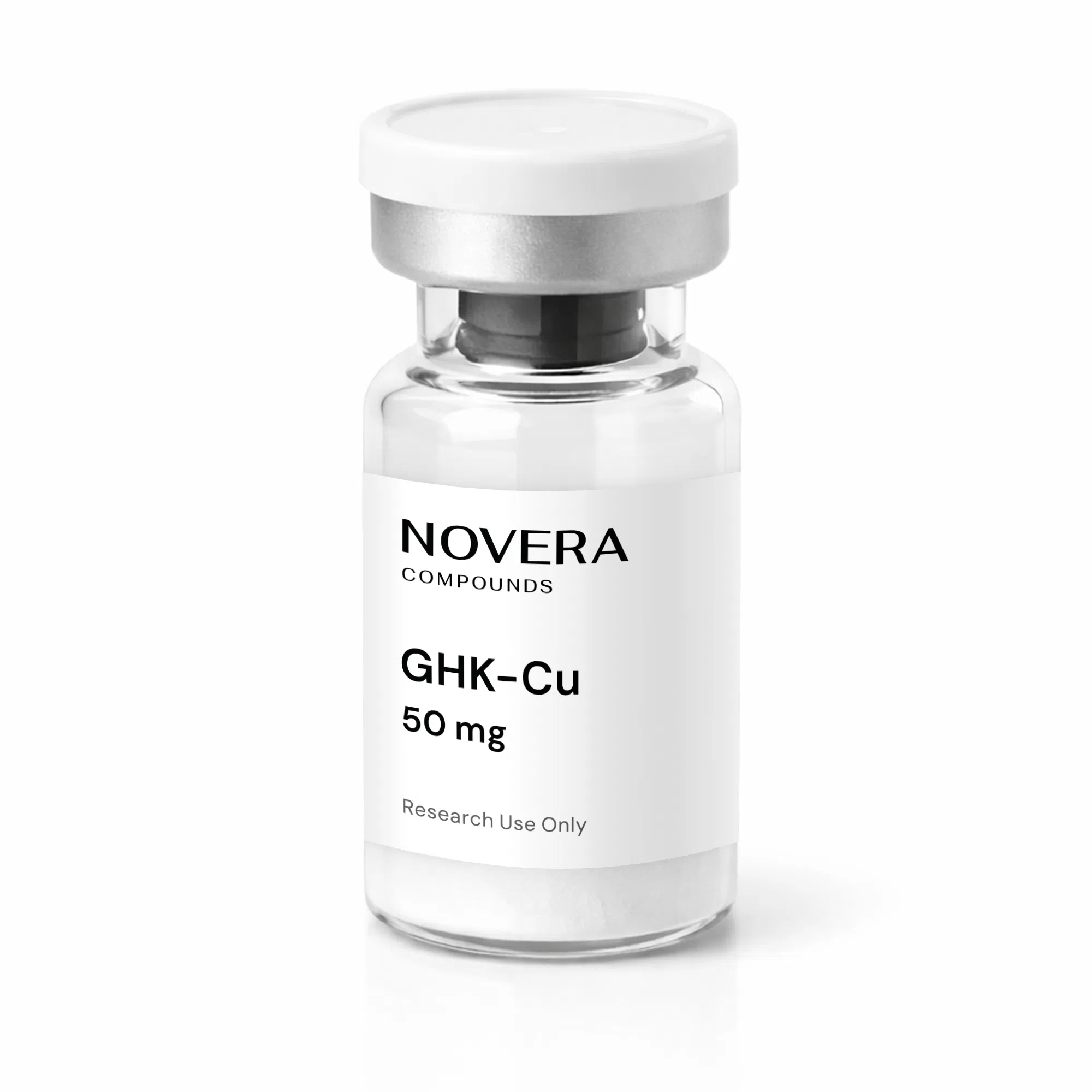
GHK-Cu 50mg
Strength: 50 mg
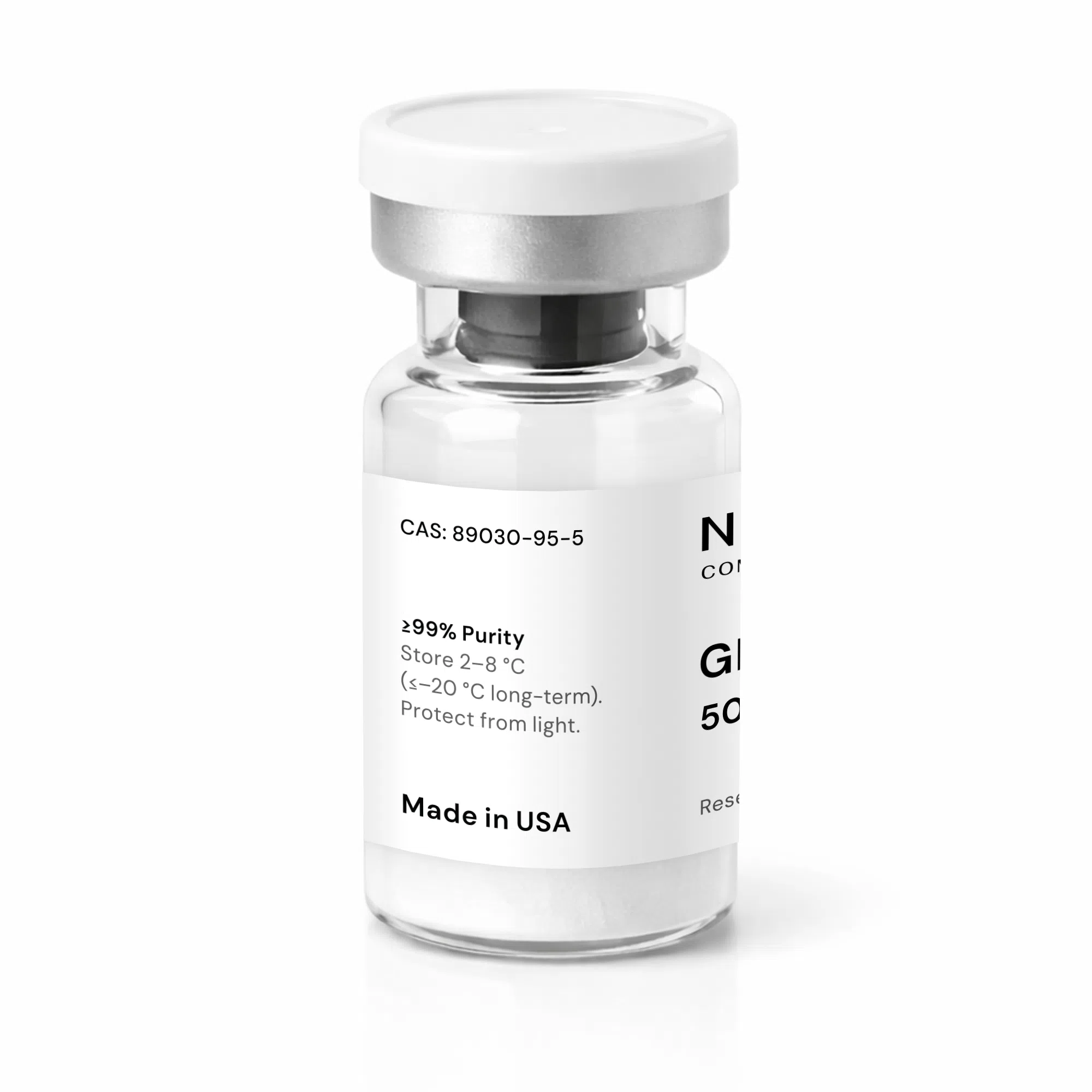
CAS: 49557-75-7
Chemical Formula: C₁₄H₂₁N₆O₄Cu
Molecular weight: 401.91 g/mol
Peptide Sequence: Gly-His-Lys(Cu2+)
Synonyms: Copper peptide, GHK, Tripeptide, ghkcu, GHK-Cu acetate, Gly-His-Lys-Cu(II)
Storage: Store 2–8 °C (≤–20 °C long-term). RT exposure during transport acceptable. Protect from light.
Shelf life: 24 months from the manufacturing date.
GHK Cu is a synthetic copper–tripeptide complex composed of glycyl L histidyl L lysine (GHK) chelated with copper(II), used in research to study tissue remodeling, extracellular matrix regulation, and copper dependent signaling in vitro and in animal models. Research has associated GHK Cu with changes in collagen synthesis, antioxidant and inflammatory markers, and gene expression profiles in defined experimental systems. All findings are limited to controlled cell based and preclinical settings and do not imply therapeutic use.


Why Choose Medica Depot
Shop hundreds of medical products with no minimums and free shipping on large orders.
 400+ products
 No order minimums
 Free shipping
 Loyalty rewards
 Trusted since 2007
 Account manager
 Verified LOT numbers
INFORMATION
What is GHK-Cu (50mg)?
GHK-Cu (50 mg) is a synthetic research peptide–copper complex used in healing and regenerative research. It combines the naturally occurring tripeptide glycyl-L-histidyl-L-lysine (GHK) with copper(II) to form a small, stable complex that researchers also detect in human plasma, saliva, and tissue matrices.
Because GHK binds copper strongly, most published research focuses on the copper-bound form (GHK-Cu). In controlled laboratory models, researchers use GHK-Cu to investigate extracellular matrix (ECM) remodeling, copper balance in cells, and redox signaling (how cells respond to oxidative stress).
Furthermore, studies have examined these effects in fibroblast and keratinocyte cultures, endothelial and neuronal systems, and preclinical animal models related to wound repair and tissue response.
For laboratory research use only.
Product Specifications
- Synonyms: Copper peptide; GHK; GHK‑Cu; Tripeptide copper complex; GHK‑Cu acetate; Gly‑His‑Lys‑Cu(II)
- Peptide Sequence: Gly‑His‑Lys(Cu²⁺)
- Chemical Formula: C₁₄H₂₃N₆O₄Cu (GHK‑Cu complex)
- Molecular Weight: 401.91 g/mol
- CAS Number: 49557-75-7
- Purity: Typically supplied at ≥99% purity as determined by HPLC; identity and mass are confirmed by analytical methods such as HPLC and MS, with lot‑specific data documented on the Certificate of Analysis.
- Packaging Format: 50 mg GHK‑Cu per vial, provided as a lyophilized (freeze‑dried) powder in a sealed research‑use container.
- Storage Conditions: Store at −20°C or below, protected from light and moisture; avoid repeated freeze–thaw cycles.
- Intended Use: For Laboratory Research Use Only (not for human or veterinary use).
Key Characteristics of GHK-Cu (50mg)
- Copper-Binding Research Complex: A GHK tripeptide chelated with Cu(II), used to study copper-dependent biology.
- ECM and Collagen-Focused Models: Frequently used in fibroblast systems that track collagen and matrix-related markers.
- Redox and Oxidative-Stress Research: Supports studies of antioxidant pathways and stress-response signaling under controlled conditions.
- Wound and Tissue-Response Models (preclinical): Used in experimental settings that measure connective tissue and repair-related endpoints.
- Gene-Expression Readouts: Research reports changes in gene sets linked to remodeling, inflammation signaling, and oxidative defense.
- Dermal Model Utility: Used in skin-related research that evaluates matrix organization and tissue structure markers.
- High-Purity, Lyophilized Format: Designed for reproducible preparation and traceability across experiments.
How GHK-Cu (50mg) Supports Research
Researchers use GHK-Cu (50 mg) to explore how copper availability and delivery can influence tissue remodeling and cellular signaling. In experimental systems, the complex provides a controlled way to study copper-linked changes in collagen-associated pathways, inflammatory mediators, and oxidative stress markers.
Because studies have evaluated GHK-Cu across multiple cell types (including fibroblasts and keratinocytes) and in preclinical models, it is commonly used to support mechanistic work on aging-related tissue changes, repair biology, and copper homeostasis—strictly within controlled research designs.
Research Applications & Usage Information
GHK‑Cu (50 mg) is commonly used in:
- Fibroblast function: Examining collagen synthesis and extracellular-matrix changes in cell cultures.
- Wound healing: Studying connective tissue deposition, angiogenesis, and inflammatory markers in animal models.
- Cosmetic research: Exploring dermal tissue effects, skin elasticity, and wrinkle reduction in controlled studies.
- Oxidative stress: Investigating how GHK‑Cu influences antioxidant enzyme activity and stress responses in cells.
- Copper transport: Studying copper uptake and homeostasis in cell models.
- Neuroprotection: Researching the peptide’s effects on neuronal cells and gene expression linked to neuroprotection.
- Cancer research: Evaluating GHK‑Cu in tumor biology and its impact on cancer cell behavior.
Notably, GHK‑Cu is a tool for exploring copper-dependent signaling and tissue regulation, with effects observed only in specific research models.
Handling and Storage Recommendations
- Keep lyophilized vials sealed at −20°C or colder, dry, and protected from light.
- Let the vial warm to room temperature while sealed to reduce condensation.
- Store at 2-8°C (short-term) or −20°C (long-term) based on your lab’s validated practice.
- Use standard PPE (lab coat, gloves, eye protection).
- Dispose of unused peptide, solutions, and contaminated items according to institutional and local chemical/biological waste procedures.
Research Use Only Notice
This product is intended for laboratory research use only and is not approved for human or veterinary use. It is not intended for diagnostic, therapeutic, or clinical applications. Any reference to biological activity or potential effects is based solely on preclinical or in-vitro findings and should not be interpreted as validated clinical outcomes. Researchers are responsible for ensuring proper handling, storage, and disposal in accordance with institutional, federal, and international guidelines.
References
- Glycyl-L-histidyl-L-lysine. PubChem. https://pubchem.ncbi.nlm.nih.gov/compound/73587
- Maquart FX, Pickart L, Laurent M, Gillery P, Monboisse JC, Borel JP. Stimulation of collagen synthesis in fibroblast cultures by the tripeptide‐copper complex glycyl‐L‐histidyl‐L‐lysine‐Cu2+. FEBS Letters. 1988;238(2):343-346. doi:10.1016/0014-5793(88)80509-x
- Maquart FX, Bellon G, Chaqour B, et al. In vivo stimulation of connective tissue accumulation by the tripeptide-copper complex glycyl-L-histidyl-L-lysine-Cu2+ in rat experimental wounds. Journal of Clinical Investigation. 1993;92(5):2368-2376. doi:10.1172/jci116842
- Pickart L, Vasquez-Soltero JM, Margolina A. The Human Tripeptide GHK-CU in Prevention of Oxidative Stress and Degenerative Conditions of aging: Implications for Cognitive Health. Oxidative Medicine and Cellular Longevity. 2012;2012:1-8. doi:10.1155/2012/324832
- Pickart L, Margolina A. Regenerative and protective actions of the GHK-CU peptide in the light of the new gene data. International Journal of Molecular Sciences. 2018;19(7):1987. doi:10.3390/ijms19071987
- Pickart L, Vasquez-Soltero J, Margolina A. The effect of the human peptide GHK on gene expression relevant to nervous system function and cognitive decline. Brain Sciences. 2017;7(2):20. doi:10.3390/brainsci7020020
What is GHK-Cu (50mg)?
GHK-Cu (50 mg) is a synthetic research peptide–copper complex used in healing and regenerative research. It combines the naturally occurring tripeptide glycyl-L-histidyl-L-lysine (GHK) with copper(II) to form a small, stable complex that researchers also detect in human plasma, saliva, and tissue matrices.
Because GHK binds copper strongly, most published research focuses on the copper-bound form (GHK-Cu). In controlled laboratory models, researchers use GHK-Cu to investigate extracellular matrix (ECM) remodeling, copper balance in cells, and redox signaling (how cells respond to oxidative stress).
Furthermore, studies have examined these effects in fibroblast and keratinocyte cultures, endothelial and neuronal systems, and preclinical animal models related to wound repair and tissue response.
For laboratory research use only.
Product Specifications
- Synonyms: Copper peptide; GHK; GHK‑Cu; Tripeptide copper complex; GHK‑Cu acetate; Gly‑His‑Lys‑Cu(II)
- Peptide Sequence: Gly‑His‑Lys(Cu²⁺)
- Chemical Formula: C₁₄H₂₃N₆O₄Cu (GHK‑Cu complex)
- Molecular Weight: 401.91 g/mol
- CAS Number: 49557-75-7
- Purity: Typically supplied at ≥99% purity as determined by HPLC; identity and mass are confirmed by analytical methods such as HPLC and MS, with lot‑specific data documented on the Certificate of Analysis.
- Packaging Format: 50 mg GHK‑Cu per vial, provided as a lyophilized (freeze‑dried) powder in a sealed research‑use container.
- Storage Conditions: Store at −20°C or below, protected from light and moisture; avoid repeated freeze–thaw cycles.
- Intended Use: For Laboratory Research Use Only (not for human or veterinary use).
Key Characteristics of GHK-Cu (50mg)
- Copper-Binding Research Complex: A GHK tripeptide chelated with Cu(II), used to study copper-dependent biology.
- ECM and Collagen-Focused Models: Frequently used in fibroblast systems that track collagen and matrix-related markers.
- Redox and Oxidative-Stress Research: Supports studies of antioxidant pathways and stress-response signaling under controlled conditions.
- Wound and Tissue-Response Models (preclinical): Used in experimental settings that measure connective tissue and repair-related endpoints.
- Gene-Expression Readouts: Research reports changes in gene sets linked to remodeling, inflammation signaling, and oxidative defense.
- Dermal Model Utility: Used in skin-related research that evaluates matrix organization and tissue structure markers.
- High-Purity, Lyophilized Format: Designed for reproducible preparation and traceability across experiments.
How GHK-Cu (50mg) Supports Research
Researchers use GHK-Cu (50 mg) to explore how copper availability and delivery can influence tissue remodeling and cellular signaling. In experimental systems, the complex provides a controlled way to study copper-linked changes in collagen-associated pathways, inflammatory mediators, and oxidative stress markers.
Because studies have evaluated GHK-Cu across multiple cell types (including fibroblasts and keratinocytes) and in preclinical models, it is commonly used to support mechanistic work on aging-related tissue changes, repair biology, and copper homeostasis—strictly within controlled research designs.
Research Applications & Usage Information
GHK‑Cu (50 mg) is commonly used in:
- Fibroblast function: Examining collagen synthesis and extracellular-matrix changes in cell cultures.
- Wound healing: Studying connective tissue deposition, angiogenesis, and inflammatory markers in animal models.
- Cosmetic research: Exploring dermal tissue effects, skin elasticity, and wrinkle reduction in controlled studies.
- Oxidative stress: Investigating how GHK‑Cu influences antioxidant enzyme activity and stress responses in cells.
- Copper transport: Studying copper uptake and homeostasis in cell models.
- Neuroprotection: Researching the peptide’s effects on neuronal cells and gene expression linked to neuroprotection.
- Cancer research: Evaluating GHK‑Cu in tumor biology and its impact on cancer cell behavior.
Notably, GHK‑Cu is a tool for exploring copper-dependent signaling and tissue regulation, with effects observed only in specific research models.
Handling and Storage Recommendations
- Keep lyophilized vials sealed at −20°C or colder, dry, and protected from light.
- Let the vial warm to room temperature while sealed to reduce condensation.
- Store at 2-8°C (short-term) or −20°C (long-term) based on your lab’s validated practice.
- Use standard PPE (lab coat, gloves, eye protection).
- Dispose of unused peptide, solutions, and contaminated items according to institutional and local chemical/biological waste procedures.
Research Use Only Notice
This product is intended for laboratory research use only and is not approved for human or veterinary use. It is not intended for diagnostic, therapeutic, or clinical applications. Any reference to biological activity or potential effects is based solely on preclinical or in-vitro findings and should not be interpreted as validated clinical outcomes. Researchers are responsible for ensuring proper handling, storage, and disposal in accordance with institutional, federal, and international guidelines.
References
- Glycyl-L-histidyl-L-lysine. PubChem. https://pubchem.ncbi.nlm.nih.gov/compound/73587
- Maquart FX, Pickart L, Laurent M, Gillery P, Monboisse JC, Borel JP. Stimulation of collagen synthesis in fibroblast cultures by the tripeptide‐copper complex glycyl‐L‐histidyl‐L‐lysine‐Cu2+. FEBS Letters. 1988;238(2):343-346. doi:10.1016/0014-5793(88)80509-x
- Maquart FX, Bellon G, Chaqour B, et al. In vivo stimulation of connective tissue accumulation by the tripeptide-copper complex glycyl-L-histidyl-L-lysine-Cu2+ in rat experimental wounds. Journal of Clinical Investigation. 1993;92(5):2368-2376. doi:10.1172/jci116842
- Pickart L, Vasquez-Soltero JM, Margolina A. The Human Tripeptide GHK-CU in Prevention of Oxidative Stress and Degenerative Conditions of aging: Implications for Cognitive Health. Oxidative Medicine and Cellular Longevity. 2012;2012:1-8. doi:10.1155/2012/324832
- Pickart L, Margolina A. Regenerative and protective actions of the GHK-CU peptide in the light of the new gene data. International Journal of Molecular Sciences. 2018;19(7):1987. doi:10.3390/ijms19071987
- Pickart L, Vasquez-Soltero J, Margolina A. The effect of the human peptide GHK on gene expression relevant to nervous system function and cognitive decline. Brain Sciences. 2017;7(2):20. doi:10.3390/brainsci7020020
This content was prepared and reviewed under our editorial guidelines , which govern how we source, verify, and update clinical and product information. Every claim is checked against peer-reviewed research, manufacturer documentation, or regulatory guidance before publication.
Related products