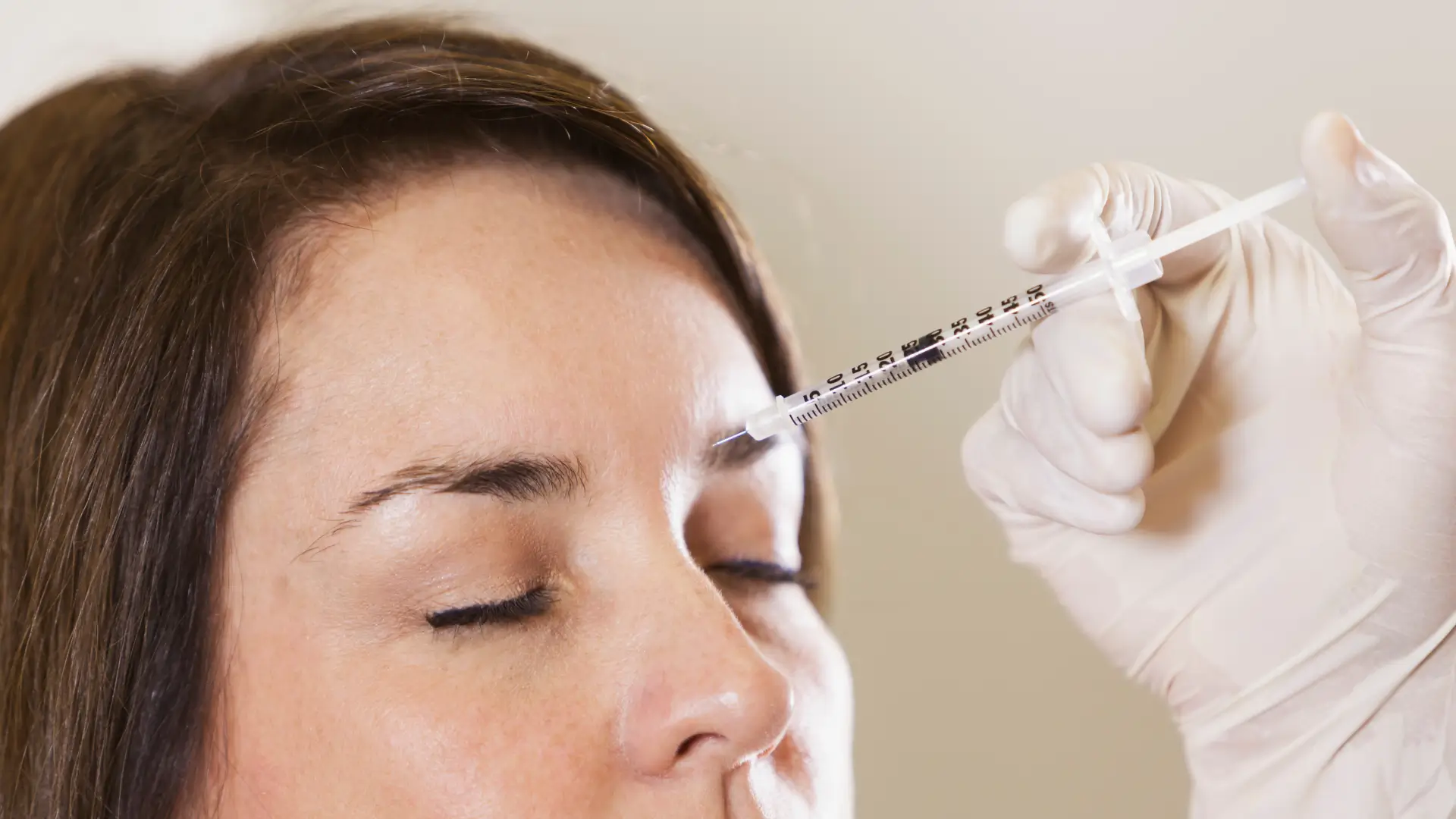
When clinics look for a straightforward Botulax review, the goal is usually to separate real clinical experience from marketing claims. Medica Depot works with licensed professionals sourcing Botulax® and other Korean neurotoxin brands, and this overview draws on what practitioners and patients most commonly say across professional forums, patient communities, and clinic feedback.
This article covers what Botulax 100 and Botulax 200 users report, how regional feedback differs between Korea’s home market and markets like the UK, the recurring purity debate against Xeomin®, the resistance question that comes up in longer threads, and Botulax’s actual regulatory footing by country.
Licensed professionals planning to order Botulax online can reach out to the Medica Depot team directly to learn more.
Key Takeaways
- Botulax reviews split largely by dose: Botulax 100 review threads focus on facial fine lines, while Botulax 200 review discussions skew toward larger muscle groups like the masseter and calves.
- Regional feedback, including UK and Botulax Reddit reviews, tends to track availability and sourcing almost as much as clinical performance.
- Regulatory status varies by country. Botulax carries approval in dozens of markets, but not always under that name.
About: Medica Depot is your trusted all-in-one supplier, offering a range of high-quality medical injectables and supplies. We offer a worry-free experience in searching for the best and most popular products on the market, like Botulax. Whether for health professionals, plastic surgeons, dermatologists, licensed estheticians, or other specialists, we can offer genuine, brand-name products you may need. With Medica Depot, we prioritize serving you better to improve the patient’s quality of life.
Botulax Reviews: An Overview
Discussion of Botulax online spans professional injector forums, patient-facing platforms, and dedicated threads across UK and Asian aesthetics communities. Because Botulax is one of several Korean-manufactured botulinum toxin type A products competing for space next to Botox®, Dysport®, and Xeomin, most of what gets discussed circles back to three questions: does it perform comparably, is it consistent between batches, and is it actually the product it claims to be once it crosses a border.
What Do Reviews Say About Botulax 100 and Botulax 200?
Botulax 100 review threads are dominated by facial applications — glabellar lines, crow’s feet, forehead lines — where injectors often describe onset as slightly faster than they’re used to with legacy brands, sometimes visible within two to three days rather than the standard week. Botulax 200 review discussions read differently: because the higher unit count is priced for larger muscle groups, this feedback tends to come from practitioners treating masseter hypertrophy for jaw slimming or calf reduction, procedures far more routine in Korean aesthetic practice than in Western clinics.
A recurring theme across both dose reviews is dilution confusion — reviewers frequently ask how Botulax’s unit dosing translates against Botox or Dysport, since unit-for-unit comparisons between toxin brands aren’t interchangeable and get misapplied in casual discussion more often than injectors would like.
What Does Regional Feedback Show? UK and Other Markets
Botulax UK reviews are noticeably thinner than what circulates out of South Korea, Vietnam, or Latin America, largely because the product isn’t marketed in the UK and EU under the Botulax name — Hugel’s own formulation is sold there as Letybo® instead, which splits the online conversation across two product names for what is functionally the same toxin.
Botulax Reddit reviews, meanwhile, skew toward price comparison and sourcing questions rather than clinical outcomes, with UK-based commenters frequently asking where a genuine, properly imported product can be found through a licensed distributor rather than a grey-market channel. Regional sentiment tracks availability and paperwork almost as much as it tracks how the toxin performs on skin.
What Key Benefits Do Practitioners and Patients Report?

Practitioners who’ve worked with Botulax tend to report a consistent set of key benefits: fast visible onset, results most describe as comparably durable to Botox and Xeomin, and pricing that gives clinics more room in treatment packages without cutting into margin. Patients echo some of this, particularly around onset speed and a softer, more natural look in areas like the forehead.
Several reviewers also point to Botulax’s track record — continuous clinical use in Korea since 2009 — as a reason for confidence, even in markets where it’s less familiar to patients than Botox by name recognition alone.
What Does the Purity Debate Say? Domestic Botulax vs Imported Xeomin
One of the more technical threads running through practitioner reviews compares domestically produced Botulax with imported alternatives like Xeomin. Xeomin is manufactured as a complexing-protein-free formulation, while Botulax, like most conventional botulinum toxin type A products, retains the surrounding complex of non-toxic proteins alongside the active neurotoxin.
A peer-reviewed comparison of Asian-market botulinum toxin formulations measured a higher total neurotoxin protein content in Botulax than in Xeomin, but also a notably higher share of inactive protein within that total [1].
For injectors weighing brands like Botulax against purer formulations, this is really a dosing-precision question: more inactive protein per vial means more foreign protein delivered for the same clinical unit dose, which is the variable most often cited in this debate rather than a straightforward purity “winner.”
Does Botox Resistance Come Up in Reviews?
Longer-form review threads regularly raise the topic of botox resistance, usually from patients who’ve had repeated treatments over several years and notice a shorter effect window or reduced response. The mechanism most often cited is neutralizing antibody formation, which research has linked to complexing-protein content and, by extension, the foreign protein load delivered with each injection over time [2].
Reviewers who raise this in the context of Botulax tend to frame it as a reason to rotate between botulinum toxin brands rather than a documented problem specific to Botulax itself, since the same protein-load discussion applies to most conventional, non-purified formulations on the market.
What Is Botulax’s Regulatory Status?
Reviews and forum threads tend to muddle Botulax’s approval status, so it helps to lay out the specifics. Hugel first secured approval from Korea’s Ministry of Food and Drug Safety in 2009, and Botulax has since been authorized under that name in more than 30 additional countries across Asia, Latin America, and the Middle East [5], including a UAE approval covering aesthetic and therapeutic indications as recently as January 2025 [4].
In the United States and the European Union, including the UK, the same Hugel formulation isn’t marketed as Botulax at all — it’s sold as Letybo, which received FDA approval in February 2024 for moderate-to-severe glabellar lines [3]. Questions like “Is Botulax FDA approved?” isn’t the right thing to ask in those markets: the toxin behind it is approved, just under a different name. This is a distinction reviews and forum threads frequently get wrong.
What’s the Overall Verdict From Reviews?
Botulax reviews point to a product that performs comparably to more established toxins on onset and duration, carries a meaningfully lower price point in most markets, and comes with the same protein-load and sourcing questions that apply to most conventional botulinum toxin type A products. The friction points aren’t really about efficacy — they’re about clarity: confusion between the Botulax and Letybo names, uncertainty about supply channels outside Korea, and dosing comparisons against Botox that don’t always translate cleanly. Practitioners weighing Botulax vs Botox directly may find it useful to see the two lined up side by side on dosing, onset, and cost.
Looking to buy Botulax online? Get in touch with our customer service representatives at Medica Depot for further guidance.
The contents of this page are meant for licensed medical professionals. They serve informational purposes only and are not to be taken as medical advice.
Citations
[1] Frevert, Jürgen et al. “Comparison of botulinum neurotoxin type A formulations in Asia.” Clinical, cosmetic and investigational dermatology vol. 11 327-331. 5 Jul. 2018, doi:10.2147/CCID.S160723
[2] Frevert, Jürgen, and Dirk Dressler. “Complexing proteins in botulinum toxin type A drugs: a help or a hindrance?.” Biologics : targets & therapy vol. 4 325-32. 9 Dec. 2010, doi:10.2147/BTT.S14902
[3] U.S. Food and Drug Administration. “BLA Approval Letter for LETYBO® (LetibotulinumtoxinA-wlbg), BLA 761225.” U.S. Food and Drug Administration, 29 Feb. 2024, www.accessdata.fda.gov/drugsatfda_docs/appletter/2024/761225Orig1s000ltr.pdf.
[4] Hugel. “Hugel Wins UAE Approval for Botulinum Toxin Botulax.” PR Newswire, 21 Jan. 2025, www.prnewswire.com/news-releases/hugel-wins-uae-approval-for-botulinum-toxin-botulax-302355953.html.
[5] Kan, Hyeong-woo. “How Hugel Turns a Thumb-Sized Tube into 25,000 Toxin Vials.” The Korea Herald, 8 July 2026, koreaherald.com/article/10800914.
This content was prepared and reviewed under our editorial guidelines , which govern how we source, verify, and update clinical and product information. Every claim is checked against peer-reviewed research, manufacturer documentation, or regulatory guidance before publication.


