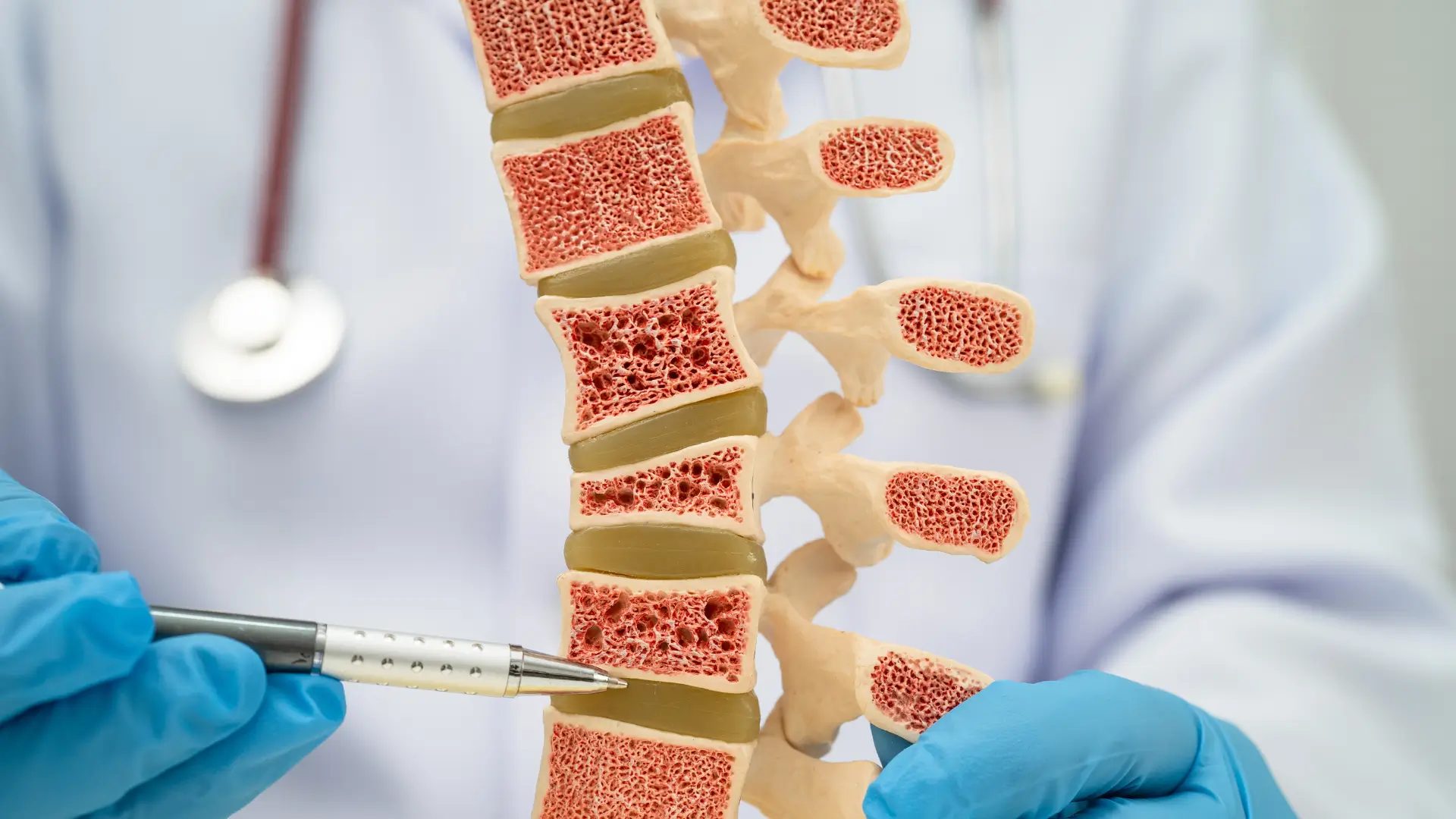
The anabolic vs antiresorptive decision is not a matter of choosing one universally superior drug class. It requires clinicians to weigh how urgently a patient needs fracture-risk reduction, whether the immediate priority is building new bone or limiting further resorption, and how the initial treatment will fit into a longer-term sequence.
This nuanced anabolic vs antiresorptive comparison considers fracture pattern, baseline risk, previous treatment, comorbidities, administration requirements, safety, and the need to preserve gains after a bone-building course.
Learn about the mechanisms, comparative effectiveness, adverse events, sequencing strategies, and cost considerations that shape an individualized choice. Medica Depot supports osteoporosis treatment decision-making with reference material for licensed professionals who buy osteoporosis injections for their practice.
Key Takeaways
- Anabolic agents promote new bone formation, while antiresorptive therapies mainly limit osteoclast-mediated bone resorption.
- Comparative trials generally report faster and greater increases in BMD with anabolic treatment, along with stronger reductions in clinical and vertebral fractures.
- The differences appear particularly relevant in patients at very high fracture risk, although evidence strength varies across outcomes and treatment comparisons.
- An anabolic-first course followed promptly by an antiresorptive is usually preferred when an anabolic agent is selected.
About: Medica Depot is your trusted all-in-one supplier, offering a range of high-quality medical injectables and supplies. We offer a worry-free experience in searching for the best and most popular products on the market, like osteoporosis treatments. Whether for health professionals, plastic surgeons, dermatologists, licensed estheticians, or other specialists, we can offer genuine, brand-name products you may need. With Medica Depot, we prioritize serving you better to improve the patient’s quality of life.
What Are the Two Treatment Classes for Osteoporosis?
Anabolic and antiresorptive medications intervene at different points in the bone turnover cycle. Antiresorptive therapy includes bisphosphonates such as alendronate, risedronate, and zoledronic acid; the RANKL inhibitor denosumab; and selected estrogen-related agents. These drugs primarily preserve existing bone by limiting resorption.
For most patients at high fracture risk, guidelines identify alendronate, risedronate, zoledronic acid, or denosumab as appropriate initial therapy because they have evidence across vertebral, nonvertebral, and hip outcomes.[1]
Anabolic therapy for osteoporosis includes the parathyroid hormone receptor agonists teriparatide and abaloparatide. Romosozumab, a sclerostin inhibitor, is commonly grouped with bone-building options but has a dual effect: it increases formation while also reducing resorption.
Guidelines generally reserve these agents for patients with very high fracture risk, such as those with recent or multiple fractures, very low BMD, fractures during treatment, or exceptionally high calculated risk.[2] The practical answer to which class is better depends on the therapeutic objective. Antiresorptives offer established, often more accessible long-term control, while anabolic agents may provide a stronger early intervention when rapid risk reduction is a priority.
Differences in Mechanisms of Antiresorptive vs Anabolic Treatments

Normal bone remodeling couples osteoclast-mediated removal of old bone with osteoblast-mediated replacement. In osteoporosis, each cycle can leave a net deficit.
Antiresorptives reduce that deficit mainly by suppressing osteoclast development, activity, or survival. Bisphosphonates bind to mineralized bone at active remodeling sites, while denosumab blocks RANKL, a signal required for osteoclast formation and function.[1]
Intermittent teriparatide or abaloparatide signaling, by contrast, activates pathways that stimulate bone formation through both remodeling-based and modeling-based activity.
Romosozumab blocks sclerostin, releasing inhibition of osteoblast activity while decreasing resorption. In other words, PTH-receptor agonists increase bone formation, whereas romosozumab increases bone formation while decreasing breakdown.[2]
These distinctions influence timing and sequencing. The effects of anabolic osteoporosis treatments are intentionally time-limited, with abaloparatide generally used for no more than two years. Teriparatide beyond two years is considered only when a patient remains or again becomes high risk, and romosozumab is limited to 12 monthly doses because its bone-forming effect wanes.[1]
What Does Comparative Evidence Show?
A 2023 systematic review and network meta-analysis of randomized controlled trials included 69 trials and more than 80,000 postmenopausal women. Compared with placebo, bisphosphonates, parathyroid hormone receptor agonists, and romosozumab reduced clinical fractures, and every evaluated treatment class reduced vertebral fractures. In active comparisons, anabolic treatments were more effective than bisphosphonates for preventing clinical and vertebral fractures.
In the same analysis, denosumab, PTH-receptor agonists, and romosozumab were associated with better vertebral fracture prevention than oral bisphosphonates. The certainty of these individual comparisons was moderate to low, however, owing to concerns about reporting quality, risk of bias, and imprecision.
The results are best interpreted as evidence of differences between specific treatment groups rather than as evidence that every anabolic agent is preferable to every antiresorptive across all clinical situations.
For a patient at high risk of fractures but without very-high-risk features, an antiresorptive may therefore remain the more proportionate first choice. For recent vertebral or hip fracture, multiple fractures, markedly low BMD, or inadequate response to prior treatment, an anabolic-first strategy may offer more rapid risk reduction.
Treatment selection still requires patient-specific assessment of renal function, calcium status, cardiovascular history, adherence, and prior therapy.[2]
Possible Side Effects of Anabolic and Antiresorptive Osteoporosis Treatments
The risk profile differs more by individual agent than by the anabolic or antiresorptive label alone.
- Teriparatide and abaloparatide: Reported adverse events include nausea, dizziness, transient orthostatic hypotension, and leg cramps. Hypercalcemia is uncommon with both agents and occurs less frequently with abaloparatide than with teriparatide. Both can increase urinary calcium, and teriparatide tends to raise urinary calcium and serum calcium more than abaloparatide. Both treatments should be avoided in patients with conditions associated with an increased risk of osteosarcoma, including prior skeletal radiation and bone malignancy.[1]
- Romosozumab: Potential effects include arthralgia, headache, hypocalcemia, hypersensitivity, and rare atypical femoral fracture or osteonecrosis of the jaw. Its U.S. boxed warning addresses possible myocardial infarction, stroke, and cardiovascular death. It should not be initiated after myocardial infarction or stroke within the preceding year.[2]
- Bisphosphonates: Oral products can cause upper gastrointestinal or esophageal irritation, while intravenous treatment can produce an acute flu-like reaction. Renal restrictions apply, and rare long-term complications include atypical femoral fracture and osteonecrosis of the jaw.[1]
- Denosumab: Correct hypocalcemia before treatment. Reported adverse effects include hypersensitivity, dermatologic reactions, signs of infection, and rare atypical femoral fracture or osteonecrosis of the jaw. Stopping or substantially delaying treatment without follow-on antiresorptive therapy can cause rapid bone loss and multiple vertebral fractures.[2]
A direct head-to-head comparison of teriparatide and abaloparatide lacks enough evidence to fully characterize safety across the entire anabolic class. The same caveat applies to antiresorptive therapy, which includes agents that differ substantially in dosing schedules, renal considerations, persistence after discontinuation, and adverse-event profiles.
Can These Therapies Be Combined or Sequenced?
Sequential treatment has stronger clinical support than routine concurrent treatment. When an anabolic course ends, an antiresorptive such as a bisphosphonate or denosumab should follow without an unnecessary gap to protect the BMD gain and fracture benefit. Starting with the anabolic matters because prior potent antiresorptive exposure can blunt or delay parts of the subsequent BMD response.[1]
An anabolic-first approach followed by antiresorptive therapy is sometimes characterized as an “ideal one-two punch” for osteoporosis. The anabolic phase can rapidly increase bone formation, while subsequent antiresorptive treatment helps maintain the gains achieved. This sequence should not be viewed as a universal treatment strategy.
It is more relevant for patients with very high or imminent fracture risk for whom the potential benefits justify the cost, injectable administration, and safety considerations associated with anabolic therapy.
Combination treatment can result in greater BMD gains in some settings, particularly with teriparatide and denosumab, although evidence showing a corresponding reduction in fracture risk remains limited. AACE does not recommend routine concomitant use.
BHOF guidance, however, suggests that combination therapy may be considered in exceptional cases involving very high fracture risk, such as patients with multiple vertebral fractures. Combining two antiresorptive agents is not routinely recommended.[2]
Cost Comparison Between Anabolic and Antiresorptive Treatments
In the antiresorptive vs anabolic cost discussion, anabolic regimens are generally more expensive than generic oral bisphosphonates, although acquisition cost is only one component. A U.S. cost-effectiveness model published in 2022 used annual treatment-cost inputs of $120 for alendronate, $600 for zoledronate, $2,542 for denosumab, $23,547 for romosozumab, and $47,256 for teriparatide. These are historical model inputs. They are not current cash prices or patient out-of-pocket estimates, but they illustrate the class-level difference.[4]
Insurance coverage, available rebates, generic or biosimilar alternatives, administration and monitoring expenses, adherence, and fracture risk all affect real-world treatment costs. Individuals at a very high fracture risk may see a higher upfront therapy cost offset if it reduces fractures and associated hospitalization or long-term care.
At the same time, a low-cost oral antiresorptive may provide better value in a less urgent risk profile. In the same U.S. model, zoledronate was the least costly strategy and denosumab was the most cost-effective among the five evaluated options under its assumptions.[4]
Drug costs in the U.S. cannot be used as a direct reference for international markets. UK guidance, for example, lists abaloparatide at £294.54 per 30-dose pen and £5,301.72 for an 18-month course before confidential NHS discounts.[5] Differences in formularies and negotiated prices may ultimately affect whether an antiresorptive or anabolic treatment is selected.
| Clinical Factor | Anabolic Approach | Antiresorptive Approach |
| Main objective | Build bone rapidly and improve microarchitecture | Slow bone loss and preserve or increase bone mass |
| Typical role | Initial option for very-high-risk patients | Initial option for most high-risk patients and maintenance after anabolic therapy |
| Comparative strength | Often larger early BMD gains and stronger vertebral/clinical fracture reduction in head-to-head evidence | Broad fracture efficacy for several agents, with extensive long-term clinical use |
| Duration | Usually time-limited | Often longer-term, with agent-specific reassessment |
| After stopping | Follow with an antiresorptive to retain gains | Discontinuation planning varies; denosumab requires another antiresorptive |
The contents of this page are meant for licensed medical professionals. They serve informational purposes only and are not to be taken as medical advice.
Citations
[1] Händel, Mina Nicole et al. “Fracture risk reduction and safety by osteoporosis treatment compared with placebo or active comparator in postmenopausal women: systematic review, network meta-analysis, and meta-regression analysis of randomised clinical trials.” BMJ (Clinical research ed.) vol. 381 e068033. 2 May. 2023, doi:10.1136/bmj-2021-068033
[2] Su, Peng et al. “Effectiveness of anabolic and anti-resorptive agents for preventing postmenopausal osteoporosis fractures: a systematic review and network meta-analysis.” Journal of orthopaedic surgery and research vol. 20,1 645. 12 Jul. 2025, doi:10.1186/s13018-025-06040-3
[3] LeBoff, M S et al. “Correction to: The clinician’s guide to prevention and treatment of osteoporosis.” Osteoporosis international : a journal established as result of cooperation between the European Foundation for Osteoporosis and the National Osteoporosis Foundation of the USA vol. 33,10 (2022): 2243. doi:10.1007/s00198-022-06479-8
[4] Luo, C et al. “Cost-effectiveness analysis of five drugs for treating postmenopausal women in the United States with osteoporosis and a very high fracture risk.” Journal of endocrinological investigation vol. 46,2 (2023): 367-379. doi:10.1007/s40618-022-01910-7
[5] National Institute for Health and Care Excellence. “Abaloparatide for Treating Osteoporosis after Menopause.” NICE, Technology Appraisal Guidance TA991, 7 Aug. 2024, www.nice.org.uk/guidance/ta991/resources/abaloparatide-for-treating-osteoporosis-after-menopause-pdf-82615965828037.
This content was prepared and reviewed under our editorial guidelines , which govern how we source, verify, and update clinical and product information. Every claim is checked against peer-reviewed research, manufacturer documentation, or regulatory guidance before publication.