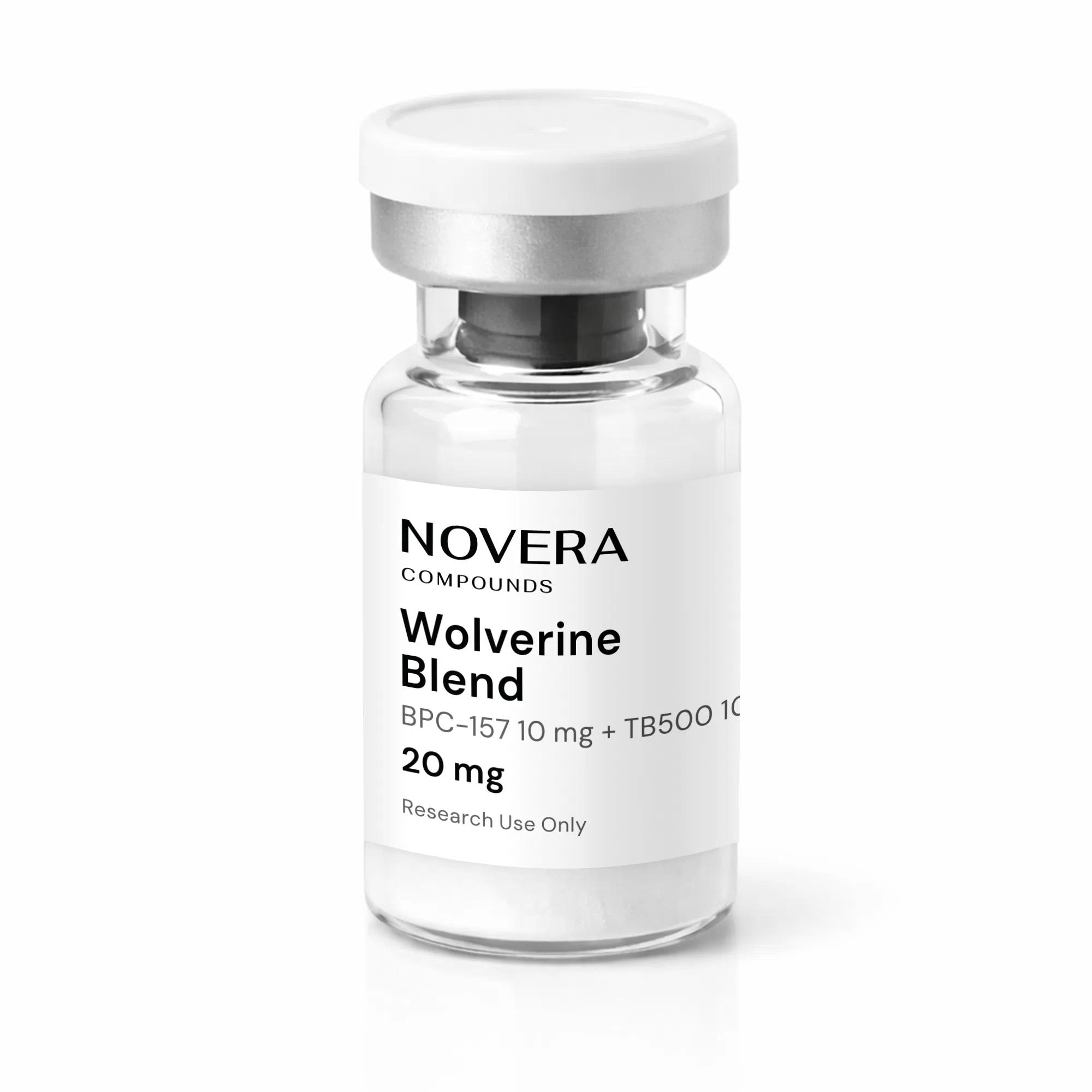
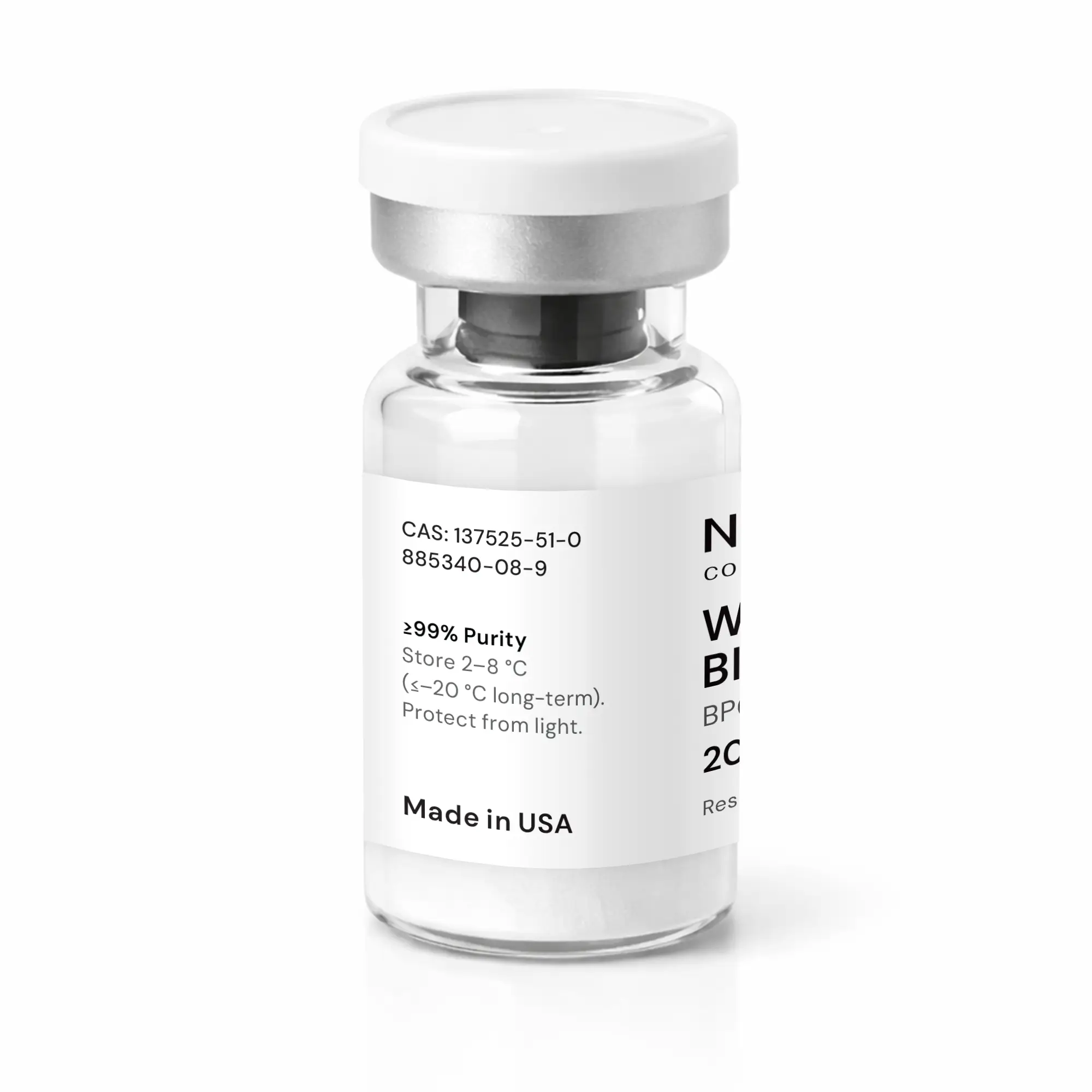
Wolverine Blend BPC-157 10mg + TB500 10mg
Strength: 20 mg
CAS: BPC-157: 137525-51-0 / TB500: 885340-08-9
Chemical Formula: BPC-157: C₆₂H₉₈N₁₆O₂₂ TB500: C₃₈H₆₈N₁₀O₁₄
Molecular weight: BPC-157: 1419.535 g/mol TB-500(TB-4): 889.0 g/mol
Peptide Sequence: BPC157: Gly-Glu-Pro-Pro-Pro-Gly-Lys-Pro-Ala-Asp-Asp-Ala-Gly-Leu-Val
TB-500(TB4): Ac-Ser-Asp-Lys-Pro-Asp-Met-Ala-Glu-Ile-Glu-Lys-Phe-Asp-Lys-Ser-Lys-Leu-Lys-Lys-Thr-Glu-Thr-Gln-Glu-Lys-Asn-Pro-Leu-Pro-Ser-Lys-Glu-Thr-Ile-Glu-Gln-Glu-Lys-Gln-Ala-Gly-Glu-Ser
Storage: Store 2–8 °C (≤–20 °C long-term). RT exposure during transport acceptable. Protect from light.
Shelf life: 24 months from the manufacturing date.
Wolverine Blend combines BPC-157 (gastric pentadecapeptide) and TB500 (actin-binding thymosin β4). Studies examine their complementary roles in rodent wound/tendon healing, angiogenesis, and tissue remodeling.


Why Choose Medica Depot
Shop hundreds of medical products with no minimums and free shipping on large orders.
 400+ products
 No order minimums
 Free shipping
 Loyalty rewards
 Trusted since 2007
 Account manager
 Verified LOT numbers
INFORMATION
What is Wolverine Blend – BPC-157 (10 mg) / TB500 (10 mg)?
Wolverine Blend – BPC-157 (10 mg) / TB500 (10 mg) is a combined peptide formulation used in research for tissue repair and regeneration. It contains two well-known synthetic peptides:
- BPC-157: A 15-amino acid peptide fragment originally identified from gastric protein research. It is studied for its role in tissue integrity, vascular responses, and organ protection in preclinical models.
- TB500 (Thymosin Beta-4): A 43-amino acid peptide known for its involvement in actin-related cell movement, angiogenesis (formation of new blood vessels), and tissue remodeling in wound and injury models.
By combining these two peptides into a single vial, the Wolverine Blend supports studies that explore complementary repair pathways, such as wound closure, microcirculation, and soft-tissue remodeling, within the same experimental framework.
Product Specifications
- BPC-157 CAS Number: 137525-51-0
- TB500 CAS Number: 885340-08-9
- Peptide Sequences:
- BPC-157: Gly-Glu-Pro-Pro-Pro-Gly-Lys-Pro-Ala-Asp-Asp-Ala-Gly-Leu-Val
- TB500: Ac-Ser-Asp-Lys-Pro-Asp-Met-Ala-Glu-Ile-Glu-Lys-Phe-Asp-Lys-Ser-Lys-Leu-Lys-Lys-Thr-Glu-Thr-Gln-Glu-Lys-Asn-Pro-Leu-Pro-Ser-Lys-Glu-Thr-Ile-Glu-Gln-Glu-Lys-Gln-Ala-Gly-Glu-Ser-OH
- Chemical Formula:
- BPC-157: C₆₂H₉₈N₁₆O₂₂
- TB500: C₃₈H₆₈N₁₀O₁₄
- Molecular Weight:
- BPC-157: 1419.5 g/mol
- TB500: 889.0 g/mol
- Purity: ≥99% (HPLC/MS verified)
- Packaging Format: 10 mg of BPC-157 and 10 mg of TB500 (20 mg total), lyophilized powder in a sealed research-grade vial
- Storage Conditions: Store at −20 °C, protect from light, keep vial tightly sealed.
- Intended Use: For laboratory research use only; not for human or veterinary use.
Key Characteristics of Wolverine Blend – BPC-157 (10 mg) / TB500 (10 mg)
- Dual-Pathway Regenerative Tool: BPC-157 is studied for its role in tissue protection and vascular integrity, while TB500 is known for its effects on actin-linked cell migration and tissue remodeling. This combination allows researchers to investigate both local tissue repair and broader cellular mechanisms in one study.
- Complementary Repair Pathways: BPC-157 often focuses on localized tissue repair (e.g., skin, tendon, gastrointestinal tissues), while TB500 is more focused on cell movement and vascularization. Together, they offer a comprehensive approach to studying repair processes.
- Strong Preclinical Literature:
- BPC-157: Reported in rodent models to support healing in skin, muscle, tendon, bone, and gastrointestinal injury systems, with endpoints including epithelial repair, collagen organization, and angiogenesis markers.
- TB500: Used in wound models to accelerate wound closure and enhance angiogenesis markers, and also studied in ocular and cardiac injury contexts.
- Cytoskeletal Regulation (TB500): TB500 regulates actin dynamics, helping researchers study how actin organization affects cell movement, wound closure, and remodeling.
- Angiogenesis and Microvascular Remodeling: Both peptides have been associated with angiogenesis and microvascular remodeling, supporting studies of blood supply and microcirculation.
- High-Purity Research Blend: This blend is supplied as a high-purity, analytically verified product, ensuring reproducible results in in vitro, ex vivo, and animal research.
How Wolverine Blend – BPC-157 (10 mg) / TB500 (10 mg) Supports Research
Researchers use Wolverine Blend as a combined research tool to study soft-tissue repair, vascular responses, and cell migration in preclinical models. BPC-157 has been reported to support healing in skin wounds, gastrointestinal models, and chemical injury systems, often focusing on epithelial repair, collagen deposition, and angiogenesis.
TB500 may support wound closure and microvascular density in cutaneous and ocular models.
By combining both peptides, researchers can investigate whether activating BPC-157-linked cytoprotective and vascular pathways alongside TB500-linked actin and cell-migration pathways produces additive or distinct outcomes compared to using either peptide alone.
At present, experts base most combined-use rationales on component-level evidence and exploratory study designs rather than large comparative trials.
Research Applications & Usage Information
Wolverine Blend – BPC-157 (10 mg) / TB500 (10 mg) is commonly used in in vitro, ex vivo, and animal models, including:
- Dermal and Soft-Tissue Wound Models: Tracking wound closure kinetics, re-epithelialization markers, granulation tissue development, collagen organization, and microvessel density in full-thickness wounds, burns, or incision models.
- Muscle, Tendon, and Ligament Injury Studies: Evaluating regeneration and remodeling at the tendon–bone interface and in ligament repair models using histology, biomechanical testing, and extracellular matrix turnover markers.
- Gastrointestinal and Mucosal Integrity Models (BPC-157): Using the blend in studies focused on mucosal protection, fistula endpoints, and microvascular preservation, with TB500 enhancing cell migration.
- Cardiac and Vascular Remodeling Models (TB500): Studying neovascularization, cardiomyocyte survival markers, and endothelial function in myocardial injury or ischemia–reperfusion models.
- Ischemia–Reperfusion and Hypoxia Models: Investigating combined effects on vascular integrity, necrosis, and reparative-cell infiltration under hypoxia or reperfusion conditions.
- Cell-Based Mechanistic Studies: Measuring fibroblast/endothelial/progenitor cell migration, proliferation, and tube formation using imaging and migration/angiogenesis platforms.
Note: Study design choices (such as concentrations, timing, routes, and endpoints) should be made by qualified researchers based on study goals and prior literature. No dosing or clinical guidance is provided or implied.
Handling and Storage Recommendations
- Store sealed vials at −20 °C, protected from light, tightly sealed.
- Allow the vial to reach room temperature before opening to reduce condensation.
- For short-term storage, keep at 2–8 °C.
- If preparing solutions, use aseptic technique and follow your lab’s SOPs for aliquoting, stability controls, and disposal.
Research Use Only Notice
This product is intended for laboratory research use only and is not approved for human or veterinary use. It is not intended for diagnostic, therapeutic, or clinical applications. Any reference to biological activity or potential effects is based solely on preclinical or in‑vitro findings and should not be interpreted as validated clinical outcomes. Researchers are responsible for ensuring proper handling, storage, and disposal in accordance with institutional, federal, and international guidelines.
References
- Chang CH, Tsai WC, Lin MS, Hsu YH, Pang JH. The promoting effect of pentadecapeptide BPC 157 on tendon healing involves tendon outgrowth, cell survival, and cell migration. J Appl Physiol (1985). 2011;110(3):774-780. doi:10.1152/japplphysiol.00945.2010
- Malinda KM, Sidhu GS, Mani H, et al. Thymosin beta4 accelerates wound healing. J Invest Dermatol. 1999;113(3):364-368. doi:10.1046/j.1523-1747.1999.00708.x
- Philp D, Goldstein AL, Kleinman HK. Thymosin beta4 promotes angiogenesis, wound healing, and hair follicle development. Mech Ageing Dev. 2004;125(2):113-115. doi:10.1016/j.mad.2003.11.005
- Huang T, Zhang K, Sun L, et al. Body protective compound-157 enhances alkali-burn wound healing in vivo and promotes proliferation, migration, and angiogenesis in vitro. Drug Des Devel Ther. 2015;9:2485-2499. Published 2015 Apr 30. doi:10.2147/DDDT.S82030
What is Wolverine Blend – BPC-157 (10 mg) / TB500 (10 mg)?
Wolverine Blend – BPC-157 (10 mg) / TB500 (10 mg) is a combined peptide formulation used in research for tissue repair and regeneration. It contains two well-known synthetic peptides:
- BPC-157: A 15-amino acid peptide fragment originally identified from gastric protein research. It is studied for its role in tissue integrity, vascular responses, and organ protection in preclinical models.
- TB500 (Thymosin Beta-4): A 43-amino acid peptide known for its involvement in actin-related cell movement, angiogenesis (formation of new blood vessels), and tissue remodeling in wound and injury models.
By combining these two peptides into a single vial, the Wolverine Blend supports studies that explore complementary repair pathways, such as wound closure, microcirculation, and soft-tissue remodeling, within the same experimental framework.
Product Specifications
- BPC-157 CAS Number: 137525-51-0
- TB500 CAS Number: 885340-08-9
- Peptide Sequences:
- BPC-157: Gly-Glu-Pro-Pro-Pro-Gly-Lys-Pro-Ala-Asp-Asp-Ala-Gly-Leu-Val
- TB500: Ac-Ser-Asp-Lys-Pro-Asp-Met-Ala-Glu-Ile-Glu-Lys-Phe-Asp-Lys-Ser-Lys-Leu-Lys-Lys-Thr-Glu-Thr-Gln-Glu-Lys-Asn-Pro-Leu-Pro-Ser-Lys-Glu-Thr-Ile-Glu-Gln-Glu-Lys-Gln-Ala-Gly-Glu-Ser-OH
- Chemical Formula:
- BPC-157: C₆₂H₉₈N₁₆O₂₂
- TB500: C₃₈H₆₈N₁₀O₁₄
- Molecular Weight:
- BPC-157: 1419.5 g/mol
- TB500: 889.0 g/mol
- Purity: ≥99% (HPLC/MS verified)
- Packaging Format: 10 mg of BPC-157 and 10 mg of TB500 (20 mg total), lyophilized powder in a sealed research-grade vial
- Storage Conditions: Store at −20 °C, protect from light, keep vial tightly sealed.
- Intended Use: For laboratory research use only; not for human or veterinary use.
Key Characteristics of Wolverine Blend – BPC-157 (10 mg) / TB500 (10 mg)
- Dual-Pathway Regenerative Tool: BPC-157 is studied for its role in tissue protection and vascular integrity, while TB500 is known for its effects on actin-linked cell migration and tissue remodeling. This combination allows researchers to investigate both local tissue repair and broader cellular mechanisms in one study.
- Complementary Repair Pathways: BPC-157 often focuses on localized tissue repair (e.g., skin, tendon, gastrointestinal tissues), while TB500 is more focused on cell movement and vascularization. Together, they offer a comprehensive approach to studying repair processes.
- Strong Preclinical Literature:
- BPC-157: Reported in rodent models to support healing in skin, muscle, tendon, bone, and gastrointestinal injury systems, with endpoints including epithelial repair, collagen organization, and angiogenesis markers.
- TB500: Used in wound models to accelerate wound closure and enhance angiogenesis markers, and also studied in ocular and cardiac injury contexts.
- Cytoskeletal Regulation (TB500): TB500 regulates actin dynamics, helping researchers study how actin organization affects cell movement, wound closure, and remodeling.
- Angiogenesis and Microvascular Remodeling: Both peptides have been associated with angiogenesis and microvascular remodeling, supporting studies of blood supply and microcirculation.
- High-Purity Research Blend: This blend is supplied as a high-purity, analytically verified product, ensuring reproducible results in in vitro, ex vivo, and animal research.
How Wolverine Blend – BPC-157 (10 mg) / TB500 (10 mg) Supports Research
Researchers use Wolverine Blend as a combined research tool to study soft-tissue repair, vascular responses, and cell migration in preclinical models. BPC-157 has been reported to support healing in skin wounds, gastrointestinal models, and chemical injury systems, often focusing on epithelial repair, collagen deposition, and angiogenesis.
TB500 may support wound closure and microvascular density in cutaneous and ocular models.
By combining both peptides, researchers can investigate whether activating BPC-157-linked cytoprotective and vascular pathways alongside TB500-linked actin and cell-migration pathways produces additive or distinct outcomes compared to using either peptide alone.
At present, experts base most combined-use rationales on component-level evidence and exploratory study designs rather than large comparative trials.
Research Applications & Usage Information
Wolverine Blend – BPC-157 (10 mg) / TB500 (10 mg) is commonly used in in vitro, ex vivo, and animal models, including:
- Dermal and Soft-Tissue Wound Models: Tracking wound closure kinetics, re-epithelialization markers, granulation tissue development, collagen organization, and microvessel density in full-thickness wounds, burns, or incision models.
- Muscle, Tendon, and Ligament Injury Studies: Evaluating regeneration and remodeling at the tendon–bone interface and in ligament repair models using histology, biomechanical testing, and extracellular matrix turnover markers.
- Gastrointestinal and Mucosal Integrity Models (BPC-157): Using the blend in studies focused on mucosal protection, fistula endpoints, and microvascular preservation, with TB500 enhancing cell migration.
- Cardiac and Vascular Remodeling Models (TB500): Studying neovascularization, cardiomyocyte survival markers, and endothelial function in myocardial injury or ischemia–reperfusion models.
- Ischemia–Reperfusion and Hypoxia Models: Investigating combined effects on vascular integrity, necrosis, and reparative-cell infiltration under hypoxia or reperfusion conditions.
- Cell-Based Mechanistic Studies: Measuring fibroblast/endothelial/progenitor cell migration, proliferation, and tube formation using imaging and migration/angiogenesis platforms.
Note: Study design choices (such as concentrations, timing, routes, and endpoints) should be made by qualified researchers based on study goals and prior literature. No dosing or clinical guidance is provided or implied.
Handling and Storage Recommendations
- Store sealed vials at −20 °C, protected from light, tightly sealed.
- Allow the vial to reach room temperature before opening to reduce condensation.
- For short-term storage, keep at 2–8 °C.
- If preparing solutions, use aseptic technique and follow your lab’s SOPs for aliquoting, stability controls, and disposal.
Research Use Only Notice
This product is intended for laboratory research use only and is not approved for human or veterinary use. It is not intended for diagnostic, therapeutic, or clinical applications. Any reference to biological activity or potential effects is based solely on preclinical or in‑vitro findings and should not be interpreted as validated clinical outcomes. Researchers are responsible for ensuring proper handling, storage, and disposal in accordance with institutional, federal, and international guidelines.
References
- Chang CH, Tsai WC, Lin MS, Hsu YH, Pang JH. The promoting effect of pentadecapeptide BPC 157 on tendon healing involves tendon outgrowth, cell survival, and cell migration. J Appl Physiol (1985). 2011;110(3):774-780. doi:10.1152/japplphysiol.00945.2010
- Malinda KM, Sidhu GS, Mani H, et al. Thymosin beta4 accelerates wound healing. J Invest Dermatol. 1999;113(3):364-368. doi:10.1046/j.1523-1747.1999.00708.x
- Philp D, Goldstein AL, Kleinman HK. Thymosin beta4 promotes angiogenesis, wound healing, and hair follicle development. Mech Ageing Dev. 2004;125(2):113-115. doi:10.1016/j.mad.2003.11.005
- Huang T, Zhang K, Sun L, et al. Body protective compound-157 enhances alkali-burn wound healing in vivo and promotes proliferation, migration, and angiogenesis in vitro. Drug Des Devel Ther. 2015;9:2485-2499. Published 2015 Apr 30. doi:10.2147/DDDT.S82030
This content was prepared and reviewed under our editorial guidelines , which govern how we source, verify, and update clinical and product information. Every claim is checked against peer-reviewed research, manufacturer documentation, or regulatory guidance before publication.
Product authenticity is an important part of making informed decisions in medical aesthetics and pharmaceuticals. Medica Depot provides information for clinics and practitioners on how to check authenticity claims. Learn more about how we recognize authentic products.
Related products